Stop and call for qualified help when plumbing water is near electrical equipment, sewage is entering occupied space, gas or burning odors are present, or a repair would require opening pressurized piping.
Why Backflow Prevention Matters at Home
Drinking water normally moves from the water supply into your home and out through a faucet or fixture. Backflow is a reversal of that intended direction. If drinking-water plumbing is connected to a source of nonpotable water, a reversal can draw or push unwanted substances into the clean-water system. That connection, called a cross-connection, may involve something as ordinary as a garden hose, an irrigation system, or a pool-filling arrangement.
For Camp Creek homeowners, the useful starting point is understanding connections, not assuming every outdoor fixture presents the same risk. Irrigation, pool equipment, and outdoor cleaning setups deserve attention wherever they exist. Seasonal occupancy can also leave equipment unattended between visits. Backflow protection should fit the actual hazard and remain accessible for inspection and service. Water that looks clear is not proof that a cross-connection is safe, and protection at one connection does not automatically protect every other connection.
Understand the Two Ways Water Can Reverse Direction
Backsiphonage happens when pressure in the drinking-water supply drops enough to pull water backward through an unprotected connection. A water-main break or another significant supply disruption can create that condition. Imagine a hose connected to an outdoor faucet with its open end submerged in a bucket of cleaning solution. Without suitable protection, the hose provides a potential pathway from the bucket into the plumbing when supply pressure falls.
Backpressure happens when pressure on the nonpotable side becomes greater than pressure on the drinking-water side. A pump or certain connected equipment can create that difference. The distinction matters because a device designed only for backsiphonage may not protect against backpressure. A plumber must consider both the contamination hazard and how the equipment operates. Choosing a device by pipe size or appearance alone leaves out the most important parts of that decision.
Look for Everyday Cross-Connections
Common places to review include hose faucets, irrigation supply piping, pool autofill systems, utility sinks, and water-fed equipment. A hose submerged in a pool, pond, bucket, or chemical mixing container creates a direct connection unless appropriate protection separates the systems. A sink spray hose that can sit below dirty water may also need attention, particularly if the faucet has been altered or replacement parts have changed its original protective arrangement.
Homeowners can make a simple inventory without disconnecting anything. Note which faucets have hoses attached, where each hose ends, and whether permanently connected equipment uses drinking water. Look for modifications made during landscaping, pool work, or equipment replacement. Share photographs and available installation records with the plumber. Do not assume that a connection is protected because it has worked for years or because the attached equipment came with a generic check valve.
Match the Protection to the Connection
An air gap is a physical separation between a water outlet and the receiving vessel’s flood-level rim. When properly designed and maintained, it prevents the receiving water from contacting the supply outlet. It is not simply a hose hanging slightly above the water’s current surface. The required separation and arrangement depend on the installation. A hose that can slip into the vessel does not provide a dependable permanent air gap.
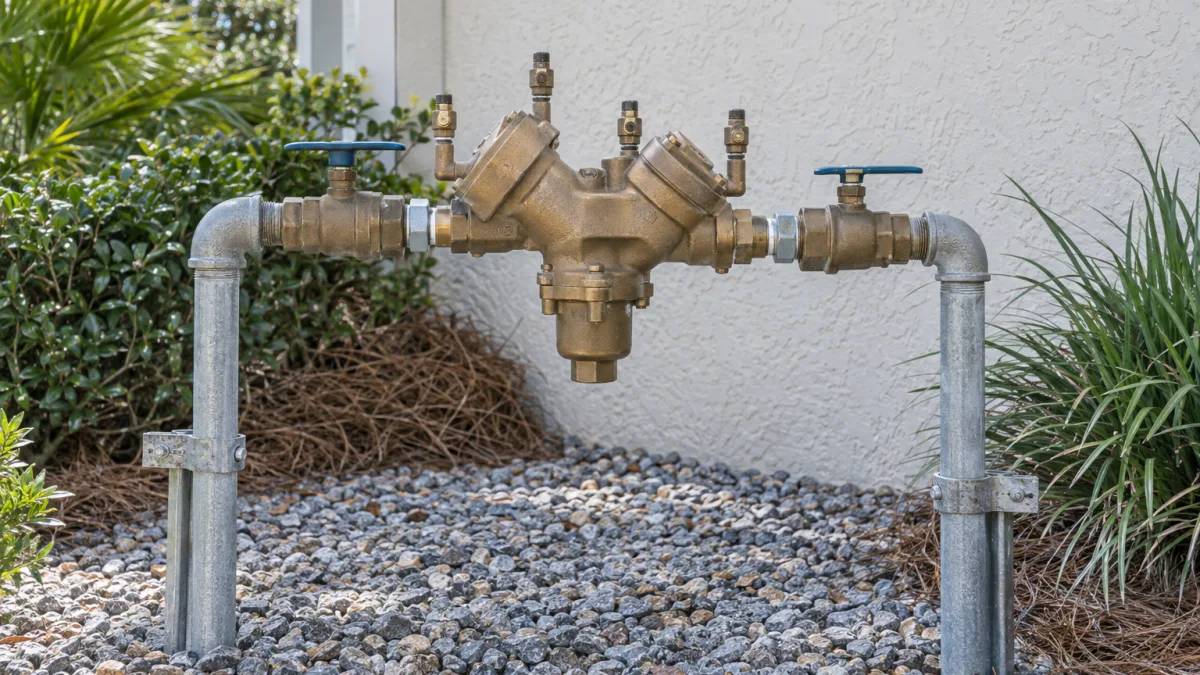
Mechanical options include hose-connection vacuum breakers, pressure vacuum breaker assemblies, and reduced-pressure principle assemblies. They are not interchangeable. Some protect only against backsiphonage; others address backpressure as well. Their suitability also depends on hazard level, continuous-pressure conditions, elevation, and installation requirements. A basic check valve is not automatically an approved substitute. Have a licensed plumber identify the appropriate protection and confirm requirements with the serving water utility or applicable local authority before purchasing equipment.
Give Irrigation and Pool Connections Special Attention
Irrigation piping is exposed to soil, standing water, and materials applied to landscaping. When supplied by drinking water, it needs protection appropriate to its configuration and hazard. Systems that introduce fertilizers or other chemicals require particular care in device selection. Ask the professional to verify the water source, whether chemical injection exists, and whether pumps or elevation changes affect the design. Protection elsewhere on the property may not satisfy the irrigation connection’s requirements.
Pool-filling arrangements also deserve a closer look. Keeping a portable hose outlet out of pool water removes the submerged-hose connection, but the faucet still needs whatever protection its use requires. A permanent autofill connection needs a properly designed protective arrangement rather than an improvised hose setup. Never connect a private well or another nonpotable source to the home’s drinking-water piping without an approved design. Separate shutoff valves alone do not provide dependable cross-connection protection.
Know Which Warning Signs Need Service
Visible leakage, broken fittings, missing components, or an assembly that has shifted out of position warrant professional review. Some vacuum breakers briefly release water during startup or pressure changes, depending on their design. Persistent leakage or repeated discharge should not be dismissed as normal. Reduced-pressure assemblies have relief openings that can discharge under certain conditions. Never plug an opening, cap a vent, or redirect discharge in a way that creates a restriction or submerges the outlet.
Changes in taste, odor, or color do not establish that backflow occurred, but they should not be ignored after a suspicious connection or supply event. If contamination is suspected, stop using the affected water for drinking, cooking, ice, and toothbrushing. Use bottled water while contacting the water utility and a licensed plumber for instructions. Boiling does not remove every contaminant, particularly chemicals, so do not treat it as a universal solution.
What Professional Inspection and Testing Involve
A cross-connection assessment starts with tracing how drinking water reaches outdoor systems and connected equipment. The professional identifies existing devices, checks whether they match the application, and looks at orientation, access, drainage, and signs of alteration. Installation records can help, but the current arrangement matters most. Landscaping changes, added pumps, or new chemical-injection equipment may change what protection is needed even when the original device remains in place.
For a testable backflow assembly, a qualified tester uses appropriate instruments and the prescribed procedure to evaluate its protective functions. A visual inspection alone cannot establish that its internal components pass a performance test. Testing may require a temporary water interruption to the protected branch or property. Confirm who is authorized to perform the test, whether results must be submitted, and what happens if the assembly fails. Not every small hose device is field-testable like a larger assembly.
Maintain Access and Watch Outdoor Exposure
Northwest Florida’s humidity and coastal salt exposure can contribute to deterioration of exposed hardware, although materials and installation conditions affect how quickly problems develop. Keep outdoor assemblies visible and reachable. Avoid piling mulch around them, allowing shrubs to block service access, or letting irrigation spray continually strike the equipment. Do not paint over identification information or cover vents and relief openings. Protective enclosures must suit the device and preserve required access and drainage.
During ordinary property checks, look for new wet areas around the assembly, damaged supports, or accidental impacts from yard equipment. After flooding or debris damage, arrange an evaluation if the assembly may have been submerged or struck. Do not operate test cocks, adjust internal parts, or take the assembly apart as routine homeowner maintenance. Follow the manufacturer’s instructions and the applicable testing schedule, and remember that a dry exterior does not prove internal protection is working.
Plan Repairs Without Bypassing Protection
A leaking or failed assembly does not always need complete replacement. Depending on its condition and parts availability, a qualified professional may clean or replace internal components and then retest it. Replacement may make more sense when the body is damaged, parts are unavailable, or the device is wrong for the application. Ask what failed, whether the existing installation remains suitable, and what documentation will confirm acceptable operation after service.
Before scheduling work, clarify which water service will be interrupted and how occupants will be notified. For a seasonal home or managed rental, coordinate access so the technician can reach both the equipment and relevant shutoffs. Never accept a temporary bypass that leaves the drinking-water supply connected to an unprotected hazard. If repairs cannot be completed immediately, the professional should explain how the affected connection can remain safely out of service until protection is restored.
Keep a Clear Record for the Property
Keep a property file with the assembly’s location, device information, installation documents, test reports, and repair history. Record the serving water utility and its contact information rather than relying on memory about which provider serves the address. Testing intervals and reporting requirements can vary by device, use, and local program. Confirm what applies to the actual property instead of assuming a neighboring home’s schedule or a general online recommendation is sufficient.
Give property managers and maintenance vendors simple boundaries: do not remove protective devices, extend outlets into standing water, or modify drinking-water connections without professional review. Add a visual check of outdoor protection to turnover or arrival inspections, but keep required professional testing on its own schedule. When requesting plumbing service, describe the connected equipment, visible symptoms, and any recent changes. Those details help distinguish a faucet repair from a broader cross-connection problem.
About this guide: This resource provides general homeowner education, not a remote diagnosis. Actual conditions, code requirements, equipment, and safe repair options must be evaluated at the property.