Stop and call for qualified help when plumbing water is near electrical equipment, sewage is entering occupied space, gas or burning odors are present, or a repair would require opening pressurized piping.
You notice that the upstairs shower loses pressure whenever the dishwasher runs. A few months earlier, a small leak was repaired behind a bathroom wall. Now there is a faint stain near another room, and the pipes sometimes bang when a faucet closes. For a homeowner in Camp Creek, these separate symptoms may be connected. Together, they can be signs your home needs repiping.
Repiping replaces some or all pressurized water-supply lines carrying hot and cold water to fixtures. It is different from drain or sewer replacement. A whole-house repipe is not always necessary, but recurring failures should be evaluated.
If water is actively leaking, shut off the nearest fixture valve or the main water valve when it is safe to reach. Keep away from wet electrical areas, move belongings from the affected space, and call a licensed plumber. Do not repeatedly reopen the water to test a concealed leak.
Common Signs Your Home May Need Repiping in Camp Creek
Leaks Keep Appearing in Different Areas
One failed connector or fitting may be an isolated repair. The concern grows when leaks occur in different rooms, involve the same pipe material, or happen within a short period.
A repair may stop the immediate leak without strengthening deteriorating pipe elsewhere. A growing list of repaired walls, valves, and pipe sections deserves closer evaluation.
Water Pressure Has Gradually Declined
Low pressure can result from a partly closed valve, clogged aerator, faulty pressure regulator, utility issue, or individual fixture problem. Internal corrosion can also narrow metal piping and restrict flow.
Notice whether one fixture or several are affected. Weak flow from multiple hot and cold fixtures, especially when two fixtures run together, calls for a broader plumbing evaluation.
Water Is Frequently Discolored
Brown, orange, yellow, or reddish water may indicate corrosion, but the source might also be the water heater or incoming supply. Note whether the discoloration appears on the hot side, cold side, or both.
Discoloration at one faucet may have a local cause. Persistent discoloration at several fixtures requires diagnosis.
Visible Pipes and Valves Are Deteriorating
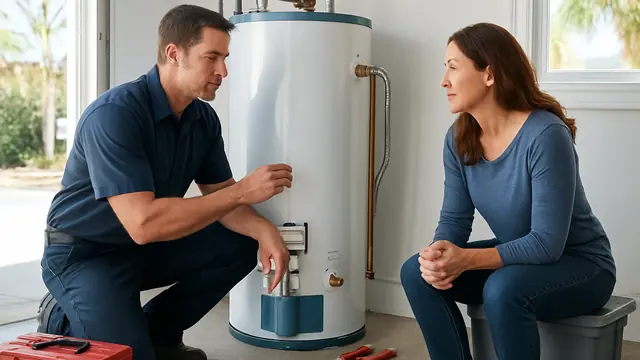
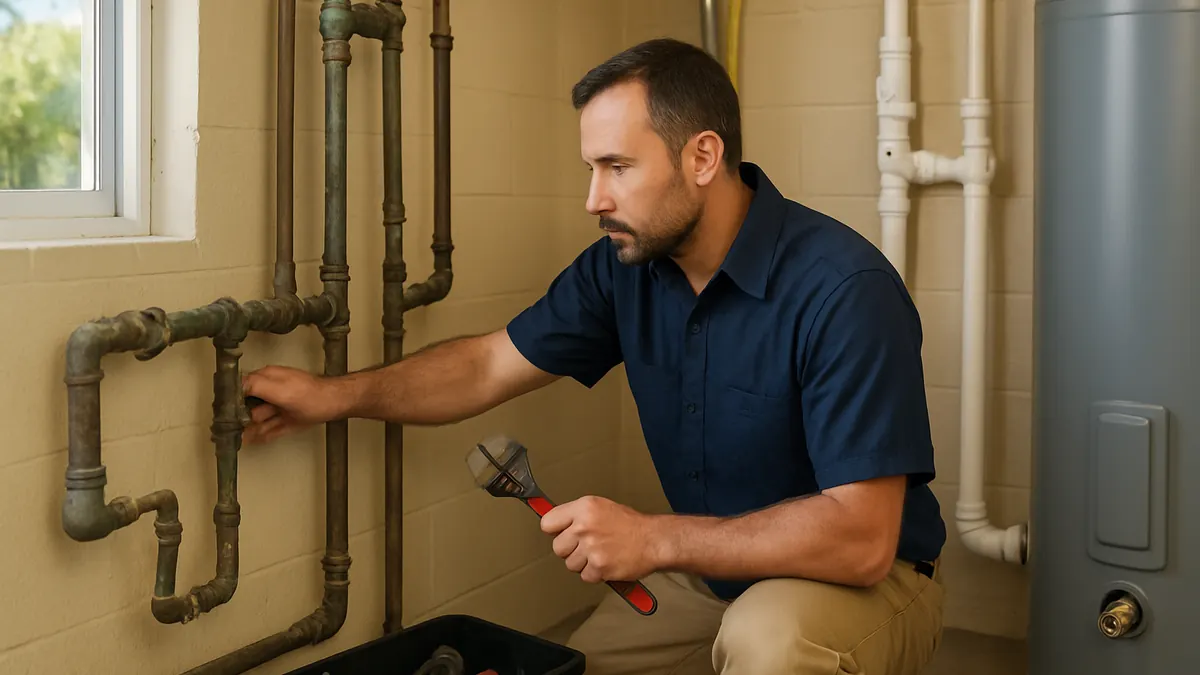
Look at accessible piping under sinks, around the water heater, and near appliance connections. Rust, green or blue staining, white deposits, pitting, dampness, and repeated corrosion around fittings are warning signs.
Do not scrape, twist, or tighten a heavily corroded fitting. Disturbing weakened pipe can turn a small seep into a larger leak.
Plumbing Noise Is Becoming More Common
Banging or rattling may come from high pressure, water hammer, loose supports, or fast-closing appliance valves. Noise alone does not prove repiping is needed, but it can reveal conditions that stress joints and fittings.
Why Water-Supply Piping Fails
Pipe reliability depends on material, pressure, temperature, installation quality, fitting compatibility, support, movement, and previous repairs.
Metal pipes may corrode internally. As buildup grows, flow decreases and pipe walls may weaken. Plastic piping does not rust, but it can fail because of unsuitable fittings, excessive heat, poor support, installation damage, or improper connections.
High pressure accelerates wear on valves, connectors, and joints. A fastener driven into concealed pipe can also cause a delayed, isolated leak. Inspection distinguishes that damage from system-wide deterioration.
Safe Checks a Homeowner Can Perform
Determine whether the symptom is local or widespread. Run several fixtures separately and compare hot and cold flow. Then operate two fixtures at once and note how much the pressure changes.
Check under sinks, around toilets, near the water heater, and beside water-using appliances for dampness, swelling, or staining. Look at ceilings below bathrooms and laundry areas for discoloration, soft drywall, peeling paint, or musty odors.
Review water bills for unexplained increases. With fixtures and appliances off, observe the meter if safely accessible. Movement may suggest a leak, although it will not locate it.
Photograph stains and record repair dates. This helps identify whether the problem is isolated or widespread.
What Homeowners Should Not Attempt
Do not open walls, ceilings, tile, or cabinetry at random. A plumber can often narrow the problem area with testing before creating access.
Do not increase water pressure to overcome weak flow. If the piping is restricted or weakened, higher pressure may worsen leaks and damage fixtures.
Avoid treating sealants, improvised clamps, or incompatible fittings as permanent repairs on pressurized lines. A temporary emergency patch may reduce damage, but the pipe still needs evaluation.
Signs That Make the Problem Urgent
Water dripping through a ceiling, light opening, wall, or electrical fixture requires immediate attention. Shut off the water when safe and avoid the wet electrical area.
Other urgent signs include a bulging ceiling, rapidly spreading stain, sudden whole-home pressure loss, a meter that moves with all water use stopped, or the sound of water running inside a wall.
Several leaks within a short time are also urgent, even when each seems small.
How a Licensed Plumber Diagnoses the Problem
A plumber reviews the history of leaks, pressure changes, discoloration, and prior repairs. The pipe material and layout are identified where accessible.
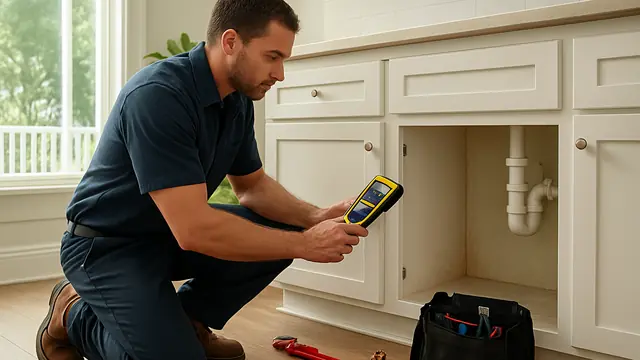
Testing may include static pressure, flowing pressure, fixture comparisons, valve inspection, and isolation of individual branches. Moisture meters, acoustic equipment, thermal imaging, or other leak-detection tools may help locate concealed water without unnecessary demolition.
The goal is to determine what failed, why it failed, and whether similar piping elsewhere is likely to fail.
Repair Options From Least to Most Invasive
The least invasive solution may be cleaning an aerator, replacing a shutoff valve, repairing a connector, correcting a pressure regulator, or replacing one accessible pipe section.
When the problem is limited to a bathroom, hot-water run, or other identifiable branch, partial repiping may be appropriate. It replaces the affected section while leaving serviceable piping in place.
Selective repiping can be coordinated with remodeling. Whole-house repiping becomes more reasonable when leaks are widespread, several branches are restricted, or repeated repairs are causing excessive damage.
Common replacement materials include PEX and copper. The appropriate choice depends on the building, routing, access, code requirements, and homeowner priorities.
Factors That Affect Repiping Cost
- Cost depends on home size, fixture count, stories, pipe material, routing, and accessibility.
- Drywall, paint, tile, cabinetry, insulation, and firestopping may require protection or restoration.
- Permits, inspections, valves, reconnections, and water-service sequencing also affect cost. The estimate should state what is included and who handles finish repairs.
Prevention and Maintenance
Keep the main shutoff accessible and make sure household members know its location. Replace aging appliance hoses, toilet connectors, refrigerator lines, and faucet supplies before they fail.
Have pressure tested if pipes bang, valves fail repeatedly, or connectors wear out early. Address stains, damp odors, corrosion, and unexplained pressure changes promptly.
For a home that may be unoccupied, consider monitored leak sensors or an automatic shutoff. They can limit water loss before someone responds.
Take the Next Step Based on the Evidence
The signs your home may need repiping in Camp Creek matter most when they form a pattern: recurring leaks, declining pressure, discoloration, corrosion, or repeated repairs. A licensed evaluation can determine whether you need a small repair, branch replacement, phased work, or a complete repipe.
About this guide: This resource provides general homeowner education, not a remote diagnosis. Actual conditions, code requirements, equipment, and safe repair options must be evaluated at the property.