Stop and call for qualified help when plumbing water is near electrical equipment, sewage is entering occupied space, gas or burning odors are present, or a repair would require opening pressurized piping.
Start With the Defect, Not the Repair Method
A damaged sewer line does not automatically require replacing every buried pipe, and a small excavation is not always a lasting solution. The right approach depends on what failed, how much pipe is affected, and whether the remaining line can reliably carry wastewater. For WaterColor homeowners, the planning goal is straightforward: correct the actual defect while understanding how the work will affect landscaping, hardscape, building access, and daily use of the property.
This guide concerns the private sanitary sewer piping that carries wastewater away from a home. If the property uses a septic system, the plumber must distinguish a building sewer problem from a tank or drainfield problem. Before comparing proposals, ask for a plain-language description of the failure: a cracked section, separated joint, recurring root entry, collapsed pipe, or improper slope. Those conditions require different repair decisions.
Confirm Whether the Problem Requires a Structural Repair
A blockage and a broken pipe are not the same thing. Grease, accumulated debris, or an object may obstruct otherwise serviceable piping. A licensed plumber may first clear the obstruction using a method appropriate for the pipe’s condition, then inspect the accessible interior. Cleaning alone will not mend a fracture or restore a displaced connection. Conversely, a single stoppage does not prove that a sewer line needs replacement.
Ask the contractor to connect the proposed repair to documented findings. Useful evidence includes inspection footage, the approximate location and depth of the defect, pipe material, and observations about nearby joints. Roots inside a pipe show that an opening exists, but the extent of damage still matters. If the line cannot be fully inspected because it is obstructed or collapsed, the proposal should identify that uncertainty rather than present the unseen portion as verified.
Establish Responsibility and Define the Work Area
Before authorizing work, confirm who owns and maintains each part of the affected sewer connection. Responsibility boundaries vary, so do not assume the property line or a cleanout marks the division between homeowner and utility obligations. Ask the serving utility and contractor to clarify where private responsibility ends. Shared piping, easements, and association-managed areas may introduce additional approvals or coordination, particularly when access crosses property that the homeowner does not control.
The written scope should identify the beginning and end of the proposed repair and explain what remains untouched. It should also address required permits, inspections, and any utility coordination without assuming that the same requirements apply to every property. If a defect lies near the public sewer connection, that location deserves specific discussion. A proposal describing only a certain length of new pipe leaves too much unclear about connections and responsibility.
When a Targeted Excavation Makes Sense
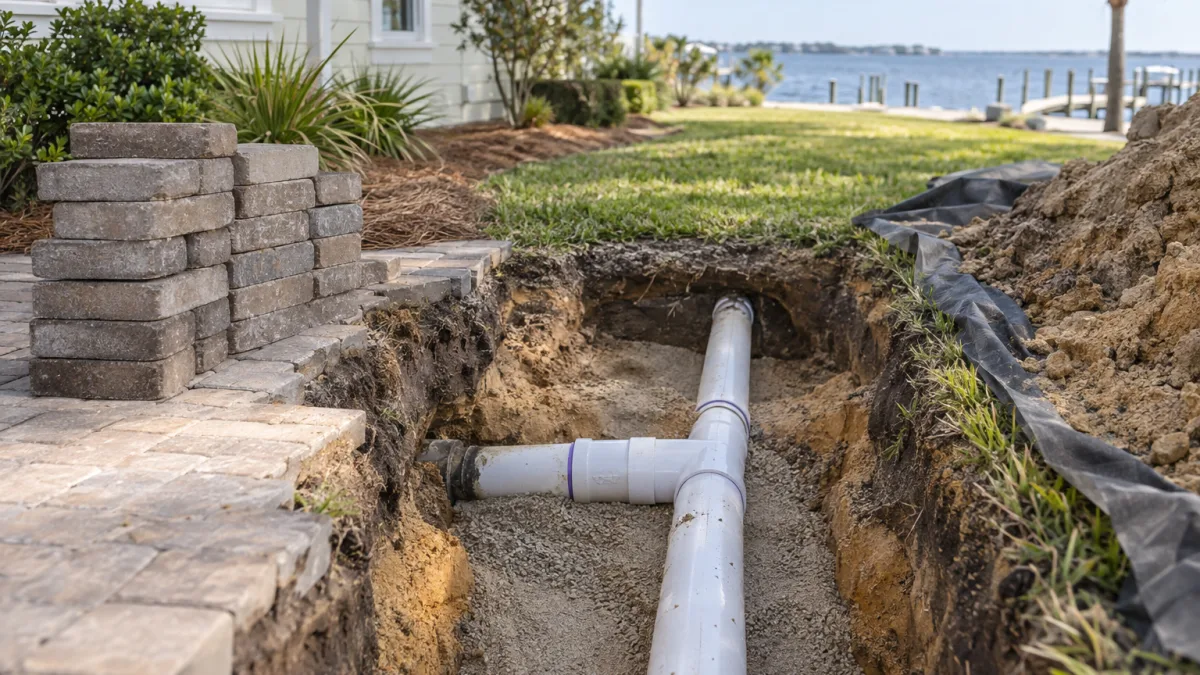
A spot repair can be appropriate when damage is limited and the surrounding pipe is in serviceable condition. The contractor exposes the affected area, removes the failed section, and reconnects sound piping using suitable materials and transitions. This approach can address a localized break or displaced joint without disturbing the entire route. Its usefulness depends on evidence that the adjacent pipe is worth retaining, not simply on the desire to keep the opening small.
Open excavation also allows direct correction of bedding and alignment at the repair location. However, a short repair may not solve a broader slope problem or repeated failures along deteriorated piping. Ask how the plumber will evaluate the exposed ends and what happens if more damage appears during excavation. Any allowance for expanding the work should have a clear approval process so a limited repair does not become an undefined replacement project.
When Longer Replacement May Be the Better Plan
Replacing a longer section may be more practical when defects are widespread, previous patches have left unreliable connections, or the pipe has significant alignment problems. A sag, often called a belly, can retain water and solids. Determining whether it needs correction requires more than noticing water in inspection footage. The contractor should evaluate the location, extent, and drainage behavior, using appropriate measurements when needed to plan a reliable repair.
A replacement proposal should explain how the new route, slope, support, and connections will be established. Existing obstructions may limit routing choices or make access more involved. Do not assume a new pipe can simply follow every contour of the old one and perform better. Where piping passes beneath a slab or near structural elements, ask how the contractor will protect the building and whether additional professional evaluation is necessary.
Understand What Trenchless Methods Can and Cannot Do
Trenchless repair can reduce surface disturbance, but it does not mean no excavation or universal suitability. Cured-in-place lining creates a new interior lining within an existing pipe after preparation. Suitability depends on the host pipe’s condition, dimensions, connections, and the specific lining system. A liner generally follows the existing pipe’s path, so it does not correct a sag or improper slope. Collapses and major offsets may need excavation before lining is possible.
Pipe bursting replaces a line by breaking the existing pipe outward while drawing new pipe along its route. It typically requires access pits and careful evaluation of nearby utilities, clearances, soil conditions, and connections. It is not appropriate for every layout. Ask which method is proposed, why the property qualifies, how branches will be handled, and what conditions could require conversion to open excavation. Compare complete scopes rather than treating 'trenchless' as a complete description.
Plan Access Before Equipment Arrives
The repair area includes more than the buried pipe. Crews may need room for equipment, excavated soil, materials, and safe movement around the opening. Walk the proposed access route with the contractor and identify fences, gates, pavers, irrigation, lighting, trees, and outdoor equipment that could be affected. Required utility locating should happen before digging. Privately installed lines may require separate locating because they may not be covered by the standard utility marking process.
Northwest Florida rain can affect excavation conditions, spoil handling, and restoration schedules. Where groundwater or wet soil is encountered, the contractor may need additional measures to keep the work area stable and suitable for installation. Homeowners should never enter a trench or attempt to shore one themselves. Ask how openings will be secured, how children and pets will be kept away, and whether access to doors, parking, or neighboring property will be restricted.
Prepare for a Temporary Loss of Drainage Service
A sewer repair can leave the home without usable drainage even when tap water remains available. Ask exactly when sinks, showers, toilets, dishwashers, and washing machines must stay unused. Water from an overlooked appliance can enter an open or disconnected sewer line. The contractor should establish a clear shutdown and restart procedure, including who will notify occupants when service is restored and whether any limited use is permitted during particular stages.
For a seasonally occupied home or vacation rental in WaterColor, schedule work around occupancy whenever possible and give the property manager written instructions. Avoid promising guests uninterrupted service before the repair sequence is confirmed. If sewage is actively backing up, stop using connected fixtures and contact a licensed plumber promptly. Keep people and pets away from contaminated areas. Do not open sewer fittings, add drain chemicals, or attempt to work around energized equipment in standing water.
Put Restoration and Unforeseen Conditions in Writing
Two proposals can describe similar pipe work while including very different restoration responsibilities. Ask whether the scope covers backfill, compaction, rough grading, sod, irrigation repairs, concrete, or paver replacement. Determine who removes excess soil and damaged materials. Replacement surfaces may not exactly match weathered finishes, and landscaping can need follow-up care. Photographs taken before work begins help document existing conditions and make discussions about disturbed areas more specific.
The proposal should also explain how concealed conditions will be handled. Examples include an unexpected branch connection, a deeper pipe than anticipated, or deterioration extending beyond the original repair area. Ask what documentation you will receive before approving additional work. Rather than comparing only the total price, compare the repair limits, access assumptions, inspection requirements, exclusions, and restoration details. A clear scope is more useful than a broad promise to leave everything 'as it was.'
Verify Completion and Keep a Useful Repair Record
Before closing the project, ask how the completed work was checked. Depending on the method and local requirements, verification may include required inspections or testing, flow checks, and a post-repair camera inspection. Camera footage can document interior conditions but does not replace every required test or inspection. For a liner, ask for documentation appropriate to the installed system, including confirmation that relevant connections remain open and functional.
Keep the final invoice, repair location, materials information, inspection records, available footage, and written warranty terms with the property’s maintenance records. Know which portions of the original line remain in service. Going forward, keep grease, wipes, and other unsuitable materials out of drains, and leave cleanouts accessible. A successful repair does not create a universal need for annual sewer cleaning; ask whether the remaining pipe condition supports a particular maintenance or monitoring schedule.
About this guide: This resource provides general homeowner education, not a remote diagnosis. Actual conditions, code requirements, equipment, and safe repair options must be evaluated at the property.