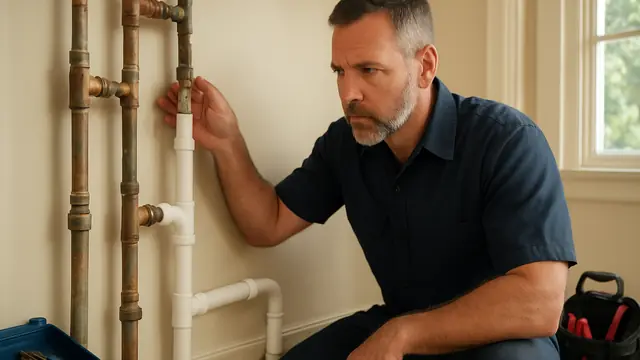
Stop and call for qualified help when plumbing water is near electrical equipment, sewage is entering occupied space, gas or burning odors are present, or a repair would require opening pressurized piping.
You return to the property after it has been quiet for several days and notice a damp smell near the laundry area. The washing machine has not been used, yet one section of baseboard looks swollen and the water meter shows movement. These may be warning signs of a hidden plumbing leak in a WaterColor home.
A hidden plumbing leak can release water from a supply pipe, valve, hose, fixture, drain, or appliance connection without creating an immediate puddle. Stop using nearby fixtures and appliances. If water is actively spreading, the meter shows rapid flow, or moisture is near electricity, shut off the main water supply when safe.
Seven Warning Signs of a Hidden Plumbing Leak in WaterColor
1. The Water Meter Moves While the Property Is Quiet
Turn off faucets, toilets, appliances, irrigation, outdoor spigots, and water-treatment cycles. Wait for toilets to finish refilling, then watch the water meter.
Continued movement may indicate unwanted flow in the pressurized plumbing system. A running toilet, automatic appliance, or overlooked outdoor water use can create the same result, so confirm that every water-using device is off.
2. A Room Smells Damp Even Though No Water Is Visible
A musty odor may develop before a stain or puddle appears. Moisture can remain inside drywall, insulation, flooring, or cabinetry where normal airflow does not dry it quickly.
Condensation or exterior moisture can cause similar symptoms, so the source should be tested rather than guessed.
3. Baseboards, Cabinets, or Flooring Begin to Swell
Swollen trim, bowed cabinet bottoms, lifted flooring, darkened seams, or soft spots can indicate hidden moisture. Avoid walking on an unstable section or removing finished materials yourself.
4. You Hear Hissing, Dripping, or Running Water
A steady hiss while fixtures are off may indicate pressurized water escaping from a supply line or connection. Dripping that begins after a sink, shower, toilet, or appliance is used may involve a drain or fixture connection.
Record when the noise begins and what water use occurred beforehand.
5. A Stain Changes After a Specific Fixture or Appliance Operates
A ceiling mark that darkens after a shower, moisture near a cabinet after the dishwasher runs, or a damp floor after a washing-machine cycle can help narrow the source.
Stop using the fixture once the pattern becomes clear instead of repeating the test.
6. Water Consumption Increases Without a Clear Reason
A higher water bill or unusual usage report can reveal a supply leak before damage is visible. Compare the increase with occupancy, irrigation, laundry, cleaning, and other normal activity.
Continued use during an unoccupied period deserves inspection.
7. Water Pressure Changes at More Than One Fixture
A sudden pressure drop throughout the property may involve a supply leak, pressure regulator, partially closed valve, utility condition, or simultaneous demand.
Pressure changes become more concerning when they occur with meter movement, hidden water sounds, or moisture damage.
What Commonly Causes Hidden Plumbing Leaks?
Common sources include appliance hoses, fixture supply tubes, shutoff valves, toilet seals, shower valves, sink traps, drain fittings, water-heater connections, and concealed pipe joints.
Supply leaks may continue while fixtures are off because the line remains pressurized. Drain leaks usually appear only when a fixture or appliance sends water through the affected connection.
Safe Checks a Homeowner Can Perform
- Photograph the damage and record which fixtures or appliances were used before it changed.
- Inspect only accessible valves, hoses, traps, toilet connections, water-heater fittings, and cabinet floors. A dry paper towel beneath a connection can reveal slow seepage.
- Perform a meter test only after all water use is off. Locate the main shutoff, but do not force a stuck or corroded valve.
What You Should Not Attempt
Do not cut into drywall, remove tile, pull up flooring, or drill into cabinetry to search for the leak. The source may be away from the visible damage, and wiring or structural components may be concealed.
Do not pour chemical drain cleaner into a fixture that may be leaking. It cannot repair a cracked fitting or failed seal and may leave hazardous liquid inside the drain.
Avoid household adhesives, tape, unapproved sealants, improvised clamps, or open-flame repairs on pressurized plumbing.
Signs That Make the Problem Urgent
Treat the situation as urgent when water spreads rapidly, the meter shows substantial continuous flow, a ceiling sags, flooring becomes unstable, or pressure drops sharply throughout the property.
Moisture near an outlet, switch, light fixture, electrical panel, water heater, or powered appliance creates an electrical concern. Do not touch wet equipment or enter an unsafe area.
Sewage odor or leakage after a toilet flush may indicate a sanitary drain problem. Keep people and pets away, stop using the affected fixture, and avoid direct contact.
How a Licensed Plumber Diagnoses the Leak
Meter behavior, pressure changes, and moisture timing help distinguish supply leaks from drain, fixture, appliance, or non-plumbing moisture.
Accessible components are inspected first. Testing may include fixture isolation, pressure measurement, pressure-loss monitoring, moisture scanning, acoustic listening equipment, thermal imaging where useful, a small inspection camera, or controlled testing of drains and appliances.
Repair Options Beginning With the Least Invasive
An accessible appliance hose, valve, supply tube, trap, toilet component, or fixture connection may only need adjustment or replacement.
A localized concealed leak may be repaired through one targeted opening. If direct access would damage a large finished area, rerouting a short pipe section through a more accessible path may be less disruptive.
More extensive replacement may be appropriate when testing reveals repeated failures or widespread deterioration. It should not be recommended automatically because of one hidden leak.
Factors That Affect Repair Cost
Cost depends on the leak source, accessibility, pipe material, diagnostic work, and the finished surfaces surrounding the repair.
An exposed hose or cabinet connection is easier to reach than piping behind tile, built-in cabinetry, flooring, or a finished ceiling. Ask which charges cover plumbing and which may involve drywall, paint, flooring, cabinets, tile, or professional drying.
Prevention and Maintenance Guidance
Inspect visible appliance hoses, fixture supplies, toilet connections, shutoff valves, traps, and water-heater fittings regularly. Replace components showing corrosion, cracking, swelling, or dampness.
Review water usage and investigate unexplained activity, especially after an unoccupied period. Keep the main shutoff accessible and make sure responsible property users know its location.
Leak alarms can provide early warning near appliances, sinks, toilets, and water heaters. A properly selected automatic shutoff device may stop the water supply when abnormal flow or moisture is detected.
Arrange periodic walkthroughs when the property is unoccupied.
Homeowner FAQs
Can a hidden leak continue while no one is staying at the property?
Yes. A pressurized supply leak, running toilet, appliance connection, or automatic water-using device can continue without anyone present.
Does a moving water meter identify the exact leak location?
No. It only shows that water may be flowing. Additional testing is needed to determine the source.
Can an appliance leak even when the floor around it looks dry?
Yes. Water may travel behind the appliance, beneath flooring, or along a wall before becoming visible elsewhere.
Should I leave the main water supply off until the plumber arrives?
If active supply leakage is causing damage and the valve operates safely, leaving it off can limit further loss. Do not use water-dependent equipment while the supply is closed.
Does one concealed leak mean all plumbing must be replaced?
No. Many leaks involve one hose, valve, fitting, or short pipe section. Broader replacement should be based on documented system condition and repeated failures.
Take Action on Seven Warning Signs of a Hidden Plumbing Leak in WaterColor
The seven warning signs of a hidden plumbing leak in WaterColor include meter movement during quiet periods, recurring damp odors, swollen finishes, concealed water sounds, stains related to fixture use, unexplained consumption, and pressure changes.
Stop using the suspected fixture or appliance, document the pattern, and shut off the water when active leakage threatens the property. A licensed plumber can determine whether the least invasive solution is a component replacement, targeted concealed repair, short reroute, or broader correction.
About this guide: This resource provides general homeowner education, not a remote diagnosis. Actual conditions, code requirements, equipment, and safe repair options must be evaluated at the property.