Stop and call for qualified help when plumbing water is near electrical equipment, sewage is entering occupied space, gas or burning odors are present, or a repair would require opening pressurized piping.
Start by Confirming How Your Property Handles Wastewater
Before planning septic maintenance for a Cinco Bayou property, confirm whether the home uses an onsite septic system or a public sewer connection. Do not assume that nearby properties share the same arrangement. Utility bills, closing documents, installation records, and information from the appropriate local utility or permitting office can help establish what serves your home. This guide applies to properties with septic systems, not homes connected to public sewer.
Once you confirm the system type, gather any available drawing showing the tank, drainfield, access points, and associated equipment. Keep inspection reports and pumping receipts together. Some systems rely mainly on gravity; others include pumps, alarms, or additional treatment components. Knowing which arrangement you have helps you request the right service and prevents a routine maintenance visit from overlooking equipment that needs separate attention.
Understand What the Tank and Drainfield Each Do
A conventional septic tank holds wastewater long enough for heavier solids to settle and lighter material to rise. The liquid between those layers moves toward the drainfield, while accumulated sludge and scum remain in the tank until professionally removed. The tank normally contains liquid during operation. Seeing liquid inside is not, by itself, evidence that the system is overdue for pumping or has failed. Homeowners should never open a tank to check its level.
The drainfield distributes wastewater into suitable soil for further treatment. It depends on both the system's design and the surrounding soil conditions. Pumping removes accumulated material from the tank, but it does not restore a damaged or failing drainfield. This distinction matters when evaluating a service recommendation: a tank maintenance problem, a blocked house sewer, and an overloaded drainfield can produce similar symptoms but require different work.
Build a Maintenance Schedule Around the Actual System
There is no single pumping interval that fits every home. Tank capacity, household occupancy, wastewater volume, solids accumulation, and system condition all affect timing. Ask a qualified septic service provider to recommend an inspection and pumping schedule based on your records and the system itself. If the maintenance history is unknown, arrange an evaluation rather than waiting for a backup to reveal how much attention the tank needs.
A useful service record should identify what was inspected, whether the tank was pumped, any observed defects, and the recommended next visit. Ask whether the system has an effluent filter, pump, alarm, or treatment equipment requiring additional maintenance. Filters should be serviced by an appropriate professional because access exposes workers to wastewater and other hazards. Keep these records available for future service providers and property managers so recommendations reflect actual history rather than guesswork.
Spread Out Water Use Instead of Overloading the System
A septic system must handle the timing of water use as well as the total amount. Several laundry loads, long showers, and other heavy uses concentrated into a short period can send a substantial surge through the tank and drainfield. Spread laundry across the week when practical and repair running toilets promptly. A continuously running toilet can add wastewater even when nobody is actively using the home.
For seasonally occupied homes and vacation rentals in Northwest Florida, plan for changes in occupancy. A lightly used property may suddenly receive full-house shower use and concentrated turnover laundry. Give guests simple disposal instructions and coordinate cleaning tasks to avoid unnecessary water surges. More guests do not automatically mean the tank needs pumping after every stay, but sustained changes in use are a reason to review the maintenance schedule and system capacity with a professional.
Keep Solids, Grease, and Unnecessary Chemicals Out
Toilets should receive human waste and toilet paper, not wipes, paper towels, hygiene products, cotton swabs, or dental floss. Products marketed as flushable can still create problems in piping and septic equipment. In the kitchen, collect cooking grease for appropriate disposal instead of pouring it into the sink. A garbage disposal does not make food waste disappear; it sends additional material into the wastewater system and can increase the solids management burden.
Use household cleaning products according to their directions and avoid sending concentrated chemicals, paint, solvents, pesticides, or unwanted medications down drains. Routine septic additives are not a substitute for pumping, sound equipment, or a functioning drainfield. Before using a product advertised to restore septic performance, ask a qualified provider what problem it would actually address. Drain cleaners and additives cannot establish whether the underlying trouble is a blockage, broken component, or unsuitable drainfield condition.
Protect the Drainfield From Traffic and Landscaping Damage
Know where the drainfield lies before parking vehicles, placing storage sheds, installing a pool, or planning a patio. Vehicle loads and construction activity can compact soil or damage buried components. Keep heavy equipment and stored materials away from the system unless a qualified professional has evaluated the proposed work. An area that looks like unused lawn may perform an essential wastewater treatment function beneath the surface.
Landscaping and drainage changes also deserve review. Deep-rooted plants can interfere with piping, while added fill or paving can alter conditions the drainfield depends on. Avoid directing roof runoff or other concentrated surface water onto the drainfield. Before changing grades or installing drainage nearby, have the effect on the septic system assessed. Appropriate plantings and setbacks depend on the installation, so use site-specific guidance rather than a generic landscaping rule.
Recognize Trouble Without Entering or Opening the System
Warning signs include recurring wastewater backups, sewage odors outdoors, and persistently wet or spongy ground near the tank or drainfield. Unusually lush vegetation in a concentrated area can also justify investigation, especially when accompanied by moisture or odor. None of these observations proves a particular failure by itself. Rainfall, irrigation, plumbing leaks, and drain blockages can confuse the picture, so note where and when symptoms occur.
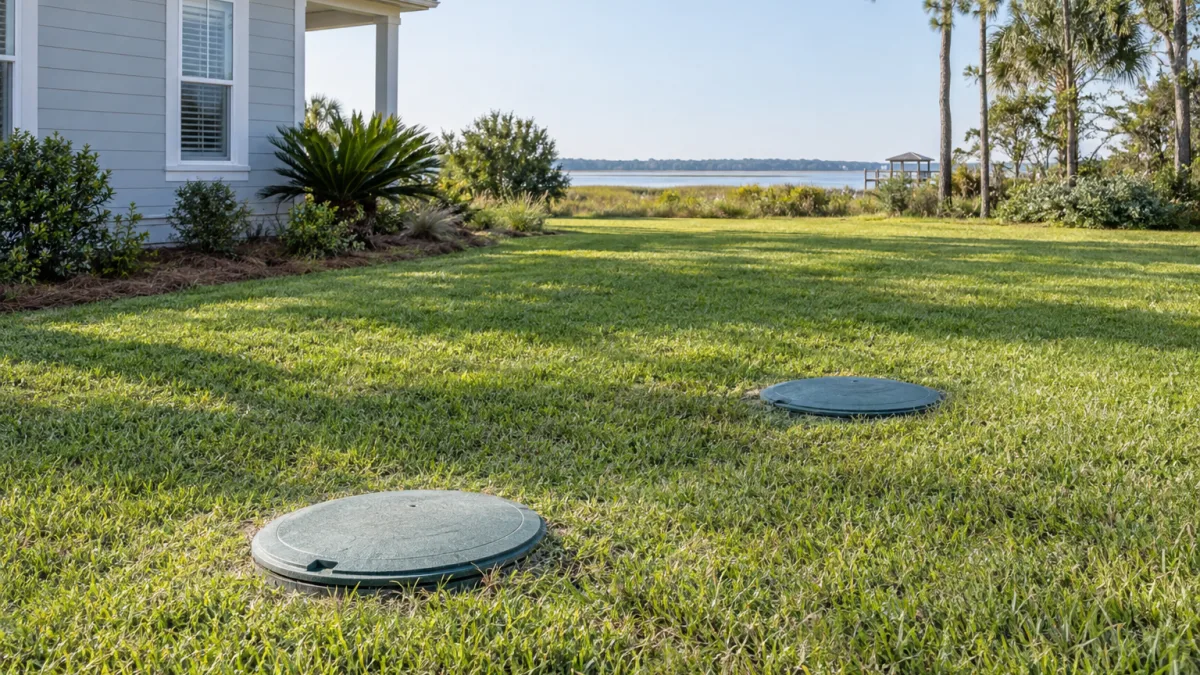
If wastewater surfaces outdoors or enters the home, stop unnecessary water use and arrange prompt professional service. Keep children and pets away from affected areas and avoid contact with contaminated water. Do not remove septic covers, lean over an opening, or enter a tank. Septic gases and confined spaces can be deadly. A damaged, loose, or missing cover is an immediate access hazard that requires keeping people away and contacting a qualified provider.
Account for Saturated Ground and Power Interruptions
Heavy Northwest Florida rainfall can temporarily limit a drainfield's ability to accept wastewater when surrounding soil becomes saturated. If drainage slows during prolonged wet weather, reduce nonessential water use and contact a septic professional for guidance. Do not assume that immediate pumping is always the right response. High groundwater can create risks for some tanks, and pumping alone cannot correct saturated soil. The provider should evaluate conditions before choosing the next step.
Systems with pumps or powered treatment equipment also need an outage plan based on their design. During a power interruption, equipment may stop moving or treating wastewater even though faucets and toilets still work. Limit water use and follow the system's operating instructions. If an alarm activates, record the timing and conditions and call for service. Do not bypass controls, repeatedly reset breakers, or approach electrical equipment surrounded by standing water.
Know What a Professional Diagnosis Should Evaluate
A thorough evaluation starts with the symptom history: when trouble began, whether it follows heavy rain, how occupancy has changed, and when maintenance last occurred. Depending on the problem and access, a provider may inspect tank condition, inlet and outlet components, solids accumulation, filters, pumps, alarms, and wastewater distribution. Drainfield assessment may require additional investigation. Ask what the visit includes because a pumping appointment is not necessarily a complete system inspection.
The piping between the home and tank may need separate attention. A licensed plumber can investigate building drains and the house sewer, while septic tanks, drainfields, and treatment equipment should be handled by a properly licensed or otherwise authorized septic professional. Responsibilities can overlap depending on qualifications. Ask who will diagnose each part, what evidence supports the proposed repair, and whether additional permits or approvals are needed before work begins.
Plan Repairs and Property Changes With Good Records
Before approving major work, request a written description of the problem, the proposed repair, and any remaining uncertainty. Ask whether the recommendation addresses a tank defect, a blocked line, equipment failure, distribution trouble, or drainfield performance. If pumping is proposed as temporary relief, understand its limits and the next diagnostic step. Repeated pumping without identifying why symptoms return can leave the underlying problem unresolved.
Before adding bedrooms, converting space for additional occupants, or expanding a rental's use, have the existing system's approved capacity and condition reviewed. Do not treat an absence of past backups as proof that it can handle increased demand. Preserve access for future service and keep system drawings available for contractors. For property managers, a concise file containing service contacts, equipment instructions, inspection history, and alarm procedures makes response decisions clearer when the owner is away.
About this guide: This resource provides general homeowner education, not a remote diagnosis. Actual conditions, code requirements, equipment, and safe repair options must be evaluated at the property.