Stop and call for qualified help when plumbing water is near electrical equipment, sewage is entering occupied space, gas or burning odors are present, or a repair would require opening pressurized piping.
The heater runs longer than it used to, yet the second morning shower turns cold. The tank is not leaking, but recovery is unpredictable and the unit recently needed repair. Reduce hot-water demand, look for moisture without opening panels, and stop using the heater if the breaker trips, gas odor appears, or water spreads.
The decision is whether to repair or replace a water heater in Cinco Bayou, FL. A recent repair does not automatically require replacement. The new symptom may come from another component, sediment, or changed demand. Replacement becomes more reasonable when failures accumulate, the tank leaks, corrosion is extensive, or capacity is unreliable.
Look Beyond the Age of the Water Heater
Age alone does not identify the failure. A newer heater can develop a repairable element or valve problem. An older heater may remain a reasonable repair candidate when the tank is sound and parts are available.
Ask what failed, whether the tank is intact, what else is worn, and how dependable the heater will be after repair.
Common Problems That May Be Repairable
Failed Lower Heating Element
On an electric storage heater, a failed lower element can significantly reduce usable hot-water capacity. The upper part of the tank may heat, but the household runs out of hot water quickly. Element replacement may restore performance when the tank and electrical system are serviceable.
Thermostat or Control Problem
A thermostat or control can cause slow recovery, inconsistent temperature, or failure to energize a heating component. Proper testing is necessary before replacement.
Burner or Ignition Trouble
A gas heater may have delayed ignition, burner contamination, gas-control trouble, or another combustion-related issue. Some parts may be replaced when the tank remains sound and the venting is safe.
Sediment Reducing Tank Capacity
Sediment occupies space and can interfere with heat transfer. The rated tank size may remain the same, but the useful amount of hot water can decrease. Maintenance may help in suitable conditions, although severe buildup may reduce the value of repair.
A Repairable Leak Outside the Tank
A connector, valve, relief fitting, drain valve, or nearby pipe can leak without the inner tank failing. Water should be traced before replacement is recommended.
Conditions That Make Replacement More Practical
A confirmed inner-tank leak is the clearest reason to replace a storage water heater. The pressurized vessel is not repaired by patching the outside jacket.
Replacement also becomes more practical when failures repeat in a short period, several major components are deteriorated, parts are difficult to obtain, or the heater is no longer sized for the household.
Compare one repair with the condition of the remaining system. A modest repair on a sound heater can be reasonable; major work on a heavily corroded unit may not provide dependable value.
Safe Checks a Homeowner Can Perform
Check whether all hot-water fixtures have the same problem. One shower that runs cold may have a cartridge or mixing-valve problem. A whole-house shortage is more likely to involve the heater or demand.
- Observe hot-water duration and recovery time. Note whether laundry, dishwashing, or simultaneous use changes the symptom.
- Look for moisture around visible connections, the drain pan, shutoff valve, drain valve, and relief piping. Do not remove service covers.
- For an electric heater, check the labeled breaker. Reset it only once. If it trips again, leave it off and schedule service.
- For a gas heater, use only normal user controls. Leave the area and follow emergency guidance if gas odor is present.
- Record the model, approximate age, capacity, repair history, and symptom timeline.
What the Homeowner Should Not Attempt
- Do not open electrical access covers, test live components, bypass thermostats, replace elements, or install a larger breaker.
- Do not disassemble gas controls, adjust the burner, alter venting, or relight a heater when gas odor is present.
- Never block the temperature-and-pressure relief valve or its discharge pipe. Do not patch a leaking tank body or continue operating a heater with a confirmed tank leak.
- Avoid draining or flushing the unit without considering the tank condition, maintenance history, and drain-valve condition. A corroded valve may not reseal.
- Do not raise the temperature excessively to compensate for reduced capacity. Higher settings increase scald risk and do not correct the underlying failure.
Signs That Make the Problem Urgent
Water spreading from the heater, a tank-body leak, continuous relief-valve discharge, or repeated breaker trips requires prompt service.
Gas odor, soot, abnormal flame, scorching, combustion smell, or suspected venting failure requires leaving the area and contacting the appropriate emergency resource.
Water near electrical wiring, a bulging tank, severe corrosion, or dangerously hot water also requires immediate attention. Close the heater's water supply or the home's main shutoff if an active leak cannot be controlled.
How a Licensed Plumber Diagnoses the Heater
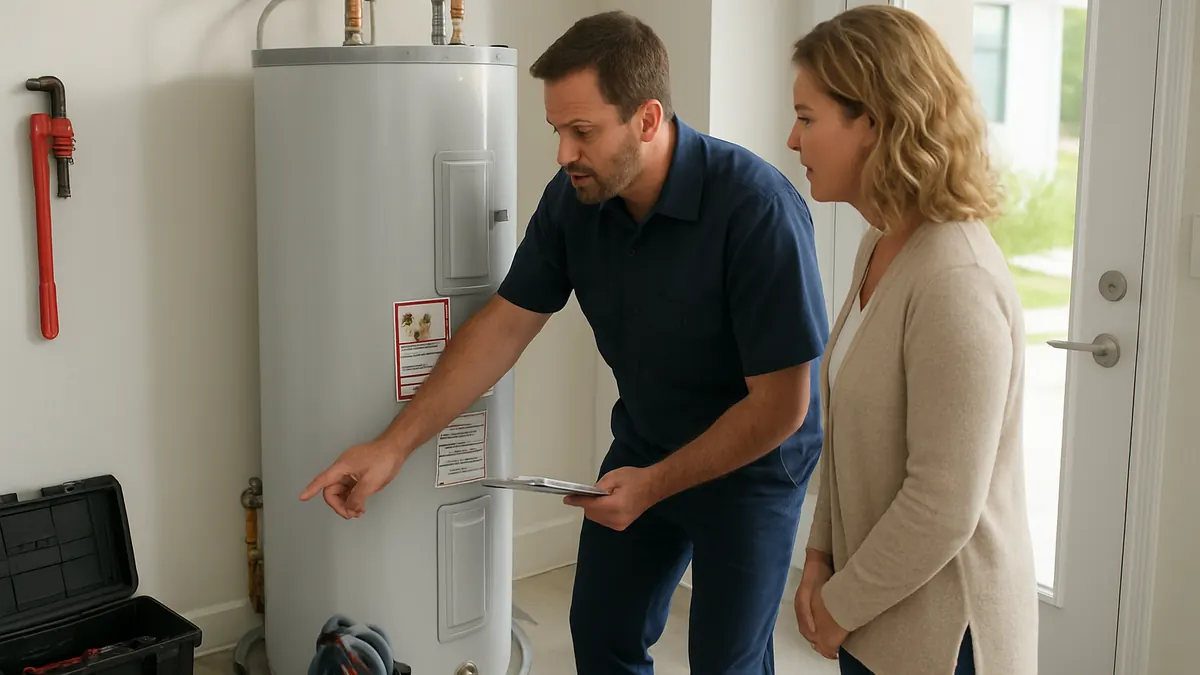
A plumber reviews the heater type, age, capacity, repair history, demand, and symptom pattern. The tank, connections, valves, drain pan, shutoff, and relief system are inspected.
Electric testing may include voltage, current draw, element resistance, thermostat operation, wiring, and breaker behavior. Gas testing may include ignition, burner condition, gas control, combustion, venting, and safety devices.
The plumber also determines whether the heater is mechanically failing or simply being asked to serve more simultaneous demand than its capacity allows.
Repair Options Beginning With the Least Invasive
- The smallest reasonable repair may be replacing an accessible connection, valve, or external piping component.
- A failed heating element, thermostat, igniter, burner component, or control may be replaced when the tank and remaining installation are sound.
- Sediment-related performance may sometimes improve through appropriate maintenance. Maintenance cannot restore a leaking tank or reverse extensive corrosion.
If replacement is justified, a similar storage heater may be the least disruptive option. A different capacity may better match current demand. Tankless may be evaluated when the energy supply, flow requirements, venting, drainage, installation space, and maintenance expectations support it.
Typical Factors Affecting Cost
Repair cost depends on the failed component, diagnostic time, parts availability, access, heater type, and related plumbing, electrical, gas, or venting work.
Replacement cost depends on capacity, fuel type, location, access, removal, disposal, permits when applicable, piping, venting, drain-pan needs, shutoff condition, and necessary upgrades.
Corroded fittings, water damage, or difficult access may expand the scope.
Prevention and Maintenance Guidance
- Pay attention to shrinking hot-water capacity, longer recovery, new sounds, repeated breaker trips, and recurring ignition trouble.
- Inspect visible connections and the drain pan for rust or moisture. Keep the area around the heater clear and the shutoff accessible.
- Follow manufacturer maintenance guidance. Depending on the system, this may include flushing, anode-rod evaluation, relief-system inspection, burner service, or tankless descaling.
- Keep repair records to distinguish an isolated failure from a replacement pattern.
Compare the Repair With the Heater That Will Remain
To repair or replace a water heater in Cinco Bayou, FL, do not evaluate the failed part in isolation. Consider the tank, other components, repair history, capacity, and expected reliability after the work is completed.
A sound tank with one serviceable failure may justify repair. A leaking vessel, widespread corrosion, repeated breakdowns, or inadequate capacity may make replacement the stronger choice. A licensed diagnosis should explain both paths without assuming the most expensive option is automatically necessary.
About this guide: This resource provides general homeowner education, not a remote diagnosis. Actual conditions, code requirements, equipment, and safe repair options must be evaluated at the property.