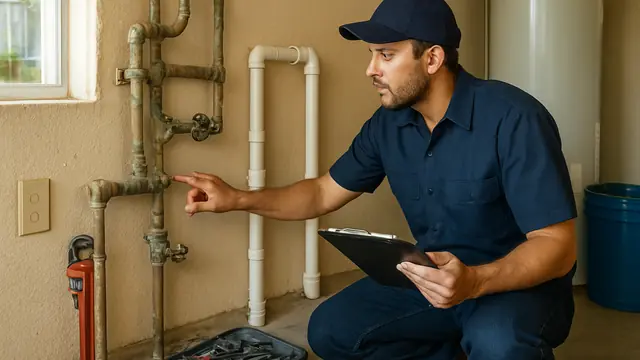
Stop and call for qualified help when plumbing water is near electrical equipment, sewage is entering occupied space, gas or burning odors are present, or a repair would require opening pressurized piping.
You flush a toilet and hear a deep gurgle from the shower. A few minutes later, the bathroom sink drains slowly, and water rises in the tub when the washing machine empties. One sluggish fixture can have a local clog. When several drains begin reacting to one another, the plumbing system is usually telling you that wastewater is being restricted farther downstream.
If multiple drains are backing up in your Miramar Beach property, stop using water as soon as possible. Do not run the dishwasher, washing machine, shower, or additional toilets to test whether the problem has cleared. Every gallon sent into a blocked line increases the chance that wastewater will return through the lowest drain.
Why Several Drains Can Fail at Once
Fixture drains connect to shared branches and then to the main building drain. A clog near one sink usually affects only that sink. A blockage farther downstream can affect a bathroom group or the entire property.
The lowest fixture often shows the first backup because wastewater follows gravity. A shower or tub may overflow even though the clog is farther away.
Common Causes of Multiple Drain Backups
A Main Drain or Sewer-Line Obstruction
The main line can become restricted by toilet paper, wipes, grease, food particles, soap residue, and other debris. A partial blockage may allow small amounts of water to pass, then fail when a bathtub, washing machine, or several occupied bathrooms discharge water quickly.
A Clogged Shared Branch Line
Not every multiple-drain problem involves the entire building. If one bathroom group backs up while another area drains normally, the restriction may be in the branch serving those fixtures.
Hair, soap, paper, and waste can collect near bends or where smaller drains join a larger pipe.
Grease and Food Debris
Cooking grease may enter the kitchen drain as a warm liquid. As it cools, it coats the pipe wall and traps food particles. Coffee grounds, fibrous vegetables, rice, pasta, and other starchy foods can add to the buildup.
Wipes and Other Improperly Flushed Items
Wipes, paper towels, hygiene products, cotton items, dental floss, and cleaning cloths do not break down like toilet paper. They may catch on rough areas or bends and create a larger obstruction as additional waste collects around them.
Roots or Damaged Piping
Roots may enter through a crack, loose joint, or damaged connection in buried piping. Once inside, they form a net that catches paper and waste.
Broken, offset, collapsed, or sagging pipe can also interfere with flow. A sagging section, often called a belly, holds wastewater and solids instead of allowing them to move continuously.
A Septic or Downstream Sewer Problem
If the property uses a septic system, a full tank, blocked connection, or downstream problem may affect several drains. If the property connects to public sewer, the restriction may be in the private lateral or another downstream section.
Safe Checks You Can Perform
Stop all water use and make a list of the affected fixtures. Note whether the symptoms are limited to one bathroom, one side of the property, or the entire building.
Look at the lowest shower, bathtub, or floor drain for standing water. Do not touch wastewater, and keep children and pets away from the area.
Think about what happened immediately before the backup. A washing-machine cycle, heavy kitchen use, multiple showers, or a recently slow toilet can help identify the affected line.
If an exterior cleanout is clearly visible, look for moisture around the cap. Do not remove the cap if the line may be full because sewage can escape suddenly.
What Homeowners Should Not Attempt
Do not pour chemical drain cleaner into several fixtures. Chemicals may not reach a deep obstruction, can damage some piping materials, and may remain trapped where a plumber later has to work.
- Do not keep running water to force the clog through. Drain systems rely on gravity, and added water usually increases the overflow risk.
- Avoid rented power snakes unless you have proper training. A drain cable can twist, recoil, damage porcelain, become stuck, or worsen an existing pipe defect.
- Do not remove a toilet or open a cleanout that may be under pressure. Never use an ordinary household vacuum to remove sewage.
Signs That Make the Backup Urgent
Call promptly if raw sewage enters a shower, tub, floor drain, or finished room. Stop all water use and keep everyone away from the contaminated area.
The situation is also urgent when all toilets are unusable, wastewater is near electrical equipment, an exterior cleanout is overflowing, or the backup is spreading to additional rooms.
A strong sewage odor, repeated backups, or a line that fails soon after being cleared may indicate roots, heavy buildup, pipe damage, or another unresolved condition.
How a Licensed Plumber Diagnoses the Problem
The plumber reviews which fixture failed first, what triggers the backup, and whether one group or the whole property is affected.
A cleanout may provide access for professional cable equipment. After flow is restored, a sewer camera can reveal grease, roots, cracks, standing water, foreign objects, or collapse. Locating equipment can mark a defect before excavation is considered.
Repair Options From Least to Most Invasive
A local clog may be cleared through a trap or nearby access point. A deeper obstruction may require professional cable cleaning.
Hydro jetting can remove grease and buildup from suitable piping after the line is evaluated. Roots may be cut to restore flow, although the entry point may still need spot repair.
Some lines may qualify for trenchless repair. Excavation and replacement are generally reserved for collapsed, badly misaligned, severely deteriorated, or repeatedly failing sections. Septic-related trouble may require pumping, line clearing, or component evaluation.
Factors That Affect Cost
Cost depends on the location and severity of the blockage, the accessibility of the pipe, and the equipment required.
A short branch clog near an accessible cleanout has a different scope from a deep obstruction beneath a slab or finished surface. Camera inspection, locating, hydro jetting, root cutting, septic service, excavation, permits, restoration, emergency timing, and sewage cleanup can affect the total.
Preventing Another Backup
- Flush only toilet paper and normal human waste. Put wipes, paper towels, hygiene products, cotton items, floss, and cleaning materials in the trash.
- Keep grease, food scraps, coffee grounds, and fibrous waste out of kitchen drains. Use sink strainers, scrape dishes before washing, and place cooled grease in a sealed container.
- Do not ignore several slow drains, recurring gurgling, sewer odors, or water moving between fixtures. These symptoms can appear before a complete blockage.
- For recurring trouble, ask about an inspection or maintenance schedule based on the confirmed cause.
Take Action When Multiple Drains Back Up in Miramar Beach
When multiple drains are backing up in Miramar Beach, stop using water, avoid contaminated areas, and arrange a professional diagnosis. Several fixtures reacting together usually point to a shared branch, main drain, sewer, or septic restriction. Finding the cause allows the repair to begin with the least invasive reasonable option instead of relying on guesswork.
About this guide: This resource provides general homeowner education, not a remote diagnosis. Actual conditions, code requirements, equipment, and safe repair options must be evaluated at the property.