Stop and call for qualified help when plumbing water is near electrical equipment, sewage is entering occupied space, gas or burning odors are present, or a repair would require opening pressurized piping.
A bathroom sink begins draining slowly. Later, the toilet bubbles when someone takes a shower, and water appears in the tub after the washing machine runs. At first, the symptoms may seem unrelated. When two or more drains react to each other, however, the plumbing system is warning that wastewater is not moving freely through a shared line.
If multiple drains are backing up in a Blue Mountain Beach home, stop using water immediately. Avoid flushing toilets, running appliances, or testing additional fixtures. Shut off any appliance already filling or draining. If sewage has entered a bathroom or living space, keep people and pets away from the area.
Start by Identifying the Pattern
The affected fixtures provide a map of the problem. One slow sink usually points to a clog near that fixture. A sink, toilet, and shower in the same bathroom may share a blocked branch. Problems throughout the home suggest that the main building drain or sewer line deserves attention.
Notice which fixture is lowest. Wastewater often appears first in a shower, tub, or floor drain because it is the easiest place for backed-up water to escape. That does not necessarily mean the clog is directly beneath that fixture.
Common Reasons Multiple Drains Back Up
A Deep Clog in the Main Drain
The main drain carries wastewater from the home toward the sewer or septic system. Toilet paper, wipes, hygiene products, grease, food residue, and other debris can combine into an obstruction.
A Shared Branch-Line Blockage
Not every multiple-fixture backup involves the entire home. A branch line may serve one bathroom group, a kitchen and laundry connection, or another cluster of fixtures.
If one part of the property works normally while another group backs up, the plumber may focus first on the shared branch serving the affected area.
Grease, Soap, and Organic Buildup
Grease coats pipe walls and catches food particles. Soap residue, hair, and other organic material can also collect where flow is slow or pipe surfaces are rough.
Over time, the usable opening narrows. A cable may punch through the center, but heavy coating may remain and contribute to another stoppage.
Foreign Objects and Improperly Flushed Material
Wipes, paper towels, cleaning cloths, toys, excessive paper, and hygiene products do not move through plumbing like ordinary toilet paper. An item may lodge at a turn or rough joint and catch additional waste.
Roots or Structural Pipe Problems
Roots may enter through cracks or loose joints in buried lines. Misaligned sections, breaks, corrosion, or a collapse can also interrupt flow.
A pipe belly is a low spot that holds water and solids. Because the material does not move away completely, the same section may clog again after an initial cleaning.
A Septic or Downstream Sewer Issue
If the property uses a septic system, a full tank, blocked inlet, or drain-field issue can affect several drains. If it connects to public sewer, the problem may be in the private lateral or, less commonly, farther downstream.
Safe Steps You Can Take
- Stop all unnecessary water use. Place a note near toilets and appliances so another person does not unknowingly add water to the line.
- List every affected fixture and when each symptom began. Mention gurgling, odors, slow drainage, or water appearing in another fixture.
- If there is an accessible exterior cleanout, visually check for leakage around the cap. Do not remove it when the line may be full. Wastewater can escape under pressure.
What Homeowners Should Not Attempt
- Do not pour chemical cleaner into several drains. It is unlikely to solve a deep main-line obstruction and can leave corrosive liquid trapped in the system.
- Do not repeatedly plunge multiple fixtures. Plunging may help a localized clog, but it can also move wastewater between connected fixtures without clearing the shared line.
- Avoid rented power snakes unless you are trained to use them. Cables can bind, recoil, damage fixtures, or become trapped in damaged piping.
- Never open a cleanout cap while standing directly in front of it. Do not remove a toilet or enter a sewage-contaminated crawlspace without proper protection and equipment.
When the Situation Is Urgent
Immediate service is appropriate when raw sewage enters the home, all toilets become unusable, wastewater reaches electrical equipment, or an exterior cleanout is overflowing.
Call promptly if the backup is worsening, strong sewer odors persist, the same line recently failed, or water is appearing in more rooms.
How a Licensed Plumber Diagnoses Multiple Drain Backups
The plumber begins by matching the symptoms to the drainage layout. Fixture testing is controlled so that more water is not added unnecessarily.
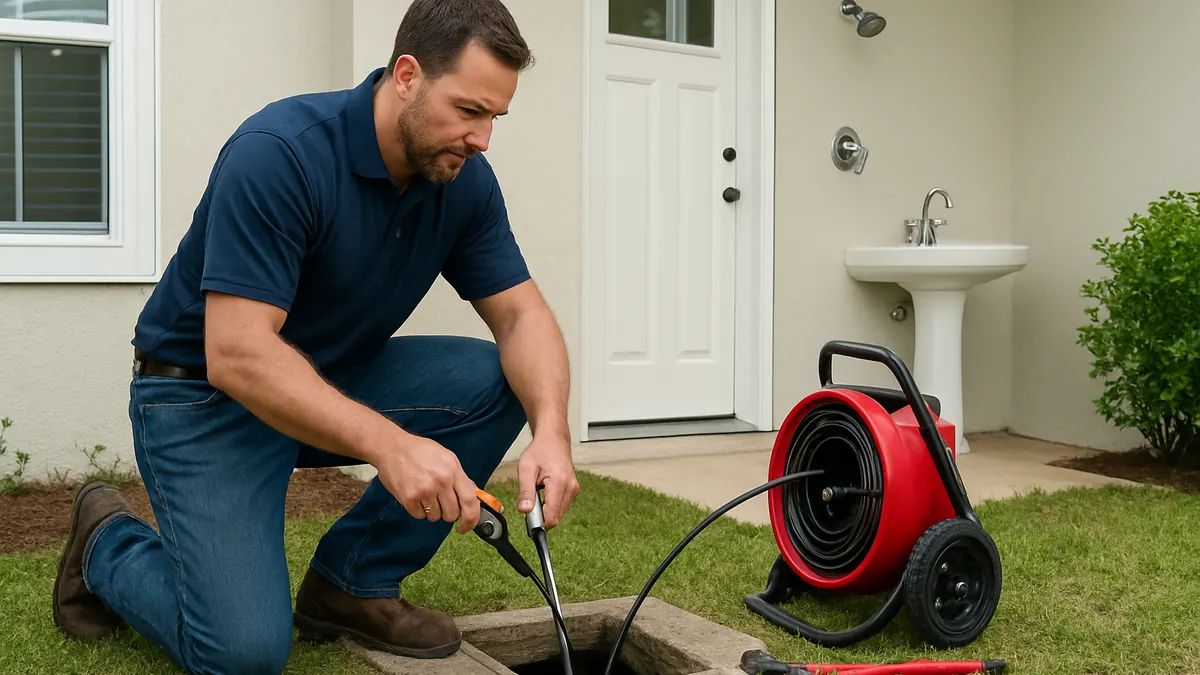
An accessible cleanout provides a direct route into the branch or main line. The plumber may use professional cable equipment to remove or break apart the obstruction. The material recovered and the cable's behavior can provide clues, but they do not always show the pipe's condition.
A sewer camera can be inserted after adequate flow is restored. Video may reveal roots, grease, broken sections, offsets, standing water, or objects. A locator can mark the position and depth of a suspected defect from above ground.
Repair Options From Simple to Extensive
The first reasonable option may be cleaning a trap or short branch line. A deeper clog may require cabling through a cleanout or another proper access point.
Hydro jetting may be recommended for heavy grease or buildup. It uses high-pressure water to clean the interior pipe wall more thoroughly, but the line must be suitable for the process.
Root cutting can restore an opening. Because roots indicate an entry point, the pipe may also need a spot repair or another corrective method.
Full replacement is generally considered when the line is collapsed, severely deteriorated, improperly aligned over a significant distance, or continuing to fail despite appropriate cleaning and localized repairs.
Factors That Affect Repair Cost
Cost varies with the location and depth of the blockage, available access, pipe diameter and length, and the equipment needed.
A straightforward cleaning through an accessible cleanout has a different scope from locating and repairing a buried break. Camera work, hydro jetting, toilet removal, excavation, permits, surface restoration, septic service, and after-hours response can affect the total.
Preventing Future Problems
- Flush only normal waste and toilet paper. Put wipes, paper towels, hygiene products, floss, cotton items, and cleaning materials in the trash.
- Keep grease, coffee grounds, fibrous food, and large amounts of food waste out of the kitchen drain. Use strainers and collect grease separately.
- Respond to early warning signs. Several slow drains, recurring gurgles, or a sewer odor can indicate a developing restriction before wastewater becomes visible.
Take Action When Multiple Drains Back Up in Blue Mountain Beach
When multiple drains are backing up in Blue Mountain Beach, stop using water and have the system diagnosed before an overflow spreads. The cause may be simple, but several fixtures reacting together means the problem is probably beyond one sink or toilet. Professional testing can identify the affected line and begin with the least invasive repair that fits the evidence.
About this guide: This resource provides general homeowner education, not a remote diagnosis. Actual conditions, code requirements, equipment, and safe repair options must be evaluated at the property.