Stop and call for qualified help when plumbing water is near electrical equipment, sewage is entering occupied space, gas or burning odors are present, or a repair would require opening pressurized piping.
A toilet flushes, but the nearby shower makes a deep bubbling sound. Later, the bathroom sink drains slowly, and a load of laundry causes water to rise in the lowest tub. For a homeowner, vacation-rental owner, or property manager in Miramar Beach, that combination usually means the trouble is not limited to one fixture. A shared drain or main sewer line may be partially blocked.
The safest immediate action is to reduce water use. Stop laundry and dishwasher cycles, avoid long showers, and do not keep flushing to test the line. If wastewater enters a tub, shower, floor drain, or living space, stop using the plumbing completely and keep people and pets away from the affected area.
A sewer camera inspection gives a licensed plumber a direct view of the accessible pipe. The camera can reveal buildup, foreign material, roots, standing water, displaced joints, cracks, or a collapsed section. That information helps the plumber recommend the least invasive reasonable solution instead of relying on guesswork.
When Is a Sewer Camera Inspection Recommended?
A camera inspection is especially useful when several fixtures react together, a blockage returns after cleaning, or the location of the problem is unclear.
One slow sink often points to a local clog in the trap or branch drain. A toilet that gurgles when a washing machine empties, water rising in a shower after flushing, or multiple drains slowing at once suggests a restriction farther downstream.
Common Problems the Camera May Reveal
Interior Buildup
Grease, soap residue, food particles, and paper can narrow a pipe. The line may work during light use but fail when several fixtures discharge together.
Wipes and Foreign Objects
Wipes labeled flushable, paper towels, hygiene products, toys, and cleaning cloths do not break down like toilet paper. One item can become lodged and collect additional waste around it.
Root Intrusion
Roots can enter through a crack or loose connection. Fine roots may appear as threads inside the pipe, while a larger mass can fill much of the opening.
Offset or Separated Joints
A joint becomes offset when connected pipe sections no longer align properly. The exposed edge can catch waste and may allow soil or roots to enter.
Standing Water or a Pipe Belly
A sewer line must maintain enough slope for wastewater to move by gravity. If a section settles, water and solids can remain in the low area. Plumbers often call this a belly. Standing water can also occur behind a downstream blockage, so the footage must be interpreted carefully.
Cracks, Deformation, or Collapse
A crack may allow roots or soil into the line. A deformed pipe has changed shape. A collapse means enough structure has failed to restrict or stop flow.
Safe Checks the Homeowner Can Perform
Make a list of every affected fixture and note the order in which the symptoms appeared. Record whether the problem follows a toilet flush, shower, kitchen use, dishwasher cycle, or laundry load.
- Check the lowest tub or shower for rising water, but do not remove the drain cover or touch wastewater. Listen for gurgling from toilets and sinks.
- If an exterior cleanout is visible, look for dampness or leakage around the cap without loosening it. A full line may release sewage when opened.
- These observations are useful, but do not intentionally overload the system to recreate the backup.
What You Should Not Attempt
- Do not pour chemical drain cleaner into multiple fixtures. It may not reach the main obstruction and can remain trapped behind the blockage.
- Do not use a garden hose, pressure washer hose, or improvised tool in the sewer line.
- Do not operate a rented sewer cable without training. Rotating cables can bind, become stuck, damage weak pipe, or injure the operator.
- Do not authorize extensive excavation without first locating the defect whenever camera and locating equipment can be used.
What Happens During a Sewer Camera Inspection in Miramar Beach?
The plumber begins by asking which fixtures are affected, when the symptoms started, and whether the line has been cleaned or repaired before.
An approved access point is then selected. An exterior cleanout is often preferred because it provides a direct route into the main sewer line. If no cleanout is available, another appropriate opening may be used.
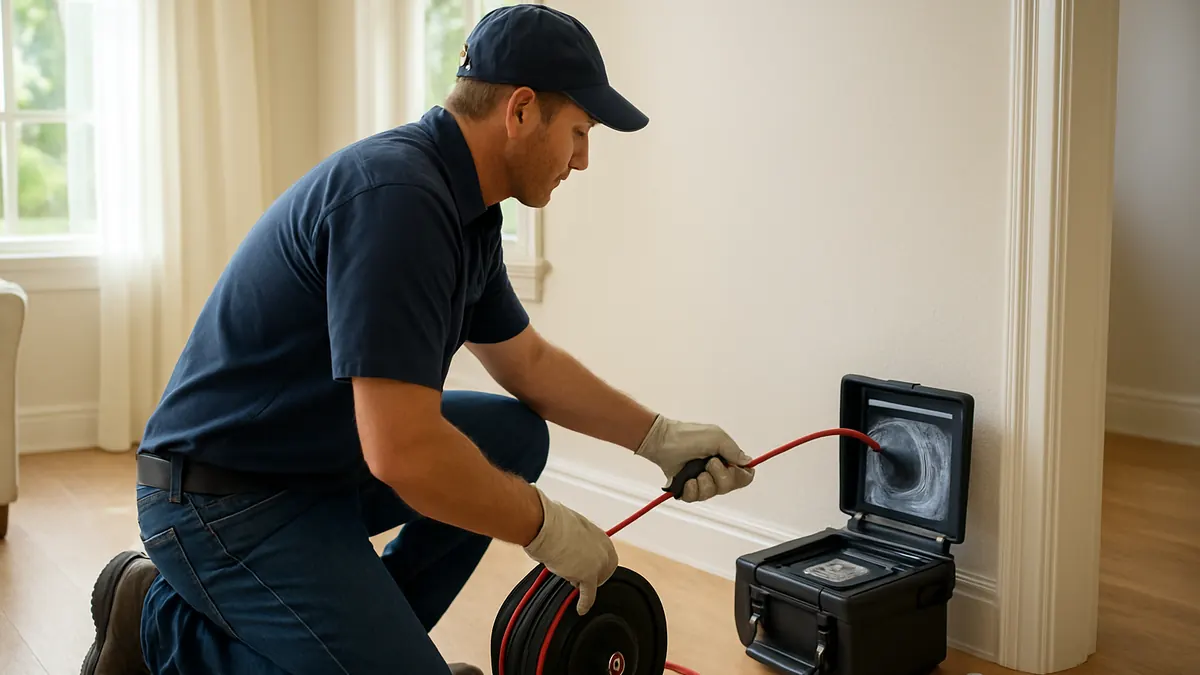
A waterproof camera with built-in lighting is attached to a flexible cable. As the plumber advances the camera, live video appears on a monitor. The plumber watches the pipe wall, joints, water level, and material inside the line.
Distance markings help estimate how far the camera has traveled. Many camera heads also include a transmitter. A receiver used above ground can help identify the approximate location and depth of a defect.
If the line is completely blocked or the water is too cloudy, the camera may not provide a useful view. The plumber may need to clear the obstruction first and inspect the line again.
Signs That Make the Problem Urgent
- Sewage entering a shower, bathtub, floor drain, or finished room requires prompt service. Stop all water use connected to the affected line.
- Other urgent signs include unusable toilets, wastewater leaking around a cleanout, a blockage that returns soon after professional cleaning, or several fixtures stopping at once.
- In a vacation rental, the issue becomes more urgent when continued guest use can turn a partial restriction into a major indoor overflow.
Repair Options From Least to Most Invasive
A removable obstruction may be cleared with professional cable equipment. A foreign object may sometimes be retrieved.
If the pipe is structurally sound but heavily coated, hydro jetting may be considered. It uses controlled high-pressure water to clean the interior wall. The plumber should evaluate the line first because fragile or badly damaged pipe may not be suitable.
- Roots can be cut to restore flow, but the crack or joint that allowed entry should be repaired or monitored.
- A localized damaged section may qualify for a spot repair. Depending on pipe material, layout, and access, a trenchless repair may also be possible.
- Complete replacement is generally reserved for widespread deterioration, repeated collapse, or multiple severe defects that smaller repairs cannot correct reliably.
What Affects the Cost?
Inspection cost depends on access, pipe length, diameter, blockage severity, cleaning needs, locating, and whether video documentation is included.
Repair cost depends on the type, depth, location, and length of the defect. Pipe material, the surface above the line, access for equipment, and restoration needs also affect the total scope.
Prevention and Maintenance Guidance
- Flush only human waste and toilet paper. Put wipes, paper towels, hygiene products, and cleaning cloths in the trash.
- Keep fats, oils, grease, and food scraps out of kitchen drains. Use sink strainers and empty them regularly.
- Address repeated gurgling, slow drains, or sewage odors before a complete backup develops. Keep camera footage, cleaning dates, and repair records for future reference.
- For rentals, provide flushing instructions and document each service call.
Schedule a Sewer Camera Inspection in Miramar Beach
What happens during a sewer camera inspection in Miramar Beach is a focused evaluation of the accessible drain or sewer line. A licensed plumber reviews the symptoms, advances a lighted camera, identifies visible problems, locates important findings when possible, and explains practical repair choices. When multiple drains react together or the same blockage keeps returning, the inspection helps identify the real cause before a major repair is considered.
About this guide: This resource provides general homeowner education, not a remote diagnosis. Actual conditions, code requirements, equipment, and safe repair options must be evaluated at the property.