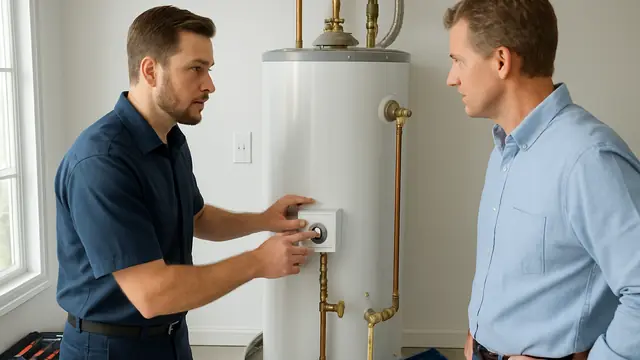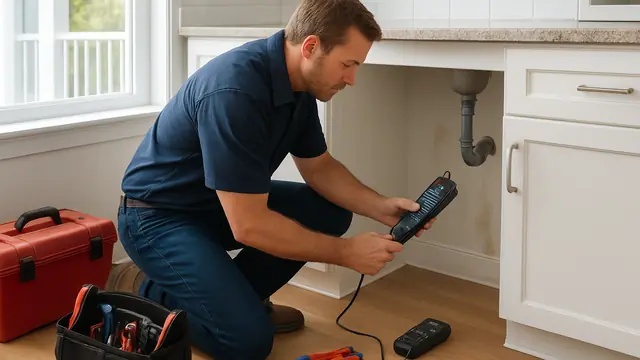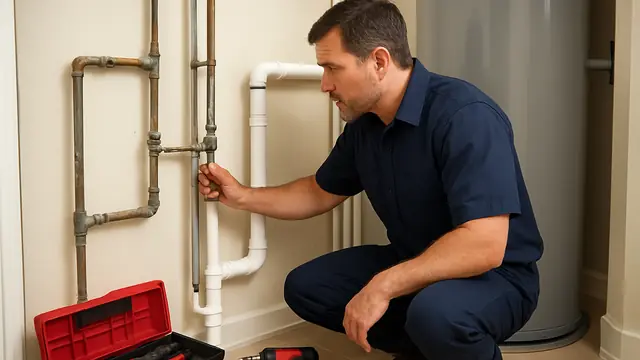
Stop and call for qualified help when plumbing water is near electrical equipment, sewage is entering occupied space, gas or burning odors are present, or a repair would require opening pressurized piping.
You flush a toilet, hear a deep gurgle from the shower, and notice that several drains are moving slowly. Or perhaps a plumber has cleared the same line more than once, but the problem keeps returning. For a homeowner, second-home owner, or vacation-rental manager along 30A, that pattern can point to a blockage or defect farther down the drain system. The safest immediate action is to reduce water use, stop running laundry or dishwashing cycles, and avoid repeated flushing until the line is evaluated.
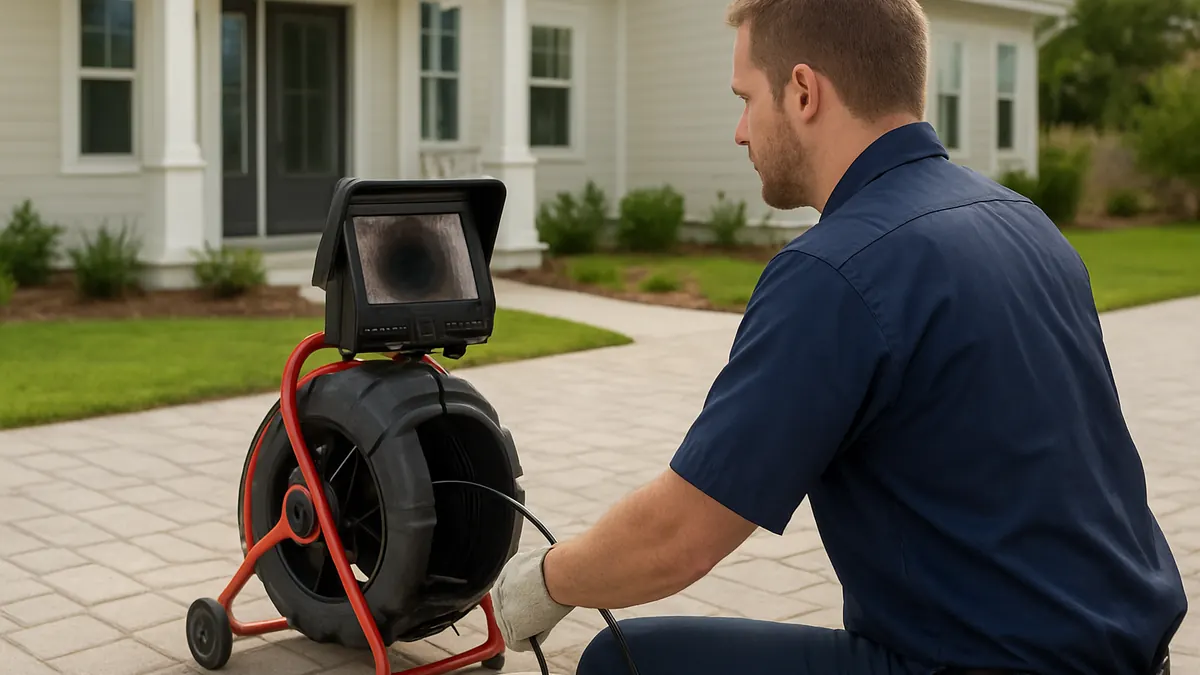
A sewer camera inspection gives a licensed plumber a direct view inside the drain or sewer line. A small waterproof camera is fed through an approved access point while the plumber watches the pipe interior on a monitor. The inspection helps answer three important questions: what is wrong, where is it located, and what is the least invasive reasonable repair?
When a Sewer Camera Inspection Is Recommended
A camera becomes more useful when the symptoms suggest a main-line problem or when previous clearing has not provided a lasting result.
Common reasons include several drains slowing together, toilets bubbling when a tub or washing machine drains, sewage odors, wastewater appearing in a shower, repeated stoppages, or concern about a broken or shifted pipe. It may also be recommended before buying a property when drainage history is uncertain.
In a vacation rental, an inspection can help determine whether a blockage involves wipes, hygiene products, food debris, roots, or a damaged line.
What May Be Causing the Trouble
Buildup Inside the Pipe
Grease, soap residue, hair, food particles, and other debris can coat the pipe wall. As the opening narrows, more material catches. A drain cable may create a temporary path without fully removing the buildup, which is why some stoppages return.
Root Intrusion
Roots can enter through a crack or loose joint. Once inside, they catch paper and waste. A camera may show fine roots, a dense root mass, or the exact opening where they entered.
A Belly or Low Spot
Drainpipes need proper slope. If a section settles, water and solids collect in the low area. Plumbers often call this a belly. The camera may pass through standing water or show debris accumulating in one location.
Shifted or Broken Pipe
A separated joint can create an edge that catches waste. Cracks may admit roots or soil. A badly damaged section may partially collapse and restrict flow.
A Foreign Object
Wipes labeled "flushable," paper towels, toys, hygiene products, and construction debris can lodge in a line. A camera can identify the obstruction without opening walls or digging first.
Safe Checks Before the Plumber Arrives
- Determine whether one fixture or several are affected. If toilets, showers, and tubs are all slow, treat the problem as a possible main-line restriction.
- Check the lowest shower or tub because a main backup often appears there first. Do not remove covers or touch wastewater.
- Listen for gurgling and note which fixture causes it. If an exterior cleanout is visible, look for leaking around the cap, but do not remove a cap that may be under pressure.
- Until the line is inspected, limit flushing, showers, laundry, dishwashing, and other high-volume water use.
What You Should Not Attempt
- Do not repeatedly pour chemical drain cleaner into the system.
- Do not force a rented cable machine through an unfamiliar sewer pipe. The cable can become stuck, damage a weak section, or create only a temporary opening.
- Do not run extra water to push the clog through. Added water can cause sewage to overflow indoors.
- Do not dig where you think the defect is located. Camera and locating equipment should guide excavation.
What Happens During a Sewer Camera Inspection in 30A?
The plumber first asks about the symptoms, when they began, and whether the line has been cleaned before. An access point is selected, usually an exterior cleanout or another approved opening.
A flexible cable carrying a lighted, waterproof camera is inserted into the pipe. As it moves, the plumber watches for buildup, roots, standing water, displaced joints, cracks, broken sections, and foreign objects.
Many camera heads transmit a signal that can be detected above ground. If a defect is found, the plumber can estimate its location and depth. This helps avoid unnecessary digging and supports a more targeted repair.
A useful inspection includes an explanation of what is visible and whether the finding is maintenance-related, structural, or still uncertain.
Sometimes the line must be cleared first. A camera cannot see through a solid blockage or heavily clouded wastewater. In that situation, cleaning followed by a second camera pass may provide the clearest diagnosis.
Signs the Problem Is Urgent
- Stop using the plumbing and request prompt service when sewage enters a tub, shower, toilet area, or floor drain. Wastewater can damage finishes and create a sanitation concern.
- Other urgent signs include repeated overflow, sewage leaking from a cleanout, strong odors, or a line that quickly blocks again after cleaning.
- A rental property deserves particular attention because a small warning can become a major backup when several guests begin using toilets, showers, laundry, and the dishwasher.
Repair Options From Least to Most Invasive
If the camera shows a soft blockage or moderate buildup, professional drain cleaning may be enough. The plumber may use a cable machine or another method suited to the pipe.
If the pipe is structurally sound but heavily coated, hydro jetting may be considered. It uses controlled high-pressure water to clean the interior. It is not appropriate for every fragile or damaged line.
Roots may be cut or cleared to restore flow, but the opening that allowed them inside still needs evaluation. Repeated root clearing can be temporary.
A localized crack, offset joint, or damaged section may be handled with spot repair or, when conditions allow, a trenchless method. Complete replacement is generally reserved for widespread failure, repeated collapse, severe deformation, or multiple defects.
What Affects the Cost
Inspection cost depends on access, pipe length and diameter, whether cleaning is needed first, and whether locating or video documentation is included.
Repair cost depends on the defect's depth, location, and length. Landscaping, patios, driveways, foundations, interior finishes, pipe material, and overall line condition may affect the plan.
Prevention and Maintenance
Keep grease, wipes, paper towels, hygiene products, and food scraps out of drains. Use strainers where appropriate and give rental guests clear flushing instructions.
Address recurring slow drains before a complete stoppage occurs. If the line has known root intrusion or structural damage, follow the plumber's monitoring or repair recommendation.
For frequently occupied properties, record the date, location, and cause of each drain problem. A pattern can reveal whether the issue is misuse or an ongoing pipe defect.
Schedule a Sewer Camera Inspection in 30A
What happens during a sewer camera inspection in 30A is straightforward: a licensed plumber accesses the line, guides a camera through it, identifies visible problems, locates defects when possible, and explains the least invasive reasonable next step. When several drains are affected or the same blockage keeps returning, the inspection replaces guesswork with evidence.
About this guide: This resource provides general homeowner education, not a remote diagnosis. Actual conditions, code requirements, equipment, and safe repair options must be evaluated at the property.