Stop and call for qualified help when plumbing water is near electrical equipment, sewage is entering occupied space, gas or burning odors are present, or a repair would require opening pressurized piping.
1. Separate Disposal Trouble From a Kitchen Drain Problem
A garbage disposal breaks small food scraps into particles that can travel through the kitchen drain with water. It does not make grease, fibrous material, or large quantities of food harmless to the plumbing. When a Panama City kitchen sink starts draining slowly, the disposal may be working normally while buildup restricts the trap or downstream piping. Replacing the appliance without checking drainage can leave the original problem unresolved.
Start by noting what happens without taking anything apart. Does the motor sound normal? Does water collect only when the disposal runs, or whenever the faucet runs? Does the neighboring basin fill with water? These observations help a plumber distinguish equipment trouble from a shared drain restriction. If water is standing in the sink, stop adding food and avoid running the dishwasher until the drainage problem is understood.
2. Know Which Sounds Mean Stop
Grinding noise changes with the food passing through a disposal, but a new metallic rattle, sharp scraping sound, or persistent hum deserves attention. A utensil or other hard object may have entered the chamber. A hum without grinding often means the motor is energized but cannot turn properly. Switch the disposal off immediately rather than leaving it humming or cycling the switch to see whether the obstruction clears.
Keep hands and tools out of the opening, and prevent anyone else from activating the unit. A silent disposal can have an electrical supply problem, an overload condition, or an internal failure; silence does not prove it is safe to reach inside. If you notice a burning smell, smoke, sparking, or repeated breaker trips, stop using it. Disconnect power only from a dry, safely accessible location, and arrange professional service.
3. Treat Jams and Repeated Resets as Warning Signs
Disposals use moving impellers and a grinding ring rather than kitchen-style knife blades. A hard object can wedge between components, while an oversized food load can stall the mechanism. Many units have overload protection that interrupts operation when the motor overheats or draws excessive current. That protection limits damage, but it does not remove the obstruction or explain why the motor stalled.
Do not repeatedly press the reset button, force a tool into the chamber, or keep trying the switch. Manufacturer-approved jam-clearing procedures vary, and a model-specific service opening is not an invitation to improvise. A licensed professional can isolate power, remove an obstruction safely, and check whether the grinding assembly turns correctly. If the unit continues to stall under ordinary use after the obstruction is removed, further diagnosis is needed before deciding on replacement.
4. Understand Slow Drainage and Dishwasher Connections
Food buildup, grease deposits, and an obstructed trap can make disposal trouble look worse than it is. Turning the motor on may move water temporarily without clearing the underlying restriction. In a double-basin sink, water moving into the other basin often points toward a restriction in the shared drainage path. Avoid chemical drain openers unless the equipment manufacturer expressly allows them. Never mix cleaners, and tell the plumber about any product already added.
Some dishwashers discharge through a connection on the disposal, so kitchen drainage problems can also interfere with dishwasher drainage. Trouble that starts immediately after a disposal replacement may involve the dishwasher inlet plug, hose routing, or another installation issue. Those connections should be checked against the appliance instructions and applicable plumbing requirements. Stop the dishwasher if it causes water to rise in the sink or leak into the cabinet.
5. Locate Leaks Without Touching Wet Equipment
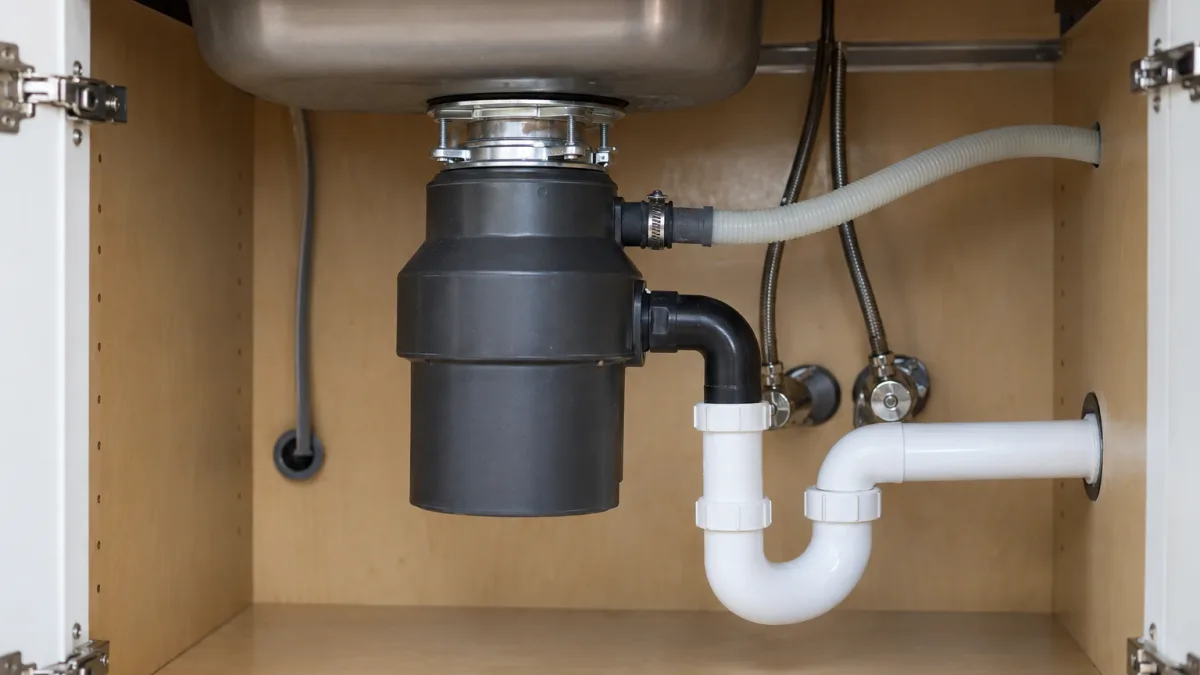
A disposal can leak at the sink flange, mounting assembly, dishwasher hose connection, discharge connection, or appliance body. Water may run along the outside before dripping from the lowest point, so the drip location alone does not identify the failed part. From a safe distance, note whether leaking occurs when the faucet runs, while the disposal operates, or during dishwasher discharge. A photo taken without touching the equipment can help document an intermittent leak.
Stop using the connected fixtures if water is escaping into the cabinet. Keep away from wet cords, receptacles, switches, and the disposal itself. If power cannot be disconnected safely, leave that task to a professional. A connection or flange leak may be repairable, while leakage through a corroded housing or failed internal seal commonly leads to replacement. Drying the cabinet afterward matters in Northwest Florida humidity, but the water source must be corrected first.
6. Address Odors Without Masking the Cause
Food residue can collect beneath a splash guard and around the grinding chamber. In a warm kitchen, that residue can produce odors even when the sink drains normally. Begin with the manufacturer's cleaning recommendations. Clean accessible sink surfaces, and clean a removable splash guard only as directed, with power disconnected. Do not reach into the chamber. A splash guard that is fixed in place should not be pulled out or cut free.
Fragrance does not remove trapped food, and a strong cleaner is not necessarily compatible with disposal seals or metal parts. Avoid improvised chemical mixtures and large loads of citrus peels. If odors return quickly after appropriate cleaning, a plumber can check for retained debris, drainage defects, or a trap or vent problem. Persistent sewage-like odor should not automatically be blamed on dirty grinding components, especially when it also occurs while the disposal is unused.
7. Build Better Everyday Disposal Habits
Scrape plates into the trash or an appropriate compost container before rinsing them. Keep grease and cooking oil out of the sink; allow them to cool and dispose of them through an appropriate household waste method. Fibrous scraps, corn husks, shells, pits, and bones can be unsuitable for many residential disposals. Large amounts of rice, pasta, or peelings can also overwhelm the equipment or contribute to drain buildup. Follow the restrictions for your specific model.
For a continuous-feed disposal, follow the manufacturer's sequence for starting cold water, operating the unit, and feeding small amounts gradually. Batch-feed models use a different activation method and should be operated accordingly. Let water continue for the manufacturer-recommended period after grinding to help carry particles away. Hot water should not be used as a strategy for washing grease down the drain. Even a powerful disposal cannot prevent that grease from collecting farther along the piping.
8. What a Professional Diagnosis Should Cover
A useful service visit starts with the history: when the symptom began, whether an unusual item entered the disposal, and whether recent plumbing or electrical work preceded the problem. The plumber should inspect mounting and drainage connections, look for corrosion or water tracks, and evaluate the grinding mechanism with power safely isolated. Depending on the symptom, troubleshooting may also include the overload device and electrical supply, with a licensed electrician involved when needed.
Once operation is safe, functional testing can show whether the disposal starts consistently, grinds normally, drains properly, and stays dry at its connections. If the dishwasher uses the disposal inlet, that connection may need testing too. Ask the technician to distinguish the cause from the symptom: a jam, failed component, loose connection, or downstream restriction calls for a different solution. An estimate should identify which parts of the sink drainage system need work and why.
9. Plan Replacement Around the Sink and Plumbing
Replacement is worth considering when a disposal has a leaking body, substantial corrosion, a failed motor, or recurring mechanical problems that are not reasonably repairable. Age alone is not a complete diagnosis. Ask whether the proposed repair addresses the underlying problem, whether parts are available, and how the repair scope compares with installing a suitable replacement. A drain clog or leaking external connection does not, by itself, establish that the entire disposal has failed.
Selecting a new unit involves more than motor power. The installer should check cabinet clearance, sink and mounting compatibility, discharge height, dishwasher connections, and the electrical connection method. A deeper replacement unit can create drainage challenges if its outlet sits too low for the existing piping. Discuss noise preferences, typical use, and septic-system guidance when applicable. New equipment should fit the plumbing correctly rather than relying on a makeshift drain arrangement.
10. Keep Simple Records and Clear Stop-Use Instructions
For a Panama City home or managed property, keep the disposal model information, operating manual, installation date if known, and service records together. Record recurring symptoms rather than repeatedly resetting the equipment between visits. During routine cabinet checks, look for moisture, staining, corrosion, or stored items pressing against plumbing and wiring. Do not operate the disposal merely to test it if you already see leakage or signs of electrical damage.
In a seasonally occupied property, check that the sink drains and the cabinet stays dry before regular kitchen use resumes. Give occupants brief instructions about prohibited waste and whom to contact for a hum, leak, or stalled unit. After a utility interruption, make sure the disposal switch is off before power returns, where safely accessible. Clear reporting and prompt service help prevent a small equipment problem from becoming cabinet damage or an unusable kitchen sink.
About this guide: This resource provides general homeowner education, not a remote diagnosis. Actual conditions, code requirements, equipment, and safe repair options must be evaluated at the property.