Stop and call for qualified help when plumbing water is near electrical equipment, sewage is entering occupied space, gas or burning odors are present, or a repair would require opening pressurized piping.
You turn on the shower and the water feels warm for less than a minute before it turns cold. Later, you notice the water heater making a sharp popping sound and see a small amount of moisture near one of the top connections. If you are trying to decide whether to repair or replace a water heater in Panama City, the safest first step is to stop guessing and identify the actual failure.
Keep the area around the heater clear. If water is spreading, steam is present, the unit smells burned, or you detect a gas odor, stop using it and call for professional help. If the cold-water shutoff is dry and safely accessible, you may close it to slow an active leak. Do not touch wet wiring, remove access panels, or attempt to seal the tank.
Why the Same Symptom Can Have Different Causes
Two water heaters can produce the same complaint for completely different reasons. Short hot-water time may come from a failed heating element, sediment buildup, a damaged dip tube, or a tank that is too small for current demand.
A puddle may come from a loose fitting, supply connector, drain valve, relief valve, nearby pipe, or the tank shell. Some of those problems can be repaired. A failed tank generally cannot.
Common Problems That Often Support Repair
A Failed Electric Heating Element
Electric tank heaters commonly use two elements. If the lower element fails, the unit may provide a small amount of hot water and then turn cold. If the upper element or related control fails, the home may have little or no hot water.
Element replacement can be reasonable when the tank is dry, the wiring is serviceable, and no major corrosion is present.
A Thermostat or Safety-Control Problem
A faulty thermostat may cause lukewarm water, inconsistent temperatures, slow recovery, or overheating. A safety reset that trips repeatedly is a warning, not a solution. The reason for the trip must be found.
A Gas Ignition or Burner Issue
Gas models may stop heating because of the igniter, flame sensor, gas control, burner, or venting. These parts may be serviceable, but gas and combustion systems should be tested by a qualified professional.
A Leaking External Component
Supply connectors, approved fittings, drain valves, relief valves, and nearby piping can leak while the tank itself remains sound. The source should be traced before replacement is recommended.
When Replacement Usually Becomes the Better Choice
A leak through the tank body is the clearest reason to replace a tank-style heater. The tank is a sealed pressure vessel. Once corrosion creates a hole, tape, epoxy, screws, clamps, or sealants cannot restore the metal safely.
Replacement may also make more sense when the heater has widespread corrosion, repeated major failures, unavailable parts, poor recovery, or inadequate capacity.
Age provides context, but condition, repair history, installation quality, and expected reliability matter more.
Safe Checks a Homeowner Can Perform
Check whether the problem affects every hot-water fixture. If one shower is lukewarm while the kitchen and other faucets are hot, the problem may be a fixture cartridge or mixing valve.
- Record how long hot water lasts, how long recovery takes, and whether several fixtures were operating.
- Without touching equipment, look for moisture at visible connections, valves, and the base. Photograph the model and serial number.
- If an electric water-heater breaker has tripped, do not keep resetting it. Repeated tripping can indicate a shorted element, damaged wiring, moisture, or another electrical fault.
What You Should Not Attempt
- Do not remove electrical covers, test energized terminals, replace an element, or install a larger breaker. These actions can create shock or fire hazards.
- Never cap the temperature-and-pressure relief valve, which releases excessive temperature or pressure.
- Do not modify a gas valve, burner, pilot assembly, combustion-air opening, or vent.
- Do not flush an older, heavily corroded tank without first evaluating whether service could expose an existing weak point.
Signs That Make the Problem Urgent
A growing leak, water near electrical components, steam, a bulging tank, or extremely hot tap water requires prompt attention.
Repeated relief-valve discharge may indicate excessive pressure, uncontrolled thermal expansion, overheating, or a failed valve. Thermal expansion means water increases in volume as it heats. In a closed plumbing system, that expansion must be controlled.
For gas equipment, urgent signs include gas odor, soot, scorch marks, delayed ignition, unstable flame, or disconnected venting. If you smell gas, leave the area and contact the appropriate emergency or gas service from a safe location.
How a Licensed Plumber Diagnoses the Heater
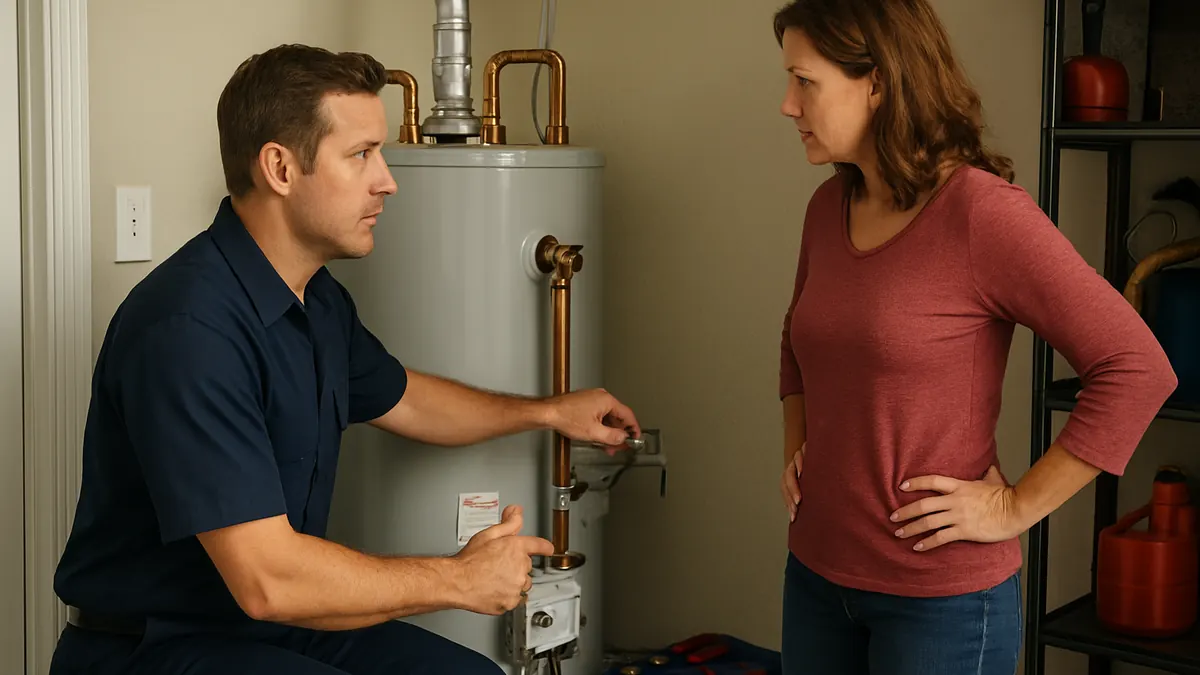
- A licensed plumber begins by identifying the heater type, capacity, age, installation condition, and reported symptoms. The leak source is dried and traced instead of assumed.
- For an electric model, testing may include voltage, element resistance, thermostats, high-limit controls, and wiring condition.
- For a gas model, diagnosis may include ignition, burner operation, gas control, combustion air, and venting.
The plumber may also test temperature and pressure and inspect the relief valve and expansion tank. The goal is to determine what failed and whether the remaining system is dependable.
Repair Options From Least Invasive to Most Extensive
The smallest repair may be correcting a setting, replacing a connector, repairing nearby piping, or addressing one fixture.
Component repairs may include a thermostat, element, ignition part, drain valve, relief valve, anode rod, or expansion tank. The cause behind a failed safety device must also be corrected.
Flushing may be considered when sediment affects performance and the tank is suitable for service.
More extensive work can include pressure regulation, expansion control, vent correction, electrical repair, drainage protection, or piping changes.
Replacement is usually recommended when the tank leaks, corrosion is advanced, failures recur, or capacity is inadequate. A tank model may be the most direct option. Tankless equipment can be evaluated when utilities, venting, demand, and maintenance requirements support it.
Typical Factors That Affect Cost
- Repair cost depends on the failed part, heater type, diagnostic time, access, parts availability, and related plumbing, electrical, gas, or venting corrections.
- Replacement cost is affected by capacity, efficiency, fuel source, location, removal, connection changes, drainage protection, expansion control, venting, permits, and upgrades.
- Repair is worthwhile when it restores a sound heater. Replacement is better when repair would leave a leaking, badly corroded, or unreliable system in service.
Prevention and Maintenance Guidance
- Inspect periodically for moisture, rust, unusual sounds, or slower recovery. Keep the equipment accessible.
- Ask whether periodic flushing is appropriate for the specific model and tank condition. Anode-rod inspection may help slow internal corrosion in a tank-style heater.
- Have pressure and thermal expansion evaluated if valves drip repeatedly. Keep gas-heater combustion and vent areas clear.
- Address changes in sound, temperature, recovery, or moisture early.
Repair or Replace a Water Heater in Panama City: The Final Decision
When deciding whether to repair or replace a water heater in Panama City, focus on the exact failure, tank integrity, expected repair reliability, and household demand. A sound tank with one failed component may be a strong repair candidate. A leaking tank, severe corrosion, repeated breakdowns, unsafe installation, or inadequate capacity usually favors replacement.
A complete diagnosis helps avoid unnecessary replacement and repeated spending on an unreliable heater.
About this guide: This resource provides general homeowner education, not a remote diagnosis. Actual conditions, code requirements, equipment, and safe repair options must be evaluated at the property.