Stop and call for qualified help when plumbing water is near electrical equipment, sewage is entering occupied space, gas or burning odors are present, or a repair would require opening pressurized piping.
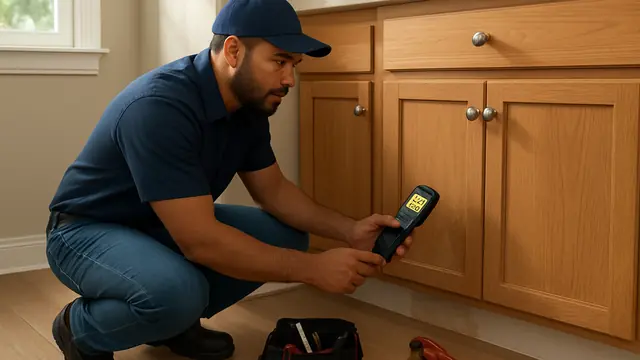
You are replacing a bathroom faucet, open the vanity cabinet, and notice a gray pipe feeding the shutoff valve. It does not look like the plumbing material you expected, which raises a question: Is this polybutylene?
Polybutylene, commonly called PB, was used in residential water-supply systems from the late 1970s through the mid-1990s. Not every gray pipe is polybutylene, however, and seeing gray plastic does not automatically mean a failure is occurring.
Leave the pipe undisturbed. Do not bend it, squeeze it, scrape the surface, or loosen any fittings. Photograph the pipe, look for identifying markings, and check the surrounding cabinet, wall, and floor for moisture. If water is actively leaking, shut off the fixture valve or the home's main water supply when it is safe.
How to Identify Polybutylene Plumbing in Panama City
Polybutylene is usually a flexible plastic water-supply pipe. The most familiar version is gray, but PB can also appear blue-gray, silver, black, or occasionally white. Because several plumbing products share similar colors, color is a clue rather than proof.
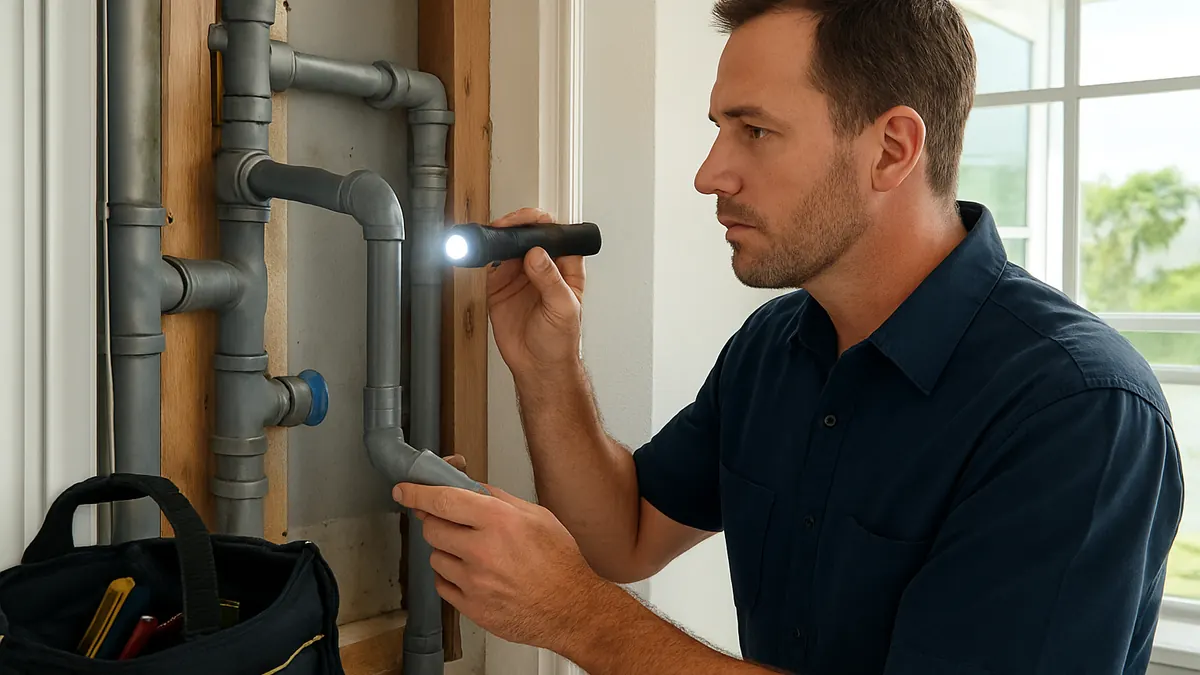
Look along an exposed section for printed markings. Common identifiers include "PB," "PB2110," a manufacturer's name, and pipe-size information. The printing may be faded or facing the wall. Use a flashlight and mirror instead of twisting the tubing.
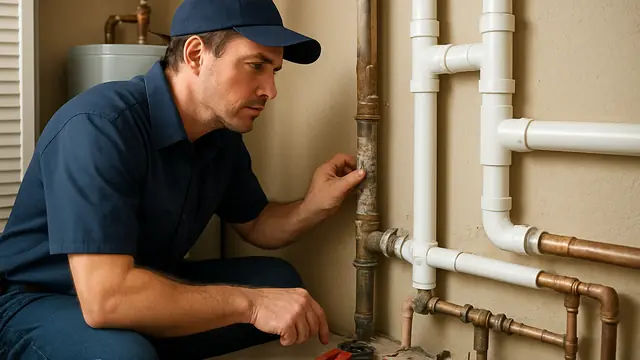
The connection style provides another clue. Many PB systems use plastic or metal fittings held by copper-colored or aluminum crimp rings. A licensed plumber confirms the material by evaluating the tubing, markings, fittings, and installation pattern together.
Make Sure You Are Looking at a Supply Pipe
Polybutylene was generally used for pressurized hot- and cold-water lines that deliver water to sinks, toilets, showers, appliances, and water heaters.
The larger pipe beneath a sink is normally the drain. A short braided line between a valve and faucet is a replaceable connector, not necessarily the permanent pipe behind the wall.
A leaking connector does not prove that concealed piping has failed. Newer connectors and valves may also be attached to older PB inside a wall.
Where You Can Look Safely
Check beneath kitchen and bathroom sinks, behind toilets, near the washing-machine box, and around the water heater. Look for the permanent pipe entering each shutoff valve.
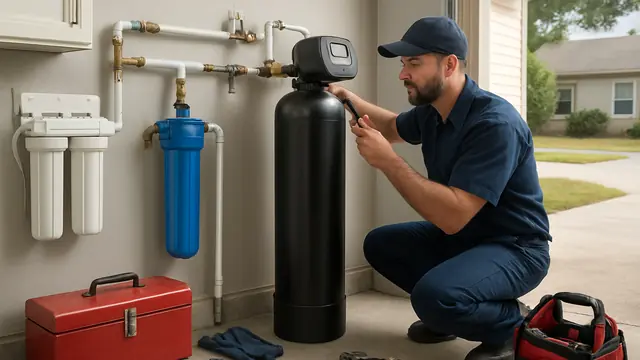
Visible plumbing in a garage, utility closet, crawlspace, or safely accessible attic may reveal longer markings and transitions. Never move wiring or step between attic framing members.
Inspect several areas. Previous repairs may have replaced one bathroom while leaving PB elsewhere. Take close photographs of markings and fittings, followed by wider images showing the location.
Symptoms That May Accompany Aging Supply Piping
Some homes with PB show no visible symptoms. When leakage develops, the first sign may be a damp cabinet, musty odor, peeling paint, stained drywall, warped baseboard, or soft flooring.
A fitting may develop a bead of water that returns after being dried. Dried residue or corrosion around a connection may indicate past seepage. Hidden leaks can also cause unexplained meter movement, reduced pressure, or the sound of water running when fixtures are off.
These symptoms are not unique to PB. The pipe material and actual leak source must both be identified.
Safe Checks You Can Perform
Use a dry paper towel around an accessible fitting without shifting the pipe. If the towel becomes damp, photograph the area and arrange an inspection.
Look for staining, swelling, peeling finishes, or softness in nearby cabinets, walls, flooring, and ceilings.
You may also observe the water meter after turning off faucets, toilets, irrigation, ice makers, and appliances that use water. Continued movement may indicate hidden water use or leakage, but it cannot identify the source.
Know where the main shutoff is located. Do not force a valve that is corroded or difficult to operate.
What You Should Not Attempt
Do not cut off a sample, bend the tubing to find lettering, squeeze it to test brittleness, or scrape it with a knife.
Do not tighten a crimp ring with pliers. PB repairs require compatible materials, approved fittings, and proper tools. Tape, glue, epoxy, general-purpose clamps, and improvised fittings are not dependable permanent repairs for pressurized piping.
Avoid opening walls simply to search for pipe. A plumber can first trace likely routes and select controlled access points if concealed inspection is necessary.
Signs That Make the Problem Urgent
- Call promptly for an active spray, uncontrolled drip, rapidly spreading stain, wet flooring, or sudden pressure loss.
- A sagging or bulging ceiling may contain substantial water. Keep people and pets away, shut off the water if safe, and do not stand underneath it.
- Water near outlets, light fixtures, appliances, or electrical panels creates an additional hazard. Do not touch wet electrical equipment.
- Repeated supply leaks in different rooms also deserve prompt evaluation because a pattern may change the most practical repair strategy.
How a Licensed Plumber Diagnoses the System
A licensed plumber checks several exposed locations, reads markings, evaluates fittings, and traces likely hot- and cold-water routes. The inspection also identifies transitions between PB and newer materials.
If moisture is suspected behind finishes, the plumber may use a moisture meter or another appropriate leak-detection method. The goal is to determine whether the material is PB, how much remains, whether leakage is present, and whether the home was partially repiped.
Repair Options From Least Invasive to Most Comprehensive
If the suspicious pipe is another material and no defect is found, no PB-specific repair is needed.
If the leak comes from a connector or shutoff valve, replacing that component may solve the immediate issue without changing the permanent piping.
For one accessible PB failure, a localized repair may be reasonable. The damaged section is removed and connected to suitable replacement piping with an approved transition. This corrects the failed area but leaves PB elsewhere.
A partial repipe may replace one branch or fixture group. A whole-home repipe replaces the remaining PB and may be appropriate when the material is widespread, leaks have repeated, or the homeowner wants one coordinated solution.
Typical Factors That Affect Cost
Cost depends on the amount of PB, number of fixtures, accessibility, home layout, replacement material, and number of wall or ceiling openings.
Cabinetry, tile, finished ceilings, mixed materials, shutoff replacement, permits when required, and finish repairs can affect the scope. Ask for a written proposal explaining what will be replaced, what will remain, and who handles restoration.
Prevention and Maintenance Guidance
Keep the main shutoff labeled and unobstructed. Make sure responsible household members know how to use it.
Place leak alarms beneath sinks, near the water heater, and beside the washing machine. A professionally selected automatic shutoff may provide added protection when the home is unattended.
Inspect visible piping periodically and investigate new stains, odors, or moisture promptly. Maintain appliance hoses and fixture connectors, remembering that replacing them does not replace concealed PB.
Homeowner FAQs
Is every gray pipe under a sink polybutylene?
No. PEX, connectors, and other products may also be gray. Markings and fitting details are needed for confirmation.
What does PB2110 mean?
PB2110 is a common marking used on polybutylene tubing and is one of the strongest identification clues.
Can part of a home contain PB while another part has PEX?
Yes. Repairs and renovations often create mixed plumbing systems. Several locations should be checked.
Does one PB leak mean the entire house must be repiped?
Not automatically. A localized repair may be reasonable, but the remaining system's extent and leak history should guide the decision.
Can PB fail without visible exterior damage?
Yes. Some deterioration may develop internally, so the outside can appear normal even when the material has weakened.
Confirm the Material Before Choosing the Solution
How to identify polybutylene plumbing in a Panama City home begins with looking for PB or PB2110 markings, flexible gray or dark supply tubing, and characteristic crimped fittings. Document what you can see without disturbing the pipe and have a licensed plumber determine how much remains. Once the material and condition are confirmed, you can make a practical decision about monitoring, a component repair, localized pipe work, partial repiping, or complete replacement.
About this guide: This resource provides general homeowner education, not a remote diagnosis. Actual conditions, code requirements, equipment, and safe repair options must be evaluated at the property.