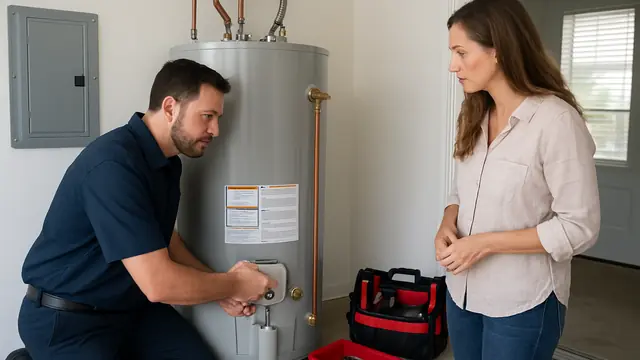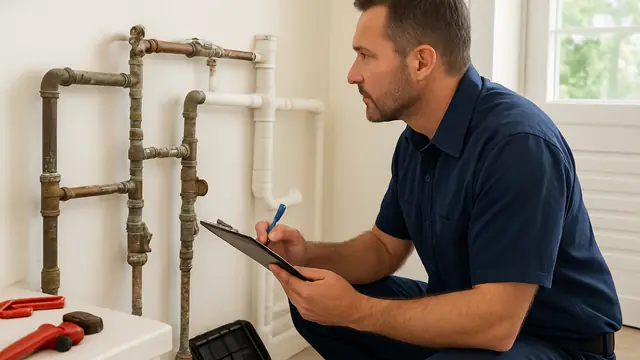
Stop and call for qualified help when plumbing water is near electrical equipment, sewage is entering occupied space, gas or burning odors are present, or a repair would require opening pressurized piping.
Understand Where the Dishwasher Meets Your Plumbing
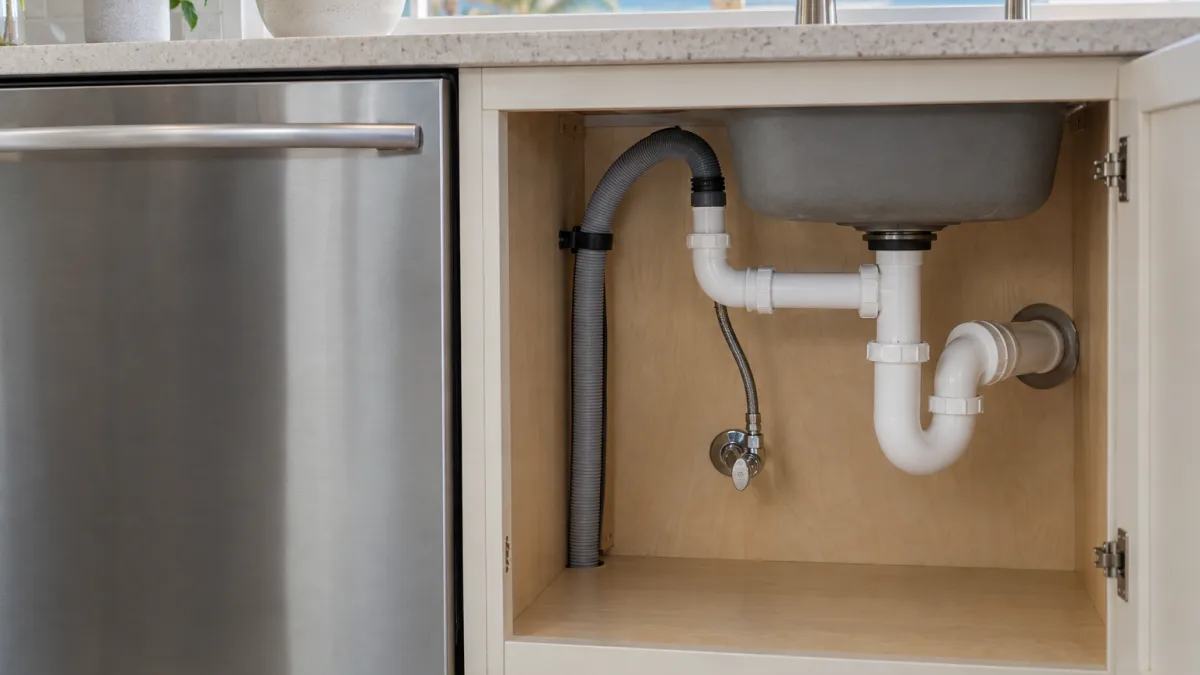
A dishwasher depends on both appliance components and household plumbing. Its supply connection brings water in, while a pump sends used water through a drain hose to an approved drainage connection, often beneath the kitchen sink. Trouble at either connection can look like an appliance failure. A machine that will not drain, for example, may have an internal pump problem, a restricted hose, or a blockage where the hose joins the sink drainage system.
For Rosemary Beach homeowners, separating these possibilities helps avoid replacing a working appliance or arranging the wrong service visit. Seasonal occupancy adds another consideration: a small connection leak may remain unnoticed while a property is empty. Northwest Florida humidity can also make cabinet odors less specific, so a musty smell alone does not establish the cause. Look for a pattern involving appliance use, visible moisture, and sink drainage before deciding what kind of professional assessment is needed.
Know When to Stop Using the Dishwasher
Stop the cycle if water reaches the floor, appears near electrical connections, or repeatedly fills the sink during discharge. Dirty sink water entering the dishwasher also calls for stopping use until the drainage problem is evaluated. Do not keep running short cycles to see whether a leak improves. Each cycle adds water and may spread moisture beneath cabinets or flooring, where the damage is harder to see.
If the dishwasher’s water shutoff is clearly identified, accessible, and dry, close it only if it operates normally. Do not force a stuck valve or reach through standing water to unplug equipment. Keep people away from wet electrical areas and obtain professional help. Remember that shutting off the dishwasher supply will not prevent sink wastewater from entering through an improperly arranged or obstructed drain connection. If sink use triggers the problem, stop using that sink as well.
Interpret Water Left in the Bottom of the Tub
A small amount of water in the recessed sump or filter area can be normal for some dishwashers. A broad pool covering the tub floor, water remaining above the filter assembly, or a sudden change from the machine’s usual condition deserves attention. Check the owner’s manual before assuming that every visible drop indicates a blockage. Also note whether the cycle completed or was interrupted, since a paused cycle or power outage can leave water behind.
Record when the water appears. Water that remains immediately after a completed cycle points toward incomplete draining, although it does not identify the failed component. Water that returns after the dishwasher has drained may be entering through the drain connection or an inlet valve that is not closing properly. Whether the kitchen sink was used during that interval is useful evidence. A professional can distinguish these paths rather than treating every standing-water complaint as a clogged household drain.
Why Drain-Hose Routing Matters
The drain hose needs more than a secure connection. Its routing helps protect the dishwasher from sink wastewater and unwanted siphoning. Depending on the appliance instructions and applicable requirements, an installation may use a countertop air gap or an approved elevated hose arrangement, often called a high loop. These arrangements are not interchangeable in every installation. A licensed plumber should verify the required method rather than copying whatever was behind the previous dishwasher.
The hose must also remain free of crushing, sharp bends, and unsupported routing that conflicts with the manufacturer’s instructions. Storage beneath the sink can push against an exposed hose, while sliding an appliance into a tight opening can pinch a concealed section. Improvised extensions and poorly matched fittings create additional trouble points. During a repair or replacement, ask the installer to check the entire accessible hose path, its support, and its connection to the sink drainage system.
Separate a Sink Drain Problem From an Appliance Problem
Watch how the sink behaves during ordinary use and when the dishwasher pumps out. A sink that drains slowly even with the dishwasher off suggests a restriction in the shared drainage path. If the sink works normally but the dishwasher does not empty, the drain hose, connection port, filter, or internal appliance components deserve closer attention. These clues guide diagnosis, but none proves the cause without inspection.
When the dishwasher connects to a disposal, the inlet must be properly prepared and unobstructed. A missed inlet plug after a disposal replacement can prevent the dishwasher from draining even though the disposal itself works. Other installations use a dishwasher branch fitting in the sink drain. The connection needs to be correctly located and assembled, not improvised into any convenient pipe. Tell the technician about recent sink, disposal, or dishwasher work, especially if the symptom began immediately afterward.
Check Supply Connections Without Moving the Appliance
Homeowners can inspect accessible, dry areas beneath the sink for moisture, corrosion, or a damaged dishwasher supply connector. Use a flashlight and look without loosening fittings or tugging on hoses. Droplets at a connection, cabinet staining, and a connector that is visibly kinked or deteriorated warrant service. Water can travel along a hose or cabinet surface, so the wettest visible spot is not necessarily the source.
Do not pull a built-in dishwasher out to investigate a hidden leak. Mounting brackets, electrical connections, supply tubing, and drain hoses can be damaged during removal. A professional can disconnect and move the appliance safely when access is necessary. If the connector needs replacement, the new assembly should be suitable for dishwasher service and compatible with the appliance and shutoff connection. Tape, sealant, or extra tightening is not a universal repair, since different connection types seal in different ways.
Use Routine Care That Protects the Drainage Path
Follow the manufacturer’s directions for cleaning a removable filter and removing accessible food debris. Turn the appliance off and let it cool before performing the maintenance described in its manual. Scrape substantial food scraps into the trash rather than relying on the dishwasher to process them. Use only dishwasher detergent in the recommended amount. Hand dishwashing liquid can produce excessive suds that escape the appliance and resemble a plumbing leak.
Avoid pouring chemical drain opener into the dishwasher, its drain hose, or a countertop air gap. These products may damage components and expose whoever services the system to hazardous residue. If you have already used a chemical product, tell the technician what it was and when it was applied. Cleaning products marketed for dishwashers may help with certain deposits when approved by the manufacturer, but they do not repair a restricted sink connection, pinched hose, failed pump, or leaking supply fitting.
Plan for Vacancies and Guest Turnovers
In a seasonally occupied Rosemary Beach home, include the dishwasher in arrival and departure checks. Before departure, finish the final cycle and check the accessible cabinet area for moisture rather than starting a load and immediately leaving. Follow the manufacturer’s storage guidance for longer absences. Do not assume that routinely operating an empty dishwasher substitutes for inspecting its connections or addressing a recurring leak.
For a vacation rental, give cleaners or property staff a simple reporting standard: photograph standing water, cabinet dampness, error messages, and any sink backup without dismantling anything. Ask guests to report problems promptly and provide the correct detergent. After a utility interruption, confirm the appliance’s status and follow its restart instructions rather than repeatedly resetting it. When service returns, an interrupted cycle may need attention, but persistent drainage or filling problems still require diagnosis.
What a Useful Professional Diagnosis Includes
A thorough visit begins with the symptom history: when the problem started, whether it happens during filling or draining, and whether recent plumbing or appliance work preceded it. The technician checks accessible supply connections, drain-hose routing, and the sink connection, then evaluates the shared drain where appropriate. A controlled test may reveal a leak or restriction that is not visible while the dishwasher is idle. Testing should happen only when conditions are safe.
The findings should identify whether the repair belongs to household plumbing, appliance service, or both. A plumber can address water-supply connections, drainage fittings, and household drain restrictions. Internal pumps, controls, door seals, and other appliance-specific parts may require an appliance technician. Ask what evidence supports the diagnosis and whether the proposed repair includes checking for leakage during operation. Cabinet or flooring moisture may also need separate assessment after the water source has been corrected.
Review Connection Details Before Replacing a Dishwasher
Before ordering a replacement, confirm more than the cabinet opening dimensions. Review the new model’s supply requirements, drain-hose limits, connection locations, and installation instructions. Ask whether the existing shutoff is accessible and functional, whether a new supply connector is needed, and whether the drain arrangement needs correction. Flooring changes can complicate removal of an older appliance, so access should be considered before installation day.
Clarify who handles plumbing alterations, electrical work, appliance mounting, and any required permits or inspections. A basic delivery installation may not include correcting an unsuitable drain connection or repairing deteriorated plumbing. After installation, request an operating leak check and confirmation that the hoses are not pinched when the machine is secured. A Superior Mechanical can be contacted about dishwasher supply and drainage concerns so the plumbing scope is understood before an appliance replacement is scheduled.
About this guide: This resource provides general homeowner education, not a remote diagnosis. Actual conditions, code requirements, equipment, and safe repair options must be evaluated at the property.