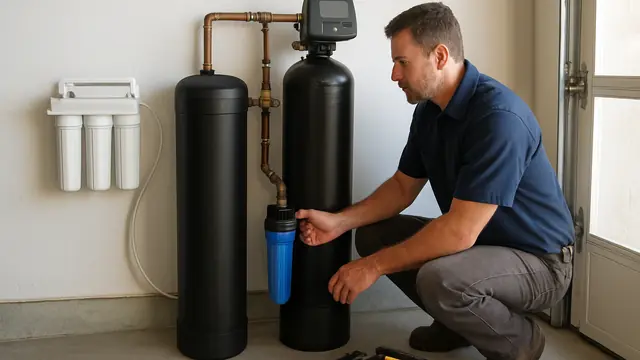
Stop and call for qualified help when plumbing water is near electrical equipment, sewage is entering occupied space, gas or burning odors are present, or a repair would require opening pressurized piping.
A small ceiling stain appears below a bathroom in your Rosemary Beach property, but the stain dries and does not return immediately. When you look beneath the bathroom sink, you see flexible gray supply pipe and wonder whether it is polybutylene. Do not assume the stain is harmless, and do not start tightening fittings or cutting into the pipe. Check for active moisture, stop using the fixture if it appears connected to the leak, locate the main water shutoff, and have a licensed plumber identify the piping and investigate the stain.
Polybutylene, usually called PB, is an older plastic water-supply material installed primarily from the late 1970s through the mid-1990s. It delivers pressurized hot and cold water to plumbing fixtures. It is different from the larger drainpipe beneath a sink and from the short flexible connector between a shutoff valve and faucet.
How to Identify Polybutylene Plumbing in Rosemary Beach
Look for letters and numbers printed along exposed pipe. "PB" or "PB2110" is a strong sign that the material is polybutylene.
Do not make the identification from color alone. PEX and other piping can have a similar appearance. A plumber confirms the material by examining its markings, dimensions, fittings, crimp rings, flexibility, and connection method.
A newer valve or short PEX section can be attached to older PB, so the visible material closest to a fixture may not represent the entire branch.
Follow the Supply Line, Not the Drain
Under a sink, the drain is the larger pipe connected to the basin. The water-supply piping is smaller and connects to the hot and cold shutoff valves. Look behind those valves toward the wall or cabinet floor.
Other safe inspection locations include toilet shutoffs, visible piping near the water heater, washing-machine hookups, utility spaces, and existing plumbing access panels. Photograph markings and fittings without moving the pipe.
Inspect more than one fixture. Renovations and prior repairs can leave a combination of PB, PEX, copper, or other materials.
Why Polybutylene Can Leak
Polybutylene can undergo internal deterioration. Oxidants in treated water may contribute to changes within the pipe wall, where they cannot be seen during a visual inspection. An exposed section can appear clean while another section is weakened.
Installation stress can also affect the system. Tight bends, unsupported pipe, crimped fittings, and sections installed under tension may be more vulnerable. Leakage can occur at a fitting, along the pipe, or at a transition to another material.
Symptoms That May Point to a Hidden Water Line
A ceiling stain below a bathroom is one possible sign, but it can also result from a shower enclosure, drain, toilet seal, roof opening, or condensation. A plumber must trace the source rather than assume the gray pipe is responsible.
Other warning signs include damp cabinet floors, bubbling paint, swollen baseboards, loose flooring, musty odors, soft drywall, or a hissing sound when fixtures are off. Unexplained water-meter movement or increased water use can also justify further investigation.
Safe Checks Before Service Arrives
Turn off faucets, appliances, irrigation, and other known water uses. Observe the water meter if it is accessible and you understand the display. Continued movement may show that water is flowing, but it will not identify whether the cause is PB, a toilet, an appliance, or another source.
Use a dry paper towel to check exposed connections without twisting them. Inspect the cabinet floor, wall penetrations, ceilings below plumbing fixtures, and the water-heater area.
If an active leak is present, shut off the main water supply when it is safe to do so. If the stain is below a particular bathroom, reducing use of that area may help prevent additional damage until it is diagnosed.
What Homeowners Should Not Attempt
- Do not flex the pipe to uncover its markings, cut out a sample, or tighten a crimped connection with household tools. Disturbing an older system can enlarge a small leak.
- Do not apply glue, heat, tape, sealant, or an improvised clamp to a pressurized line. PB repairs require approved materials and compatible transition fittings.
- Do not open multiple walls without a diagnostic plan. Random demolition may miss the pipe route and cause unnecessary restoration work.
When the Problem Needs Urgent Attention
Water spraying from a line, a stain that expands quickly, a sagging or bulging ceiling, wet electrical components, or flooring that begins to buckle requires urgent service. Shut off the water when safe.
Rapid meter movement with all known water use stopped can indicate a substantial hidden leak. Several moisture locations or a history of repeated repairs also justify prompt evaluation.
How a Licensed Plumber Diagnoses It
A plumber first identifies the visible pipe by its markings, fittings, connection rings, dimensions, and flexibility. The inspection then expands to other accessible fixtures and utility areas to estimate how much PB remains.
Moisture meters and thermal imaging can help identify damp building materials. An inspection camera or carefully placed access opening may be used to trace concealed routing.
The diagnosis should separate the piping question from the leak-source question. A home can contain PB while a particular stain is caused by a drain, fixture, or waterproofing issue.
Repair Options Beginning With the Least Invasive
If one accessible fitting or short section has failed, a localized repair may be possible. The damaged portion is removed and transitioned to approved modern piping.
A partial repipe may replace one branch, bathroom group, kitchen line, or another clearly defined area. It is most useful when PB is limited and the proposal clearly states what will remain.
A complete repipe replaces the pressurized distribution system with an approved material, commonly PEX or copper depending on the project. New routes and planned access points can reduce disruption. Disconnected PB may remain inside concealed spaces when removal is unnecessary.
Leak sensors, monitored alarms, automatic shutoff valves, and pressure regulation may supplement the chosen repair plan. They reduce risk but do not repair piping that remains.
Factors That Affect Cost
Cost is influenced by the amount of PB, fixture count, number of levels, pipe routing, accessibility, selected material, permits, inspections, and restoration requirements.
A written proposal should explain where access is expected, what piping will be replaced, who handles restoration, and what warranties or exclusions apply.
Prevention and Maintenance
Keep the main water shutoff accessible and ensure anyone responsible for the property knows its location. Test leak alarms as directed and place them near the water heater, washing machine, dishwasher, and sink cabinets.
Consider a monitored leak-detection system or automatic shutoff if the property is sometimes unoccupied. Have water pressure evaluated after banging pipes, unusually forceful flow, or repeated connector failures.
Identify Both the Pipe and the Source of the Symptom
Learning how to identify polybutylene plumbing in Rosemary Beach requires two separate answers: what piping material is present and what is causing the current symptom. Visible PB does not prove it caused every stain, but its presence should not be ignored. A licensed plumber can trace the moisture, document the piping, and explain whether a localized repair, partial repipe, complete replacement, or protective upgrade is appropriate.
About this guide: This resource provides general homeowner education, not a remote diagnosis. Actual conditions, code requirements, equipment, and safe repair options must be evaluated at the property.