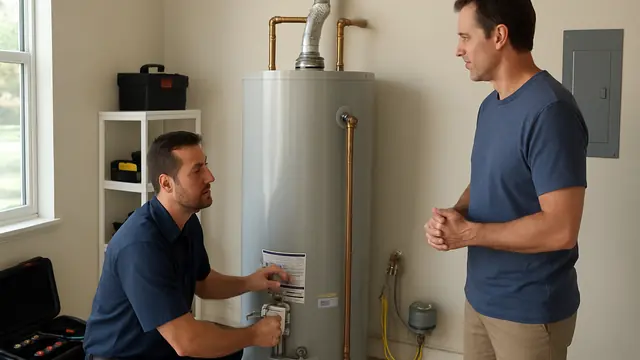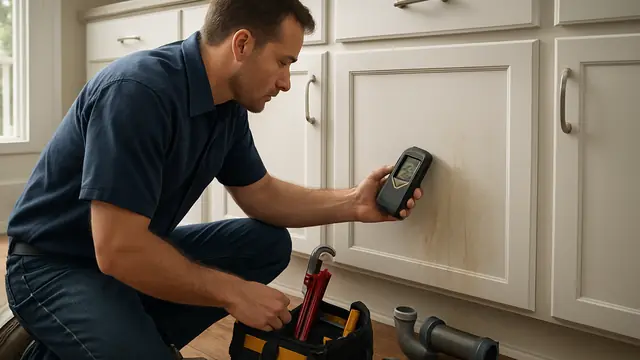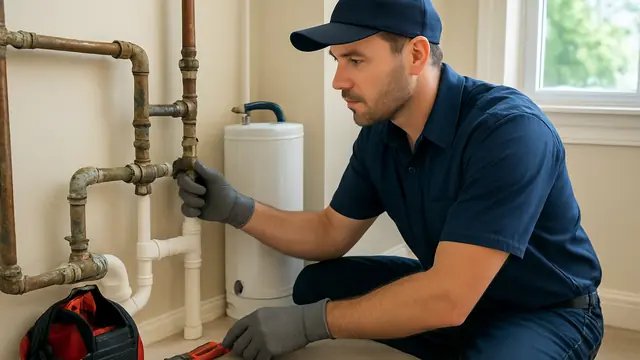
Stop and call for qualified help when plumbing water is near electrical equipment, sewage is entering occupied space, gas or burning odors are present, or a repair would require opening pressurized piping.
Why sudden shower temperature changes deserve attention
A shower should not become painfully hot when someone flushes a toilet or turn cold without warning while the handle stays in place. These changes can indicate a problem with the shower valve, the water reaching it, or the hot-water system. The distinction matters because replacing a showerhead will not correct every temperature problem, and turning up the water heater can make a scalding hazard worse.
For Shalimar homeowners and property managers, the most useful first step is identifying the pattern without deliberately recreating an unsafe condition. Does only one shower misbehave? Does the change happen immediately or after several minutes? Has it occurred during another fixture's use? Those observations help a plumber distinguish a local control problem from a broader supply issue. Stop using a shower that produces unpredictable hot bursts, especially when children, older adults, or people with limited mobility may use it.
Separate temperature trouble from ordinary hot-water delays
Water that starts cool and gradually warms after a shower is turned on may simply reflect cooled water sitting in the piping. A long pipe run can increase that initial wait. By contrast, water that repeatedly changes from comfortable to hot or cold after stabilizing suggests a different problem. A shower that slowly cools during extended use may be exhausting available hot water rather than suffering from a faulty shower valve.
Record what happens during ordinary use, including the approximate time before a change and whether anyone was using another fixture. Note recent plumbing work, a new showerhead, or a utility interruption. In Northwest Florida, seasonal changes in incoming water temperature can affect how much hot water must be mixed with cold, but they should not be used to dismiss abrupt, painful swings. Avoid having someone flush toilets or start appliances while another person stands under the shower as a diagnostic experiment.
How pressure-balancing and thermostatic valves differ
A pressure-balancing shower valve responds to changes in the relative pressures of the hot and cold supplies. When another fixture reduces cold-water pressure, the valve is designed to adjust the hot side to help maintain the mixture. A sticking balancing mechanism can interfere with that protection. Pressure balancing does not directly measure water temperature, so it cannot fully compensate for a changing hot-water supply temperature.
A thermostatic valve senses the mixed-water temperature and adjusts the blend within its operating limits. Some shower systems combine thermostatic control with pressure-balancing protection. Neither design can create hot water that is unavailable, and both depend on correct installation, adequate supplies, and functioning internal components. Handle style alone does not establish which protection a shower has. A plumber can identify the rough-in valve and cartridge, then determine whether the installed controls are appropriate and operating correctly.
When one shower behaves differently from the rest
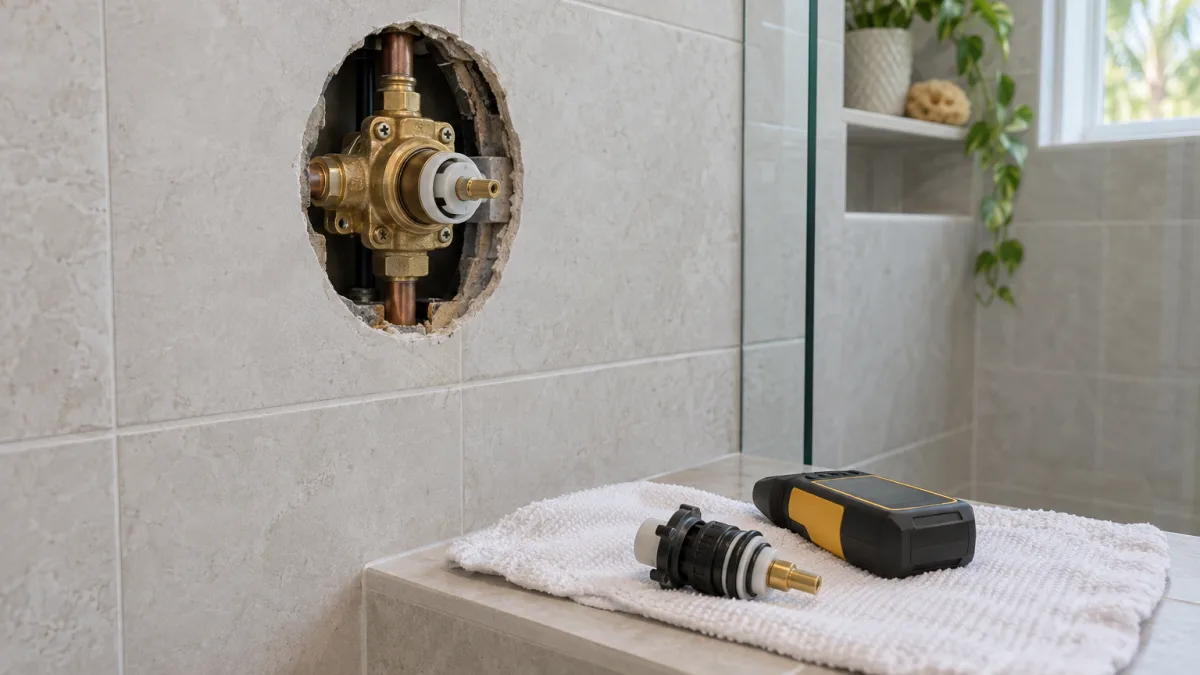
If other fixtures maintain normal temperatures while one shower changes unpredictably, the shower's cartridge or balancing assembly deserves close attention. Wear, debris, or mineral deposits can limit internal movement. A damaged seal can also affect how hot and cold water mix. Trouble beginning after plumbing work or a service interruption may involve disturbed debris, although timing alone does not prove the cause.
An incorrectly selected cartridge, reversed supplies, or a misadjusted handle limit stop can also produce confusing symptoms. The limit stop restricts handle travel toward the hot setting; it does not repair a failed balancing mechanism. A plumber should identify the valve before selecting parts rather than relying on trim appearance. A compatible cartridge replacement may solve the problem without opening the wall, but damaged valve bodies or unavailable parts can require a more extensive repair.
What temperature changes at several fixtures can mean
When more than one shower or faucet experiences similar changes, the investigation should extend beyond a single cartridge. Possible causes include inconsistent water-heater output, a malfunctioning central mixing valve, restricted supply piping, or changing demand that exceeds the system's capacity. A storage heater running out of usable hot water typically produces a different pattern from a shower that gets suddenly hotter whenever cold water is used elsewhere.
Some tankless heaters may stop heating if flow through the unit drops below the manufacturer's operating threshold. A restricted fixture or certain mixing conditions can contribute, but this needs confirmation rather than guesswork. A defective mixing fixture elsewhere can also allow unintended flow between hot and cold piping, sometimes called a plumbing crossover. Increasing the heater setting or installing a larger heater without testing may leave the actual cause untouched while adding cost or increasing burn risk.
Scald protection involves more than the heater setting
The temperature stored or produced at a water heater is not necessarily the temperature delivered at the shower. Central mixing devices, pipe conditions, fixture valves, and demand all influence delivery. A shower's adjustable limit stop should be checked against measured outlet temperature, not positioned by feel alone. Even a comfortable result during quiet household use does not establish that the valve will respond properly when supply conditions change.
A commonly cited residential hot-water reference is 120°F, but that is not a universal storage prescription or a guarantee against burns. Exposure time and individual vulnerability matter. Water storage, microbial risk management, equipment requirements, and point-of-use scald protection must be considered together. Ask a licensed plumber to evaluate the complete arrangement rather than changing settings independently to solve a shower complaint. Anyone who cannot quickly move away from hot water needs particular protection from unexpected temperature changes.
What a professional temperature diagnosis should include
A useful service visit starts with your description of the symptoms and an inspection of the affected fixture. The plumber may identify the valve model, measure outlet temperatures, compare hot and cold delivery at other fixtures, and observe how the system responds to controlled demand changes. Testing should occur with nobody exposed to the shower stream. Depending on the findings, supply pressure, flow restrictions, and heater operation may also need evaluation.
The next steps should follow the evidence. A single-shower problem may call for inspecting the cartridge and balancing components. Problems throughout the home may require testing a central mixing valve, checking heater performance, or isolating a suspected crossover. Ask what measurement or test supports the proposed repair. After work is complete, the plumber should verify stable operation, check the temperature limit, inspect for leaks, and explain any remaining limitations related to household demand or existing equipment.
Choosing between a cartridge repair and valve replacement
A cartridge repair is often worth considering when the valve body is sound, the correct replacement component is available, and the installed valve provides suitable temperature protection. Replacing only decorative trim generally does not upgrade the mechanism behind the wall. Likewise, installing a new showerhead cannot restore a failed balancing assembly, although correcting a fixture restriction may resolve a confirmed flow-related problem.
Full valve replacement may make sense when the body is damaged, necessary parts cannot be obtained, or an older arrangement lacks appropriate protection. Before approving work, ask where access will be made and who will handle wall repairs. Shower-side access can affect tile and waterproofing; access from an adjacent room may be possible but is not guaranteed. The scope should address compatible trim, any diverter or volume-control components, temperature adjustment, and final operational testing.
Maintenance that supports reliable shower controls
Keep a record of the shower valve manufacturer, model, cartridge information, and repair date whenever that information is available. Those details can prevent unnecessary disassembly during a future service visit. Clean accessible showerhead surfaces and outlets according to the manufacturer's instructions, and report noticeable changes in flow or handle movement. Avoid forcing a stiff handle or using unapproved chemicals that may damage seals and finishes.
For seasonally occupied Shalimar properties, include normal shower operation in the return-to-service check before guests arrive. Northwest Florida humidity can make inspection of nearby finishes worthwhile, but it does not by itself establish the cause of an internal valve failure. After a utility interruption, follow provider guidance before resuming use and report persistent changes in temperature or flow. Valve maintenance should follow the equipment's instructions and observed condition rather than an assumed replacement schedule.
When to stop using the shower and arrange service
Stop using the shower if it suddenly becomes scalding, cannot be adjusted to a comfortable temperature, or has a control that spins, binds, or no longer responds predictably. Keep guests and household members from using that fixture until it is evaluated. Do not treat a warning sign as something everyone can simply learn to work around. If a burn occurs, obtain appropriate medical guidance rather than continuing plumbing troubleshooting.
Do not remove a cartridge, open a pressurized valve body, or bypass a temperature-limiting component to restore flow. Property managers should document the complaint, identify the affected bathroom, and arrange a safe alternative for occupants. When scheduling plumbing service with A Superior Mechanical, provide the observed pattern, any recent work, and whether other fixtures are affected. Request a diagnosis that includes the shower's temperature protection and verification after repair, not just replacement of a suspected part.
About this guide: This resource provides general homeowner education, not a remote diagnosis. Actual conditions, code requirements, equipment, and safe repair options must be evaluated at the property.