Stop and call for qualified help when plumbing water is near electrical equipment, sewage is entering occupied space, gas or burning odors are present, or a repair would require opening pressurized piping.
A Springfield homeowner may discover the problem after moving a laundry basket and finding damp flooring, opening a vanity and smelling moisture, or noticing that the water heater seems to run when no one is using hot water. The cause may be a concealed supply pipe, drain joint, fixture seal, appliance hose, or valve. Stop using the fixture closest to the symptom, move belongings away from the wet area, and determine whether the moisture continues to appear. If water is actively spreading and the nearest fixture valve does not stop it, turn off the main water supply when it is safe.
How Hidden Leaks Behave
Pressurized supply lines can leak continuously, including overnight. Drain lines usually leak only when a sink, toilet, shower, tub, dishwasher, or washing machine is used. Fixture seals and appliance connections may leak only during use or under certain operating conditions.
Other moisture sources can look similar, so the system responsible should be confirmed before repair.
Seven Warning Signs of a Hidden Plumbing Leak in Springfield
1. Water Appears After Laundry or Dishwasher Use
Timing is one of the most useful clues. Damp flooring after the washing machine runs may point to a supply hose, drain hose, standpipe, valve, or nearby concealed line. Moisture after a dishwasher cycle may involve its water connection, drain hose, door seal, or adjacent sink plumbing.
Stop using the appliance until the source is identified. Avoid pulling a heavy appliance away because that can damage flooring, hoses, or connections.
2. The Meter Changes During a No-Use Period
Turn off faucets, irrigation, ice makers, appliances, and water-treatment equipment. Make sure toilets have stopped refilling. Record the meter reading, use no water for 20 to 30 minutes, and then check it again.
If the meter changes, inspect toilets and automatic equipment first. Continued movement after those are isolated can indicate a concealed supply leak.
3. A Wall or Ceiling Stain Grows After Fixture Use
A small ceiling mark may darken after an upstairs bathroom is used. A wall stain may expand after a shower or sink drains. Paint may bubble, texture may loosen, or drywall may feel soft.
Water often travels before becoming visible. Photograph the area and mark its edge to track growth.
4. Flooring Feels Spongy, Uneven, or Loose
Water beneath flooring can soften underlayment, raise laminate seams, loosen vinyl, cup wood, or make carpet padding feel damp. Tile may move slightly or sound hollow when tapped.
Avoid putting heavy furniture or body weight on a weakened area. Stop using nearby plumbing and keep others away if the floor feels unstable. A warm patch may indicate a hot-water leak, although other heat sources can create a similar effect.
5. A Damp Odor Returns After Cleaning
A musty smell that returns may indicate that drywall, insulation, cabinets, carpet padding, or subflooring remains wet.
Note where the odor is strongest and whether it increases after a fixture or appliance operates.
6. You Hear Water When Every Fixture Is Off
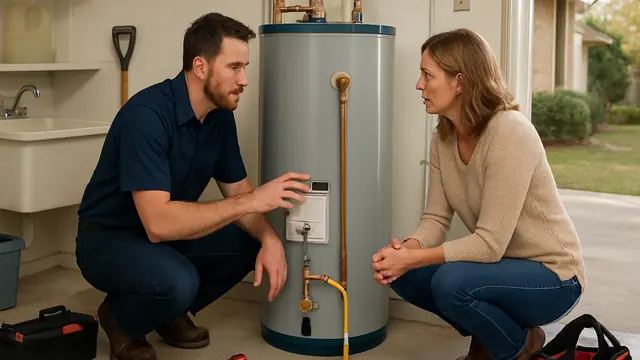
A hiss, drip, or faint rushing sound may be easier to detect at night. Listen near toilets, sinks, the water heater, laundry connections, and walls where plumbing enters.
To test a toilet, add several drops of food coloring to the tank and wait without flushing. If color reaches the bowl, water is leaking internally through the toilet. If the sound remains after fixtures are isolated, a concealed line may be releasing water under pressure.
7. Hot Water or Pressure Changes Unexpectedly
A hot-water leak may cause the water heater to cycle more often and hot water to run out sooner. A larger supply leak can reduce pressure at several fixtures.
Other causes include aerators, valves, regulators, or utility issues. Note which fixtures and temperatures are affected.
Safe Checks You Can Perform
Use a flashlight to inspect under sinks, around toilet bases, behind accessible appliance connections, near the water heater, and around visible valves.
Wipe exposed fittings with a dry paper towel and photograph stains, flooring damage, and meter readings.
If water is actively damaging the home, close the nearest valve or the main shutoff when safely accessible. Keep away from wet electrical outlets, appliances, panels, or ceiling fixtures.
What the Homeowner Should Not Attempt
Do not cut walls, remove flooring, break tile, or drill into a ceiling based only on where the stain appears. The source may be several feet away, and wiring or other plumbing may be hidden in the area.
Do not use chemical drain cleaner. It cannot repair a cracked drain, failed seal, or loose joint.
Avoid forcing corroded valves or repeatedly tightening fittings. A small seep can become a full break. Tape, caulk, or surface epoxy is not a dependable permanent repair for pressurized plumbing.
Signs That Make the Problem Urgent
Call for prompt service when water spreads quickly, a ceiling sags, flooring lifts, drywall feels soft, or cabinetry begins to separate. Keep people away from a bulging ceiling because saturated material can fall.
Water near electrical equipment requires immediate caution. A continuously moving meter, sudden pressure loss, rapidly disappearing hot water, or an active leak that will be left unattended also warrants fast action.
How a Licensed Plumber Diagnoses the Leak
The plumber first determines whether moisture follows appliance use, drainage, or no-use periods.
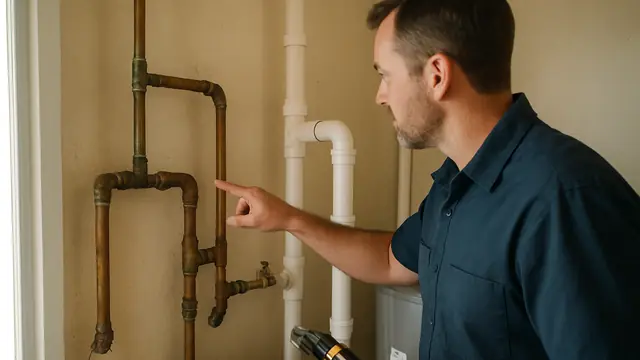
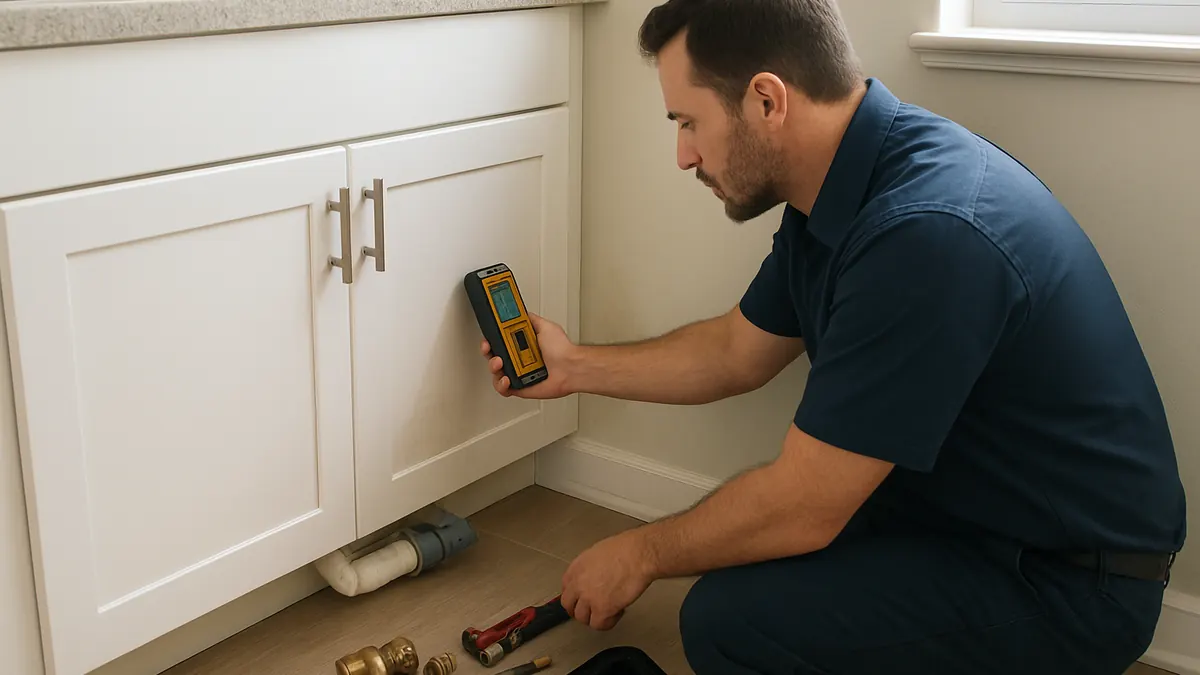
Testing may include meter observation, water-pressure checks, toilet testing, fixture isolation, and inspection of accessible hoses and connections. Moisture meters help map wet building materials. Thermal imaging may reveal temperature differences, acoustic equipment can help locate pressurized leaks, and drain cameras can inspect accessible drainage lines. The goal is to confirm the source before opening finished surfaces.
Repair Options Beginning With the Smallest Effective Fix
A leaking appliance hose, faucet connector, trap, valve, toilet seal, or water-heater fitting may only require replacement of that part. A failed pipe joint or short damaged section may be repaired through a small access opening.
An inaccessible line may be rerouted to avoid extensive wall or floor removal. A longer branch may be replaced when deterioration extends beyond one spot. Partial or complete repiping may be considered when leaks recur or several parts of the system are failing. Wet building materials may need drying or restoration after the plumbing repair.
Factors That Affect Repair Cost
Cost depends on the leak location, pipe material, accessibility, diagnostic work, repair method, and amount of water damage. An exposed washing-machine hose is generally simpler to replace than a concealed line beneath concrete or finished flooring.
Prevention and Maintenance
Inspect washing-machine hoses, dishwasher connections, sink cabinets, toilet lines, and the water heater several times a year. Replace connectors that are cracked, bulging, rusted, or damp. Keep appliance shutoff valves accessible.
Monitor bills, have excessive pressure evaluated, and make sure household members know how to use the main shutoff.
Homeowner FAQs
Can an appliance leak only during one part of its cycle?
Yes. A washing machine or dishwasher may leak only while filling, draining, or pumping water.
Why is the floor damp but the cabinet is dry?
Water may be traveling beneath the flooring from another fixture, appliance, wall cavity, or pipe location.
Can a hidden leak stop temporarily?
An intermittent drain or appliance leak may seem to stop when the fixture is not used, but the failed connection remains.
Does a moving meter prove there is a slab leak?
No. Toilets, irrigation, appliances, and other supply leaks should be ruled out before the leak location is determined.
Can leak detection reduce demolition?
Often, yes. Meter testing, moisture mapping, thermal imaging, acoustic tools, and system isolation can narrow the search before access is made.
Act on the Pattern, Not Just the Puddle
Seven warning signs of a hidden plumbing leak in Springfield include appliance-related moisture, unexplained meter movement, growing stains, damaged flooring, recurring odors, water sounds, and changes in pressure or hot-water performance. Stop using the suspected fixture or appliance, document the pattern, control active water safely, and arrange a licensed diagnosis before damage spreads through more of the home.
About this guide: This resource provides general homeowner education, not a remote diagnosis. Actual conditions, code requirements, equipment, and safe repair options must be evaluated at the property.