Stop and call for qualified help when plumbing water is near electrical equipment, sewage is entering occupied space, gas or burning odors are present, or a repair would require opening pressurized piping.
A Callaway homeowner may discover the problem while opening a sink cabinet, stepping on soft flooring, or hearing water move after everyone has gone to bed. The area may not look flooded, yet a pipe or connection could be leaking inside the home. Stop using the nearest fixture, remove stored items, and shut off the fixture valve if water is actively escaping. If damage is spreading and the source cannot be isolated, use the main shutoff when safe.
Water can travel along framing, collect beneath cabinets, soak flooring, or appear in another room. Early diagnosis improves the chance of a focused repair.
Why Hidden Leaks Develop
Supply lines carry pressurized water, while drain lines carry used water away. Supply leaks may continue constantly; drain leaks often appear only when a fixture is used.
Common causes include loose connections, cracked hoses, worn toilet seals, corroded fittings, damaged joints, failed valves, and excessive pressure. Condensation, roof intrusion, and air-conditioning drainage can create similar marks, so the source must be confirmed.
Seven Warning Signs of a Hidden Plumbing Leak in Callaway
1. The Water Meter Moves During a No-Use Test
Turn off faucets, irrigation, appliances, and ice makers. Record the meter reading, wait 20 to 30 minutes without using water, and check again. Movement suggests water is being used or lost. Check toilets and equipment that can cycle automatically before assuming a concealed pipe is broken.
2. One Room Develops a Damp or Earthy Odor
A recurring musty odor may mean materials are staying wet. Cabinets, drywall paper, insulation, carpet padding, and wood can hold moisture even when the surface feels dry.
Pay attention to where the smell is strongest and whether it changes after using a bathroom, kitchen, or laundry fixture. That timing can distinguish a drain leak from a continuously leaking supply line.
3. Paint, Drywall, or Cabinet Materials Change
Water can cause paint to blister, wall texture to loosen, drywall to soften, and cabinet panels to swell. Baseboards may separate from the wall or show darkened edges.
Do not assume the center of a stain marks the pipe failure. Water often travels before it becomes visible. Mark the edge of the affected area and photograph it so you can document growth.
4. Flooring Becomes Spongy, Buckled, or Discolored
A hidden leak may first appear as flooring that feels different underfoot. Laminate can swell at the seams, wood may cup, vinyl can loosen, and carpet may feel cool or damp.
Stop using nearby plumbing and avoid placing heavy objects on a weakened floor. If the area is near a toilet, tub, shower, dishwasher, refrigerator, or washing machine, note which fixture was used before the symptom appeared.
5. You Hear Dripping or Rushing Water
Listen when the home is quiet and every fixture is off. Dripping inside a wall, hissing near a valve, or a faint rushing sound beneath the floor may indicate a supply leak.
Running toilets are a common alternative explanation. Put food coloring in the toilet tank and wait without flushing. Color entering the bowl indicates an internal toilet leak that should be repaired.
6. Hot Water Runs Out Faster Than Normal
A hidden hot-water leak can cause the water heater to operate more frequently and reduce the amount of hot water available. You may also notice a warm floor, warm cabinet surface, or unexplained energy use.
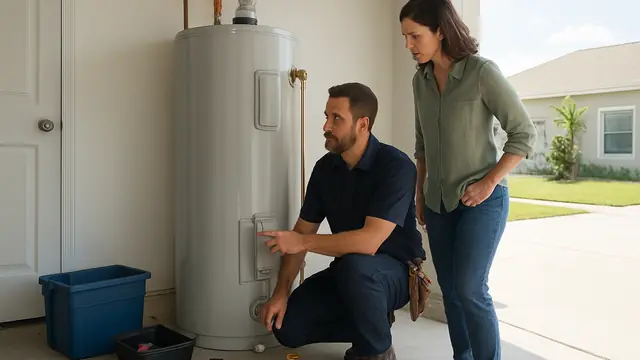
A water-heater problem can create similar symptoms, so do not assume the leak is beneath the slab. The heater, hot-water piping, and fixtures should be tested as a system.
7. Water Pressure Changes Suddenly
A major supply leak can reduce pressure at several fixtures. Compare hot and cold performance and determine whether the problem affects one faucet, one room, or the whole home.
A clogged aerator, partially closed valve, pressure regulator problem, or utility interruption can also lower pressure. The pattern helps separate a local fixture issue from a larger plumbing problem.
Safe Checks Before the Plumber Arrives
Use a flashlight to inspect below sinks, around toilet bases, behind accessible appliances, near the water heater, and around valves. Wipe fittings with a dry paper towel to reveal small leaks.
Check the meter only when no legitimate use is occurring. Note whether moisture appears continuously or only after drainage. Move belongings away. If water approaches electrical equipment, keep your distance and shut off the supply only when the valve is safely accessible.
What Homeowners Should Not Do
Do not cut a wall or ceiling simply because a stain is visible. Opening the wrong area can damage wiring, ductwork, or additional plumbing while failing to expose the leak.
Do not pour chemical drain cleaners into a fixture to solve unexplained moisture. They cannot seal a cracked drain and may remain in the pipe when a plumber opens it.
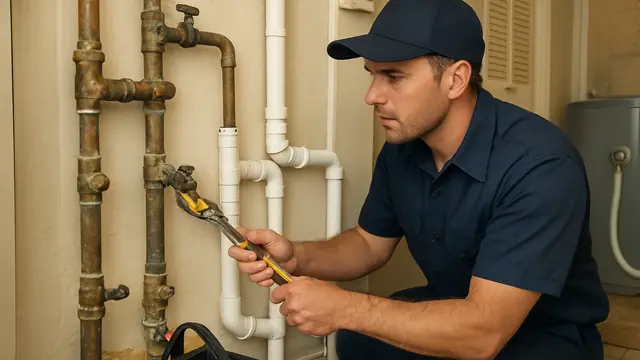
Avoid forcing an old shutoff valve or overtightening a corroded fitting. A small seep can become a full break. Tape, caulk, and surface sealants are not permanent repairs for damaged pressurized pipe.
Signs the Leak Needs Immediate Service
Call promptly when water is spreading, a ceiling is sagging, flooring is lifting, drywall is soft, or cabinets are separating. Water near electrical equipment requires special caution.
Continuous meter movement, a sudden pressure loss, unexplained hot-water depletion, or active water beneath the floor also warrants quick attention. Even a slow leak can damage materials and create conditions that require extensive drying.
How a Licensed Plumber Finds the Source
The plumber reviews symptoms, inspects exposed components, tests pressure, and observes the meter. Fixtures may be isolated to determine whether the problem involves a toilet, appliance, hot-water line, cold-water line, or drain.
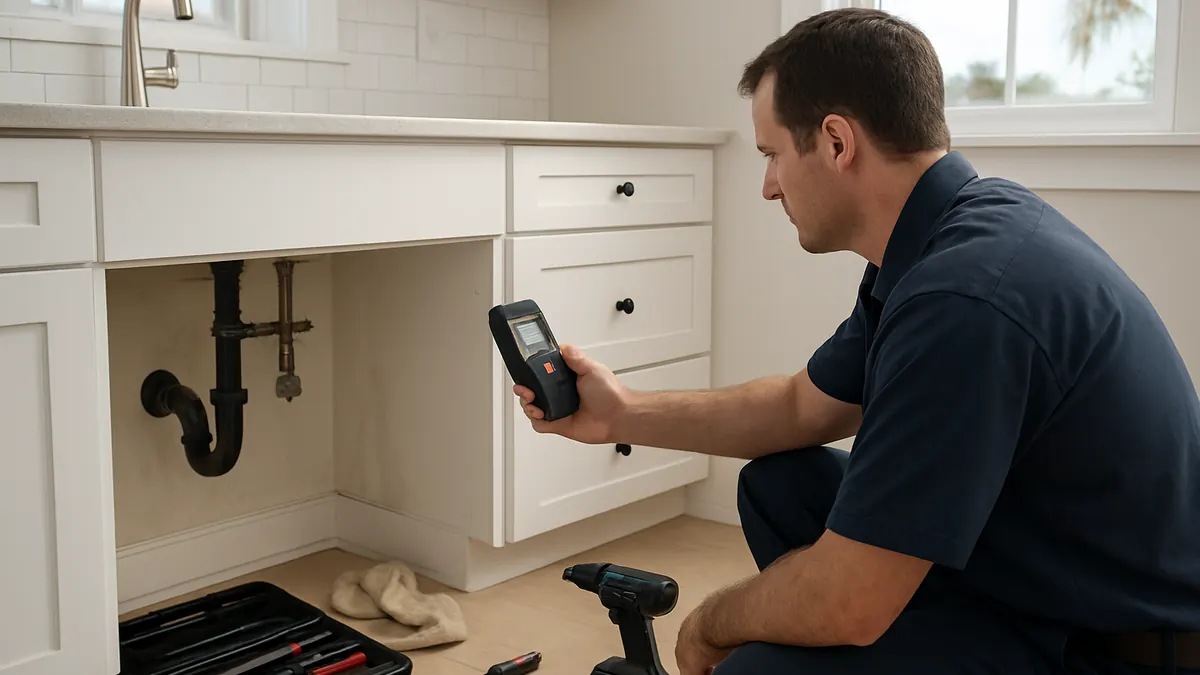
Moisture meters map damp materials. Thermal imaging reveals temperature patterns, acoustic equipment may detect escaping pressurized water, and drain cameras can inspect accessible lines. Testing narrows the location before a small access opening is made.
Repair Choices: Start With the Smallest Effective Fix
A leaking connector, trap, valve, toilet seal, or appliance hose may only need component replacement. A failed joint or short damaged section may require a localized repair.
For piping beneath a slab, options can include focused access, rerouting, or replacing a longer section. Repeated leaks or widespread deterioration may justify partial or whole-home repiping. Drying and restoration may still be needed after the source is repaired.
Factors That Affect Cost
Cost varies with access, location, pipe material, diagnostic complexity, repair method, and water damage. A loose sink connection is less complex than a line beneath concrete. Emergency scheduling, fixture removal, rerouting, and multiple failures also affect the total.
Prevention and Routine Maintenance
Inspect below sinks and around appliances every few months. Replace cracked, bulging, rusted, or damp hoses. Keep valves accessible, monitor water bills, and investigate unexpected usage. Have excessive pressure corrected, and label the main shutoff clearly.
Homeowner FAQs
Can a small hidden leak cause serious damage?
Yes. A slow leak may remain unnoticed long enough to soak materials over a wide area.
Why does the stain appear away from the fixture?
Water can follow framing, pipes, and low points before it reaches the visible surface.
Will thermal imaging show the exact broken pipe?
Not always. It shows temperature differences that help guide further testing; it does not identify every leak by itself.
Should I leave the main water off?
Leave it off when active supply water is causing damage. A plumber can advise when it is safe to restore service.
Is every musty smell caused by plumbing?
No. Condensation, roof leaks, and humidity can create similar odors. The source must be tested.
Protect the Home Before the Damage Spreads
Seven warning signs of a hidden plumbing leak in Callaway include meter movement, recurring odors, damaged finishes, changed flooring, water sounds, lost hot water, and pressure changes. Document what you see, limit fixture use, control active water when safe, and arrange a licensed diagnosis rather than guessing where to open the home.
About this guide: This resource provides general homeowner education, not a remote diagnosis. Actual conditions, code requirements, equipment, and safe repair options must be evaluated at the property.