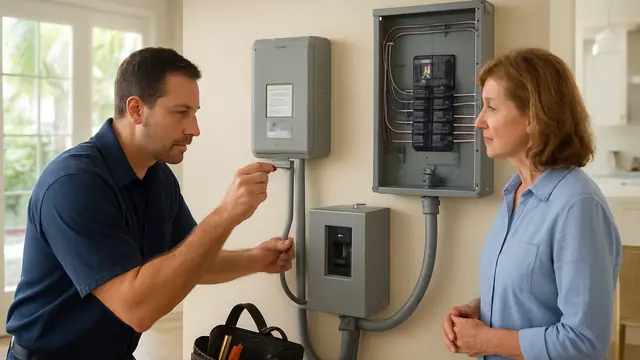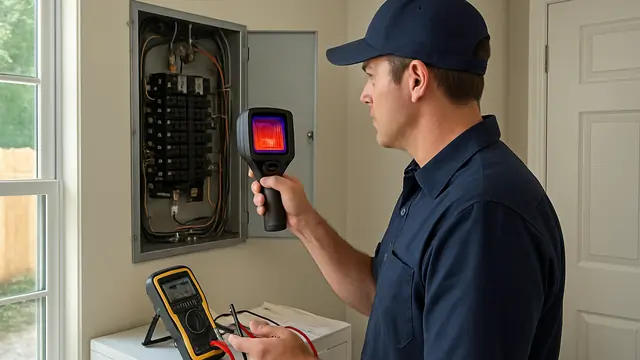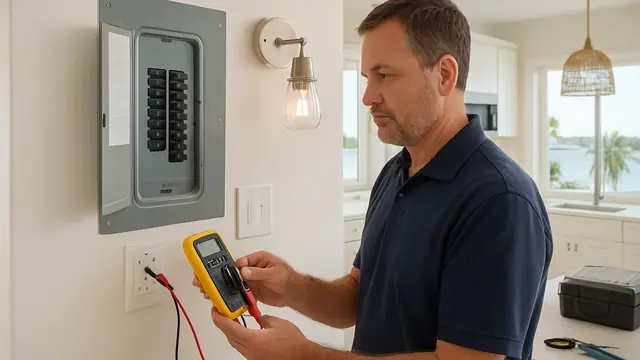
Do not remove an electrical panel cover, touch exposed conductors, bypass protection, or repeatedly reset a fault. Keep clear of smoke, sparks, burning odors, hot equipment, standing water near electricity, and downed lines, then call qualified help.
You unplug a lamp near the living room sofa and notice that the wall plate feels warmer than the drywall around it. Another common situation is finding warmth at a kitchen outlet after running a coffee maker, toaster, or countertop appliance. The receptacle may still work, and no breaker may have tripped, but heat at an outlet is not something to ignore.
A warm electrical outlet can be caused by heat from the connected device, a loose wire, worn internal contacts, an overloaded circuit, or damage inside the electrical box. The safest immediate step is to unplug the device and stop using that receptacle. If the outlet is hot, discolored, buzzing, sparking, smoking, or producing a burning odor, turn off the circuit breaker if the panel is accessible and call a licensed electrician.
What Causes an Electrical Outlet to Feel Warm in Pretty Bayou?
A receptacle should stay close to room temperature. Mild warmth may sometimes come from a charger or electronic power supply, but noticeable or persistent heat usually means something needs to be checked.
Loose Connections Create Resistance
Electricity flows best through clean, tight metal connections. When a terminal screw, wire connector, or internal contact loosens, current is forced through a smaller contact area. That added resistance creates heat.
Worn Receptacle Contacts
The metal contacts inside an outlet are supposed to hold plug blades firmly. If a plug wiggles, droops, or falls out easily, the contacts may be worn.
A loose fit can cause arcing, meaning electricity jumps across a tiny gap and damages the metal while creating heat.
High Electrical Demand
Portable heaters, hair dryers, irons, vacuum cleaners, countertop ovens, and power tools use much more electricity than lamps or phone chargers. A weak connection may remain cool under a light load but heat rapidly when a high-wattage appliance operates.
Running several heavy loads on the same circuit can also create excessive demand. A power strip adds plug spaces, but it does not add circuit capacity.
Heat From the Device Itself
Chargers, adapters, and plug-in transformers can feel warm during normal use and transfer heat to the outlet cover.
Unplug the equipment and allow the area to cool. If the warmth disappears and the outlet shows no looseness, odor, discoloration, or noise, the device may be the source. If the receptacle stays warm or heats with different devices, it needs professional evaluation.
Damaged Wiring or Splices
A loose splice, damaged conductor, weak push-in connection, or failing neutral can create heat inside the box. The outlet may feel warm while feeding other outlets downstream.
Safe Checks a Homeowner Can Perform
Unplug the device by holding the plug body rather than pulling on the cord. Let both the plug and receptacle cool before looking closely.
Without removing the cover plate, check for discoloration, melted plastic, cracks, looseness, or a hot-plastic smell. Listen for buzzing or crackling and notice whether lights flicker.
Inspect the appliance cord and plug for bent blades, darkened metal, damaged insulation, or looseness where the cord enters the plug. Note what was running and whether other high-demand devices were in use.
You may look at the breaker handle from outside the panel. Do not remove the panel cover. If a breaker has tripped, unplug the appliance before one reset. If the breaker trips again, leave it off.
What You Should Not Attempt
Do not remove the outlet, tighten wires, replace the receptacle, or open the electrical panel unless you are qualified. A box may contain more than one cable, shared conductors, or unexpected voltage.
Never replace a tripping breaker with a larger one. Breakers are sized to protect the wiring. Increasing the breaker rating can allow the circuit conductors to overheat.
Do not cool the outlet with water, tape a plug into a loose receptacle, bend the blades, or keep using the other half of the outlet. Both openings usually share the same internal connections.
Avoid using an extension cord or power strip as a permanent workaround. Moving the appliance does not repair the original fault.
Signs That Make the Problem Urgent
- Turn off the circuit and arrange prompt service when the outlet is painful to touch, smells burned, makes a sizzling or popping sound, sparks, smokes, or shows melted plastic.
- Heat spreading beyond the cover plate, a plug fused to the outlet, repeated breaker trips, or widespread flickering also require immediate attention.
- If smoke or fire is present, leave the area and call emergency services. Do not use water on an electrical fire and do not approach the panel if smoke or heat makes it unsafe.
How a Licensed Electrician Diagnoses the Problem
The electrician begins by identifying what was connected and which other devices share the circuit. Power is turned off and verified with test equipment before the receptacle is removed.
The electrician inspects the contacts, terminals, wire ends, splices, insulation, grounding, and box for heat damage.
Testing may include voltage measurement, polarity verification, grounding checks, circuit tracing, load evaluation, and voltage-drop testing. A high-resistance connection may show normal voltage with no load but fail when current increases.
Repair Options Beginning With the Least Invasive
If a defective appliance, charger, plug, or cord caused the heat, removing that item from service may be the first correction.
When the receptacle is worn but the wiring remains sound, the electrician may replace the device and reconnect the conductors securely. A loose splice can often be remade with an approved connector.
Heat-damaged wire ends may sometimes be trimmed and reterminated if enough safe conductor remains. If insulation is damaged beyond the box, the affected section of cable may need replacement.
A dedicated circuit may be recommended when a high-demand appliance regularly stresses a general-purpose circuit. More involved work may include correcting a loose neutral, replacing a defective breaker, repairing a panel connection, or redistributing loads. One warm outlet does not automatically mean complete rewiring.
What Affects Repair Cost?
Cost depends on the cause, accessibility, number of affected devices, and extent of heat damage. Replacing one accessible receptacle is generally less involved than tracing an intermittent fault through several rooms.
Concealed cable damage, wall access, box replacement, panel capacity, and a possible dedicated circuit also affect the scope. The estimate should separate necessary repairs from optional improvements.
Preventing Warm Outlets
Replace receptacles that no longer hold plugs firmly. Stop using cords with bent blades, damaged insulation, or discolored plug ends.
Avoid operating several high-wattage appliances on the same circuit. Plug portable heaters and similar loads directly into appropriate wall outlets instead of lightweight extension cords or stacked adapters.
Keep furniture from pressing plugs sideways or crushing cords. Pay attention to buzzing, flickering, hot odors, and repeated breaker trips. Early attention can prevent a small connection problem from becoming a larger repair.
Stop Using the Outlet Until the Cause Is Known
What causes an electrical outlet to feel warm in Pretty Bayou may be heat from a connected device, a worn receptacle, a loose terminal, excessive circuit demand, or hidden wiring damage. Unplug the equipment, leave the outlet unused, and have a licensed electrician determine the safest repair before reuse.
About this guide: This resource provides general homeowner education, not a remote diagnosis. Actual conditions, code requirements, equipment, and safe repair options must be evaluated at the property.