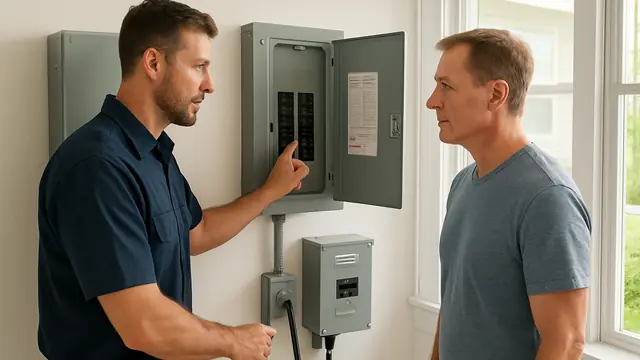
Do not remove an electrical panel cover, touch exposed conductors, bypass protection, or repeatedly reset a fault. Keep clear of smoke, sparks, burning odors, hot equipment, standing water near electricity, and downed lines, then call qualified help.
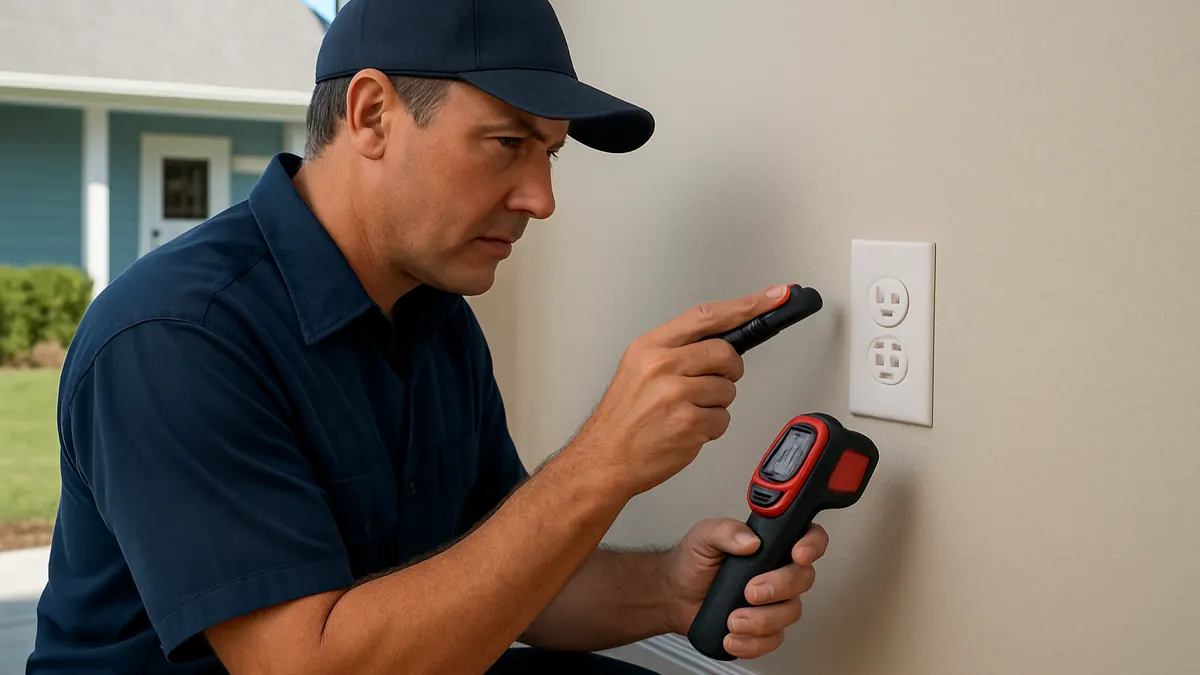
You are cleaning the kitchen and notice that the outlet beside the counter feels warm after the coffee maker has been running. Or perhaps a bedroom receptacle feels hot behind a television, even though everything still has power. A warm electrical outlet means heat is coming from the connected device, the receptacle, the wiring, or the amount of current moving through the circuit.
Unplug anything connected to the outlet and stop using it. If the receptacle is hot, smells burned, shows dark marks, sparks, buzzes, or causes repeated breaker trips, turn off the circuit from a safe location and contact a licensed electrician. A working outlet can still contain a hazardous connection behind the wall.
Why an Electrical Outlet May Feel Warm
Electrical connections create very little heat when they are tight and properly sized. When a contact becomes loose or a circuit carries more demand than intended, resistance and temperature can rise.
Loose Terminal Screws or Splices
A receptacle connects to branch-circuit wires through terminals. If a screw, connector, or splice loosens, current passes through an unstable contact area. That can create heat, voltage drop, intermittent power, or arcing.
Worn Internal Contacts
Plugs should fit firmly. When a plug falls out, droops, or works only at a certain angle, the outlet's internal contacts may no longer grip the blades correctly.
That loose fit can produce small electrical arcs and localized heat. Replacing the worn receptacle is usually safer than trying to bend, tape, or support the plug.
An Overloaded Branch Circuit
A branch circuit carries power from the panel to a group of outlets, lights, or equipment. Problems can occur when several high-demand devices run at once.
Microwaves, toaster ovens, electric skillets, portable heaters, hair dryers, and power tools can draw substantial current. The breaker may trip when the total load becomes excessive, but a weak outlet can overheat before the breaker responds.
A Loose Neutral
The neutral conductor provides a return path for current in many household circuits. A loose neutral can cause heat, flickering lights, erratic voltage, or unusual appliance behavior.
Faulty Wiring or a Damaged Conductor
Improperly stripped wire, nicked copper, heat-damaged insulation, weak push-in connections, or earlier unverified repairs can create resistance. The defect may be in the outlet box, another receptacle, or a junction farther along the same circuit.
Heat From the Appliance
Laptop chargers, gaming power supplies, plug-in scent devices, and other electronics may warm during normal operation. Unplug the device and allow the area to cool.
If the outlet becomes cool and shows no damage, the equipment may be the heat source. If the receptacle remains warm, fits plugs loosely, or heats with several different devices, it needs professional evaluation.
Safe Checks Before Calling an Electrician
Hold the plug body when disconnecting equipment. Inspect the plug and cord for bent blades, darkened metal, melted plastic, crushed insulation, or looseness where the cord enters the plug. Do not reuse visibly damaged equipment.
Without removing the cover, look for discoloration, cracks, loose plug fit, buzzing, burning odor, intermittent power, dimming lights, or repeated trips. Note whether the warmth occurs with one appliance or several and what else was operating.
You may check the breaker handle from outside the panel. Do not remove the panel cover or touch internal components. A breaker that will not remain reset should be left off.
What You Should Not Do
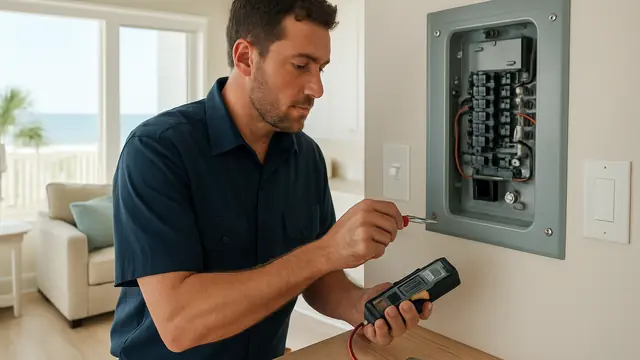
Do not open the outlet box, tighten live terminals, or replace the receptacle without proper training and test equipment. Electrical boxes may contain more than one circuit, shared neutrals, or mislabeled conductors.
Never replace a tripping breaker with a higher-amperage model. The breaker must match the conductor size and circuit design. Oversizing it can allow wiring to overheat without proper protection.
Do not use a power strip to solve the problem. A strip adds plug spaces but does not add circuit capacity. Do not use an extension cord as a permanent route to another room.
When the Problem Is Urgent
Immediate action is needed when the outlet is hot to the touch, smoke is visible, a burning odor is present, or plastic appears melted. Sparks, popping sounds, scorch marks, repeated breaker trips, and heat spreading into the wall are also urgent.
If a plug appears melted into the receptacle, do not pull it out. Turn off power if it is safe and call for service. Pulling on it may expose energized metal.
If there is active fire, evacuate and call emergency services. Never use water on an electrical fire.
How a Licensed Electrician Finds the Cause
The electrician begins by asking which appliance was connected, how long it ran, and whether the breaker tripped. After safely de-energizing and verifying the circuit, the receptacle is removed for inspection.
The electrician checks terminal tightness, conductor ends, insulation, grounding, splices, and the electrical box. Heat damage may appear as darkened copper, pitted contacts, softened insulation, or melted plastic.
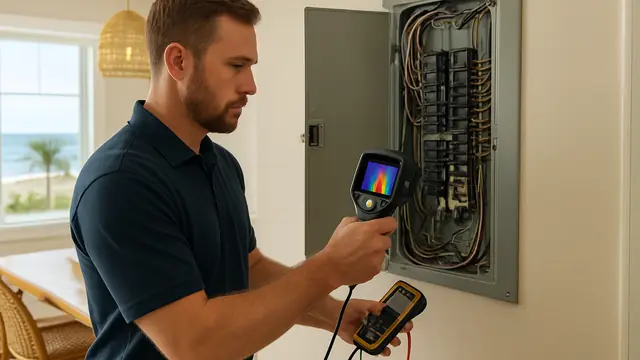
Testing can include voltage measurement, polarity and grounding verification, circuit tracing, load testing, and checking voltage drop under operating conditions. Other receptacles on the circuit may be inspected because an upstream fault can affect downstream devices.
Repair Options Beginning With the Least Invasive
If a defective appliance or plug is creating the heat, removing it from service may solve the immediate problem. When one receptacle is worn or damaged, the electrician may replace it, reterminate sound conductors, and verify proper grounding and polarity.
A loose splice may be remade with an appropriate connector. Similar weak connections at nearby outlets may also be corrected.
If heat has damaged cable beyond the box, the affected section may require replacement. When ordinary household use overloads the circuit, a dedicated circuit may be recommended for the high-demand equipment.
Broader repairs may include replacing a defective breaker, correcting panel connections, or reconfiguring circuit loads. One warm outlet does not automatically mean the home needs complete rewiring.
Factors That Influence Cost
Cost varies with the location of the fault, the number of affected devices, and how accessible the wiring is. One receptacle replacement is less involved than opening a wall to replace damaged cable or routing a new dedicated circuit.
Preventing Future Outlet Heating
Avoid operating several high-wattage appliances on the same circuit. Replace outlets that no longer hold plugs firmly and retire damaged cords instead of taping them.
Do not daisy-chain power strips or place extension cords under rugs. Keep furniture from pressing hard against plugs, which can bend blades and stress receptacles.
Schedule an electrical evaluation when you notice frequent trips, widespread loose outlets, flickering, or a history of uncertain electrical modifications. Early correction is usually less disruptive than repairing heat damage later.
Protect the Circuit Before Using It Again
What causes an electrical outlet to feel warm in Callaway may be a heat-producing device, loose terminal, worn receptacle, damaged conductor, or overloaded circuit. Treat the symptom as a warning, stop using the outlet, and have a licensed electrician identify the source.
About this guide: This resource provides general homeowner education, not a remote diagnosis. Actual conditions, code requirements, equipment, and safe repair options must be evaluated at the property.