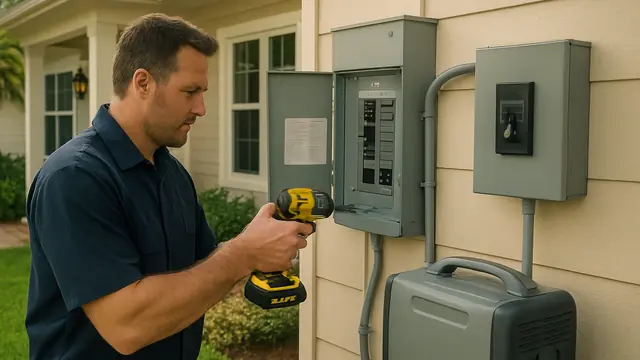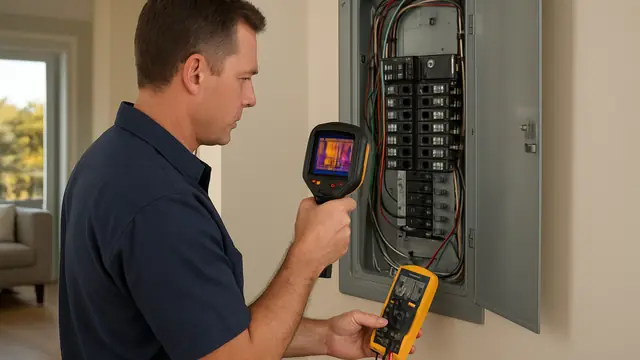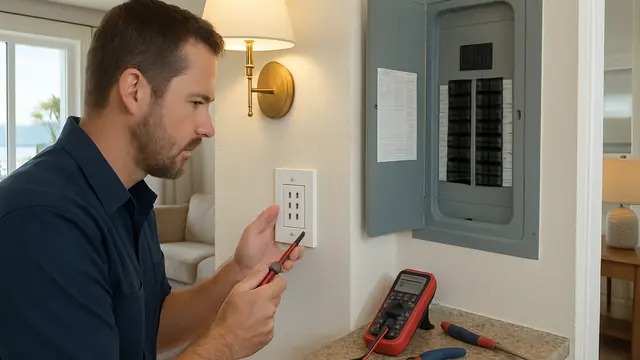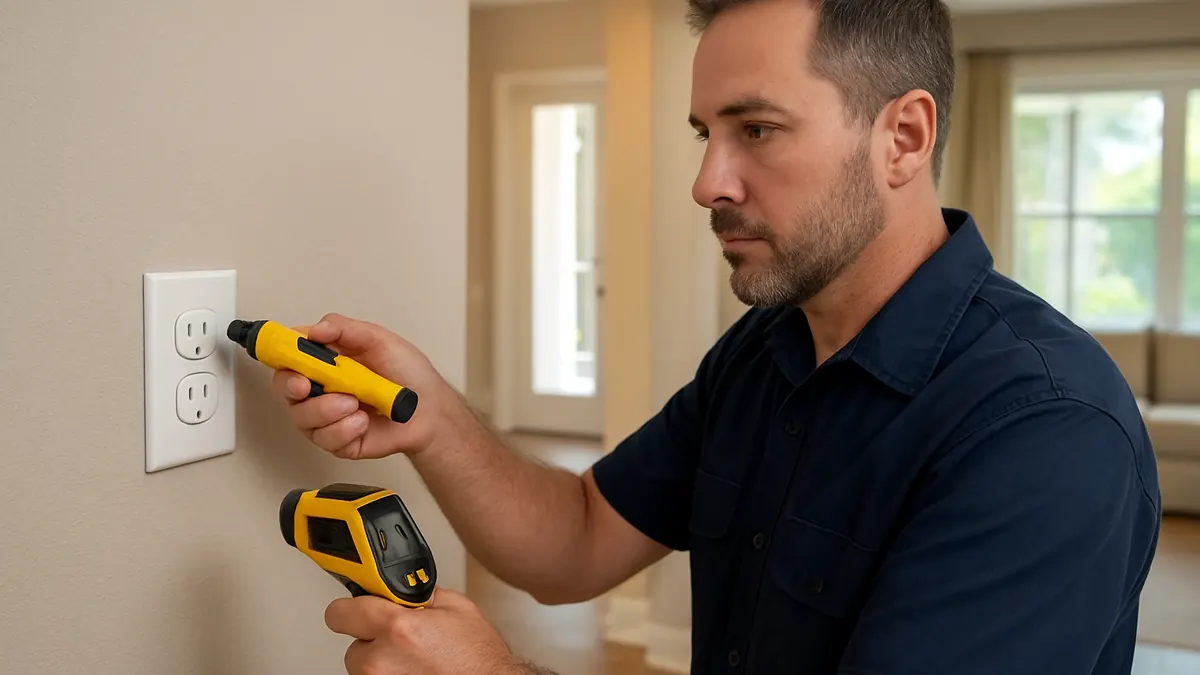
Do not remove an electrical panel cover, touch exposed conductors, bypass protection, or repeatedly reset a fault. Keep clear of smoke, sparks, burning odors, hot equipment, standing water near electricity, and downed lines, then call qualified help.
You notice the warmth while unplugging a vacuum, moving a nightstand, or reaching behind a television. The cover plate feels warmer than the wall, and the plug may feel hot. Because the outlet still supplies power, it is easy to assume the condition is harmless. A working receptacle, however, can still contain a loose, worn, or overheated connection.
Unplug the equipment and leave the outlet unused. If you see scorching, melted plastic, smoke, sparks, or hear crackling, turn off the circuit from a safe location and contact a licensed electrician. Do not plug in more devices to see whether the warmth returns.
What Causes an Electrical Outlet to Feel Warm in Laguna Beach?
Outlet heat generally comes from the appliance, electrical resistance at a poor connection, or excessive demand on the circuit. Touch alone cannot confirm which cause is present.
Heavy Appliance Use
Vacuum cleaners, portable heaters, hair tools, countertop appliances, and some window units draw more current than lamps or phone chargers. When a high-demand device operates on a circuit that also serves other equipment, a weak connection can heat quickly.
A Loose-Fitting Receptacle
The metal contacts inside an outlet lose tension with age and repeated use. A plug may sag, move when touched, or partially slide out under the weight of a cord.
That poor fit can cause arcing. Arcing means current crosses a small air gap instead of flowing through a solid contact. It creates localized heat and damages both the receptacle and plug blades.
Loose Wires Behind the Outlet
If a terminal screw or push-in connection is loose, electrical resistance rises. Heat may be strongest inside the box, so the cover plate can be the first visible clue.
A Deteriorated Splice
The electrical box may contain connectors joining several wires. A loose splice can heat while another light or outlet on the circuit is operating. Replacing only the faceplate or moving an appliance will not correct a hidden splice problem.
A Damaged Cord, Plug, or Power Supply
Bent blades, loose cord connections, internal appliance faults, and failing chargers can transfer heat to the outlet. After unplugging the device, check for darkened blades, pitting, softened plastic, or looseness.
Improper Extension Cord or Adapter Use
Extension cords can overheat when they are undersized, coiled, pinched, covered by rugs, or used with heavy loads. Multi-plug adapters add connection points but do not create additional circuit capacity.
Heat at the wall outlet may be the first warning that the temporary arrangement has become unsafe.
Safe Checks Without Opening the Outlet
After unplugging the device, let the plug and receptacle cool. Compare the outlet with another unused one. Do not insert tools or remove the cover.
Look for cracks, discoloration, deformation, debris, or a loose fit. Listen for buzzing or crackling and notice any hot-plastic smell. Record whether the breaker trips, lights flicker, or another outlet loses power.
If the receptacle is a GFCI, do not keep pressing reset when it is warm, damaged, or repeatedly trips. One normal test may be reasonable when there is no heat or damage, but repeated resetting is not a repair.
What Not to Attempt
Do not keep cycling the breaker to force the circuit back on. A second trip means the condition remains unresolved.
Never install a higher-amperage breaker to stop tripping. Breaker size must match the circuit conductors. A larger breaker can allow wiring to overheat.
Do not remove the receptacle and tighten wires based on a guess. Boxes can contain multiple cables, shared neutrals, switched conductors, or wiring that remains energized after one breaker is turned off.
Do not tape over a hot outlet, hide it behind furniture, spray it with water, or cut the grounding pin from a plug. Avoid using an extension cord to bypass the problem permanently.
Warning Signs That Require Prompt Action
The situation is urgent when the outlet is painful to touch, the surrounding wall is heating, or plastic appears melted. Burning odors, smoke, sparks, crackling, and scorch marks require immediate attention.
Repeated breaker trips, partial power loss, or flickering in several areas may point to a broader circuit or panel issue. A plug that flashes when moved should not be touched again.
If smoke or fire is present, leave the area and call emergency services. Turn off the breaker only when the panel is safely accessible and there is no smoke around it.
How a Licensed Electrician Diagnoses the Outlet
The electrician identifies the circuit, connected load, and pattern of symptoms. Power is shut off and verified with test equipment before the device is removed.
The receptacle and box are inspected for loose terminals, damaged insulation, poor splices, and grounding problems.
Testing may include voltage, polarity, grounding, circuit tracing, and voltage drop under a controlled load. Excessive voltage drop can reveal a high-resistance connection that appears normal when no appliance is operating.
Repair Options From Simple to More Involved
If the plugged-in equipment is defective, removing or replacing it may be the first correction. When the receptacle is worn but the wiring remains sound, replacing the device and making secure connections may be sufficient.
A loose splice can be remade with an approved connector. Heat-damaged wire ends may sometimes be trimmed and reterminated when enough safe conductor remains. A damaged box or cover can also be replaced.
When normal use places too much demand on the existing circuit, a dedicated circuit may be recommended. Concealed cable must be replaced when heat has damaged insulation beyond the box.
Broader work may include correcting a shared neutral, replacing a defective breaker, repairing a panel connection, or dividing loads. The electrician should recommend the smallest safe repair that addresses the actual cause.
Factors That Affect Cost
Cost mainly depends on the location and extent of damage. One accessible receptacle is simpler than a hidden cable fault.
Ask for an explanation that separates necessary safety repairs from optional improvements.
Preventing Warm Outlets
Use high-demand appliances on suitable circuits and avoid running heaters or cooking equipment through extension cords. Do not put cords under rugs or press furniture tightly against plugs.
Replace outlets that no longer grip plugs. Retire equipment with bent blades, crushed insulation, or loose cord caps.
Pay attention to small changes such as buzzing, brief flickering, hot smells, or occasional breaker trips. Consider an electrical inspection after remodeling, repeated circuit problems, or the addition of high-demand equipment.
Do Not Ignore the Heat
What causes an electrical outlet to feel warm in Laguna Beach may be a failing appliance, loose contact, damaged receptacle, overloaded circuit, or hidden wiring defect. Stop using the outlet and schedule professional diagnosis before additional heat damage develops.
About this guide: This resource provides general homeowner education, not a remote diagnosis. Actual conditions, code requirements, equipment, and safe repair options must be evaluated at the property.