Do not remove an electrical panel cover, touch exposed conductors, bypass protection, or repeatedly reset a fault. Keep clear of smoke, sparks, burning odors, hot equipment, standing water near electricity, and downed lines, then call qualified help.
A guest at your Pretty Bayou vacation rental calls because the bedroom ceiling fan has started making a clicking sound, two outlets near the living room no longer work, and the kitchen lights briefly dim when the microwave starts. Nothing has completely shut down, so the situation may not look urgent.
Those symptoms can come from several different electrical problems. A worn fan control, loose receptacle connection, overloaded circuit, failing breaker, damaged appliance, or loose neutral can all create intermittent problems that appear only when several devices are being used. The safest immediate action is to stop using any outlet, switch, fan, or appliance that feels warm, smells burned, crackles, or sparks. Portable equipment can be unplugged, and a tripped breaker or GFCI can be reset once if the area is dry and undamaged. If the problem returns, leave the affected circuit off and arrange professional service.
The most common electrical problems on vacation rentals in Pretty Bayou are often discovered during busy stays because guests use a property more intensively and differently than an owner might. Frequent turnover, moved furniture, added chargers, and repeated appliance use can expose weak connections that were previously unnoticed.
Most Common Electrical Problems on Vacation Rentals in Pretty Bayou
Loose or Worn Receptacles
A receptacle that no longer holds a plug securely should not be ignored. Repeated plugging and unplugging can wear the contacts inside the device. The outlet may still supply power, but a poor connection can create resistance and heat.
Watch for plugs that sag out of the outlet, a wall plate that feels warm, buzzing, crackling, discoloration, or an outlet that works only when the plug is moved. Stop using the device until it is inspected.
Breakers That Trip During Normal Guest Use
A breaker may trip because too many appliances are operating on the same circuit. It may also be responding to a short circuit, ground fault, damaged appliance, loose wire, or failing breaker.
If the breaker resets once and stays on, note what was running when it tripped. If it trips again, leave it off. Repeated resets do not increase circuit capacity and can delay diagnosis of a real fault.
Ceiling Fan, Switch, and Dimmer Problems
Ceiling fans and lighting controls receive frequent use. Clicking, inconsistent speeds, excessive wobble, heat, or crackling can point to a worn control, loose connection, or failing component. Turn questionable equipment off.
Flickering or Dimming Lights
One flickering bulb may simply be loose or failing. Flickering in several fixtures or rooms can indicate voltage drop, a loose connection, overloaded wiring, panel problems, or a loose neutral.
If some lights become unusually bright while others dim, arrange prompt professional attention.
GFCI Outlets That Trip or Will Not Reset
GFCI protection is designed to reduce shock risk by shutting power off when current leaks from the intended path. Moisture, damaged appliance cords, faulty equipment, damaged wiring, or a failed GFCI can trigger it.
A GFCI that will not reset may lack incoming power or be detecting a downstream fault.
Exterior Electrical Equipment That Stops Working
Exterior outlets and lights can fail because of damaged covers, moisture, corrosion, or worn connections. Keep guests away from wet or damaged equipment.
Safe Checks the Homeowner or Property Manager Can Perform
Start by asking the guest exactly what happened. Find out which devices stopped working, what appliances were running, whether the problem followed rain or cleaning, and whether anyone noticed sparks, buzzing, heat, or odor.
Unplug portable appliances from the affected circuit. If a GFCI is dry, cool, and visibly undamaged, press reset once. A tripped breaker can also be moved fully off and then back on once.
Inspect visible cords for cuts, melting, bent blades, or scorch marks, and remove damaged portable equipment from service. If the breaker or GFCI trips again, leave the circuit off and document what lost power.
What the Homeowner Should Not Attempt
Do not remove the panel cover or open outlets, switches, fan boxes, or junction boxes. Never install a larger breaker to stop trips; the breaker is sized to protect the wiring. Do not bypass GFCI or AFCI protection, tape a breaker on, repair cords with household tape, or use extension cords as permanent wiring.
Signs That Make the Problem Urgent
Treat smoke, burning odor, visible arcing, melted plastic, shocks, crackling, or significant heat as urgent warning signs.
A breaker that trips immediately with appliances unplugged may indicate a wiring fault. Rapid brightness changes across several rooms can indicate a neutral or supply problem. Keep everyone away from wet electrical equipment, and call emergency services for active fire or smoke.
How a Licensed Electrician Diagnoses the Problem
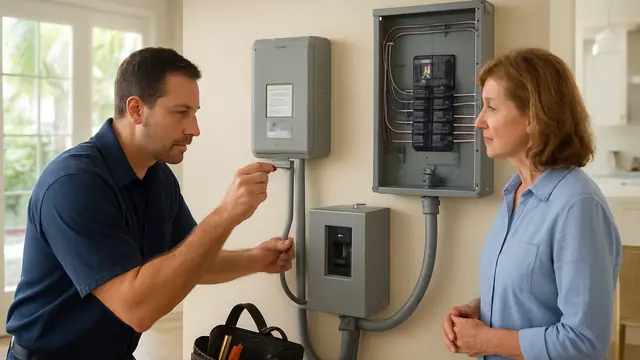
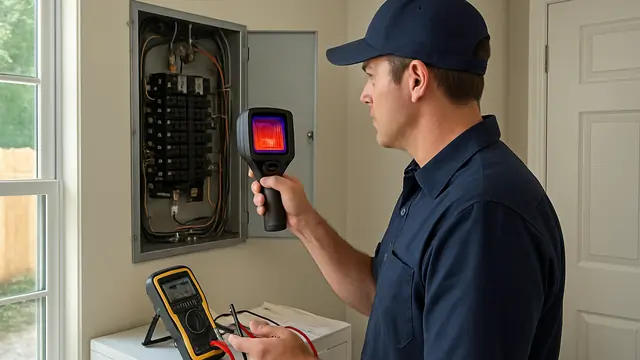
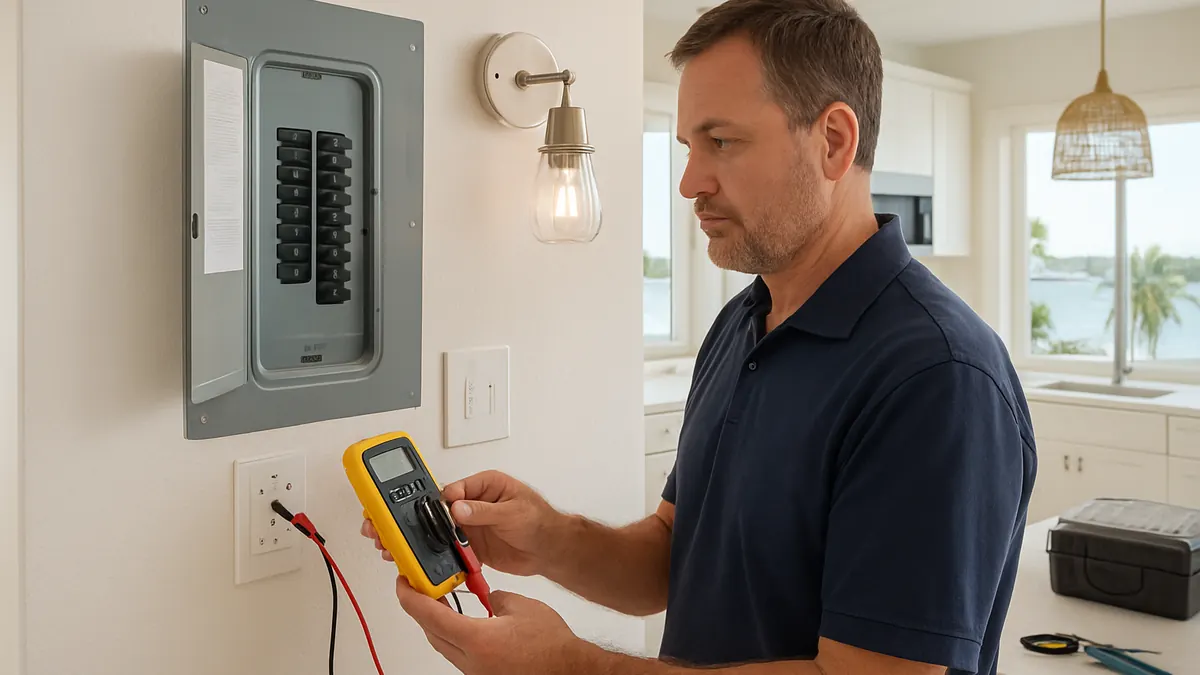
A licensed electrician begins with the guest's description and identifies which devices share the affected circuit. Voltage testing can reveal lost power, excessive voltage drop, or unstable readings.
The electrician may inspect breakers, receptacles, switches, fan controls, fixtures, and accessible connections for overheating or damage. Load measurements show whether the circuit is overloaded. GFCI and AFCI devices can be tested, and appliances can be disconnected to isolate a fault. Widespread flickering may also require panel and neutral checks.
Repair Options Beginning With the Least Invasive
The least invasive solution may be removing a faulty appliance, correcting a serviceable connection, or replacing one worn receptacle, switch, GFCI, fan control, fixture component, or properly diagnosed breaker.
If regular guest use overloads a circuit, the electrician may recommend redistributing appliance use or adding a dedicated circuit. Damaged conductors may require limited wall or ceiling access. More extensive work can include correcting previous modifications or replacing damaged panel equipment. Service upgrades or widespread rewiring should follow load calculations and broader findings, not one failed device.
Factors That Affect Repair Cost
Cost depends on diagnostic time, accessibility, the number of affected devices, panel condition, circuit length, permit requirements, and whether the failure is intermittent.
Prevention and Maintenance Guidance
Include representative outlets, GFCIs, lights, fans, alarms, and exterior devices in turnover inspections. Ask staff to report loose outlets, warm switches, repeated resets, buzzing, or discoloration. Keep the breaker directory accurate, replace damaged devices promptly, and track complaints by room and date.
Correct the Cause Before the Next Reservation
The most common electrical problems on vacation rentals in Pretty Bayou include loose receptacles, tripping breakers, fan and switch problems, flickering lights, failed GFCIs, and exterior electrical issues.
A problem that disappears after a reset can still return under load. Stop using any device that becomes hot, noisy, damaged, or unstable, document the circumstances, and have a licensed electrician determine the least invasive safe repair.
About this guide: This resource provides general homeowner education, not a remote diagnosis. Actual conditions, code requirements, equipment, and safe repair options must be evaluated at the property.