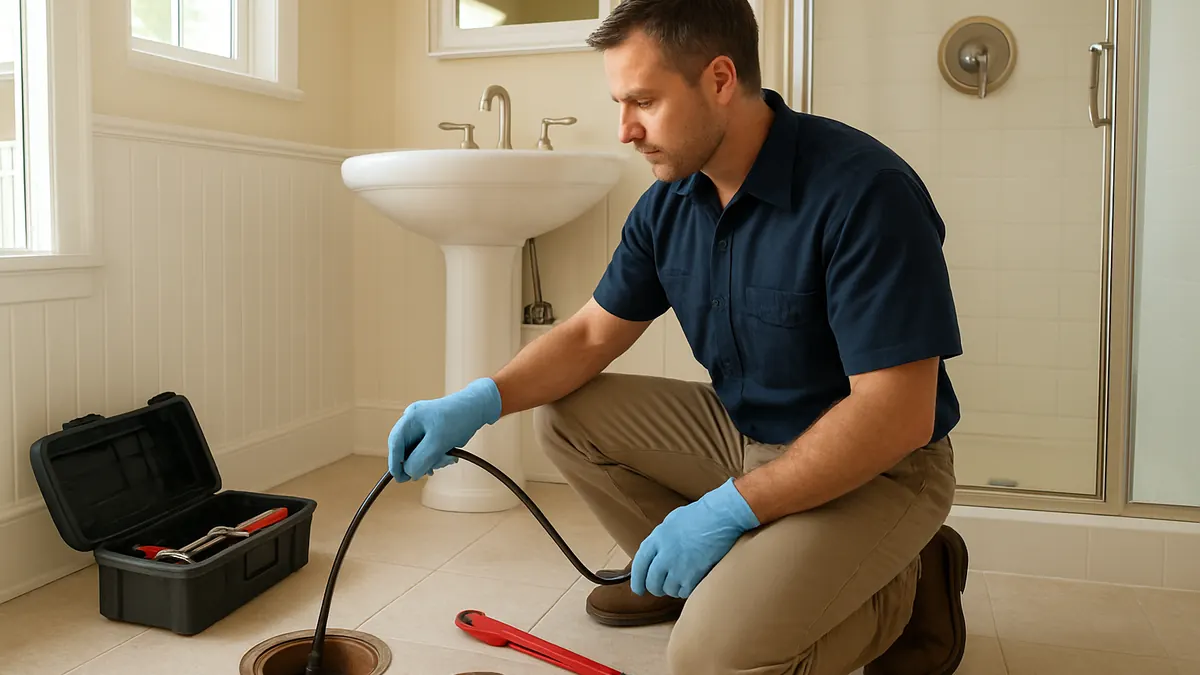
Stop and call for qualified help when plumbing water is near electrical equipment, sewage is entering occupied space, gas or burning odors are present, or a repair would require opening pressurized piping.
When toilets, tubs, showers, sinks, or floor drains begin backing up together in a Bluewater Bay property, the drainage system is signaling a shared obstruction or flow problem. The homeowner may hear bubbling toilets, see water rise in a shower after flushing, or notice that laundry discharge returns through a nearby tub.
A single clogged sink usually affects only that fixture. Multiple-drain symptoms often indicate a blockage farther downstream in a common branch, the main building sewer, or the septic connection.
The problem should be treated seriously. Backed-up wastewater can introduce harmful contaminants into living areas and can damage flooring, baseboards, cabinets, drywall, insulation, and personal property.
Bluewater Bay includes homes with different ages, drainage materials, landscaping conditions, and sewer or septic arrangements. The most effective repair begins with identifying the exact cause instead of assuming that every backup needs the same solution.
The Most Common Possible Causes
- A main sewer blockage may form from accumulated waste, paper, wipes, grease, hair, and other debris.
- Kitchen grease is particularly damaging. It can cool inside the pipe, attach to the wall, and gradually trap additional material.
- Flushable wipes can contribute to obstructions because they generally do not disintegrate like toilet paper. They may catch on a rough joint, root, offset, or buildup.
- Tree roots may enter through small cracks or separated pipe joints. Once roots enter the sewer, they create a net that catches paper and waste.
- Coastal vegetation and mature landscaping can place root systems near underground plumbing, but root intrusion usually requires an existing opening in the pipe.
- Cast-iron piping can develop scale and corrosion. The effective diameter becomes smaller, and the rough surface slows waste.
- A shifted joint, cracked section, or collapsed pipe can stop normal drainage. Soil movement, poor bedding, age, and previous installation defects can contribute.
- A sewer belly can retain water and solids. Recurring backups may result even after the pipe has been mechanically cleaned.
High occupancy can expose a partial restriction. A Bluewater Bay household or rental may drain adequately during low usage but back up when multiple bathrooms and appliances operate.
A septic system can also cause whole-property symptoms when the tank is full, a filter is clogged, a pump fails, or the drain field cannot accept effluent.
Safe Checks the Homeowner Can Perform
- Stop all water use. This is the most important immediate step.
- Do not flush toilets, use showers, operate laundry equipment, or run the dishwasher. Additional water can force sewage through lower fixtures.
- Note which drains are affected. A single bathroom may indicate a branch blockage. A backup throughout the property points toward the main line or septic system.
- Observe the lowest drain openings. Showers and floor drains often receive the first overflow.
- Listen for gurgling or bubbling. These sounds occur when air is displaced around wastewater trapped in the line.
- Check whether the problem begins during laundry discharge. Washing machines release water quickly and can expose partial blockages.
- Look outside for wastewater near the sewer cleanout or septic area. Keep people and pets away.
- If the property is part of an association or multiunit development, notify management when shared piping may be involved.
- Do not touch sewage without protection. Wash exposed skin promptly and avoid tracking contaminated water through the property.
What the Homeowner Should Not Attempt
- Do not continue testing fixtures. Every test adds water.
- Avoid pouring chemical drain cleaner into toilets, tubs, and sinks. Chemicals are ineffective against collapsed pipes and may create hazardous wastewater.
- Do not mix drain chemicals with bleach or other cleaners.
- Do not use a rented sewer machine without training. Rotating cables can twist clothing, injure hands, damage fixtures, or become trapped.
- Avoid improvised jetting with pressure-washer equipment. Sewer jetting requires controlled pressure, correct nozzles, and knowledge of the pipe's condition.
- Do not climb onto the roof to clear vent pipes. Roof work is hazardous, and a vent obstruction is not the usual cause of sewage returning through multiple drains.
- Do not excavate until the sewer is located and underground utilities are identified.
- Homeowners should not enter septic tanks or attempt internal repairs.
Signs That Make the Problem Urgent
Urgent conditions include:
- Raw sewage flowing into the property
- Multiple unusable toilets
- Wastewater entering showers or tubs
- Water spreading under flooring
- Sewage contacting electrical appliances or outlets
- Strong sewer odors throughout the home
- Backup affecting adjacent units
- Septic alarm activation
- Sewage surfacing outdoors
- Recurring backup after recent cleaning
- Occupants with increased health vulnerability
Stop water use and arrange service immediately.
How a Licensed Plumber Diagnoses the Problem
- A licensed plumber evaluates the pattern of the backup and identifies the most likely drainage zone.
- An exterior cleanout provides access to the main sewer. The water level at the cleanout can help determine whether the blockage is upstream or downstream.
- A professional cable machine may be used to penetrate the obstruction. The cable's travel distance and resistance provide useful diagnostic information.
After the line drains, a sewer camera can inspect the pipe walls. The plumber looks for root intrusion, scale, grease, cracks, separated joints, bellies, foreign objects, and collapse.
- The camera head can be located from above ground to define the damaged section's depth and position.
- If several branches are involved, the plumber may test them independently.
- For septic systems, diagnosis may include the tank, outlet filter, pump chamber, alarm system, and drain-field performance.
- The objective is not only to restore flow but also to determine why the obstruction occurred and whether it is likely to return.
Repair Options-Including Conservative Repairs
- Mechanical sewer cleaning may resolve a typical paper or waste blockage.
- Specialized cutting heads may remove roots or heavy deposits. Root removal can restore flow but may not prevent future growth through a damaged joint.
- Hydro jetting cleans the pipe using high-pressure water. It may be recommended for grease and sludge after the line's structural condition is evaluated.
- Descaling tools may improve certain cast-iron drainage lines by removing internal corrosion buildup.
- Spot repair may correct one damaged section while preserving the remainder of the sewer.
- Pipe lining may be available for some cracked or deteriorated pipes. It creates a new surface inside the existing line.
- Pipe bursting can replace a damaged sewer through limited excavation in appropriate conditions.
- Traditional excavation is used when the line has collapsed, shifted severely, or cannot be rehabilitated internally.
Septic remedies may include pumping, cleaning a filter, repairing a pump or baffle, clearing the building sewer, or correcting drainage around the system. Complete replacement should be based on confirmed system failure.
Typical Factors Affecting Cost
Cost depends on:
- Location and depth of the obstruction
- Cleanout access
- Sewer length and pipe diameter
- Root, grease, wipe, or scale blockage
- Pipe material and condition
- Camera inspection and locating
- Hydro jetting or descaling
- Excavation and surface restoration
- Landscaping or hardscape above the line
- Association access requirements
- Septic service
- Emergency timing
- Sewage cleanup and sanitation
A simple obstruction near a cleanout is generally less expensive than structural damage beneath a driveway, slab, or landscaped area.
Prevention and Maintenance Guidance
- Keep grease and cooking oil out of drains. Dispose of them in sealed containers.
- Flush only toilet paper and human waste. Do not flush wipes, hygiene products, paper towels, or household debris.
- Use drain strainers in kitchens, showers, and tubs.
- Avoid rinsing sand, grout, paint residue, and renovation debris into plumbing fixtures.
- Keep the sewer cleanout accessible and clearly identified.
- After a root-related backup, consider a camera inspection to determine whether the sewer needs repair rather than relying indefinitely on repeated root cutting.
- Properties with cast-iron piping and recurring buildup may benefit from periodic evaluation and maintenance.
- For septic systems, follow a pumping and inspection schedule appropriate for household size and use. Protect the drain field from vehicles, structures, and excessive water.
Pay attention to early warning signs such as frequent gurgling, slow lower-level drains, and backups that occur during laundry. Addressing a partial restriction before the line closes completely can reduce damage and emergency costs.
Multiple drains backing up indicate that wastewater cannot move through a shared part of the system. A Superior Mechanical can restore flow, inspect the drainage piping, and explain repair choices based on the actual condition of the line.
About this guide: This resource provides general homeowner education, not a remote diagnosis. Actual conditions, code requirements, equipment, and safe repair options must be evaluated at the property.