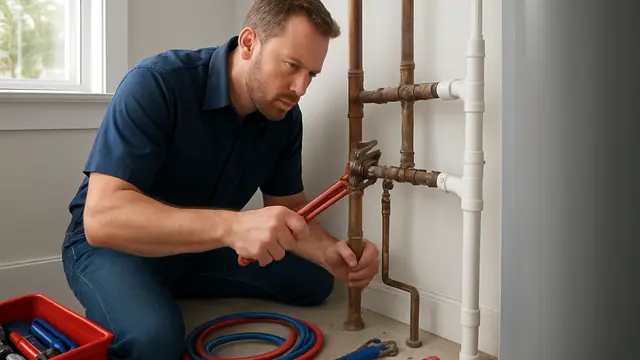
Stop and call for qualified help when plumbing water is near electrical equipment, sewage is entering occupied space, gas or burning odors are present, or a repair would require opening pressurized piping.
When more than one drain backs up in a Fort Walton Beach property, the problem is usually more serious than a clog in a single fixture. Homeowners may notice water rising in the bathtub when a toilet is flushed, a shower filling when the washing machine drains, several toilets bubbling, or wastewater appearing through a floor drain.
These symptoms often indicate that wastewater cannot move through a shared branch drain or the main sewer line. As additional water enters the system, pressure builds behind the restriction and forces water toward the lowest open fixture.
Multiple-drain backups can expose occupants to contaminated wastewater and can damage flooring, walls, cabinets, furniture, electrical equipment, and personal property. The safest response is to stop using water and arrange professional diagnosis.
Fort Walton Beach includes older homes, renovated properties, rentals, condominiums, and commercial buildings. Drainage systems can therefore vary in age, material, layout, and condition. A licensed plumber should identify the actual cause before recommending a repair.
The Most Common Possible Causes
A main sewer-line blockage is one of the leading causes of multiple fixtures backing up. Because most drains eventually connect to the same building sewer, a restriction in that line can affect toilets, showers, tubs, sinks, and floor drains.
Accumulated grease is a frequent contributor. Grease may enter a kitchen drain as a liquid but cool and attach to the pipe. Food particles and other debris then collect on the buildup.
Wipes and hygiene products are another common source. Many wipes remain intact much longer than toilet paper. They can become caught on rough pipe surfaces, roots, offsets, or existing debris.
Tree roots may enter through cracked joints or damaged sections. Once inside, the roots can spread through the pipe and trap waste.
Older cast-iron drainage piping can develop heavy internal scale. The opening gradually becomes smaller, and the rough interior catches paper and waste. Cast iron can also crack or deteriorate near the bottom.
- Clay, concrete, Orangeburg, PVC, and other sewer materials have their own potential failure patterns. Joints can separate, pipes can shift, and sections can crack or collapse.
- A low area in the sewer line, often called a belly, can hold wastewater and solids. The line may drain during light use but back up when several fixtures operate.
- Improper slope, poor previous repairs, foreign objects, and construction debris may also restrict flow.
- For septic properties, the cause may be a full tank, clogged filter, damaged inlet or outlet, or saturated drain field.
Safe Checks the Homeowner Can Perform
Stop using all plumbing fixtures. Do not assume that using an upstairs bathroom is safe merely because the backup appears downstairs. All fixtures may connect to the same restricted sewer.
- Determine whether the problem affects one fixture, one bathroom group, or the entire property. This information helps distinguish a fixture clog from a branch or main-line problem.
- Observe the lowest drains. A tub, shower, or floor drain may show wastewater before higher fixtures overflow.
- Listen for gurgling or bubbling. Air being displaced by wastewater can escape through toilet bowls and traps.
- Check whether the backup occurs when a high-volume appliance drains. Washing machines and dishwashers can reveal a partial restriction because they release water quickly.
- Inspect the area outside for sewage near the cleanout, foundation, or septic components. Do not walk through or touch wastewater.
- Homeowners can look at an exterior cleanout from a safe distance, but they should not remove the cap when sewage may be under pressure. A loose cap can release wastewater suddenly.
- In multiunit buildings, contact the property manager or association. A shared stack or building sewer may affect multiple occupants.
What the Homeowner Should Not Attempt
Do not continue running water to determine whether the backup will clear on its own. Additional water can increase damage.
Avoid chemical drain cleaners. They generally do not resolve root intrusion, collapsed piping, or major sewer obstructions. Chemicals trapped behind the blockage also create a hazard for the technician.
- Do not mix cleaners or household chemicals. Dangerous gases or heat may result.
- Do not insert a small sink snake through random fixtures. A short cable may not reach the obstruction and can damage traps or become stuck.
- Do not remove a cleanout cap while standing directly in front of it. Sewage may be pressurized behind the cap.
- Do not use a pressure washer hose or improvised jetting device inside the sewer. Improper pressure can damage piping and expose the operator to contaminated water.
- Avoid digging over the presumed sewer location until the line has been located. Underground utilities may be present.
- Do not assume that repeated drain cleaning is the only solution. A backup that keeps returning may indicate structural damage that requires a camera inspection.
Signs That Make the Problem Urgent
The problem requires prompt attention when raw sewage enters the building.
Other urgent signs include:
- Several toilets and drains stop working
- Sewage enters a shower or bathtub
- Wastewater spreads beneath flooring
- Water reaches outlets, wiring, or appliances
- The backup affects multiple units
- Strong sewer gas odors persist
- Sewage appears outside near the building
- The property contains children, elderly occupants, or vulnerable individuals
- The backup returns within days or weeks of cleaning
- Toilets overflow whenever another fixture drains
- The building is a restaurant, rental, healthcare setting, or occupied business
Stop water use and keep occupants away from the affected area.
How a Licensed Plumber Diagnoses the Backup
The plumber begins with the pattern of symptoms. Which fixture backed up first? Does the problem occur during laundry, toilet use, or all drainage? Is the issue limited to one side of the building?
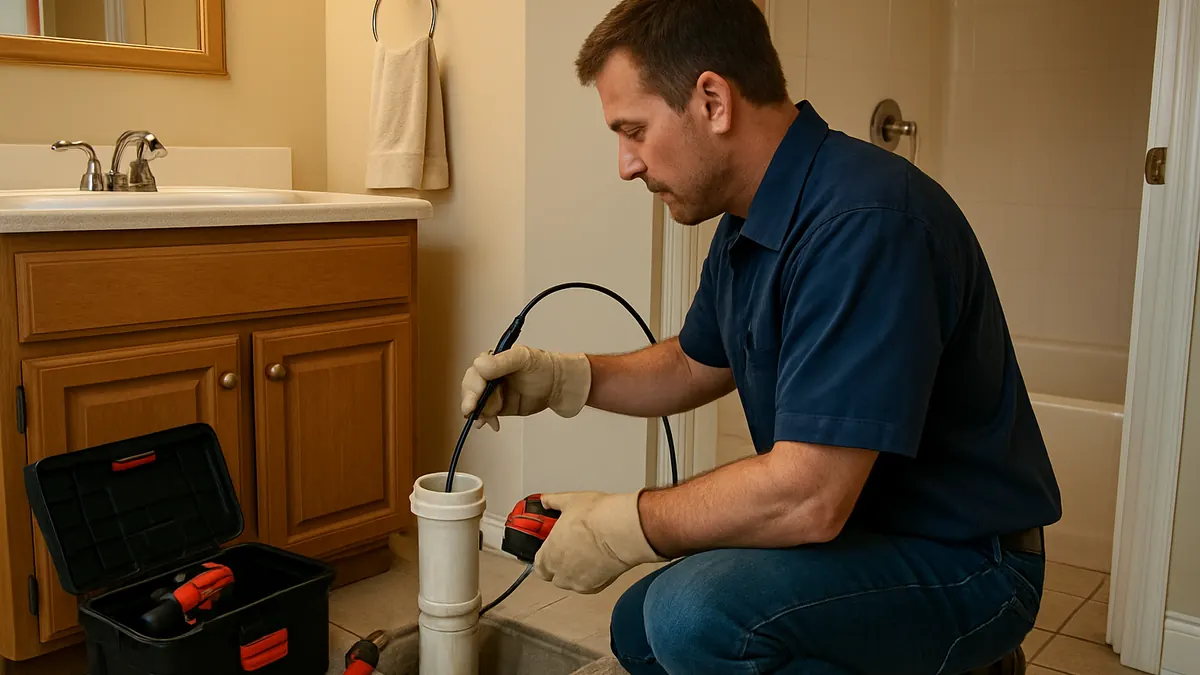
The technician locates an appropriate access point, preferably a sewer cleanout. A professional cable machine may be used to open the line and assess the obstruction.
Cable length and resistance help estimate where the blockage is located. The material recovered on the cutting head may also provide evidence of roots, grease, wipes, or scale.
After flow is restored, a sewer camera may be inserted. The camera allows the plumber to inspect the interior for roots, cracks, offsets, corrosion, foreign objects, bellies, or collapse.
- A locating device may identify the camera's position and depth. This reduces unnecessary excavation if a repair is required.
- In buildings with multiple drainage zones, additional testing may be needed to isolate the affected branch.
- Smoke testing, dye testing, or other specialized procedures may be appropriate when improper connections, leaks, or venting problems are suspected.
- For septic systems, the plumber or septic professional may inspect the tank level, filter, baffles, piping, and drain-field conditions.
Repair Options-Not Just Complete Sewer Replacement
- Mechanical drain cleaning is often the first practical option for a typical obstruction. A properly sized cable and cutting head can restore flow.
- Root cutting may provide temporary or medium-term relief when roots have entered the pipe. However, root removal does not repair the opening that allowed the roots inside.
- Hydro jetting can remove grease, sludge, and buildup from the pipe walls. It may provide a more complete cleaning than basic cabling when the pipe is structurally suitable.
- Descaling may improve flow in certain cast-iron pipes. The pipe should be evaluated to determine whether enough sound material remains.
- Spot excavation can repair one damaged section without replacing the entire sewer.
- Trenchless lining may rehabilitate certain pipes by forming a new interior surface. It is not suitable for every configuration or collapsed line.
- Pipe bursting can replace an underground sewer while limiting open trenching in some situations.
- Traditional excavation may be needed for severe collapse, extensive offsets, or conditions that cannot be corrected internally.
- Where a septic system is involved, pumping, filter cleaning, baffle repair, line repair, or drain-field evaluation may resolve the problem without replacing every component.
Typical Factors Affecting Cost
Cost is influenced by:
- Access to the sewer line
- Presence or absence of a cleanout
- Type and severity of the obstruction
- Length of cable or jetting required
- Roots, grease, wipes, or scale
- Pipe material and diameter
- Camera and locating services
- Depth of the line
- Concrete or landscaping above the sewer
- Multiunit access requirements
- Permits
- Emergency scheduling
- Septic involvement
- Need for cleanup or restoration
A blockage near an accessible cleanout is usually less costly than a collapsed pipe beneath a slab, roadway, or heavily landscaped area.
Prevention and Maintenance Guidance
- Do not pour grease or cooking oil into sinks. Place cooled grease in a container and dispose of it with household waste.
- Flush only toilet paper and human waste. Keep wipes, paper towels, hygiene products, and household debris out of toilets.
- Install strainers in kitchen sinks, showers, and tubs. Clean them regularly.
Avoid planting large trees directly over known sewer routes. Existing trees do not automatically require removal, but sewer condition should be monitored when roots have caused previous problems.
- Have recurring backups investigated with a camera. Repeatedly cabling the line without identifying structural damage may create ongoing emergency costs.
- Maintain accessible sewer cleanouts. Property owners should know where the cleanout is located before a backup occurs.
- Commercial kitchens and heavily occupied properties may benefit from scheduled cleaning based on actual buildup and usage.
- Septic tanks should be pumped and maintained according to occupancy and system conditions. Do not drive over or saturate the drain field.
Multiple drains backing up are a system-level warning. A licensed plumber can restore flow, identify the underlying cause, and explain repair options based on the pipe's actual condition.
About this guide: This resource provides general homeowner education, not a remote diagnosis. Actual conditions, code requirements, equipment, and safe repair options must be evaluated at the property.