Stop and call for qualified help when plumbing water is near electrical equipment, sewage is entering occupied space, gas or burning odors are present, or a repair would require opening pressurized piping.
Understand the Plumbing Behind Your Refrigerator
A refrigerator with a dispenser or automatic ice maker depends on a small water supply connection that is easy to overlook. Water travels from the home’s cold-water piping through a shutoff valve and connector to the appliance. Inside the refrigerator, filters, electrically operated valves, and tubing distribute it. A problem anywhere along that path can produce similar symptoms, but the right repair depends on identifying which side of the connection has failed.
For Hammock Bay homeowners, this connection deserves attention even when the kitchen appears dry. A slow leak behind a refrigerator can remain hidden beneath flooring or cabinets. Northwest Florida humidity may slow drying and make moisture damage harder to recognize by appearance alone. Know where the refrigerator’s water shutoff is located, keep its access clear, and distinguish it from the home’s main shutoff before an urgent situation develops.
Recognize Leaks Without Assuming Every Puddle Is a Supply Problem
Warning signs include recurring moisture beside the refrigerator, swollen cabinet edges, curling flooring, mineral deposits around an accessible fitting, or a musty smell near the appliance. A supply connection remains pressurized even when nobody uses the dispenser. That means a leaking connector or fitting can continue releasing water while the home is empty. Do not dismiss a small recurring wet spot simply because the ice maker still works.
Not every refrigerator puddle comes from household plumbing. A blocked defrost drain, appliance drain pan problem, internal tube leak, or condensation can create similar evidence. Note when the water appears: continuously, after dispensing, during ice production, or during an appliance cycle. Photographs and timing notes help the professional narrow the source. Avoid pulling the refrigerator out solely to investigate, especially if you cannot see how much slack the water line and electrical cord have.
- Record whether the water appears at the front, side, or adjoining cabinet.
- Note recent filter changes, appliance movement, or installation work.
- Treat spreading moisture or changing flooring as a reason for prompt service.
Know When to Stop Using the Appliance and Call
If water is actively escaping and the refrigerator’s shutoff is safely accessible from a dry location, close it gently without forcing it. Turn off ice production using the appliance’s normal control, following its instructions. If the valve is stuck, inaccessible, or leaking, do not twist harder or disconnect the supply tubing. Use a known, safely accessible main water shutoff if needed, and contact a licensed plumber for the supply-side problem.
Keep away from water near the refrigerator’s plug, receptacle, or other electrical equipment. Do not reach behind a wet appliance to unplug it or move it through standing water. Electrical hazards require qualified assistance. Once the water source is controlled and the area is safe, arrange drying and assessment of affected materials. Repairing the connection does not resolve moisture trapped beneath flooring, behind baseboards, or inside cabinetry.
Separate Slow Dispenser Flow From Ice Maker Failures
A weak dispenser stream and small or hollow ice cubes can indicate restricted water delivery. Possible causes include a clogged filter, kinked connector, partially closed valve, or restriction in the supply branch. However, ice production also depends on freezer temperature, appliance controls, and internal components. An ice maker that stops producing ice while the dispenser works normally does not automatically need a new household water line.
Start with observations that do not involve disassembly. Check the filter replacement history, any appliance warnings, and whether other cold-water fixtures also have reduced flow. Note whether the problem began after replacing a filter or moving the refrigerator. Use the manufacturer’s troubleshooting guidance for normal controls and filter installation. Leave tubing disconnections, pressure measurements, and internal electrical or valve testing to the appropriate professional rather than replacing parts based on symptoms alone.
Choose Supply Materials That Match the Installation
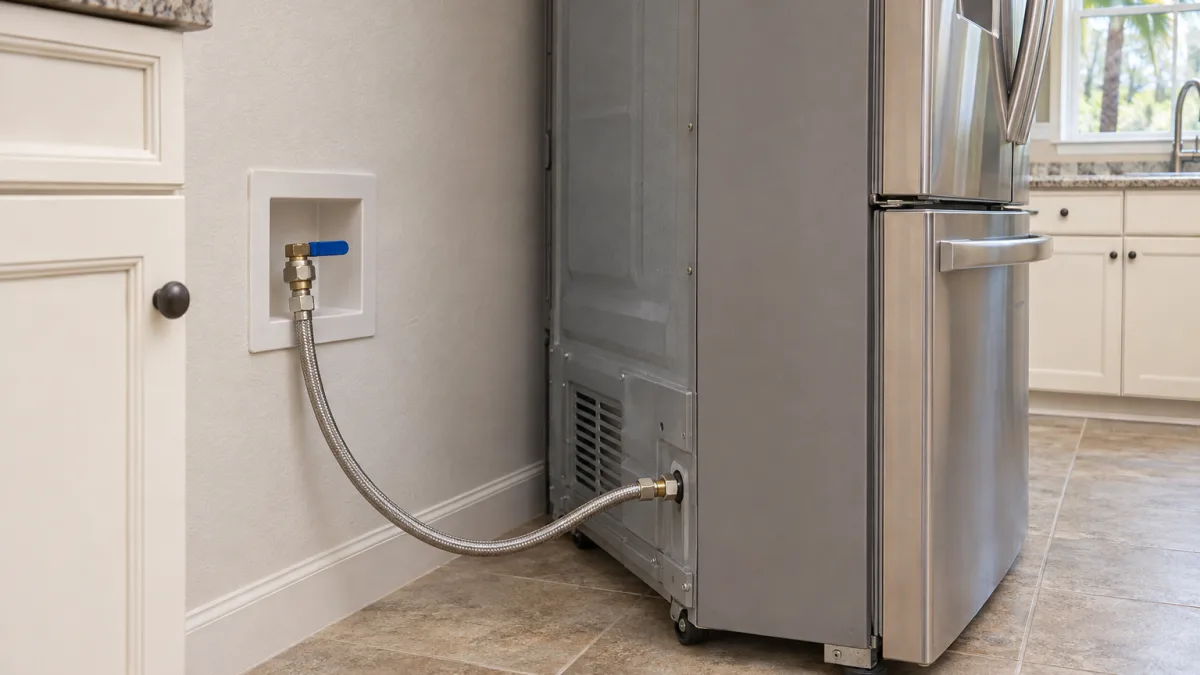
Refrigerator connections may use copper tubing, approved polymer tubing, or factory-made flexible connectors. The appropriate choice depends on the appliance instructions, applicable requirements, connection sizes, routing, and exposure to damage. A stainless-steel-braided connector has an inner water-carrying hose, so its metal exterior does not make it immune to deterioration. Likewise, generic plastic tubing is not interchangeable with tubing specifically approved for a potable-water appliance connection.
A plumber should inspect the entire accessible route, not just the fitting that is currently wet. Tight bends, tubing pinched beneath an appliance, unsupported runs, and repeated rubbing against cabinet openings can shorten service life. Connections need to match the tubing and manufacturer’s specifications. Combining mismatched parts or repeatedly tightening a questionable fitting can worsen a leak. Replacement planning should include suitable protection at penetrations and enough correctly arranged slack for necessary appliance servicing.
Make the Shutoff Valve Accessible and Dependable
The refrigerator should have an appropriate way to isolate its water supply for service. A valve trapped behind a heavy appliance may be difficult to reach during a leak. Depending on the layout, a plumber may recommend an accessible location in an adjacent cabinet or a suitable recessed connection box. The goal is practical access without creating interference with drawers, stored items, appliance clearance, or the supply connector.
Some older installations use small piercing-style saddle valves. These can become restricted or develop leaks and may not be permitted for a new installation under applicable requirements. A plumber can evaluate whether a proper branch connection and dedicated valve are needed. Do not attempt to free a seized valve with pliers, assume a handle’s position confirms water is off, or treat a leaking valve stem as a harmless inconvenience.
What a Professional Supply-Side Diagnosis Should Include
A useful diagnosis begins with the appliance model, symptom history, filter status, and recent work. The plumber can inspect accessible supply piping, the shutoff valve, fittings, and connector for leakage or restriction. Pressure and available flow may need evaluation against the refrigerator manufacturer’s requirements. A normal static pressure reading alone does not establish that enough water reaches the appliance while it is filling or dispensing.
The professional may isolate parts of the supply path to determine whether the restriction is in the household piping, valve, connector, or appliance. Controlled testing is preferable to disconnecting a pressurized line over finished flooring. Once the external supply is confirmed adequate, an appliance technician may be needed for an internal inlet valve, frozen tubing, controls, or ice maker assembly. Ask the service provider which work they perform so the visit addresses the likely problem.
- Ask where the leak or restriction was actually found.
- Request an explanation of any pressure or flow findings.
- Confirm that repaired connections will be checked during appliance operation.
Maintain Filters Without Masking a Plumbing Problem
Use the filter type specified for the refrigerator and follow its replacement and flushing instructions. Replacement timing depends on the manufacturer’s guidance, water use, and operating conditions, not just whether the water still tastes acceptable. A filter that is overdue, incorrectly seated, or unsuitable for the model can reduce dispenser flow. If a problem begins immediately after replacement, that timing is important diagnostic information.
Do not assume a refrigerator filter removes every contaminant or makes unsafe water safe. Treatment claims are specific to the product and its certifications. During a boil-water advisory, follow the utility’s and appliance manufacturer’s instructions, including restrictions on using the dispenser and ice maker. After the advisory ends, follow their guidance for flushing, discarding ice, and filter replacement. Persistent taste or odor changes may require evaluation beyond simply installing another filter.
Plan Carefully Before Replacing or Moving the Refrigerator
A replacement refrigerator may place its water connection differently, need a different connector arrangement, or require more clearance behind the cabinet. Before delivery, check the new model’s installation instructions and ask what the installer’s service includes. Delivery personnel may not replace a defective shutoff valve, modify household piping, or correct an unsuitable supply route. Address those issues beforehand rather than discovering them while the kitchen is occupied by two appliances.
Moving the refrigerator can kink copper tubing, strain a fitting, or trap a flexible connector under a wheel. Arrange for controlled movement and floor protection by someone equipped for the task. After installation, the supply path should be checked for leaks with water restored and while the dispenser and ice maker operate. A dry fitting before the appliance is pushed back does not prove it remained undamaged in its final position.
Build Water-Line Checks Into Property Care
For an occupied home, include the refrigerator area in routine visual checks and inspect accessible connections after filter service or appliance movement. Look without disturbing the tubing. A battery-powered moisture alarm placed where leakage is likely to collect can provide notice, but it does not stop water or replace inspection. Keep installation information and repair records available so future service providers know what components are present.
For a Hammock Bay property left vacant for extended periods, follow the refrigerator manufacturer’s shutdown guidance. If the water supply will be isolated, turn off ice production as instructed and coordinate with anyone managing the home. After an interruption or vacancy, check accessible plumbing and follow the appliance’s return-to-service instructions before offering water or ice to occupants. Property managers should record who can authorize repairs and where safe shutoff access is located.
About this guide: This resource provides general homeowner education, not a remote diagnosis. Actual conditions, code requirements, equipment, and safe repair options must be evaluated at the property.