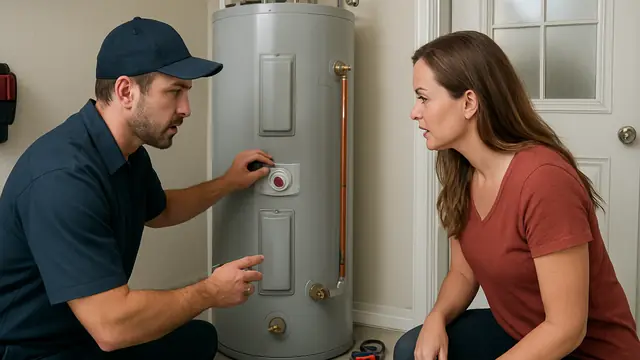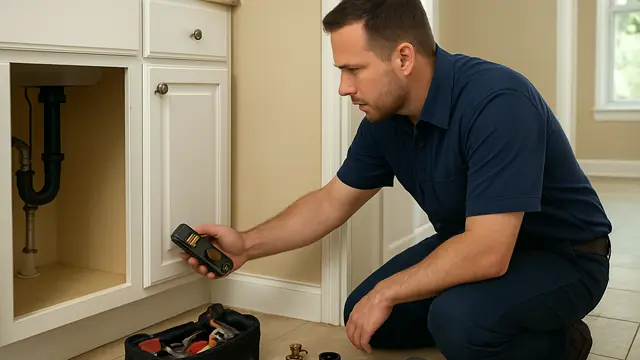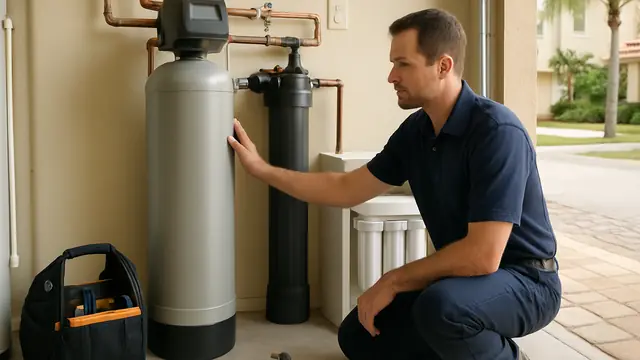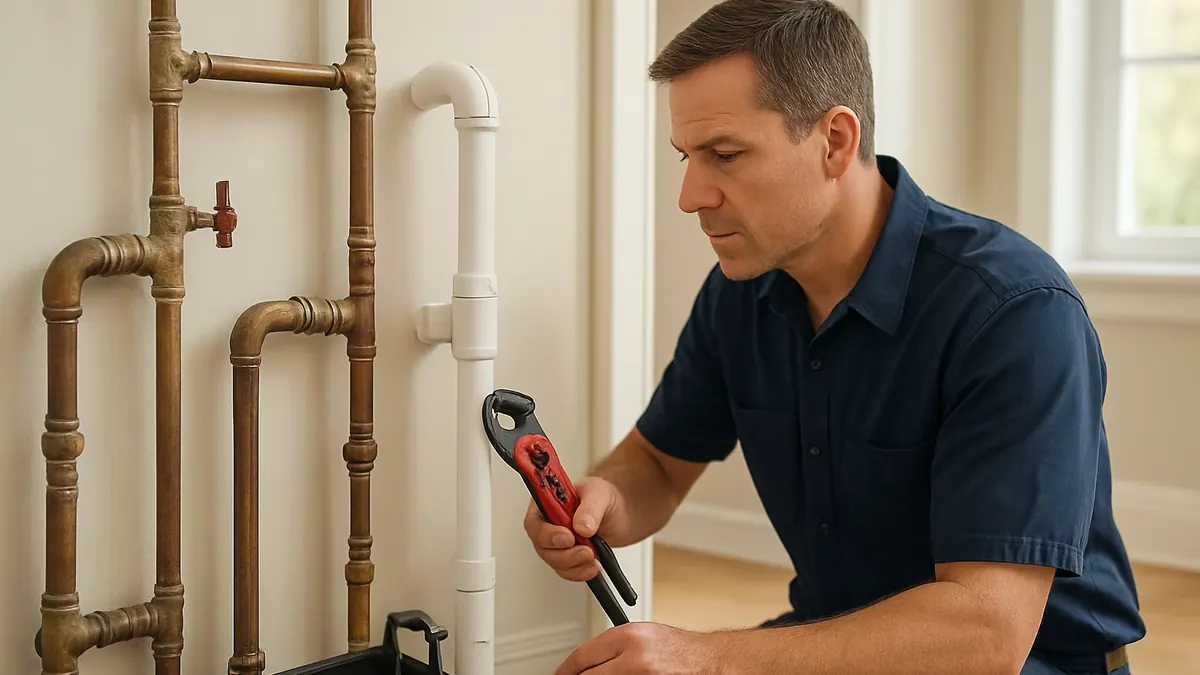
Stop and call for qualified help when plumbing water is near electrical equipment, sewage is entering occupied space, gas or burning odors are present, or a repair would require opening pressurized piping.
The problem may begin with a toilet that fills slowly or a shower that loses pressure whenever another fixture is opened. Later, you may find moisture under a sink or hear that another section of pipe has developed a leak. For a homeowner in Hammock Bay, the important question is whether these are isolated plumbing problems or signs your home needs repiping.
Repiping replaces part or all of the hot- and cold-water supply lines. It does not include drains or sewers. Many homes need only a targeted repair, but recurring leaks or restrictions call for evaluation.
If you have an active leak, shut off the nearest fixture valve or the main supply when safe. Keep away from water near electrical equipment, move belongings out of the wet area, and call a licensed plumber. Limiting water damage is the immediate priority.
How to Recognize a Possible Repiping Problem
Pressure Drops When More Than One Fixture Runs
Some pressure change is normal when several fixtures run. A dramatic drop may indicate an undersized branch, partly closed valve, regulator issue, or restricted piping. Test fixtures individually first. One weak shower may have a clogged showerhead, while several weak hot- and cold-water fixtures require wider investigation.
Leaks Are No Longer Limited to One Location
A loose connector under one sink does not mean the entire home needs repiping. Concern increases when leaks occur in separate rooms, involve concealed lines, or affect the same material repeatedly. A repair history can reveal a broader pattern.
Fixture Valves and Exposed Lines Show Deterioration
Check accessible valves, exposed pipe, appliance connections, and the water-heater area. Rust, pitting, deposits, green or blue stains, or damp connections should be examined. One corroded valve may only need replacement; similar deterioration at several locations may indicate a broader issue.
Water Quality Changes Inside the Home
Discoloration, metallic taste, or particles in aerators may relate to corrosion, but the water heater, incoming supply, or one fixture may be responsible. Note whether the problem affects hot water, cold water, or both.
Moisture Appears Without an Obvious Fixture Leak
A soft cabinet bottom, damp baseboard, ceiling stain, bubbling paint, or musty odor may indicate a concealed leak. Other building systems can create similar damage, so the source must be confirmed before repairs are covered.
Why Water Lines Eventually Develop Problems
Supply piping is affected by material, installation quality, pressure, temperature, support, fittings, physical damage, and water chemistry. The calendar alone cannot determine whether repiping is needed.
Metal lines can corrode and narrow internally. This may reduce flow and eventually create weak spots. Plastic lines avoid metal corrosion but can still fail at damaged, unsupported, overheated, or improperly assembled sections.
High pressure can make a system appear strong while placing unnecessary stress on connectors, valves, appliance components, and fittings. Pressure should be measured rather than judged by feel.
Safe Checks You Can Complete Before Service
- Run several faucets and showers separately. Compare hot and cold flow, then operate a second fixture and note whether the first becomes unusually weak.
- Look inside sink cabinets and around toilets, appliances, and the water heater. Check for staining, moisture, corrosion, swelling, or signs of an earlier repair.
- Review your water-use history for unexplained increases. A higher bill does not prove a leak, but it can support other evidence.
With all known fixtures and water-using equipment off, observe the water meter if safely accessible. Continued movement may indicate water use or leakage. Do not open utility-owned equipment.
Write down when symptoms occur. Specific details are more useful than a general report of low pressure.
What You Should Not Try
- Do not cut into drywall, ceilings, or cabinetry without locating the likely problem area. Random access creates unnecessary damage and may expose wiring or other building systems.
- Do not increase the water pressure to force more flow through restricted lines. That can worsen leaks and damage valves, hoses, and fixtures.
- Do not use drain chemicals for low pressure, discoloration, or a supply-line leak. Drain cleaners do not repair pressurized water piping.
- Avoid permanent reliance on tape, sealant, clamps, or unapproved transition fittings. Emergency control and lasting repair are not the same thing.
When the Situation Becomes Urgent
Act promptly if water is passing through a wall or ceiling, pooling rapidly, or reaching a light, outlet, appliance, or electrical panel. Shut off the water when safe and avoid wet electrical areas.
A sagging ceiling, sudden whole-home loss of pressure, rapidly moving water meter, or sound of water running behind a surface also requires immediate attention.
Recurring leaks can become urgent even without flooding. Once failures begin occurring close together, planning a durable correction is safer than waiting for the next emergency.
How a Licensed Plumber Evaluates the Piping
The plumber reviews the symptoms, prior repairs, fixture locations, and known pipe material. Accessible lines are inspected for corrosion, patches, improper support, damaged fittings, or movement.
Pressure testing helps determine whether the home has excessive pressure, weak incoming pressure, or a large drop during flow. Comparing fixtures and isolating branches can identify whether the problem is local, limited to one section, or widespread.
Leak-detection equipment may help locate concealed water. The recommendation should explain why a repair, partial repipe, or whole-house replacement is appropriate.
Repair Options Before Complete Replacement
The least invasive solution may be cleaning a fixture aerator, replacing a cartridge, changing a supply connector, replacing a shutoff valve, correcting a pressure regulator, or repairing one accessible section.
If the issue is limited to one bathroom, one appliance area, or one hot-water branch, partial repiping may provide a long-term correction without replacing reliable lines elsewhere.
Phased repiping can sometimes be coordinated with renovations or other planned access. The plumber must account for proper transitions and the condition of piping left in service.
Whole-house repiping becomes more reasonable when failures are distributed throughout the home, restrictions affect many fixtures, or repeated repairs create ongoing damage and disruption. PEX and copper are common materials, with the choice based on code, routing, access, and project priorities.
What Affects the Cost of Repiping
The primary cost factors include home size, number of plumbing fixtures, number of floors, pipe-route length, replacement material, and accessibility.
Pipes behind cabinets, tile, finished ceilings, or other detailed surfaces require additional labor and restoration planning. Permits, inspections, insulation, valves, fixture reconnections, drywall repair, painting, and cleanup may also affect the scope.
Ask whether the estimate includes restoration, debris removal, permits, and water-service arrangements. Compare scopes, not totals without context.
Prevention and Maintenance Guidance
Keep the main shutoff valve accessible and make sure other household members know where it is. Replace aging appliance hoses, refrigerator lines, toilet connectors, and faucet supply lines before they fail.
Have the pressure checked when pipes bang, fixture components fail repeatedly, or connectors develop frequent leaks. Investigate water stains, damp odors, and unexplained flow changes early.
For a home that may be unoccupied at times, monitored leak sensors or an automatic shutoff valve can reduce the time a leak runs before discovery. These devices do not replace maintenance, but they can limit damage.
Decide Whether the Problem Is Isolated or Widespread
The signs your home may need repiping in Hammock Bay become more meaningful when several occur together: recurring leaks, weak flow, visible deterioration, water-quality changes, and concealed moisture. A licensed plumber can identify the cause and recommend the least invasive option that provides a reliable result.
About this guide: This resource provides general homeowner education, not a remote diagnosis. Actual conditions, code requirements, equipment, and safe repair options must be evaluated at the property.