Stop and call for qualified help when plumbing water is near electrical equipment, sewage is entering occupied space, gas or burning odors are present, or a repair would require opening pressurized piping.
You are preparing to leave a Hammock Bay home before a hurricane when the whole-house water pressure seems inconsistent, the washing-machine valve is difficult to turn, and a faint musty odor is coming from a vanity cabinet. These symptoms may have simple explanations, but they deserve attention before the property is vacant and normal repair schedules are disrupted.
The safest immediate step is to stop unnecessary water use and inspect the affected areas without opening walls or dismantling equipment. If you find active leaking, close the nearest fixture shutoff only if it moves freely. Locate the main shutoff in case the leak cannot be isolated. Never force a seized valve or step into standing water near electrical equipment.
This Northwest Florida hurricane plumbing checklist in Hammock Bay focuses on connected equipment, appliance lines, drainage performance, and a safe restart after the storm.
Build a Written Shutdown and Restart Plan
A useful storm checklist should tell any responsible adult where the main shutoff, water heater controls, appliance valves, sewer cleanout, irrigation controls, and treatment-equipment bypasses are located.
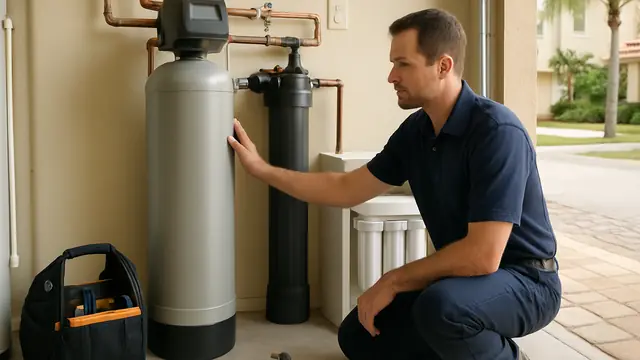
Do not assume every valve should be turned. Some homes have irrigation, recirculation, filtration, softening, or fire-protection equipment that may require a specific shutdown sequence. Obtain system-specific instructions before severe weather arrives.
Verify That the Main Shutoff Operates
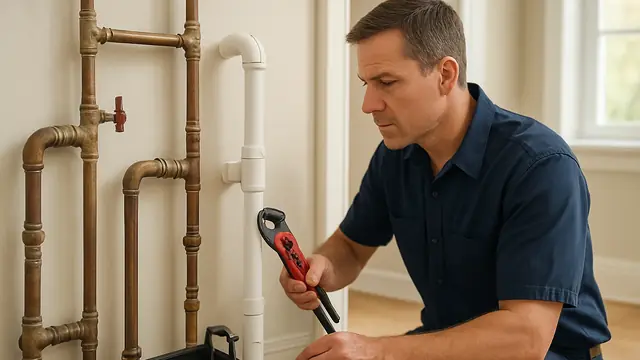
A lever-style ball valve usually closes with one-quarter turn. A round gate valve may need several turns.
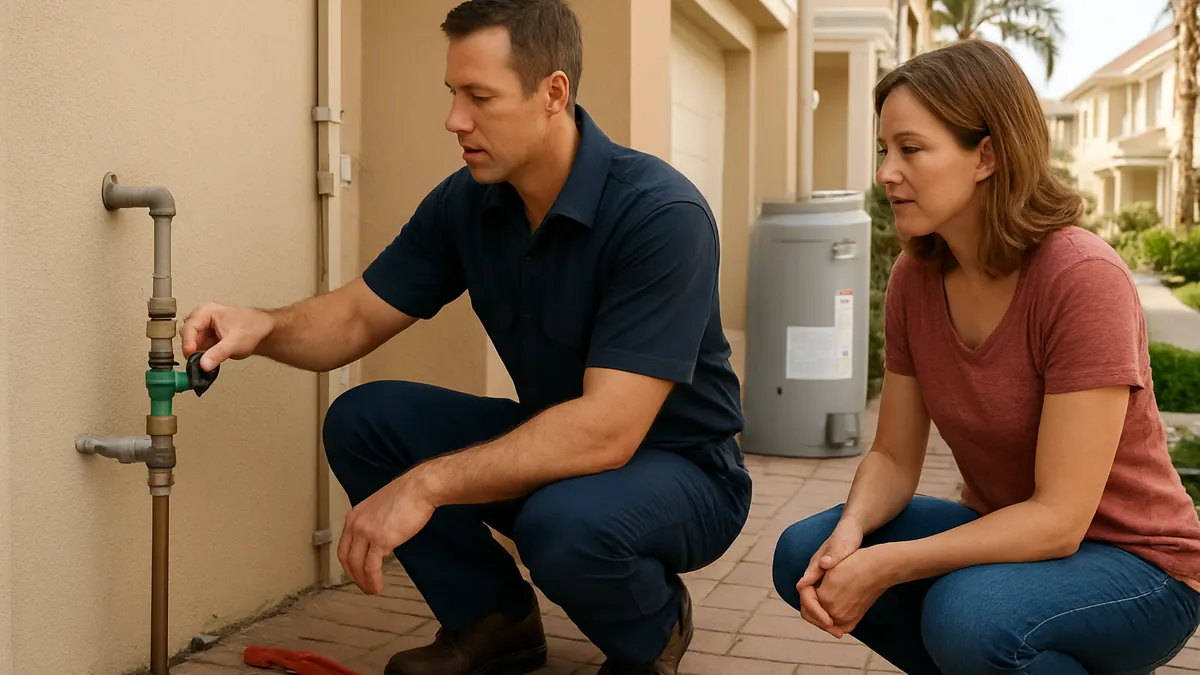
Test the main valve gently while there is still time to obtain service. If the handle is corroded, leaking, twisted, or extremely difficult to move, stop. Extra leverage can break the valve or connected pipe.
Investigate Pressure Changes
Pressure that changes throughout the home may result from simultaneous water use, a partly closed valve, pressure-regulator trouble, buildup, a leak, or connected equipment.
Turn off water-using fixtures and listen. If you hear water moving when everything is off, see unexplained meter movement, or notice moisture, a leak may be present. Sudden whole-home pressure loss combined with visible water requires prompt attention.
Inspect Laundry and Appliance Connections
Washing-machine hoses are important because they remain pressurized while the valves are open. Look for bulges, cracking, rust, fraying, kinks, or dampness.
If the washer will not be used, closing the valves may reduce risk, but do not force stiff handles. Old valves can begin leaking after they are disturbed.
Search for Concealed-Leak Clues
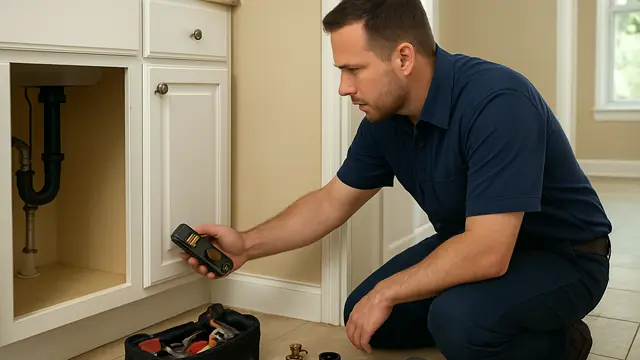
A musty cabinet odor, swollen baseboard, peeling paint, soft drywall, or recurring stain can indicate moisture even when no active drip is visible.
Do not cut into a wall based only on a stain. Water may travel along framing, pipes, or flooring before becoming visible. Professional moisture detection can help narrow the source.
Make Sure Toilets and Faucets Shut Off
Flush each toilet once. The tank should fill and stop. Repeated refilling may indicate a worn flapper, fill-valve problem, chain issue, or incorrect water level.
Inspect the toilet supply line, shutoff, tank bolts, and floor around the base. Moisture there may come from condensation, a supply leak, tank hardware, or the seal beneath the toilet.
Inspect the Water Heater and Connected Components
Check the tank, top connectors, valves, expansion tank, drain pan, and nearby floor. An expansion tank helps absorb pressure changes as water heats.
Water around the heater may come from a connector, drain valve, relief valve, condensation, nearby pipe, or tank failure. A component leak may be repairable. Leakage through the tank body usually means replacement is needed.
Never cap the temperature and pressure relief valve discharge pipe. Do not drain the heater as routine hurricane preparation. An empty electric tank can be damaged if power returns before it is refilled.
Test Drains for Multiple-Fixture Symptoms
Run a moderate amount of water through sinks, tubs, and showers. Flush toilets once. Watch for slow drainage, gurgling, sewage odor, or water appearing in another fixture.
One slow drain may have a local obstruction. Several affected fixtures, a bubbling toilet, or wastewater rising in a shower may point to a larger branch-line or main-sewer blockage.
Stop using water if sewage backs up. Do not run the dishwasher or washing machine. Avoid chemical cleaners, and do not remove a cleanout cap during an active backup.
What Homeowners Should Not Attempt
Do not force valves, adjust pressure regulators, dismantle treatment equipment, modify backflow devices, work on gas controls, or alter water-heater wiring. Do not climb onto a roof in wind or rain.
Signs That Make the Situation Urgent
Call for prompt help when an active leak cannot be isolated, sewage enters the home, water reaches electrical equipment, a gas odor is present, or the main shutoff does not stop flow.
How a Licensed Plumber Diagnoses the System
A licensed plumber identifies whether the problem involves the water supply, pressure control, fixture, appliance line, water heater, treatment equipment, or drainage system.
Diagnosis may include pressure readings, meter observation, valve isolation, moisture detection, and inspection of visible piping. Drain problems may require mechanical cleaning and sewer-camera inspection.
A sewer camera can identify buildup, roots, displaced joints, foreign objects, or damaged pipe. Water-heater testing distinguishes a replaceable fitting or component from internal tank failure.
Repair Options Start With the Smallest Reliable Fix
A running toilet may need a flapper, fill valve, seal, or adjustment. A faucet may require a cartridge, washer, or connector. A worn appliance line can often be replaced individually.
A leaking shutoff or main valve may be serviced or replaced. A localized supply leak may allow targeted repair. Broader repiping is considered when failures are widespread or recurring.
Drain work often starts with mechanical clearing. Camera findings may support additional cleaning or spot repair. Water-heater repairs may involve a valve, connector, thermostat, element, or control. A leaking tank body generally requires replacement.
What Affects the Cost?
Cost depends on access, pipe and valve material, equipment type, diagnosis time, permits, failure location, and emergency scheduling. Concealed leaks generally require more investigation than visible connector failures. Drain work varies with cleanout access, blockage depth, pipe condition, and excavation needs.
Prevention and Safe Restart After the Hurricane
Exercise operable valves periodically, replace deteriorated supply lines, and address recurring pressure changes, drain symptoms, or unexplained moisture.
Open the main valve slowly while another person watches plumbing areas. Listen for water movement with fixtures off. Follow official water-use guidance, and do not energize an empty electric water heater or submerged equipment.
Complete Your Northwest Florida Hurricane Plumbing Checklist in Hammock Bay
A strong storm plan identifies the main shutoff, accounts for connected equipment, checks appliance lines and fixtures, verifies drain performance, and provides a safe restart procedure.
Use this Northwest Florida hurricane plumbing checklist in Hammock Bay before conditions deteriorate. An unreliable valve, pressure change, damp cabinet, or slow drain is easier to diagnose before the property is unattended.
About this guide: This resource provides general homeowner education, not a remote diagnosis. Actual conditions, code requirements, equipment, and safe repair options must be evaluated at the property.