Stop and call for qualified help when plumbing water is near electrical equipment, sewage is entering occupied space, gas or burning odors are present, or a repair would require opening pressurized piping.
You are considering a home in Hammock Bay and one bathroom sink drains slowly, the water pressure drops when the washing machine fills, and a toilet continues running after every flush. Those symptoms may be minor, but they can also reveal a restricted drain, a pressure-control issue, a worn toilet component, or a system that has not been tested under normal household demand.
Note when each symptom occurs and request a licensed plumbing inspection before closing. Do not take apart the toilet, adjust pressure controls, disconnect appliance hoses, or pour chemicals into the sink.
A plumbing inspection checklist before buying a Northwest Florida home in Hammock Bay should evaluate not only whether each fixture works, but also how the plumbing performs when several fixtures and appliances operate together.
Understand the Difference Between Appearance and Performance
Newer-looking fixtures do not guarantee that valves, connectors, drains, and concealed piping are sound. A faucet can look new while the shutoff below it is corroded, and a shower can drain during a brief test but back up when the washing machine discharges.
Review Records and Repeated Symptoms
Request available invoices for leak repairs, drain cleaning, water-heater service, fixture replacement, repiping, and appliance-related plumbing work. Ask whether the property has experienced recurring low pressure, sewer odor, hot-water shortages, or water damage.
Repeated service at the same fixture or drain deserves explanation so the buyer understands whether the issue was isolated or recurring.
Locate the Main Shutoff and Isolation Valves
The main water shutoff should be easy to locate and reach. Buyers should know how water would be stopped during an emergency, but they should not force an old or damaged valve during a walkthrough.
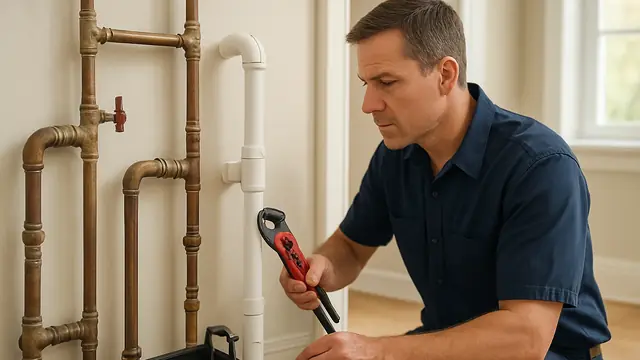
The plumber should inspect accessible shutoffs serving fixtures, appliances, and the water heater. Leaking, concealed, or corroded valves can turn a small repair into a larger water-control problem.
Measure Pressure Under Different Conditions
The plumber may measure static pressure when no water is running and flowing pressure while fixtures or appliances operate.
High pressure can stress toilet fill valves, faucet cartridges, appliance hoses, connectors, and water-heater components. Low pressure throughout the home may involve a partially closed valve, regulator problem, restricted pipe, filter, pump, or supply limitation.
Inspect Kitchens, Bathrooms, and Utility Areas
Kitchen Plumbing
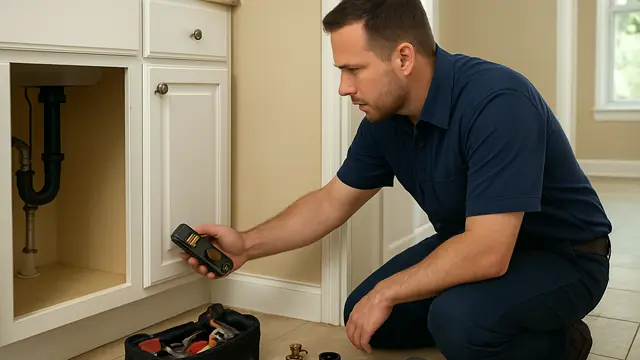
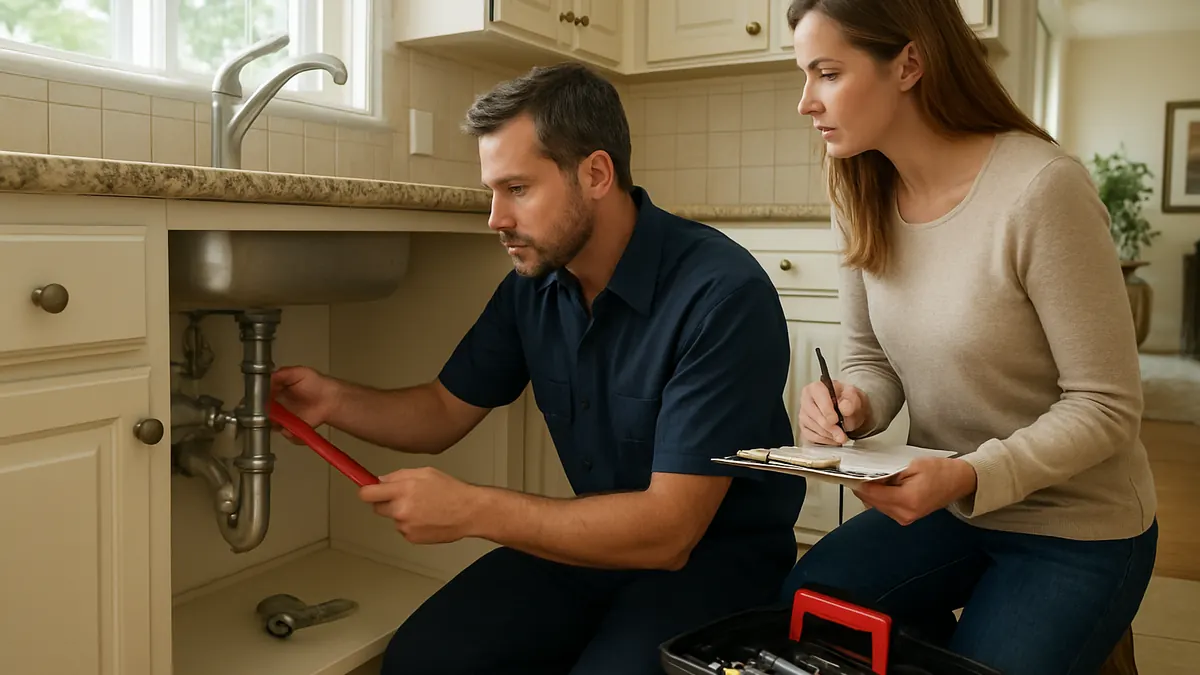
Run hot and cold water. Check beneath the sink while the faucet operates and while the basin drains. Inspect connectors, shutoffs, traps, disposal fittings, dishwasher connections, and cabinet penetrations.
Swelling, rust, deposits, or staining can indicate past or intermittent leakage.
Bathroom Fixtures
Run each faucet and shower long enough to evaluate temperature, drainage, and leakage. Flush every toilet and wait for the complete refill cycle. The toilet should stop running and remain stable at the floor.
A running toilet may have a worn flapper, fill valve, improperly adjusted float, or another internal issue. A rocking toilet may have mounting or seal concerns and should not simply be caulked in place.
Laundry Connections
Inspect washing-machine hoses, valves, drain connections, and the area around the equipment. Small laundry-connection defects should be identified before closing.
Evaluate the Water Heater and Hot-Water Delivery
The inspection should identify the heater type, approximate age, capacity, energy source, shutoff, relief protection, discharge piping, venting or wiring, and service access.
Run hot water at fixtures in different areas. Note delays, fluctuating temperature, unusual sounds, or hot water that runs out too quickly. Causes can include controls, heating elements or burners, scale, recirculation equipment, mixing valves, or fixture cartridges.
Visible corrosion or moisture should be traced to the exact component because a leaking connector is different from a leaking tank.
Test Drains Together
Drain performance should also be observed while other fixtures or appliances discharge.
One slow sink often has local buildup. Several slow drains, toilet bubbling, gurgling, or water rising in a lower fixture may indicate a branch or main-line restriction.
A sewer-camera inspection may be recommended when symptoms, repair history, or access justify it. The camera can reveal visible buildup, offsets, roots, breaks, standing water, and prior repairs.
Safe Checks a Buyer Can Perform
With permission, you can:
- Run faucets and inspect below sinks.
- Flush every toilet and confirm that filling stops.
- Operate a shower while another faucet is running.
- Observe whether pressure changes when an appliance fills.
- Look for cabinet swelling, floor damage, or ceiling stains.
- Listen for gurgling, dripping, hissing, or water hammer.
- Locate the main shutoff and appliance valves.
- Ask for manuals, invoices, and warranty information.
What the Buyer Should Not Attempt
- Do not disassemble toilet tanks, adjust regulators, open electrical or gas compartments, disconnect hoses, lift toilets, open cleanouts, or remove finished surfaces.
- Do not use chemical drain cleaners. They can damage some piping, create a hazard, and make later service more difficult.
- Do not assume that a recently replaced fixture proves the underlying piping or drain is sound.
Signs That Require Prompt Attention
Treat active leaks, water near electrical components, sewage backup, several slow or backed-up fixtures, a leaking water heater, persistent sewer odor, unexplained meter movement, soft flooring, or sagging ceilings as urgent concerns.
A running toilet is not usually an emergency, but it wastes water and may worsen. A rocking toilet, especially with odor or soft flooring, deserves faster attention.
How a Licensed Plumber Diagnoses the System
The plumber begins with the symptom pattern and operating conditions. Diagnostic steps may include pressure measurement, meter observation, moisture readings, fixture isolation, toilet testing, drain-flow testing, pressure testing, drain cleaning, or sewer-camera inspection.
A useful report should identify confirmed defects, probable causes, recommended tests, urgent repairs, maintenance items, and future improvements.
Repair Options Beginning With the Least Invasive
Minor repairs may include replacing a toilet flapper, fill valve, connector, cartridge, trap, shutoff, hose, or pressure regulator. A local drain may only need mechanical cleaning.
The next level may involve water-heater service, targeted wall access, branch-line repair, appliance-valve replacement, sewer cleaning, or a spot repair.
More extensive options include water-heater replacement, rerouting, partial repiping, whole-home repiping, or major sewer repair. Replacement should be based on documented condition, repair history, and reliability rather than appearance alone.
Factors That Affect Cost
Cost depends on access, pipe material, equipment type, defect location, number of affected fixtures, testing, permit requirements, surface protection, excavation, and restoration.
A repair in an open utility area is different from work behind cabinets, beneath flooring, inside a finished wall, or underground. Request written scopes that explain what is included and whether another contractor is needed for restoration.
Prevention and Maintenance After Closing
Label shutoffs, replace deteriorated appliance hoses, repair small leaks promptly, and keep grease, wipes, and foreign objects out of drains.
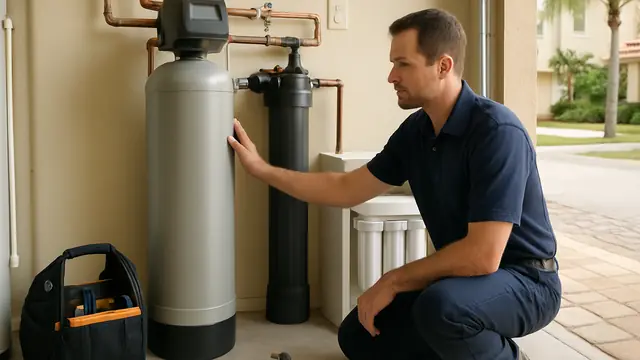
Follow manufacturer guidance for the water heater and any treatment, pumping, filtration, or leak-control equipment. Save inspection reports, model numbers, warranties, and repair invoices. If the home will be unoccupied at times, create a plan for water shutoff, leak monitoring, and regular checks.
Make the Purchase With Reliable Plumbing Information
A plumbing inspection checklist before buying a Northwest Florida home in Hammock Bay should show how the plumbing performs under real household demand. Evaluating pressure, shutoffs, fixtures, appliances, drains, the water heater, and the main line helps separate ordinary maintenance from conditions requiring immediate repair or future planning.
About this guide: This resource provides general homeowner education, not a remote diagnosis. Actual conditions, code requirements, equipment, and safe repair options must be evaluated at the property.