Stop and call for qualified help when plumbing water is near electrical equipment, sewage is entering occupied space, gas or burning odors are present, or a repair would require opening pressurized piping.
When a Home Needs a Sewage Ejector Pump
Most household drains rely on gravity to carry wastewater toward a sewer connection or septic system. When a fixture's drain cannot reach that connection with the required slope, a sewage pumping system may provide the lift. Wastewater collects in a basin, and a pump sends it through a discharge pipe to the receiving drainage system. These installations are not limited to basements; building elevations and plumbing layouts can create other situations where pumping is necessary.
For Lower Grand Lagoon homeowners, the first question is whether the property actually has this equipment and which fixtures depend on it. A pump might serve one bathroom, a separate living area, or a larger portion of the home. Do not assume every drain uses it. Installation records and a plumber's inspection can establish the service area, equipment location, and ownership before a problem occurs.
Know Which Kind of Pumping System You Have
A sewage ejector pump handles wastewater containing solids within its rated limits. A grinder pump uses a cutting mechanism and may be specified for a different pressure or discharge arrangement. An effluent pump usually handles wastewater after solids have settled in a septic tank, while a sump pump is intended for groundwater or similar drainage. These terms are not interchangeable, and replacing one type with another can cause serious performance problems.
Some properties connect to pressure sewer systems with specific equipment and service arrangements. A basin on your property is not automatically yours to open, maintain, or replace. Check utility documents, association responsibilities, and installation records. If ownership is unclear, contact the wastewater provider before authorizing work. Septic-related pumping equipment also needs evaluation in the context of the septic system, rather than treatment as an ordinary household drain repair.
Understand the Basin, Controls, and Discharge Piping
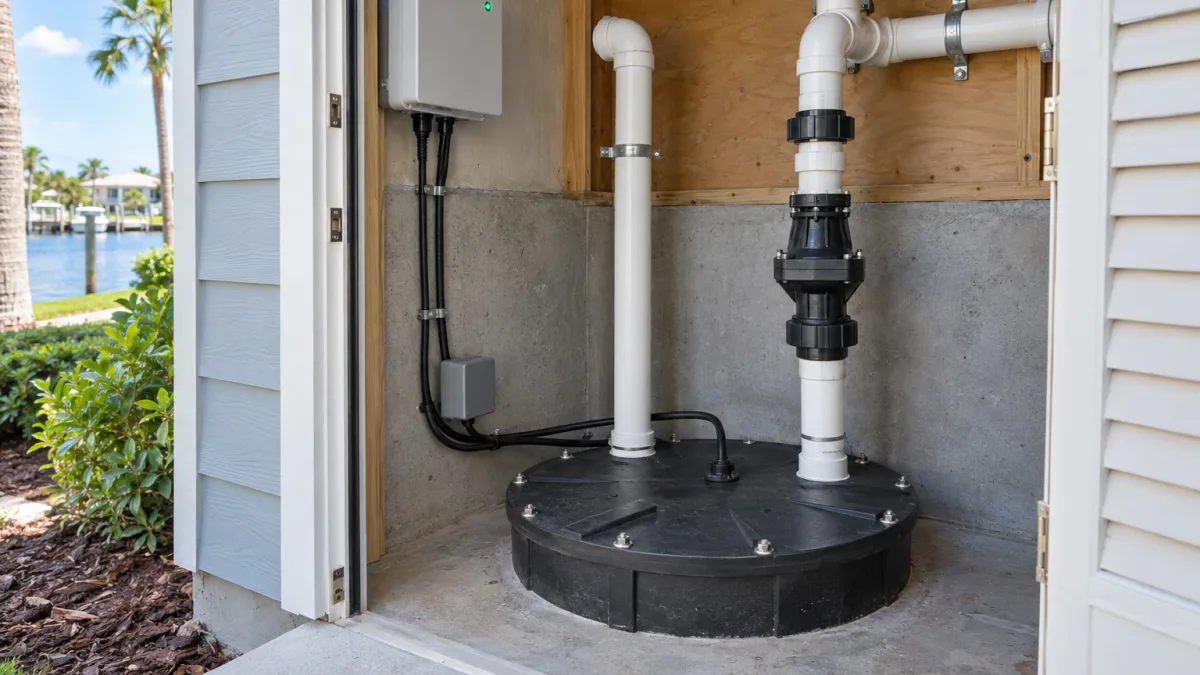
In a typical sewage ejector installation, a level control starts the pump as wastewater rises and stops it after the level drops. Depending on the design, this may involve floats or other sensors. The basin cover and its seals help contain wastewater and sewer gases. A properly arranged vent serves the basin, while the discharge piping carries pumped wastewater away. A check valve helps prevent discharged wastewater from flowing back after the pump stops.
Many systems also have a high-water alarm that warns when the level rises beyond its normal operating range. An alarm does not identify the cause by itself: the problem could involve power, controls, the pump, or restricted discharge. Keep accessible equipment information and service records together, but do not remove the basin cover to identify components. Inspecting inside a sewage basin exposes you to contaminated water, gases, electrical hazards, and moving equipment.
Respond to an Alarm Before Wastewater Overflows
A high-water alarm deserves prompt attention even if no fixture has backed up. Stop using the toilets, sinks, showers, and appliances served by that pump. If you do not know which fixtures depend on it, minimize water use throughout the property until the system can be identified. Note whether the alarm began during heavy use, after a power interruption, or while the home was unoccupied, and contact the responsible service provider or a licensed plumber.
Follow posted manufacturer instructions for acknowledging an alarm, but understand that silencing the sound does not correct the condition. Do not repeatedly reset a breaker, force a control to run, open the basin, or touch wet electrical equipment. If sewage is escaping, keep people and pets away. Wastewater cleanup may require a qualified remediation service. Water near electrical equipment also requires electrical safety evaluation before anyone approaches or attempts repairs.
Recognize Changes in Pump Operation
Changes from the system's normal pattern often matter more than a particular sound. A pump that starts unusually often, runs much longer than before, or appears to operate continuously needs evaluation. A leaking check valve can allow wastewater to return to the basin and trigger another cycle. Control problems, unwanted water entering the basin, and changes in fixture use can also affect cycling. The sound alone cannot confirm which part has failed.
Other warning signs include repeated alarms, new vibration, grinding noises, wastewater escaping around the installation, or drainage trouble limited to pump-served fixtures. Record what happened and which fixtures were operating, without deliberately adding water to reproduce the problem. A plumber can use that history to distinguish a fixture blockage from a pumping failure. Do not wait for an overflow simply because the pump eventually stops or the alarm clears.
What a Professional Diagnostic Visit Should Cover
A useful diagnosis starts with the system's purpose, model information, service history, and symptoms. The plumber checks the basin arrangement, accessible piping, cover condition, venting, controls, and discharge path. With appropriate isolation and safety procedures, the technician can inspect for obstructions and assess whether the level controls move and operate correctly. Electrical testing and repairs must be performed by a professional qualified for that work, with a licensed electrician involved when needed.
The evaluation should explain why wastewater is not leaving at the expected rate. Possible causes include a failed motor, jammed pump, faulty control, leaking check valve, or obstructed discharge piping. The receiving drainage system may also be restricting flow. Replacing a pump without checking these conditions can leave the original problem unresolved. After repair, controlled operating tests should verify normal cycling, discharge, connections, and alarm function where an alarm is installed.
Protect the System Through Everyday Use
Keep wipes, paper towels, hygiene products, diapers, dental floss, grease, and cat litter out of the drains. Products described as flushable can still interfere with pumps and controls. A grinder mechanism does not make a system suitable for unrestricted waste disposal. Toilets should receive human waste and toilet paper, while cooking grease belongs in an appropriate waste container rather than the sink. These habits protect both the pumping equipment and downstream piping.
Do not add drain-opening chemicals, solvents, or unapproved treatments to solve a pump problem. They may damage components and create hazards for the person servicing the basin. Keep access paths clear, and do not place storage, landscaping, or permanent construction over service covers. For vacation rentals, a short disposal notice and clear instructions for reporting an alarm are more useful than asking guests to troubleshoot equipment themselves.
Set a Maintenance Plan for Coastal Conditions
Maintenance frequency should follow the equipment manufacturer's guidance and reflect actual use, system age, and previous problems. A heavily occupied rental may need a different service schedule than a lightly used second home. Professional maintenance can include checking controls, alarm operation, pump performance, check-valve behavior, and basin-cover seals. Basin cleaning or internal work should be performed by trained personnel, not treated as a homeowner cleaning task.
Lower Grand Lagoon's heat and humidity make the condition of electrical enclosures and accessible connections worth checking. Where equipment is exposed, salt air can contribute to corrosion. Stormwater should not enter a sanitary sewage basin through a damaged cover or surrounding drainage problem. Ask the technician to assess signs of unwanted water entry and exposure damage. Do not drill, seal, reroute, or modify covers and vents without a system-specific professional assessment.
Plan for Power Interruptions and Unoccupied Periods
An electrically powered sewage pump generally cannot move wastewater during an outage unless an appropriate backup system is operating. The remaining space in the basin is limited and should not be treated as a predictable allowance for showers or toilet flushing. Stop using affected fixtures during the interruption. Gravity-fed drains elsewhere in the home do not prove that the pump-served area is safe to use, and a quiet alarm may also have lost power.
Ask whether the alarm has independent backup power and what that backup actually supports. A battery that powers an alarm usually does not power the sewage pump. Generator or other backup arrangements require equipment-specific planning and safe electrical installation. For seasonal absences, arrange a way to receive alarm reports and authorize service. After power returns, continued alarms or abnormal operation warrant service rather than immediately resuming full household water use.
Make Repair and Replacement Decisions With the Full System in View
A faulty float, check valve, or alarm component may be repairable without replacing the pump. Replacement becomes a stronger consideration when the motor has failed, important components are deteriorated, or recurring problems reveal that the existing equipment is unsuitable. Age alone does not establish the right choice. Ask for the diagnosis, the condition of related components, and an explanation of what the proposed repair will and will not address.
For replacement, horsepower alone is not a sufficient specification. The professional must consider wastewater type, required flow, vertical lift, piping resistance, basin dimensions, controls, and downstream requirements. A larger pump is not automatically better. Request a written scope covering removal, compatible equipment, piping and electrical work, required approvals, testing, and restoration. Before the job is complete, obtain the equipment information, maintenance guidance, and a clear explanation of the alarm response procedure.
About this guide: This resource provides general homeowner education, not a remote diagnosis. Actual conditions, code requirements, equipment, and safe repair options must be evaluated at the property.