Stop and call for qualified help when plumbing water is near electrical equipment, sewage is entering occupied space, gas or burning odors are present, or a repair would require opening pressurized piping.
You find water beneath a bathroom vanity, close the fixture valve, and discover a gray plastic pipe entering the wall. The leak may be coming from the connector, shutoff valve, fitting, or concealed supply line. Before assuming the whole plumbing system has failed, identify what material is actually present.
Polybutylene, or PB, was widely used for residential water-supply piping from the late 1970s through the mid-1990s. It can develop leaks at fittings or along the tubing, but not every gray pipe is PB. Your safest immediate action is to stop active water flow, dry the area, photograph the pipe, and avoid disturbing it. If the fixture valve does not stop the leak, shut off the main water supply when it is safe.
Start by Separating the Leak Source From the Pipe Type
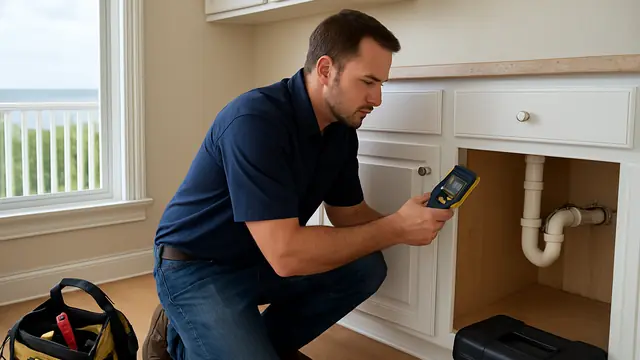
Water beneath a sink does not automatically mean the pipe inside the wall is leaking. Common sources include a loose connector, worn shutoff valve, leaking drain, or failed faucet. Dry the area and observe where moisture first returns without moving the pipe. The leak source and pipe material are separate questions; PB may also remain behind a newer connector or valve.
How to Identify Polybutylene Plumbing in Lower Grand Lagoon
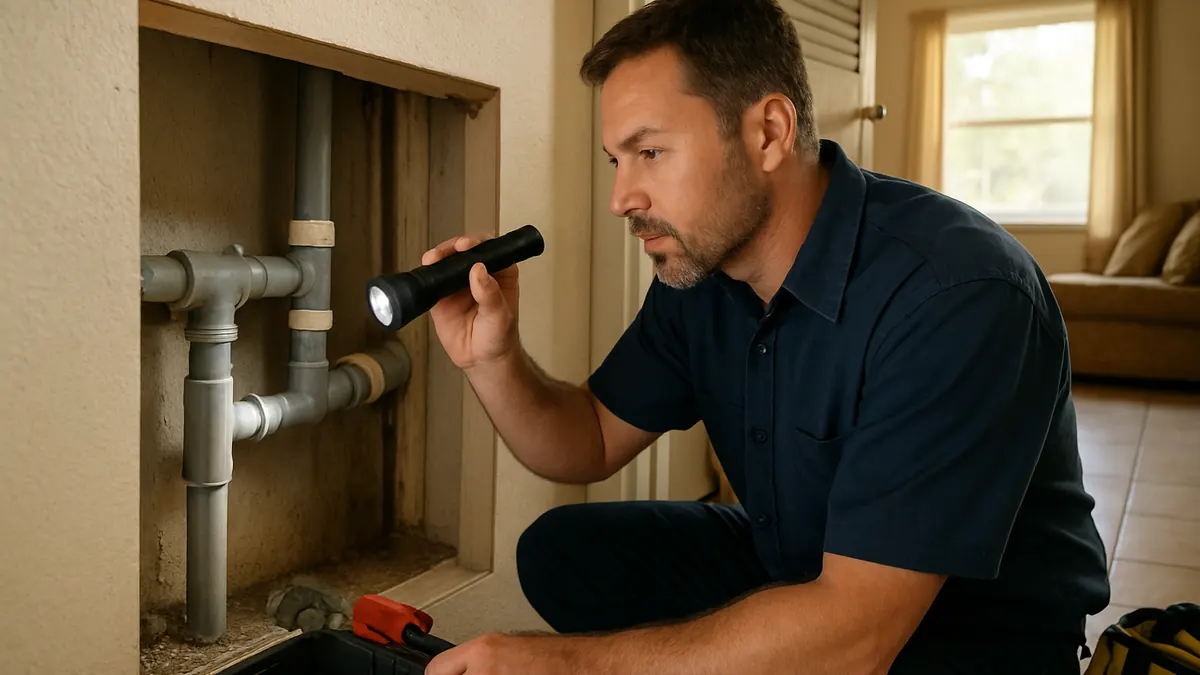
Look for flexible plastic tubing that is gray, blue-gray, silver, black, or occasionally white. PB supply pipe is commonly smaller than drain piping and carries water under pressure to sinks, toilets, showers, appliances, and the water heater.
Search for "PB," "PB2110," a manufacturer's name, or sizing information. Use a flashlight and mirror if the print faces away. Do not rotate or scrape the pipe. Many PB installations use plastic or metal fittings with copper-colored or aluminum crimp rings. One newer connection does not prove that all PB was removed.
Common Materials Homeowners Mistake for PB
PEX is flexible plastic piping and may look similar. Faucet supply tubes, toilet connectors, appliance hoses, irrigation tubing, and condensate drains can also create confusion.
A braided line from a shutoff valve to a faucet is a connector, not permanent piping. The larger pipe beneath the sink is normally a drain. Printed codes, fittings, crimp rings, and pipe location provide a more dependable answer than color.
Check Several Locations, Not Just the Leaking Fixture
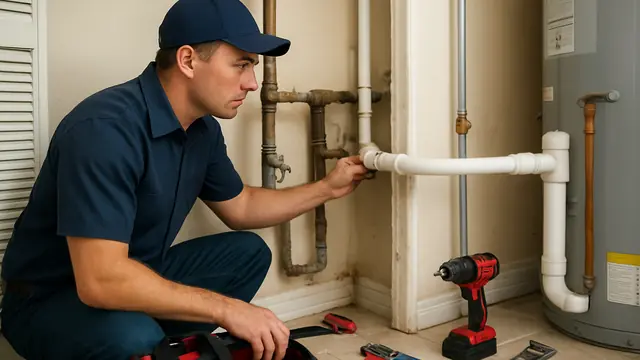
Inspect beneath other sinks, behind toilets, near the washing-machine box, and around the water heater. Look at exposed runs in a garage, utility area, crawlspace, or safely accessible attic.
A house may have a mixed system. One bathroom may have been repiped while another branch still contains PB. Photograph each location, but do not operate questionable valves simply to test them.
Safe Checks for Hidden Leakage
Inspect cabinet floors, baseboards, walls, ceilings, and flooring around plumbing fixtures. Watch for swelling, discoloration, peeling paint, soft drywall, musty odors, corrosion, or powdery residue near fittings.
A dry paper towel can reveal seepage around an accessible connection when used without shifting the pipe. You may also observe the water meter after every fixture and water-using device is off. Continued movement may indicate leakage, but it cannot tell you whether PB is responsible.
Actions That Can Make the Problem Worse
Do not bend the line to see whether it cracks. Do not squeeze it, drill nearby, or cut out a sample. Avoid sanding or scraping the surface to find markings.
Never use tape, glue, epoxy, a hose clamp, or an unrelated fitting as a permanent repair. Do not repeatedly tighten a shutoff valve or crimp ring. Avoid opening walls without a plan; a plumber can identify the most useful access point.
Urgent Signs That Require Prompt Service
A spraying pipe, uncontrolled drip, rapidly spreading stain, wet flooring, falling water pressure, or repeated leaks requires prompt attention. Shut off the water when safe and move belongings away from the affected area.
- Keep people out from under a sagging or bulging ceiling. Do not puncture the ceiling from below. Water can be heavy, and damaged material may fall.
- Water near outlets, light fixtures, appliances, or an electrical panel creates an added hazard. Do not touch wet electrical equipment or stand in water while operating switches.
- A slow leak also deserves timely service when the property will be unoccupied. Small seepage can continue unnoticed and damage cabinets, drywall, flooring, or framing.
How a Licensed Plumber Diagnoses the System
The plumber examines visible markings, fitting types, and crimp rings at several fixtures. They trace likely supply routes and look for transitions indicating a partial repipe.
The investigation may include moisture readings or appropriate leak detection. The plumber determines whether the immediate leak comes from tubing, a fitting, a valve, or another component and explains how much PB can be confirmed.
Repair Options Beginning With the Least Invasive
The least invasive solution may be replacement of a failed connector or shutoff valve when the permanent supply piping is not damaged.
If one accessible PB section or fitting has failed, a localized repair can stop the leak. The plumber removes the damaged area and installs an approved transition to suitable replacement pipe. This resolves that failure but leaves other PB in service.
A partial repipe replaces a defined branch or fixture group. This can be practical when PB is limited to one area or when previous renovations already replaced other sections.
A whole-home repipe replaces the remaining PB. It may be considered when the material is widespread, leaks have occurred repeatedly, access makes staged repairs inefficient, or the homeowner wants one coordinated long-term solution.
What Affects the Cost of Repair or Repiping
Cost is influenced by the true leak source, amount of PB, number of fixtures, pipe accessibility, home layout, chosen replacement material, and number of finish openings.
Work behind cabinets, tile, showers, or finished ceilings can require more labor. Water removal, drying, and finish repairs may be separate. Request a written scope identifying the pipe included, transitions, access openings, permits when required, and restoration responsibility.
Prevention and Maintenance Guidance
Keep the main water shutoff accessible and make sure responsible occupants know how to use it. Do not store items where they block the valve.
Install leak alarms beneath sinks, near the water heater, and beside the washing machine. For a property that may be vacant, discuss an automatic shutoff system with a qualified professional.
Inspect accessible supply lines periodically and investigate new stains or odors. Replace worn connectors and appliance hoses as recommended, recognizing that these are separate from concealed PB. If PB is confirmed, document its locations and create a planned timeline.
Homeowner FAQs
Does a leak beneath the sink prove the PB line failed?
No. The connector, shutoff valve, faucet, or drain may be the source. The area must be inspected before blaming the concealed supply pipe.
Can PB be connected to copper or PEX?
Yes. Repairs and partial repipes often create transitions between materials. A newer visible section may connect to older PB.
Is black plastic pipe always polybutylene?
No. PB can be black, but color alone cannot confirm it. Look for markings and fitting details.
Can I continue using the water if the area is currently dry?
A dry area may be monitored while an inspection is arranged, but recurring moisture, staining, or meter movement should not be ignored.
Is a localized PB repair permanent?
A properly completed repair can permanently correct the damaged section. It does not renew or remove PB elsewhere in the system.
Make the Decision After the Material and Leak Are Confirmed
How to identify polybutylene plumbing in Lower Grand Lagoon starts with separating the source of the water from the type of pipe behind it. Look for PB or PB2110 markings, flexible gray tubing, and characteristic crimped fittings, but avoid disturbing the line. A licensed plumber can confirm the material, determine how much remains, and explain whether a connector replacement, localized repair, partial repipe, or whole-home repipe is the most reasonable next step.
About this guide: This resource provides general homeowner education, not a remote diagnosis. Actual conditions, code requirements, equipment, and safe repair options must be evaluated at the property.