Stop and call for qualified help when plumbing water is near electrical equipment, sewage is entering occupied space, gas or burning odors are present, or a repair would require opening pressurized piping.
You open the vanity cabinet and find the bottom panel damp again. The faucet supply lines are dry, but a stain is spreading along the back wall, and a plumber repaired a different concealed leak earlier in the year. At the same time, the kitchen faucet has lost pressure whenever the washing machine fills. Those symptoms can make a homeowner wonder whether another isolated repair is enough or whether the home's water-supply piping is becoming unreliable.
The immediate safe step is to stop using the fixture nearest any active leak, close the nearest working shutoff valve, and use the main water shutoff when water cannot be controlled locally. Move stored items away from moisture and keep water away from outlets, lights, appliances, and electrical panels. Do not open walls or cabinets beyond what is already accessible until diagnostic testing has narrowed the likely source.
The signs your home may need repiping in Mary Esther, FL are most meaningful when several problems occur together. Repeated leaks, pressure loss at multiple fixtures, recurring stains, visible corrosion, and repairs in different branches may support a broader piping evaluation. One damp fitting, clogged aerator, or failed valve does not automatically justify a whole-home repipe.
What Residential Repiping Includes
Repiping replaces some or all of the pressurized hot- and cold-water distribution piping that supplies fixtures and appliances. It does not normally mean replacing drains, sewer piping, toilets, faucets, or the water heater.
A plumber may recommend one localized repair, a branch replacement, a reroute, a partial repipe, or a whole-home repipe.
Common Signs Your Home May Need Repiping in Mary Esther
Leaks Have Occurred in Different Rooms
One leak may come from accidental damage, a loose fitting, or a single weakened pipe section. Leaks beneath a vanity, behind a kitchen wall, near a laundry connection, or above a ceiling in separate locations can suggest broader deterioration, excessive pressure, poor support, or installation stress.
Pressure Drops When More Than One Fixture Runs
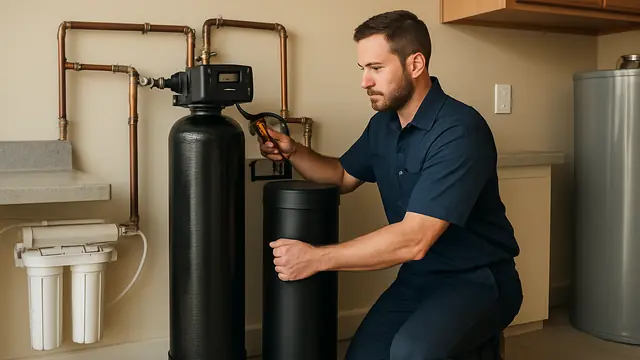
A single weak faucet may have a dirty aerator or worn cartridge. Pressure that drops throughout the home when a toilet, washing machine, or second shower operates may involve pipe restriction, a pressure regulator, a partially closed valve, a hidden leak, or the distribution layout.
Moisture or Staining Keeps Returning
Cabinet swelling, peeling paint, ceiling discoloration, musty odor, or recurring dampness can indicate a hidden water leak. Plumbing is one possible source, but drains, roofing, condensation, and exterior moisture should also be considered.
Exposed Pipes and Valves Show Similar Deterioration
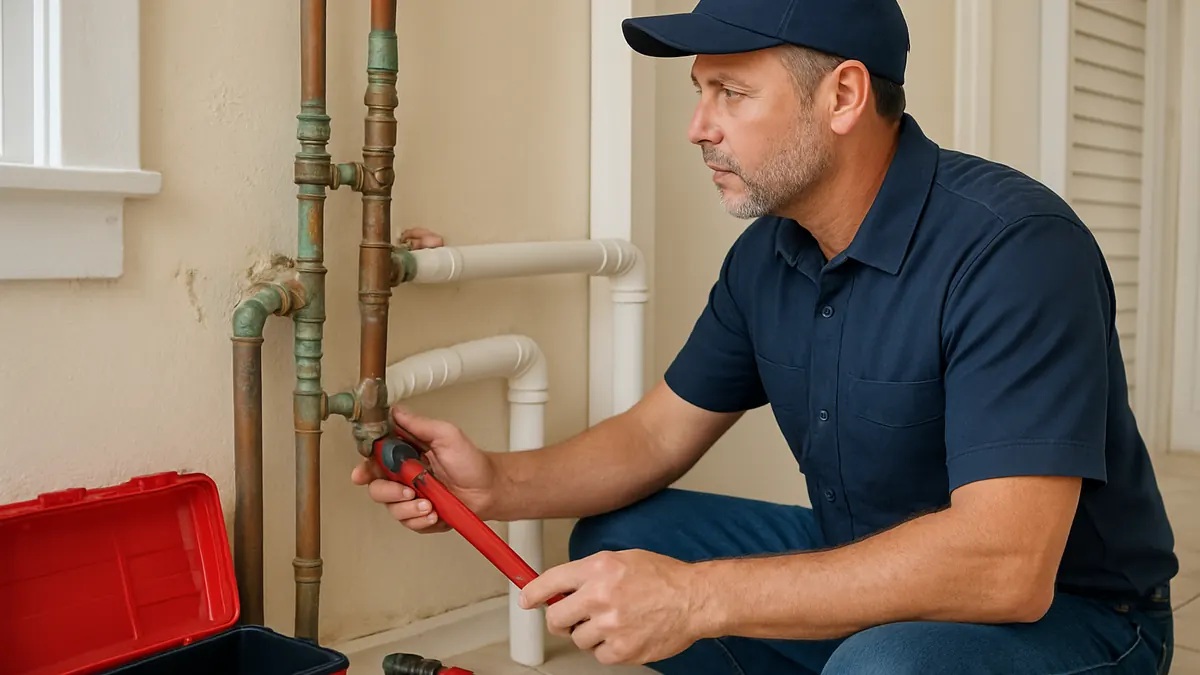
Rust, green staining, mineral crust, pitting, dampness, or flaking surfaces on several accessible valves and fittings can indicate broader wear. One corroded shutoff may still be an isolated repair.
Water Use Rises Without a Clear Explanation
A higher water bill, meter movement during a no-use period, or the sound of water while fixtures are off may indicate concealed leakage. The source should be located before a repiping decision is made.
Common Causes Behind Repeated Pipe Problems
Water-supply piping can develop repeated problems because of corrosion, high water pressure, vibration, poor support, installation stress, incompatible connections, internal restriction, accidental damage, or normal wear.
Excessive pressure can strain valves, fittings, appliance hoses, and fixture connectors throughout the home. Unsupported piping can move whenever water starts or stops, placing repeated stress on joints.
Safe Checks the Homeowner Can Perform
Test several fixtures and compare hot and cold flow. Write down where pressure is weak and whether another fixture makes the problem worse.
Inspect exposed piping, shutoff valves, appliance connections, and water-heater piping with a flashlight. Use a dry paper towel around accessible joints to check for minor moisture.
Perform a controlled meter test. Turn off faucets, irrigation, ice makers, appliances, and other automatic water users. Photograph the meter, avoid all water use for 15 to 30 minutes, and compare the reading.
What the Homeowner Should Not Attempt
Do not cut drywall, remove cabinets, lift flooring, or break tile before testing narrows the likely problem area. Unplanned access can create expensive restoration without finding the failed pipe.
Do not force corroded shutoff valves, overtighten damp fittings, or rely on chemical sealers and improvised clamps as permanent repairs. A brittle fitting can crack and release more water.
Do not assume low pressure proves that the pipes are corroded or too small. Regulators, valves, fixtures, service piping, and leaks should be evaluated first.
Never work around energized electrical equipment or continue using a line that is actively damaging the structure.
Signs That Make the Situation Urgent
Shut off the water and request prompt service when a leak is spreading, a ceiling begins to sag, flooring becomes soft, or moisture reaches wiring, outlets, appliances, or an electrical panel.
A rapidly moving meter, sudden major pressure loss, multiple active leaks, or a main shutoff that cannot be operated also requires quick attention.
How a Licensed Plumber Determines Whether Repiping Is Needed
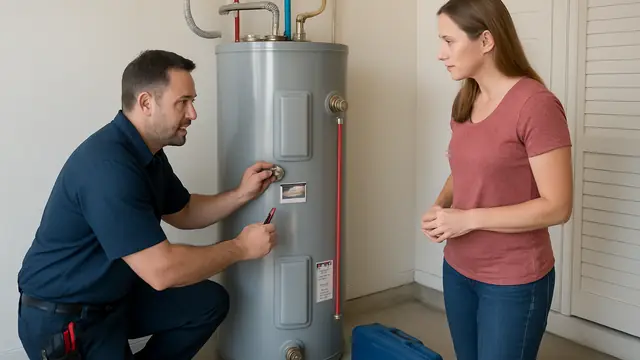
A plumber reviews the leak history, pressure complaints, meter behavior, and previous repairs. Accessible piping, shutoff valves, fixture supplies, appliance connections, water-heater piping, and the main distribution route are inspected.
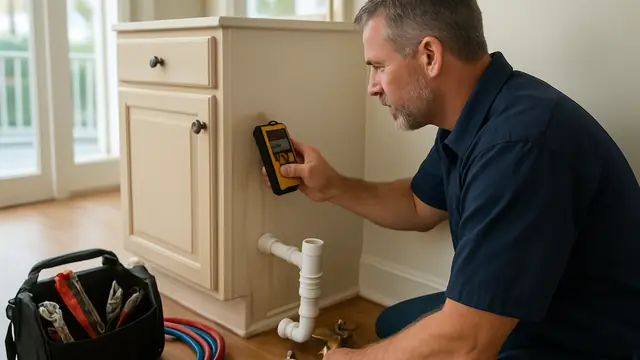
Testing may include static pressure, flowing pressure, meter observation, fixture isolation, moisture mapping, and targeted leak detection. Static pressure is measured when no water is moving. Flowing pressure shows how the system performs while fixtures operate.
Representative sections and previous repair points may be checked for corrosion, restriction, poor support, or stressed connections. The goal is to determine whether the problem is local or widespread.
Repair Options Beginning With the Least Invasive
- The smallest reasonable repair may be replacing one valve, connector, fitting, or damaged pipe section through a controlled opening.
- A pressure-regulator repair, fixture service, valve correction, or removal of a local restriction may restore performance without repiping.
- If one branch has repeated failures or poor access, sectional replacement or rerouting may provide a dependable solution while preserving serviceable piping elsewhere.
- A partial repipe may replace one area or several weak branches. Whole-home repiping is considered when repeated leaks or widespread deterioration make spot repairs unreliable.
Typical Factors Affecting Cost
Cost depends on the amount of piping replaced, selected material, number of fixture connections, home layout, routing, access, number of stories, and required wall or ceiling openings.
Cabinetry, tile, concrete, limited access, permits, and finish restoration can affect the scope.
Ask whether the proposal includes access openings, piping, valves, fixture reconnects, pressure testing, cleanup, wall closure, texture, and paint.
Prevention and Maintenance Guidance
Keep the main shutoff accessible and make sure household members know how to use it. Monitor water bills for unexplained changes.
Inspect exposed valves, appliance hoses, and piping for corrosion, dampness, or bulging. Have pressure checked when connectors fail repeatedly, pipes move, or flow changes throughout the home.
Choose the Scope That Matches the Evidence
The signs your home may need repiping in Mary Esther, FL are strongest when several symptoms occur together: leaks in different rooms, pressure loss at multiple fixtures, recurring moisture, visible deterioration, or hidden water use. Each symptom can also have a smaller cause, so diagnosis should come before major replacement.
A licensed plumber can compare local repair, pressure correction, branch replacement, rerouting, partial repiping, and whole-home repiping. The recommended scope should be the least invasive option that can reasonably provide dependable service.
About this guide: This resource provides general homeowner education, not a remote diagnosis. Actual conditions, code requirements, equipment, and safe repair options must be evaluated at the property.