Stop and call for qualified help when plumbing water is near electrical equipment, sewage is entering occupied space, gas or burning odors are present, or a repair would require opening pressurized piping.
You may hear "polybutylene" for the first time during a home inspection, bathroom update, or sink repair. Someone points to flexible gray tubing entering the wall, and you wonder whether a hidden leak could be developing elsewhere. Do not pull, bend, cut, or tighten it. Take photographs, locate the main shutoff, and schedule a licensed plumbing evaluation.
Learning how to identify polybutylene plumbing in Mary Esther requires more than matching a color. Accurate identification depends on markings, fittings, pipe purpose, and transitions to newer materials.
What Polybutylene Plumbing Is
Polybutylene is a flexible plastic pipe used in residential water-supply systems during earlier decades. It may appear gray, silver-gray, blue, or black. It typically carries pressurized hot or cold water to sinks, toilets, showers, washing machines, and water heaters.
A common identifying mark is "PB2110." Printing can be faint, painted over, or turned toward a wall. Older installations may use plastic or metal insert fittings secured with copper-colored rings or aluminum bands. No single clue should be used alone.
Common Reasons the Pipe Is Discovered
Suspected polybutylene often comes into view during a valve replacement, water-heater service, renovation, or leak investigation. The home may still have its original supply tubing, or an earlier repair may have replaced only one short section. Newer PEX, CPVC, or copper near a fixture can therefore connect to older concealed pipe. In other cases, a gray connector or conduit is mistaken for polybutylene, which is why several identifying clues are necessary.
How to Identify Polybutylene Plumbing in Mary Esther
Look for PB Markings
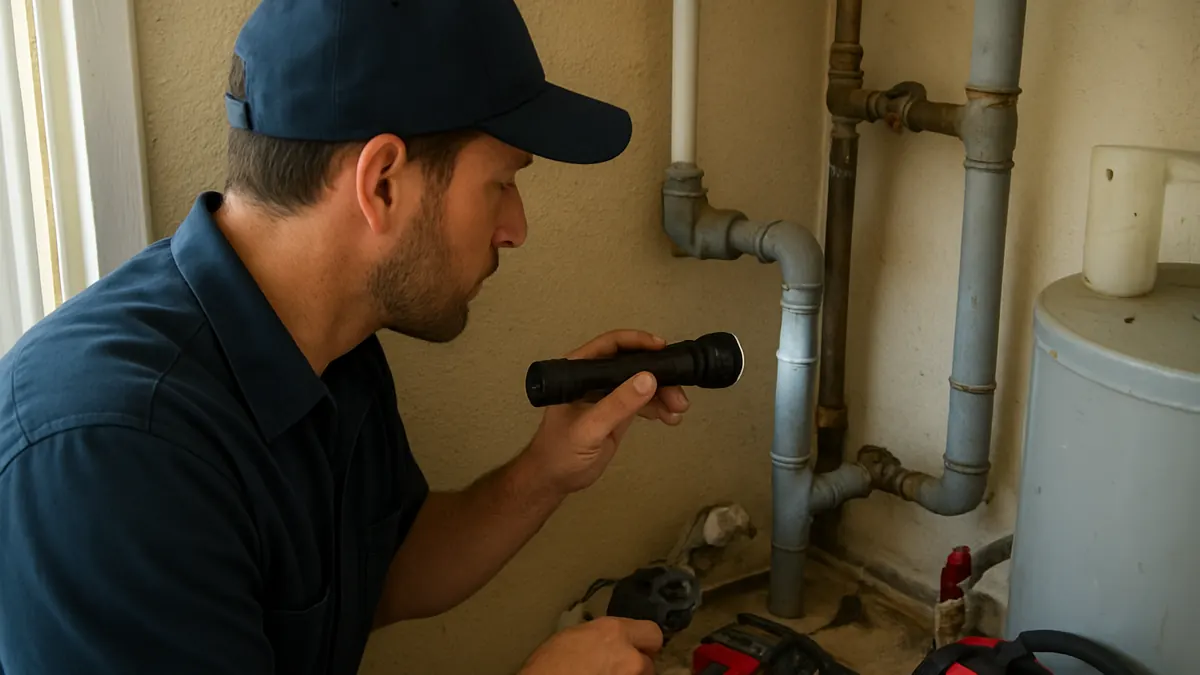
Use a flashlight and examine an exposed section without touching it. If you can see only part of the printing, take a close photograph and enlarge the image.
Do not scrape, sand, heat, or chemically clean the pipe. If the marking is hidden, look for another accessible section.
Confirm What the Pipe Supplies
Polybutylene was used for pressurized water distribution. A suspected section will normally connect to a fixture, appliance, valve, or water branch.
Do not confuse it with a large drainpipe, plumbing vent, or gray electrical conduit. Those systems serve different purposes.
Examine Fittings and Crimp Rings
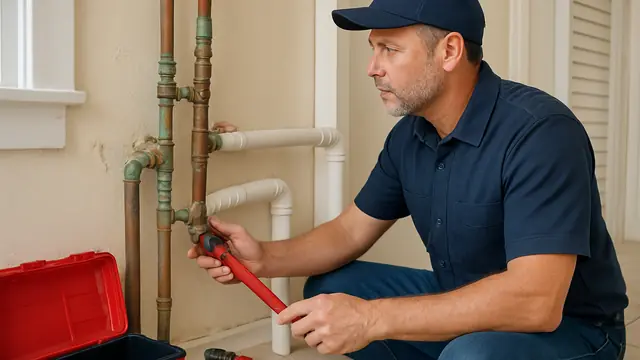
Photograph where the pipe meets a valve, elbow, tee, or transition fitting. Copper-colored rings or aluminum bands may be present.
Compare Several Locations
Check beneath more than one sink, around the water heater, at washing-machine connections, and behind existing access panels. Similar tubing in several rooms suggests a larger system.
Safe Checks a Homeowner Can Perform
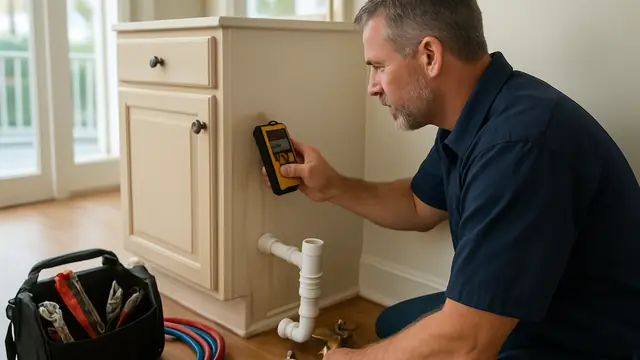
Photograph the pipe's location, markings, fittings, valves, and material changes. Record where similar tubing appears. Look for damp cabinets, soft drywall, peeling paint, musty odors, or unexplained staining.
- A dry paper towel placed beneath a questionable fitting can reveal a slow drip. Do not wrap the fitting or press against it.
- Locate the main shutoff and keep the path clear. If the valve appears corroded, stuck, or damaged, do not force it.
- With water use off, observe the meter. Continued movement may indicate leakage, but it cannot locate the problem.
What the Homeowner Should Not Attempt
- Do not flex, squeeze, pull, or tap suspected polybutylene to see whether it feels brittle. A dry connection may begin leaking after being disturbed.
- Do not loosen crimp rings, remove fittings, cut a sample, or use a generic repair coupling. Plastic piping systems require compatible fittings and approved transition methods.
- Do not perform a homemade pressure test; it cannot promise future reliability.
- Avoid tape, epoxy, putty, clamps, or sealants as permanent repairs on a pressurized supply line.
- Do not open walls at random. A plumber should first evaluate visible routing and moisture evidence so any access opening is targeted.
Signs That Make the Problem Urgent
- Call promptly if water is actively dripping or spraying, the meter is moving rapidly with no known water use, or pressure suddenly drops at several fixtures.
- A wet or sagging ceiling, soft drywall, lifting flooring, swollen cabinetry, or water appearing from a wall opening can indicate hidden leakage.
- Water near electrical outlets, appliances, wiring, or a panel creates additional danger. Stay away from the wet area and avoid operating nearby electrical equipment.
- If substantial water is escaping, shut off the main supply only when the valve is safe to reach. Keep people away from bulging ceilings and standing water near electricity.
- Repeated leaks in different rooms may indicate a broader system concern.
How a Licensed Plumber Diagnoses the Plumbing
- A licensed plumber examines visible markings, tubing dimensions, flexibility, fitting style, crimp method, valves, and transitions to modern materials.
- The plumber estimates the system's extent by checking fixtures, the water-heater area, utility spaces, and access panels.
- Repair records and newer pipe sections may reveal earlier localized failures.
- When hidden moisture is suspected, diagnostic tools may help narrow the search and guide limited access. The explanation should separate confirmed findings from concealed areas.
Repair Options Beginning With the Least Invasive
Identification and Documentation
If no active leak exists, the first step may be a documented inspection with photographs, locations, shutoff information, and recommendations.
Localized Leak Repair
A plumber may remove one failed section and transition to modern pipe using compatible fittings. This restores service but does not replace remaining polybutylene.
Replacement of One Defined Branch
If the material is limited to one accessible run, replacing that branch may solve the immediate concern without disturbing unrelated modern piping.
Phased Repiping
A larger system may be replaced in planned stages. Completed sections and areas still containing older pipe should be mapped clearly.
Complete Repiping
When polybutylene is widespread, repeatedly leaking, or difficult to isolate, complete repiping may be the most practical long-term solution. The proposal should explain replacement material, routing, fixture reconnections, testing, access openings, permits when applicable, and finish restoration.
Typical Factors Affecting Cost
Cost depends on pipe quantity, fixture count, layout, number of levels, accessibility, routing, replacement material, valve condition, and transitions.
Surface restoration, permits, and difficult access can add labor. Confirm what is included. A meaningful estimate requires an on-site inspection.
Prevention and Maintenance Guidance
Keep the main shutoff labeled and accessible. Consider water-detection alarms near the water heater, washing machine, and frequently used sinks.
Inspect visible areas without touching fittings. Investigate stains, odors, pressure changes, or meter movement promptly.
Keep photographs and repair records. During remodeling, document exposed piping before walls close. If polybutylene is confirmed but dry, create a monitoring or replacement plan and review it after any new leak.
Confirm the Pipe Before Choosing the Scope of Work
Knowing how to identify polybutylene plumbing in Mary Esther begins with PB markings, flexible tubing, crimped fittings, material transitions, and signs of previous repairs. Do not test the pipe by bending it or attempting an improvised repair.
A licensed plumber can confirm the material, estimate how widely it is installed, investigate possible leakage, and explain choices ranging from documentation and localized repair to phased or complete repiping. The goal is to make a measured decision before hidden water damage turns the situation into an emergency.
About this guide: This resource provides general homeowner education, not a remote diagnosis. Actual conditions, code requirements, equipment, and safe repair options must be evaluated at the property.