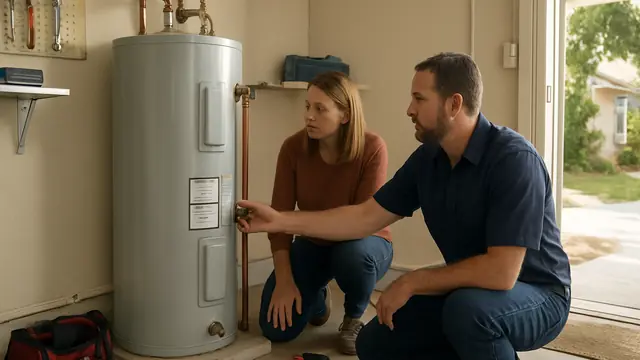
Stop and call for qualified help when plumbing water is near electrical equipment, sewage is entering occupied space, gas or burning odors are present, or a repair would require opening pressurized piping.
1. A Faucet Drip Is Worth Investigating
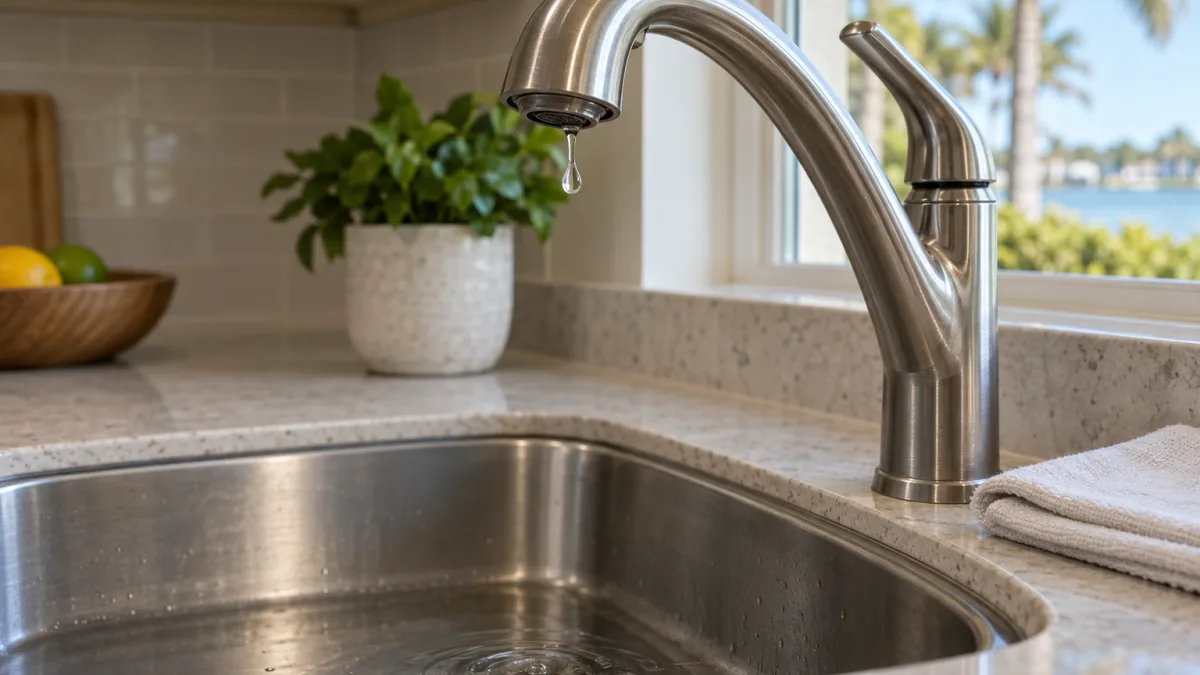
A kitchen or bathroom faucet should stop delivering water after it is turned off and any residual water has drained from the spout. A continuing drip usually means an internal sealing component is no longer closing properly. Water around the handle, faucet base, or cabinet requires a different investigation. Identifying where the water first appears is more useful than assuming every faucet leak needs the same repair.
For Ocean City homeowners, the concern is not just the water going down the drain. Leakage outside the sink can damage cabinet materials, loosen finishes, and keep concealed surfaces damp. Northwest Florida humidity can make those areas slower to dry. A small, contained spout drip generally allows time to schedule service, but water reaching cabinetry or flooring deserves prompt attention.
2. Separate Residual Water From a Continuing Leak
Some faucets release a little retained water after shutoff, especially models with a high curved spout or pull-down spray head. That brief drainage is different from a drip that continues indefinitely. Watch whether the dripping stops completely or keeps returning after the faucet has been unused. Record whether it happens after every use, only after hot water use, or only when the handle rests in a particular position.
Avoid pushing the handle harder to make the dripping stop. Excess force can damage handles, stems, and sealing surfaces without fixing the underlying problem. A faucet that shuts off only when its handle is carefully positioned needs evaluation, even if you have found a temporary sweet spot. A short video of the drip and handle position can help a plumber understand an intermittent problem without repeatedly operating a damaged fixture.
3. What Commonly Fails Inside a Faucet
Different faucet designs control water in different ways. Many single-handle faucets use a replaceable cartridge, while others use a ball-and-seal assembly. Two-handle fixtures may use ceramic cartridges or stems with rubber washers. Worn seals, damaged ceramic surfaces, debris, or deterioration at a valve seat can allow water past the shutoff mechanism. The visible symptom may be similar even though the replacement parts and repair method are very different.
Deposits and grit can also interfere with moving parts or sealing surfaces. If dripping begins after nearby plumbing work or a utility interruption, mention that timing during the service call. It is a useful clue, not proof of the cause. A plumber still needs to identify the faucet and inspect the relevant components. Replacing an accessible washer will not solve a cracked cartridge housing or a damaged faucet body.
4. Leaks at the Handle, Base, or Pull-Down Hose
Water appearing around a handle can indicate an internal seal or stem problem. Water at the base is less straightforward: it might be leakage from the faucet, water traveling down from a loose spout connection, or ordinary sink splash entering around the mounting area. A loose faucet can complicate the problem by moving during use. Adding sealant around the outside without identifying the source may conceal leakage instead of correcting it.
Pull-down and pull-out kitchen faucets add a spray head, hose, and connections to the inspection. A leak may appear only when the hose is extended or the head is held in a certain position. Water can then follow the hose into the cabinet rather than dripping into the sink. Tell the plumber whether wetness follows normal stream use, spray mode, or hose movement. Do not keep pulling on a hose that is visibly split, snagged, or leaking.
5. Safe Checks Before the Service Visit
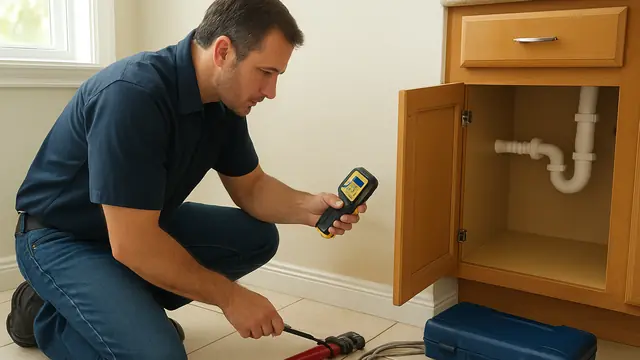
If the area is safe and dry enough to inspect, remove stored items from beneath the sink and look for the first visible wet spot. Check whether water appears while the faucet runs, after shutoff, or when the basin drains. A drain connection can leak during faucet use and be mistaken for a faucet failure. In humid conditions, condensation on a cold supply line is another possibility, but recurring cabinet wetness should not simply be dismissed as sweating.
Keep your checks visual. Do not loosen supply connections, remove a cartridge under pressure, or force a corroded shutoff valve. Stop using the fixture if water is escaping into the cabinet. If you know which accessible shutoff serves the leak and it turns normally, closing it can limit damage while service is arranged. If isolation is uncertain or the valve leaks, call a licensed plumber. Stay away from water near receptacles, disposal wiring, or other electrical equipment.
6. How a Plumber Diagnoses a Faucet Leak
A professional diagnosis starts by confirming the source rather than immediately ordering a cartridge. The plumber may operate the faucet through its normal range, inspect the handle and spout, examine the supply connections, and check the spray hose where present. Testing the sink drain separately helps distinguish drainage leakage from a pressurized-water leak. If pressure symptoms or repeated failures suggest a broader issue, a pressure measurement may also be appropriate.
Before disassembly, the plumber establishes a dependable way to isolate the water. The next steps depend on the fixture: identifying the manufacturer and model, inspecting the cartridge or stem, and checking the sealing surfaces and faucet body. After repair, the faucet should be tested for shutoff, normal operation, and leakage above and below the sink. For pull-down models, that includes moving the hose through its usual travel and checking the connections again.
7. When Repair Makes Sense and When Replacement Helps
Repair is often reasonable when the faucet body is sound, the mounting is secure, and compatible service parts are available. A worn cartridge, seal, or spray hose does not automatically mean the whole fixture is finished. Model identification matters because parts that look similar may differ in dimensions, port arrangement, or retention method. Share purchase records or installation paperwork if available, and ask whether the proposed part is approved for that faucet.
Replacement becomes more practical when the body is cracked, internal surfaces are badly damaged, several components are failing, or suitable parts cannot be obtained. Repeated repairs also justify discussing replacement, but the cause of recurrence should be considered first. A new faucet will not correct an unresolved supply issue or a separate drain leak. Ask for an explanation of the failed component, the condition of the remaining fixture, and the scope of each option.
8. Planning a Replacement That Fits the Sink
Choosing a replacement involves more than matching the finish. The installer needs to confirm the sink or countertop hole layout, mounting thickness, spout reach, and clearance behind the handle. A tall faucet can look appropriate but place its water stream poorly within a shallow basin. For kitchen fixtures, the pull-down hose and weight need unobstructed room beneath the sink without catching on stored items, plumbing, or nearby equipment.
Consider how the fixture will be used and maintained. Clear handle movement, an easy-to-grip spray head, and available replacement parts can matter more than extra spray settings. Touchless or electronically controlled faucets introduce batteries or another specified power source, so ask how the faucet operates during a power interruption. Confirm whether the work includes new supply connectors, removal of the old fixture, mounting-area cleanup, and any necessary repairs discovered beneath the sink.
9. Maintenance That Protects Seals and Finishes
Use the faucet manufacturer's cleaning guidance. A soft cloth and a compatible mild cleaner are generally safer starting points than abrasive pads or strong chemical treatments. Acidic cleaners and prolonged soaking can damage some finishes and nonmetallic parts. Do not assume a method suitable for an uncoated metal component is safe for the entire faucet. Wipe away standing water around the base so new leakage is easier to spot.
A clogged aerator can cause an uneven stream or splashing, but it is not usually the component responsible for a faucet that will not shut off. Clean an accessible aerator only as the manufacturer directs, and leave stuck or concealed assemblies to a professional if removal risks damage. Keep pull-down hoses free of cabinet clutter, use handles without force, and avoid hanging objects from the spout. Report stiff operation rather than trying to overcome it.
10. Document the Problem and Confirm the Repair
For a seasonal Ocean City residence or managed property, add a brief faucet check to routine walkthroughs. Run each fixture, turn it off normally, and check for continuing drips and new cabinet moisture. Ask occupants to report a handle that becomes stiff, a spray hose that drips underneath, or a faucet that no longer shuts off consistently. These observations are more useful than waiting until a cabinet develops staining or swelling.
Keep the faucet model information, repair date, and installed-part details with the property maintenance records. After service, confirm that the original symptom has stopped during ordinary use, not just with the handle in one carefully chosen position. Dry affected surfaces and monitor them for renewed moisture. Persistent dampness, softened cabinet materials, or a recurring leak needs further evaluation. A Superior Mechanical can assess faucet repair or replacement needs for Ocean City homeowners and property managers.
About this guide: This resource provides general homeowner education, not a remote diagnosis. Actual conditions, code requirements, equipment, and safe repair options must be evaluated at the property.