Stop and call for qualified help when plumbing water is near electrical equipment, sewage is entering occupied space, gas or burning odors are present, or a repair would require opening pressurized piping.
You are close to purchasing an Ocean City home when a second walkthrough raises new questions. The shower drains slowly, the outside faucet drips after being turned off, and the hot water changes temperature while another fixture is running. None of these symptoms automatically means the plumbing system requires major replacement, but each deserves an explanation before closing. The safest immediate action is to write down when each symptom occurs, avoid adjusting unfamiliar valves or disassembling fixtures, and arrange a licensed plumbing inspection before the purchase deadline.
A plumbing inspection checklist before buying a Northwest Florida home in Ocean City gives you a clear picture of the supply piping, fixtures, drains, water heater, shutoffs, and accessible connections.
Gather the Plumbing History First
Ask for invoices, warranties, permits, and dates for leak repairs, drain cleaning, sewer work, water-heater replacement, remodeling, or repiping. Also ask about unexplained water bills, recurring backups, ceiling stains, or prior water damage.
A repair history does not automatically make a home undesirable. It helps the plumber identify repeated patterns and verify whether earlier problems were corrected.
Check the Water Meter and Main Shutoff
The plumber should locate the main shutoff and evaluate whether it is accessible. Visible piping near the service entry should be checked for leakage, corrosion, damaged fittings, unsupported sections, and prior repairs.
Buyers should not force a shutoff valve during a showing. A valve that is difficult to operate may leak or fail when turned. The plumber can determine whether it is serviceable or should be replaced.
When conditions allow, meter movement while all known fixtures and appliances are off may indicate a leak that requires diagnosis.
Plumbing Inspection Checklist Before Buying a Northwest Florida Home in Ocean City: Test More Than One Fixture
The plumber may operate two or more fixtures to observe how the system responds. Low flow at one faucet may result from a clogged aerator or worn cartridge. A drop throughout the home may involve the main valve, pressure regulator, service line, or supply piping.
Excessive pressure can shorten the life of valves, hoses, faucet components, and water-heater connections. Hot and cold flow should be compared at sinks, tubs, and showers.
Inspect Every Toilet and Bathroom Connection
Each toilet should flush fully, refill normally, stop running, and remain stable at the floor. A rocking toilet may damage the seal below it and can allow moisture or sewer gas to escape.
The plumber checks the connector, shutoff valve, tank hardware, bowl base, and surrounding floor. Moisture may come from the seal, condensation, or a supply leak.
At sinks, tubs, and showers, staining may come from a drain, supply line, overflow, valve, or enclosure. Individual testing helps identify the source.
Evaluate Kitchen, Laundry, and Exterior Connections
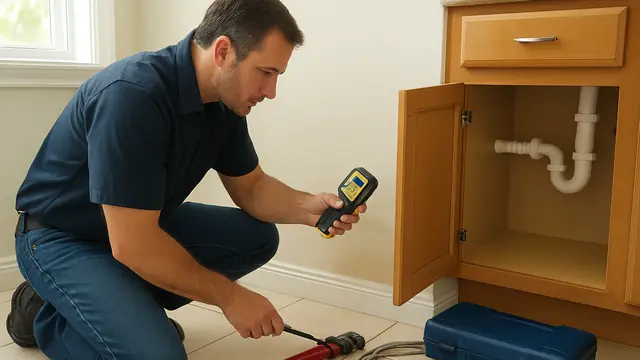
The plumber should check the kitchen faucet, sink drain, disposal where present, dishwasher hose, refrigerator line, and shutoff valves. Laundry valves, hoses, and drains should be checked for leakage or overflow evidence.
Exterior faucets should shut off completely and remain secure. Movement at the wall can justify checking the concealed connection.
Examine the Water Heater as a System
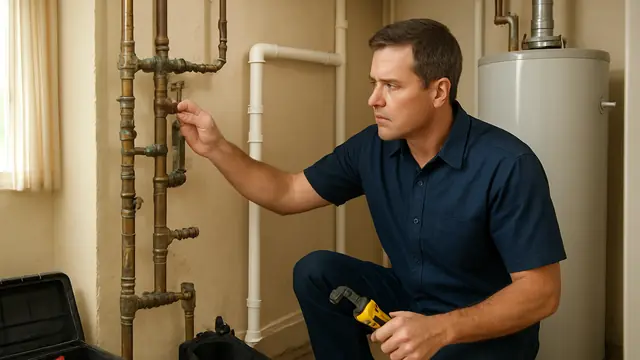
The plumber should inspect the water heater, accessible supply connections, shutoff valve, drain pan where applicable, temperature-and-pressure relief valve, discharge piping, and visible gas or electrical components.
Rust streaks, water in the pan, moisture near the base, damaged venting, exposed wiring, scorch marks, or inconsistent heating should be evaluated. The finding may call for a component repair, installation correction, maintenance, or replacement planning.
Determine Why the Shower or Sink Drains Slowly
One slow fixture often has a local obstruction near the trap or branch drain. Multiple slow fixtures, toilet gurgling, sewer odor, recurring backups, or water appearing in a tub when another fixture drains can point to a larger restriction.
A plumber may test the drain system in sequence and inspect accessible cleanouts. A sewer camera may be recommended when symptoms, previous repairs, or uncertainty about the buried line justify the additional information. Camera footage can show visible buildup, standing water, offsets, obstructions, cracks, or damaged sections.
Safe Checks a Homebuyer Can Perform
Run hot and cold water at accessible faucets and compare flow. Flush each toilet once and wait for it to stop filling. Observe whether sinks, tubs, and showers drain without prolonged pooling.
Look beneath sinks without moving plumbing. Check floors around toilets, appliances, and the water heater, and inspect ceilings below bathrooms.
Record when each symptom occurs. "The toilet gurgles when the tub drains" is more useful than saying the plumbing sounds unusual.
What the Buyer Should Not Do
- Do not force shutoff valves, remove cleanout caps, disassemble traps, open water-heater electrical covers, adjust gas components, or test the relief valve.
- Do not use chemical drain cleaner to make a slow drain appear normal. Chemicals can create a hazard, affect some plumbing materials, and hide a symptom without revealing the cause.
- Request records or professional verification rather than relying solely on a statement that a stain is old.
Urgent Signs That Need Prompt Evaluation
Active water leakage, wastewater backup, strong sewer odor, wet ceilings, an unstable toilet, water near electrical components, or moisture around the water heater should be investigated promptly.
Urgency also increases when several drains are slow, the meter moves with fixtures off, water pressure changes suddenly, or the water service is unavailable for testing. A system that cannot be operated has not been fully evaluated.
How a Licensed Plumber Diagnoses the Findings
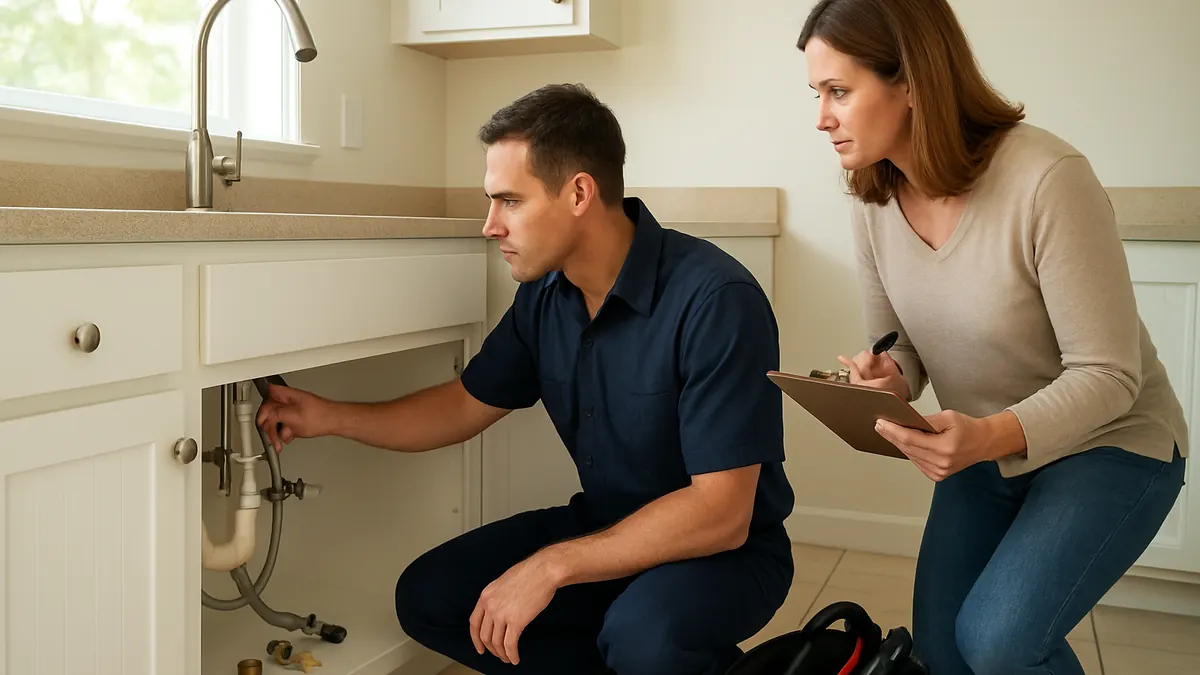
A plumber combines the property history, buyer observations, visual inspection, pressure and flow testing, moisture readings, fixture operation, drain testing, and specialized equipment when necessary.
A dripping exterior faucet may need a local repair, while pressure loss throughout the home requires broader testing. One slow shower may be isolated, while several slow drains may justify main-line evaluation.
The report should state what was confirmed, what remains uncertain, and what action is recommended.
Repair Options Beginning With the Least Invasive
Small repairs may include replacing an aerator, faucet cartridge, toilet component, supply connector, drain seal, trap part, hose bibb component, or shutoff valve.
Moderate work may involve professional drain clearing, localized pipe repair, fixture replacement, water-heater correction, or installation of a usable cleanout.
Larger work may include water-heater replacement, underground sewer repair, partial repiping, or whole-home repiping. Extensive replacement should be based on verified condition, repeated failures, access, and repair practicality.
Factors That Affect Plumbing Cost
Cost varies with the defect, location, access, pipe material, labor, equipment, permits, diagnostic testing, and restoration after the plumbing work.
A visible connection is generally simpler to repair than piping behind a wall or below a slab. Sewer work depends on depth, access, length, and defect type. Water-heater work depends on equipment, capacity, energy source, and required installation corrections.
Prevention and Maintenance After Closing
Locate and label the main shutoff and individual fixture valves. Replace worn appliance hoses, repair small leaks promptly, and keep grease, wipes, and unsuitable objects out of drains.
Follow manufacturer guidance for water-heater maintenance. Keep plumbing invoices, photographs, and warranties together so future symptoms can be compared with prior work.
Complete the Purchase With Fewer Unknowns
A plumbing inspection checklist before buying a Northwest Florida home in Ocean City helps you understand whether observed symptoms represent simple maintenance, targeted repair, additional diagnosis, or larger planning. Documented findings make it easier to proceed confidently, negotiate specific corrections, or obtain further evaluation before closing.
About this guide: This resource provides general homeowner education, not a remote diagnosis. Actual conditions, code requirements, equipment, and safe repair options must be evaluated at the property.