Stop and call for qualified help when plumbing water is near electrical equipment, sewage is entering occupied space, gas or burning odors are present, or a repair would require opening pressurized piping.
You are preparing a Sandestin property for a hurricane and extended vacancy when you find moisture beneath a second-floor vanity, a water treatment system with unfamiliar valves, and a toilet that bubbles when the washing machine drains. These signs may involve different parts of the plumbing system, but each can become more disruptive when the home is empty and normal access is limited.
The safest immediate action is to stop using the affected fixtures and determine whether water is actively leaking or backing up. Close the nearest fixture valve only if it turns smoothly. If the leak cannot be isolated, locate the main water shutoff. Do not force unfamiliar valves, dismantle treatment equipment, or stand in water near electrical components.
This Northwest Florida hurricane plumbing checklist in Sandestin explains how to prepare a residence or rental property and restore service safely after the storm.
Create a Property-Specific Shutdown Plan
A hurricane plan should identify the main shutoff, fixture valves, water heater controls, sewer cleanout, appliance connections, treatment-equipment bypasses, and any irrigation or recirculation controls.
Photograph each location and write simple instructions for whoever checks the property afterward.
Do not assume every valve should be turned. Filtration, softening, recirculation, irrigation, and fire-protection equipment may require a specific shutdown and restart sequence.
Verify That the Main Shutoff Operates
The main valve controls water entering the property. Closing it before an extended absence may reduce damage if a pressurized supply line fails.
A ball valve usually closes with a quarter turn; a gate valve may require several turns. Test it only if it moves normally. If it is corroded, bent, leaking, or difficult to turn, stop. Extra leverage can break the valve or pipe.
Investigate Upstairs Moisture Promptly
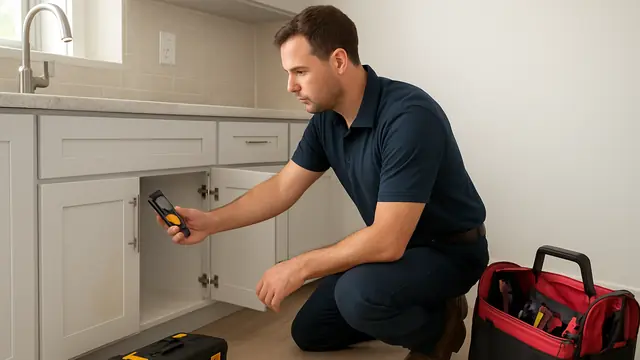
- Moisture beneath a second-floor vanity can damage cabinets, flooring, ceilings, insulation, and rooms below.
- Inspect accessible supply lines, faucet connections, shutoff valves, and drain piping. Look for droplets, stains, swollen material, loose fittings, or damp odors.
- Do not open walls based only on a stain. Water can travel along pipes and framing, while moisture-detection tools help narrow the source.
- If water is actively spreading, stop using the fixture and close its shutoff. If the leak continues, shut off the main water supply if it can be done safely.
Inspect Appliance and Laundry Connections
- Check refrigerator or ice-maker lines, dishwasher connections, washing-machine hoses, and the washing-machine drain hose.
- Look for rust, fraying, cracks, bulges, kinks, or moisture. Washer hoses remain pressurized while their valves are open.
- If the machine will not be used, closing the valves may reduce risk, but only move them if they operate smoothly. Make sure the drain hose is secure and cannot pull free.
Check Toilets and Shared Drain Symptoms
Flush each toilet once and confirm that the tank stops filling. A toilet that cycles without use may have a worn flapper, faulty fill valve, chain issue, or incorrect water level.
A toilet that bubbles when the washer drains may indicate a partial blockage or restricted airflow in shared piping. Rapid discharge can expose a developing problem.
If several fixtures gurgle, drain slowly, or back up, stop unnecessary water use. Sewage appearing in a shower, tub, or floor drain means the system should not be used until it is evaluated.
Evaluate Water Treatment Equipment Carefully
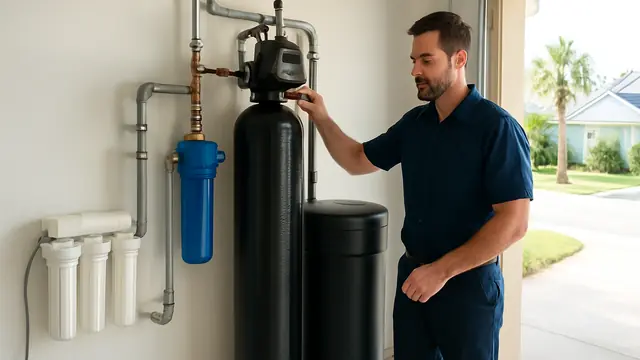
- Whole-house filters, softeners, and other treatment equipment may have bypass valves, drains, tanks, and electrical controls.
- A bypass valve directs water around equipment, but arrangements differ. Do not turn unfamiliar handles by guesswork; use manufacturer or professional instructions.
- Check for moisture, loose tubing, leaking fittings, unusual noises, or standing water near controls. Leave submerged equipment off.
Inspect the Water Heater
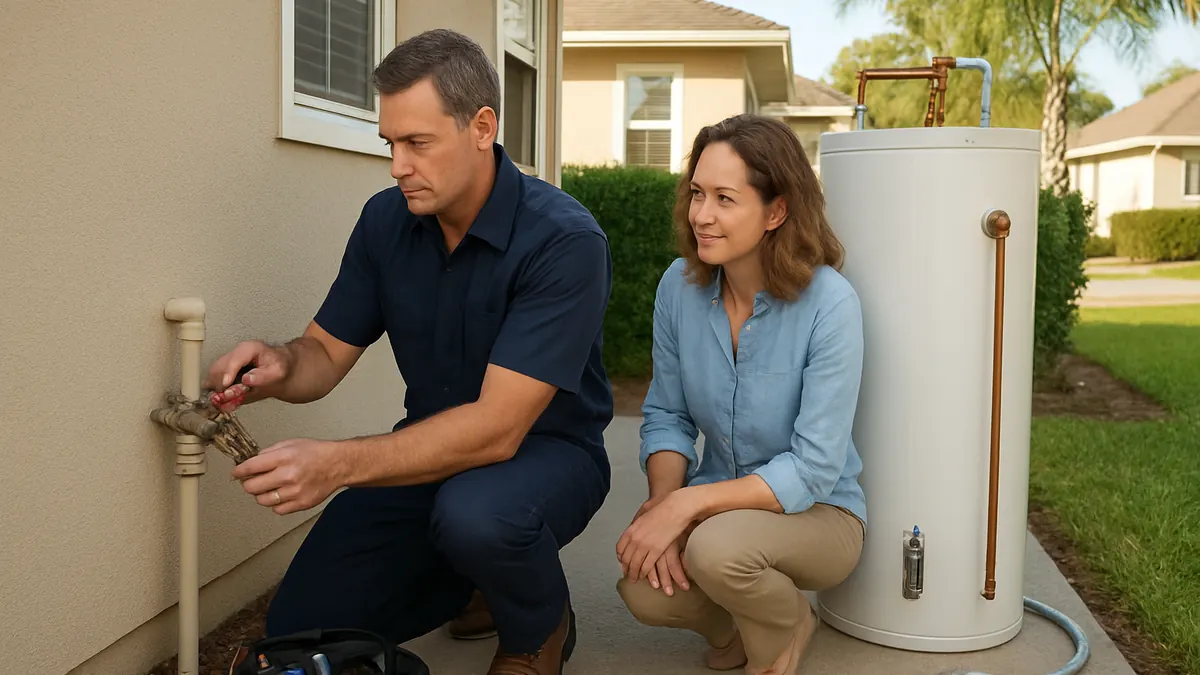
Inspect the top connections, valves, visible tank surface, drain valve, drain pan, and nearby floor.
Water may come from a connector, valve, nearby pipe, or tank failure. Component leaks must be distinguished from leakage through the tank body.
Never cap the temperature and pressure relief valve discharge pipe. Do not drain the heater simply because the property will be vacant. An electric water heater must be completely full before power is restored.
What Homeowners Should Not Attempt
- Do not force shutoff or bypass valves, adjust pressure regulators, modify backflow devices, alter gas controls, or change water-heater wiring.
- Do not use chemical cleaner for a multi-fixture backup; it can fail and leave hazardous liquid inside the pipe.
- Do not cut ceilings beneath an active leak while standing below a sagging area. Keep people away from damaged surfaces and electrical hazards.
Signs That Make the Problem Urgent
Arrange prompt professional help for an active leak that cannot be isolated, sewage entering the property, water near electrical equipment, a gas odor, or a main shutoff that does not stop flow.
A bulging water heater, spreading ceiling stain, sudden pressure loss, pipe movement, or unexplained exterior flow also requires prompt attention.
How a Licensed Plumber Diagnoses the Problem
A licensed plumber determines whether the issue involves the supply system, a fixture, appliance line, treatment equipment, water heater, or drainage system.
Diagnosis may include pressure readings, meter observation, valve isolation, moisture detection, mechanical cleaning, and sewer-camera inspection.
A sewer camera can identify buildup, roots, separated joints, foreign objects, or damaged pipe. Treatment equipment and the water heater are tested to separate repairable component leaks from broader system or tank failure.
Repair Options Begin With Targeted Work
A running toilet may need a flapper, fill valve, seal, or adjustment. A leaking faucet may require a cartridge, washer, or connector. A damaged appliance line can often be replaced individually.
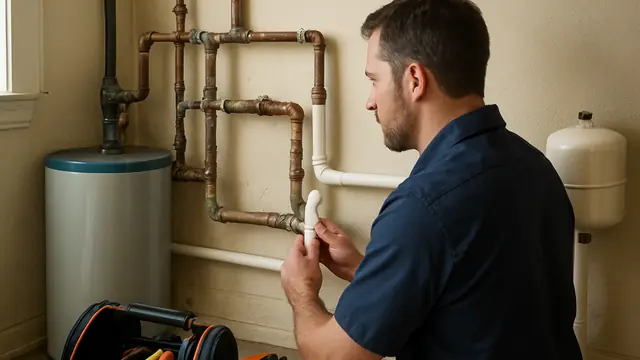
A leaking fixture valve or main shutoff may be serviced or replaced. A localized supply leak may allow targeted repair. Broader repiping is considered when failures are widespread or recurring.
A drain obstruction may be mechanically cleared before structural repair is considered. Camera findings may support further cleaning, spot repair, or replacement of a damaged section.
Treatment-equipment repairs depend on the failed valve, seal, tubing, tank, or control. Water-heater repairs may involve a connector, valve, thermostat, heating element, or control. A tank leaking through its body generally requires replacement.
Typical Factors That Affect Cost
Cost depends on accessibility, pipe and valve material, equipment type, failure location, diagnostic time, permit requirements, and emergency scheduling.
Drain work varies with cleanout access, blockage depth, pipe condition, and excavation needs. Treatment equipment can add diagnostic steps.
Prevention and Safe Post-Storm Restart
Inspect supply lines, fixture shutoffs, treatment equipment, toilet components, drains, and the water heater throughout the year. Address recurring gurgling, pressure changes, toilet cycling, or unexplained moisture before hurricane season.
After the storm, inspect for broken piping, shifted equipment, stains, standing water, and electrical damage.
If the main valve was closed, reopen it slowly while another person watches plumbing areas. Follow official water-use or boil-water guidance, and do not energize an empty electric water heater or submerged controls.
Complete Your Northwest Florida Hurricane Plumbing Checklist in Sandestin
Preparing a property for an extended vacancy requires more than closing doors and turning off lights. It requires a dependable main shutoff, sound appliance lines, correctly managed treatment equipment, clear drains, and a safe process for restoring water.
Use this Northwest Florida hurricane plumbing checklist in Sandestin before severe weather limits access. An upstairs leak, bubbling toilet, unfamiliar bypass valve, or damaged appliance connector is easier to address before the property is left unattended.
About this guide: This resource provides general homeowner education, not a remote diagnosis. Actual conditions, code requirements, equipment, and safe repair options must be evaluated at the property.