Stop and call for qualified help when plumbing water is near electrical equipment, sewage is entering occupied space, gas or burning odors are present, or a repair would require opening pressurized piping.
During your final check of a Blue Mountain Beach home, the kitchen faucet sputters, a shower drains slowly, and a damp spot appears beneath the laundry connection. None of these symptoms automatically means a major failure, but they should not be ignored before the property is evacuated.
Stop using the affected fixture and determine whether moisture is spreading. If an accessible fixture valve closes smoothly, shut it off. Locate the main water valve in case the leak cannot be isolated. Stay away from water near outlets, appliances, or electrical panels.
This Northwest Florida hurricane plumbing checklist in Blue Mountain Beach helps homeowners find weak points, make safe decisions, and restart plumbing carefully after the storm.
Assign the Final Plumbing Check
- Assign one person to complete the final walk-through. A checklist fails when everyone assumes somebody else tested the valves.
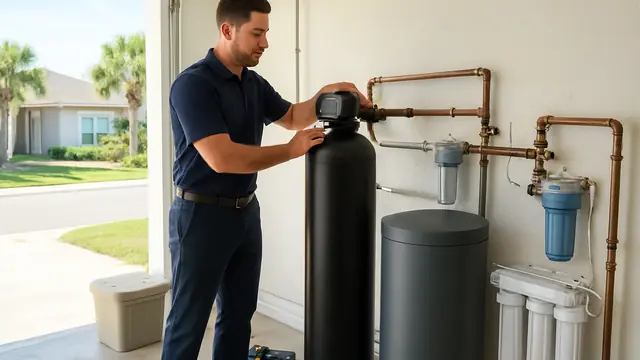
- Record the locations of the main shutoff, water heater, sewer cleanout, and appliance valves. Share them with the responsible person.
- If the main shutoff is in an exterior box, inspect it only when safe. Never reach into a box you cannot clearly see.
Test Water Pressure and Watch for Changes
Open one faucet at a time and notice whether the flow is steady. Low pressure at one fixture may come from a clogged aerator or valve. Low pressure throughout the home may indicate a supply problem or leak.
An aerator is the small screen at a faucet's tip. Rinse it only if it removes easily.
Sudden pressure loss accompanied by water sounds, dampness, or meter movement should be investigated promptly.
Inspect the Laundry, Kitchen, and Bathrooms
Washing-machine hoses remain pressurized while their valves are open. Look for rust, cracking, bulging, fraying, or moisture. If the washer will not be used and the valves turn normally, closing them can reduce exposure.
In the kitchen, inspect beneath the sink, around the dishwasher connection, and near the refrigerator supply line.
In bathrooms, confirm toilets stop filling. Water near a toilet can come from the supply connection, tank bolts, condensation, a failed wax seal, or nearby splashing. The wax seal is the hidden ring sealing the toilet to the drain.
Do not rock the toilet, overtighten bolts, or remove it during storm preparation.
Include Exterior Plumbing
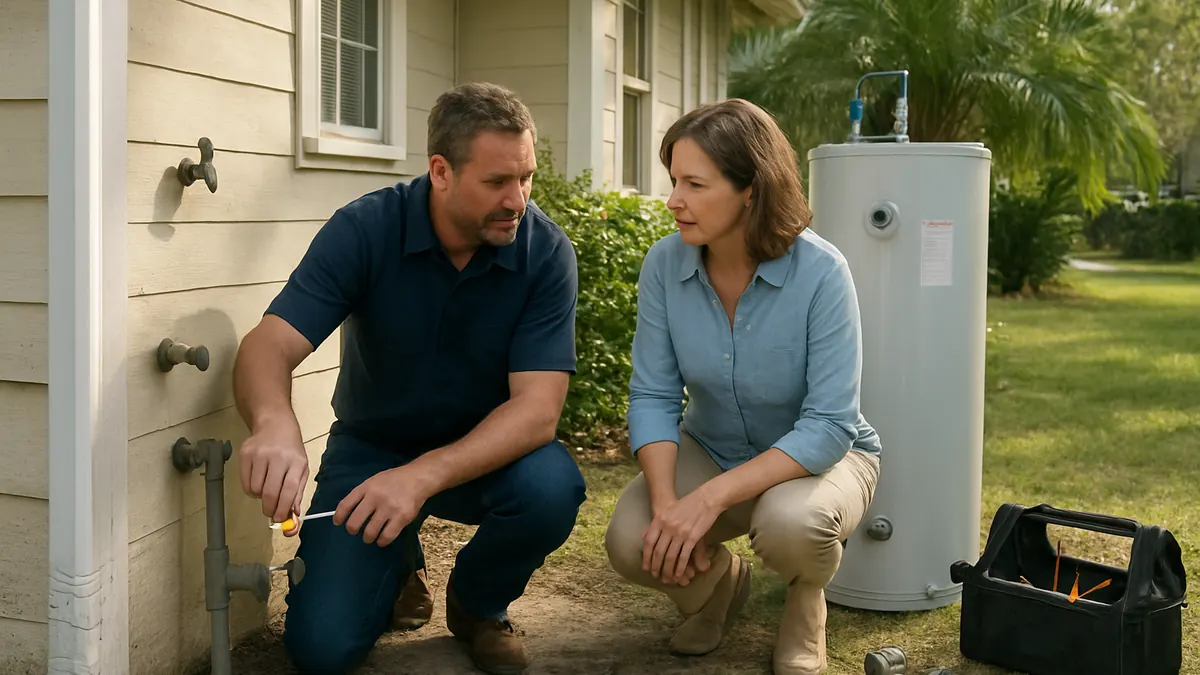
Disconnect garden hoses and close exterior faucets without overtightening. If a faucet drips or moves in the wall, arrange repair rather than twisting harder.
Secure removable hoses and accessories.
If the property has an outdoor shower, sink, pool fill line, or other exterior plumbing, verify that valves close and piping is supported. A broken exterior line can continue releasing water and reduce pressure inside.
Examine the Water Heater Safely
Inspect the water heater base, top connections, valves, drain pan, and nearby floor. Rust streaks, droplets, or water in the pan should be traced to the source.
A drain pan catches limited leakage, not a continuing tank failure.
Do not test the temperature and pressure relief valve immediately before evacuation unless directed by a plumber. An older valve may not reseal. Never block or plug its discharge pipe.
A leaking connector or drain valve may be repairable. Water emerging through the tank body usually indicates internal failure and often means replacement is necessary.
Check Drain Performance
- Run a moderate amount of water through sinks, tubs, and showers. Flush each toilet once. Watch for slow drainage, gurgling, sewage odor, or water appearing in another fixture.
- A single slow drain may have a local obstruction. Several slow drains or a toilet bubbling when another fixture empties can indicate a blockage farther downstream.
- If wastewater backs up, stop using the plumbing system. Every gallon sent down a drain can return through the lowest opening. Keep people and pets away from sewage.
- Do not remove a cleanout cap during an active backup. The line may be under pressure. Avoid chemical drain cleaner because it may fail and leave hazardous liquid in the pipe.
What You Should Not Attempt
- Do not begin repiping, water-heater replacement, wall demolition, or sewer excavation without enough time to complete and test the work.
- Do not force shutoff valves, modify pressure regulators, work on gas controls, or alter electrical connections. Do not climb onto the roof as wind or rain increases.
- Tape, putty, and clamps are not dependable permanent repairs for pressurized piping. Do not use a temporary patch as a reason to leave water on in an unattended home.
When the Plumbing Problem Is Urgent
- Seek prompt help for a leak that cannot be isolated, sewage inside the home, water near energized equipment, a gas odor, a bulging water heater, or a broken main valve.
- Other urgent signs include rapid pressure loss, a swelling ceiling, or unexplained exterior water flow.
- If structural materials are sagging or electrical hazards are present, leave the area.
How a Licensed Plumber Finds the Cause
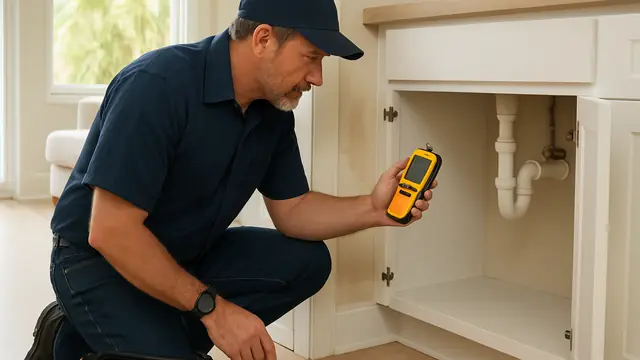
A licensed plumber separates supply problems from drainage problems. Supply diagnosis may involve pressure readings, shutoff testing, meter observation, moisture meters, or controlled isolation of plumbing sections.
Drain diagnosis may begin with fixture testing and mechanical cleaning. If symptoms recur or damage is suspected, a sewer camera can show buildup, roots, separated joints, or damaged pipe.
For a water heater, the plumber distinguishes tank failure from a repairable fitting or component leak.
Repair Options in a Sensible Order
The least invasive reliable repair comes first. A clogged aerator can be cleaned. A toilet may need a flapper, fill valve, supply line, or seal. A damaged appliance connector may be replaced.
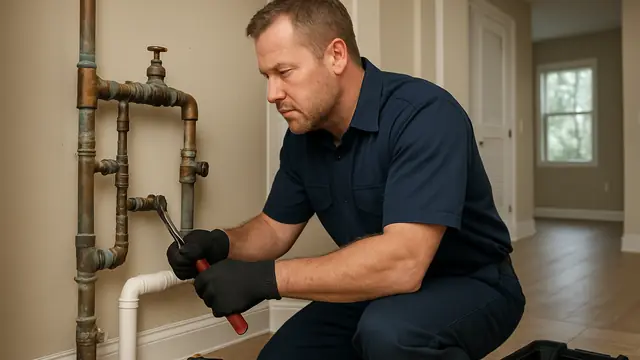
A leaking shutoff may be serviced or replaced. A localized supply leak may allow a targeted repair. Broader repiping is considered when failures are widespread or existing material cannot support dependable repairs.
A drain blockage may be mechanically cleared. Camera findings may support spot repair or replacement of a damaged section. Complete sewer replacement is not the automatic first recommendation.
What Determines the Cost?
Cost depends on access, pipe material, failure location, diagnostic equipment, permits, and whether work occurs under emergency conditions.
A visible connector is generally faster to repair than piping beneath flooring or behind finished walls. Drain costs depend on cleanout access, blockage depth, pipe condition, and excavation needs.
Water-heater cost depends partly on whether the failure involves a replaceable component or the tank itself.
Prevention and Post-Storm Restart
Inspect supply lines and valves throughout the year. Correct recurring slow drains, running toilets, pressure changes, and unexplained moisture while scheduling is flexible.
After the storm, wait until the property is safe to enter. Look for damaged piping, shifted equipment, ceiling stains, and standing water. If the main was closed, reopen it slowly while watching and listening for leaks.
Follow official water advisories. Do not energize an electric water heater until you know it is full.
Finish Your Northwest Florida Hurricane Plumbing Checklist in Blue Mountain Beach
A reliable storm plan identifies who will inspect the property, where water can be stopped, how drains are performing, and what must be checked before service is restored.
Complete this Northwest Florida hurricane plumbing checklist in Blue Mountain Beach before conditions worsen. A damp connector, weak shutoff, slow drain, or water-heater leak is easier to address before evacuation than after it becomes an unattended emergency.
About this guide: This resource provides general homeowner education, not a remote diagnosis. Actual conditions, code requirements, equipment, and safe repair options must be evaluated at the property.