In Shalimar, ceiling fans work hard. Coastal humidity, salt air, summer heat, and sudden storms all put extra stress on a home’s electrical system, and a fan that starts acting differently can be one of the first clues that something deeper is wrong. For local property owners, paying attention to those clues can prevent bigger repair bills, reduce fire risk, and keep rooms comfortable year-round.
A ceiling fan problem is not always just a fan problem. Loose wiring, an overloaded circuit, a failing switch, or a weak box in the ceiling can all show up through wobbling, buzzing, flickering lights, or a breaker that trips more often than it should. If you are already searching for Ceiling Fan Services in Shalimar, FL, it is worth looking at the electrical system around the fan too, especially in older homes and remodels where wiring may have been changed over time.
Why ceiling fan issues matter more in Shalimar homes
Shalimar homes face a mix of conditions that can expose weak electrical work. Older houses may still have aging switches, undersized boxes, or outdated wiring methods. Newer homes can still run into problems when builders add fans, recessed lighting, or smart controls on circuits that were not designed for the extra load. Add in coastal weather, storm outages, and frequent use during hot months, and even a small fan issue can point to a larger electrical concern.
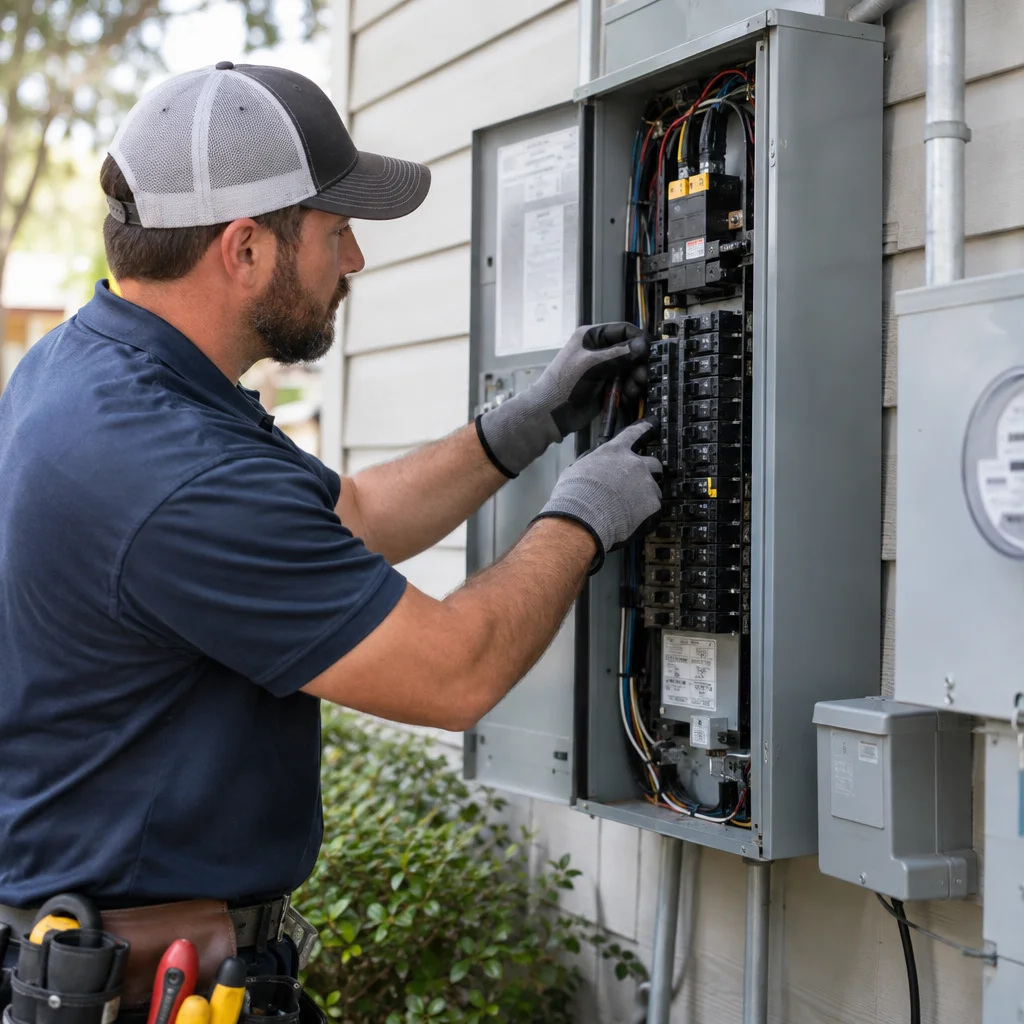
That is why local electrical service matters. A technician who understands Okaloosa County homes can spot patterns that a quick visual check might miss, from corrosion in attic connections to loose neutral terminations in a panel. Homeowners looking for electrical services in Shalimar often need more than a fan replacement. They may need troubleshooting, circuit checks, or a full safety review of the room’s wiring and controls.
Electrical clues a ceiling fan is sending
Wobbling that gets worse over time
A slight wobble can happen with any fan, but a fan that shakes more after a blade replacement or seasonal use may be telling you the mounting box is not rated for ceiling fan weight. In some homes, the fan is attached to a standard light box instead of a fan-rated support box. That can loosen connections over time and stress the wiring. It is not just annoying. It can become a safety issue.
Buzzing, humming, or clicking noises
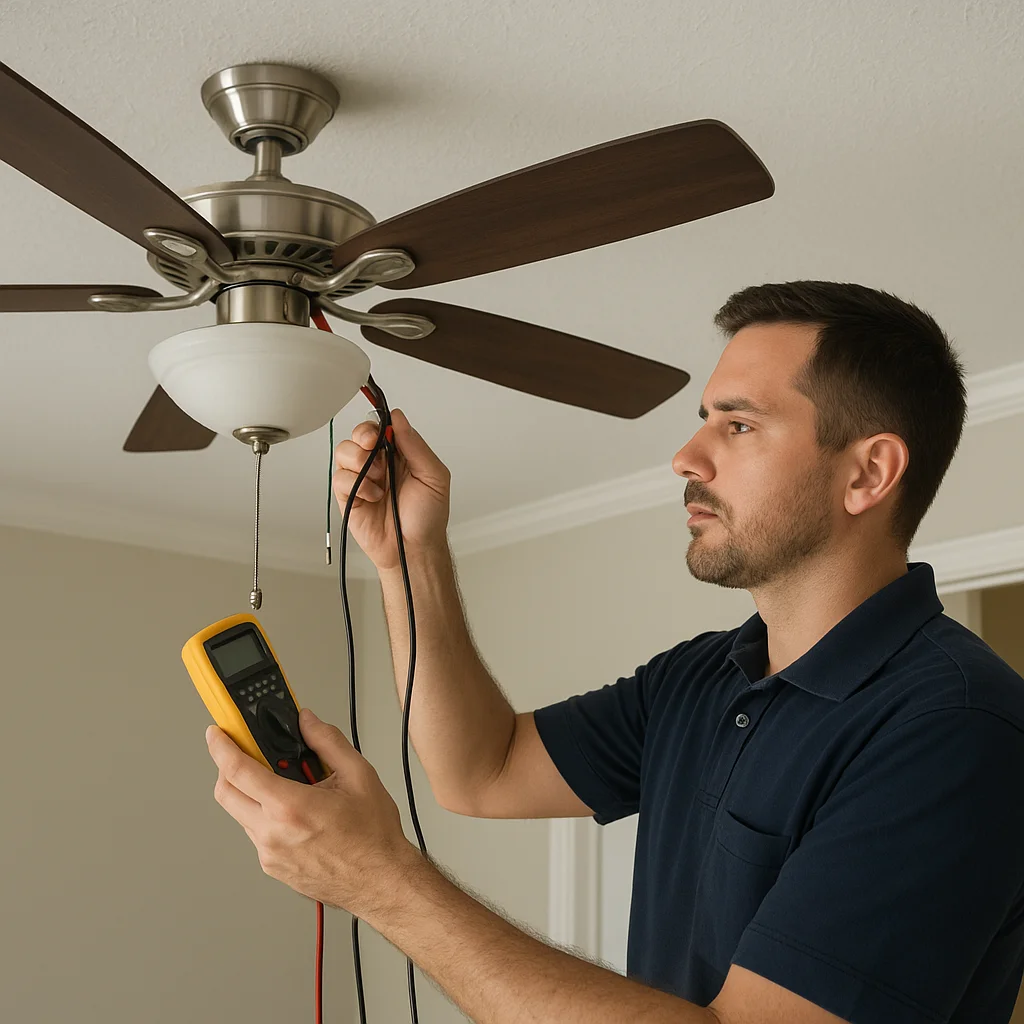
Some noise comes from the fan motor itself, but electrical buzzing can also mean a loose wire, a failing speed control, or a dimmer that is not compatible with the fan. If the sound changes when the fan speed changes or when the light is turned on, the problem may be in the switch leg or the wiring connection inside the canopy. This is a common reason homeowners search for electrical services near me after noticing the fan is no longer operating smoothly.
Flickering lights or dimming when the fan runs
Flicker can point to a loose neutral, a weak connection, or a circuit that is carrying more than it should. In homes with older wiring, the fan and light may share a circuit with other fixtures or outlets, which can create voltage drops when the fan starts up. If the light flickers every time the fan turns on, that is a clue worth checking before it turns into a broader electrical repair.
Burning smell, warmth, or discoloration
Any smell of hot plastic or a warm switch plate should be treated as urgent. Heat around the fan canopy, wall switch, or ceiling box can indicate loose conductors, arcing, or a failing control. In coastal Florida, humidity can make corrosion worse inside connections, especially in homes that have not had routine electrical maintenance. If this happens, shut the fan off and call a licensed electrician right away.
Breaker trips or lights that go out with the fan
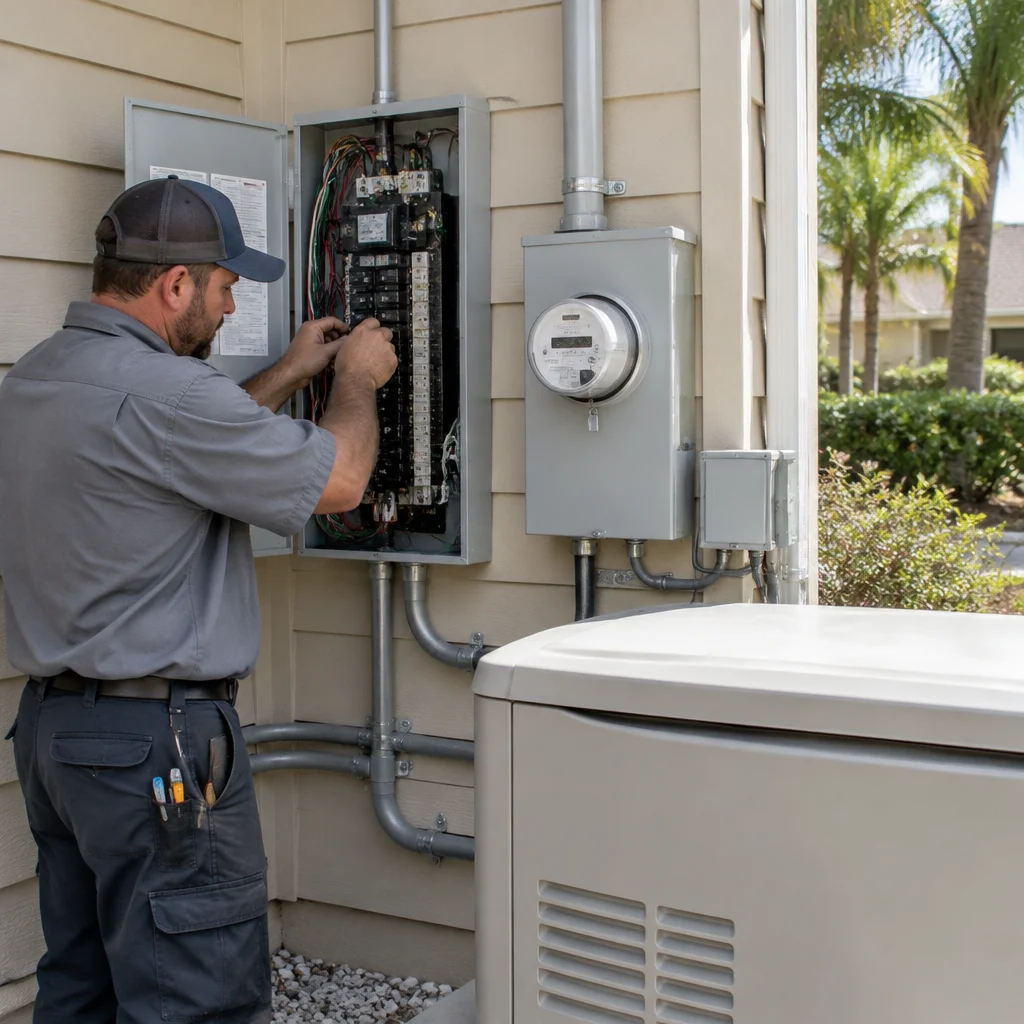
When a fan causes a breaker to trip, the circuit may be overloaded or there may be a short in the fan wiring. If the breaker trips repeatedly, the issue could involve the panel, the breaker itself, or the branch circuit feeding the room. Homeowners searching for Electrical Inspections and Code Updates often discover that a ceiling fan is only one part of a bigger code or safety issue.
What usually causes fan-related electrical trouble
Ceiling fan issues often start with installation details. A fan needs a secure mounting box, properly sized conductors, correct grounding, and the right control device. If any part of that is off, the fan can work for a while and then begin to fail as vibration and heat take their toll.
In Shalimar, we also see problems caused by storm-related power events. A surge can damage a fan control, wall switch, or integrated light kit. Homes without proper surge protection may notice strange behavior after an outage, especially if other devices on the same circuit were affected. A homeowner looking for surge protector installation near me may be trying to protect more than just appliances. Ceiling fans with lights and smart controls can also be vulnerable.
Another common issue is added electrical demand. A room that once held a basic light fixture may now have a fan, recessed lights, a television, or charging equipment all sharing the same circuit. If the circuit was never upgraded, the fan may expose weak wiring or an undersized breaker. In some homes, that can lead to a need for breaker panel repair, a sub panel installation near me search, or even a 200 amp panel upgrade near me if the home has grown beyond its original electrical capacity.
How prevention saves money
Routine checks are cheaper than emergency repairs. A ceiling fan that is installed correctly and inspected periodically is less likely to create damage in the ceiling box, switch, or panel. Homeowners can reduce risk by keeping blades balanced, avoiding oversized light kits, and making sure any replacement fan is rated for the room and the mounting location.
It also helps to schedule a home safety inspection electrician near me visit when you notice other warning signs in the house, such as outlets that feel warm, breakers that trip, or lights that dim when larger appliances start. Those symptoms can point to a broader issue with grounding, bonding, or circuit loading. If your home has older aluminum branch wiring, outdated fixtures, or a fuse box, it is even more important to have a professional review the system before small problems spread.
For local homeowners, prevention can include services beyond the fan itself. A room with a new ceiling fan may also benefit from Battery Backup Systems for storm resilience, Smart Home Integration for app-based controls, or additional wiring for lighting and switches. If you are planning a remodel, addition, or garage conversion, it is smart to review the circuit layout before the new fan goes up.
When the fan points to a bigger electrical repair
A ceiling fan can be the first visible symptom of a problem elsewhere in the system. If the fan is connected to a circuit that also feeds outlets, bathroom lighting, or exterior fixtures, the issue may lie in the branch wiring rather than the fixture. That is why an electrician near me search often leads to troubleshooting that includes the panel, switches, and receptacles in the area.
Some situations deserve immediate attention: repeated breaker trips, scorch marks near the switch, a fan that stops and starts on its own, or a ceiling box that moves when the fan runs. If a homeowner is also dealing with outlet problems, a code correction electrician near me issue, or a breaker that will not reset, the best next step is a licensed evaluation. A fan repair may be simple, but the circuit feeding it may need more serious work.
Local homes, local weather, local wiring realities
Shalimar and the surrounding Okaloosa County area include a mix of older homes, renovated properties, and newer construction. That variety matters because the electrical system behind a ceiling fan may have been installed under different codes, by different contractors, or during different remodel phases. A fan in a 1970s home may be tied to aging wiring and an older panel. A fan in a newer home might be wired correctly but still be affected by a loose switch leg, a poor splice, or a control not rated for the motor.
Storm season adds another layer. Power fluctuations can damage fan speed controls, smart switches, and LED light kits. In coastal weather, corrosion can also show up faster at connectors and device terminals. That is one reason homeowners who need local electrical maintenance should not wait for a complete failure before calling. A small repair today can help avoid damage to the ceiling box, drywall, or panel later.
Other electrical upgrades worth considering during fan service
If a technician is already working on a ceiling fan, it can be a good time to review nearby electrical needs. Many homeowners combine fan service with lighting installation, outlet repair, switch replacement, or dedicated circuit planning for spaces that are seeing more use. Bathrooms, kitchens, garages, and outdoor areas often need GFCI protection, and some rooms may benefit from new lighting controls or security lighting installation near me type upgrades for added safety.
For homes adding more loads, such as EV chargers, hot tubs, or backup power equipment, the existing panel and grounding system should be checked first. A fan problem is not caused by an EV charger, but it can reveal that the home is already near its electrical limits. That is why homeowners searching for electrical inspections and code updates often pair that service with panel work, breaker repair, or dedicated circuit installation. If you are planning larger upgrades, it is better to review the whole system before adding more demand.
Simple homeowner checks before you call
You do not need to open the fan or touch wiring to notice important clues. Listen for new noise, watch for flicker, and check whether the fan wobbles more at certain speeds. Look for switch plates that feel warm, rooms where the fan and light only work intermittently, and breakers that trip after the fan has been running for a while. If the issue appears after a storm or outage, mention that when you call, since surge damage can change the repair approach.
If the problem is limited to the fan itself, a ceiling fan wiring near me service may be enough. If the fan is part of a larger pattern that includes outlets, switches, or panel problems, the repair plan may need to expand. That is where a licensed electrical contractor can save time and money by finding the root cause instead of replacing one part after another.
Why professional service is worth it
Ceiling fans may look simple, but the electrical work behind them has to be done carefully. Proper support, grounding, wire sizing, and control compatibility all matter. A fan installed on the wrong box or the wrong circuit can damage the ceiling, stress the breaker, or create a hidden fire risk. Professional service helps make sure the fan is safe, balanced, and matched to the home’s electrical system.
A Superior Mechanical helps Shalimar homeowners with ceiling fan installation, repair, and upgrades that fit local homes and local conditions. Whether the issue is a loose mount, a noisy motor, a faulty switch, or a deeper circuit concern, getting the electrical side checked early can keep repairs manageable. If you are already searching for an affordable electrician near me or same day electrician near me because a fan has started acting up, it is smart to have the system inspected before the problem spreads to the panel, wiring, or nearby fixtures.
For homeowners comparing options, it can also help to review related projects like Building Better Electrical Systems Into Shalimar Commercial Projects, Security system wiring in Shalimar homes: what matters before the first camera goes up, Why Professional Waterline Service Matters for Shalimar Homes, and Small Plumbing Problems in Shalimar Can Grow Fast if Homeowners Wait Too Long. Even when the topic is different, the lesson is the same: small issues are easier to solve before they turn into major repairs.
Find Ceiling Fan Services in Shalimar, FL
If you need Ceiling Fan Services in Shalimar, FL, visit our local service page or contact A Superior Mechanical today.
Map of Shalimar, FL
Frequently Asked Questions
Can a ceiling fan problem mean there is an electrical issue in the house?
Yes. Wobbling, buzzing, flickering lights, or repeated breaker trips can point to loose wiring, a weak switch, an overloaded circuit, or a mounting box that is not rated for a fan.
Why do ceiling fans in Shalimar homes need special attention?
Coastal humidity, salt air, storms, and older wiring in some homes can all affect fan performance and electrical connections. Local service helps identify those conditions early.
Should I replace the fan or call an electrician first?
If the fan is noisy, hot, or tripping a breaker, it is better to have the wiring, box, and circuit checked first. The fan may be fine, but the electrical system around it may need repair.
Can a ceiling fan be installed on any ceiling box?
No. A ceiling fan should be mounted to a box rated for fan support and installed with proper grounding and wiring. A standard light box may not be safe for a fan.
Related Articles
Photo Gallery