EV ownership is growing fast along 30A, and many homeowners are discovering that the charger itself is only part of the job. The real success starts with the electrical system behind it. In coastal Walton County, where salt air, storms, remodels, and mixed age housing all affect wiring and panels, a careful plan can prevent expensive setbacks later.
If you are thinking about EV charger installation in 30A, FL, the best first step is to look at the home as a whole. A charger adds a steady electrical load, and that load has to fit safely into the panel, breakers, grounding system, and wiring already in place. For homeowners searching for electrical services in 30A, this is also a good time to check for other issues that may be hiding in the background, like worn outlets, outdated breakers, or loose connections.
Why EV charging is a bigger electrical project than it looks
Many people assume installing an EV charger is similar to adding a new appliance. In reality, a Level 2 charger can draw power for hours at a time, often on a dedicated circuit. That means the condition of the panel, feeder wiring, grounding, and overcurrent protection matters just as much as the charger brand you choose.
In newer homes along 30A, the panel may already have room for a dedicated circuit, but that does not mean the work is automatically simple. In older beach cottages, vacation rentals, or homes that have gone through additions and kitchen remodels, the electrical system may have been expanded in stages. That can create mixed wiring types, crowded panels, or circuits that are already carrying too much load from lighting, ceiling fans, outlets, and appliances.
Homes near the coast also face more moisture and corrosion than inland properties. Salt air can affect outdoor equipment, breaker enclosures, conduit fittings, and even connections inside a garage or exterior wall. That is why local electrical service matters. An electrician who works in Walton County understands how storm exposure, humidity, and seasonal occupancy affect the way a charger should be installed and protected.
Start with the panel, not the charger
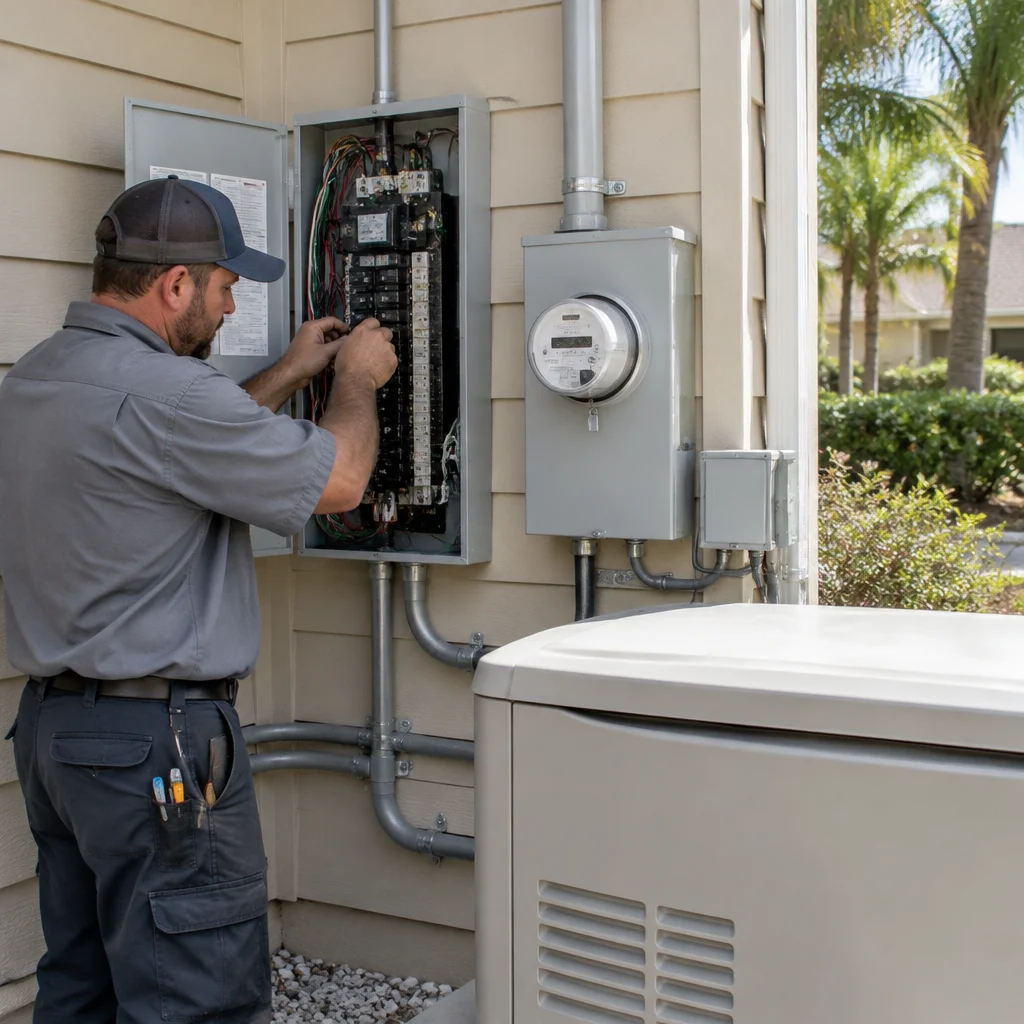
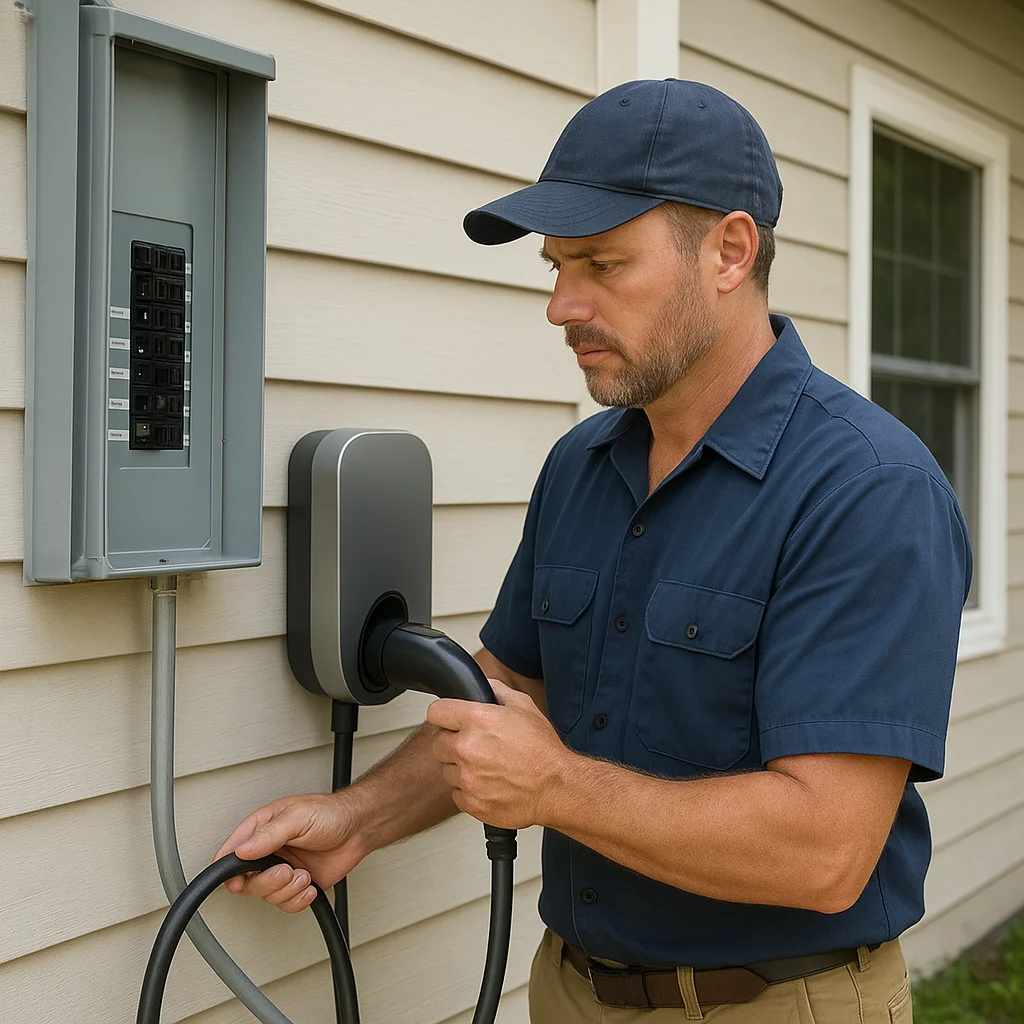
The panel is usually the first place problems show up. If your home already has a busy panel, adding an EV charger may require a panel upgrade, breaker repair, or a new subpanel. Homeowners searching for smart panels often want better load management, and that can be a smart move when EV charging, air conditioning, lighting, and other large loads are all in play.
Warning signs that the panel needs attention include frequent breaker trips, warm breaker handles, buzzing sounds, scorch marks, or a panel that feels overcrowded. If you smell something burning or notice discoloration near the panel, that becomes an emergency electrical concern, not a routine upgrade. A search for electrical repair near me may point you in the right direction, but the real fix often starts with a full inspection and load calculation.
Some older homes in Walton County still have fuse boxes or outdated equipment that was never designed for modern charging demands. In those cases, homeowners searching for electrical panel upgrade near me, fuse box replacement near me, or circuit breaker repair near me may need a broader plan that includes grounding updates, service replacement, and code corrections before a charger can be installed safely.
Dedicated circuits make charging safer and more reliable
An EV charger should not share a circuit with random outlets, lighting, or garage equipment. A dedicated circuit gives the charger the steady power it needs and reduces the chance of nuisance trips or overheating. It also makes troubleshooting much easier later if the charger ever stops working.
Dedicated circuit planning is especially important in homes where the garage has been converted into a storage area, workshop, or bonus space. It is also worth checking whether the outlet location is protected correctly, especially if the charger will be installed in a damp or partially exposed area. GFCI protection may be required in certain locations, and grounding must be correct for the installation to pass inspection and operate safely.
If your home already needs outlet repair, switch repair, or old wiring replacement near me type service, it may be a sign that the electrical system needs a broader review before charging equipment is added. That same review can uncover issues that affect other parts of the home too, such as recessed lighting, dimmer switch installation, or ceiling fan installation near me requests that have been patched together over time.
Coastal weather changes how the installation should be done
30A weather can be hard on electrical equipment. High humidity, salt exposure, heavy rain, and storm season all increase the need for durable materials and careful installation methods. Outdoor conduits should be sealed properly. Enclosures need to be rated for the environment. Fasteners and fittings should resist corrosion. Even indoor garages can be affected if moisture travels in from open doors or nearby breezeways.
For many homes, surge protection is just as important as the charger itself. Power spikes from storms or utility interruptions can damage EV charging equipment, smart panels, appliances, and sensitive electronics. Whole home surge protection can help protect the system, especially in homes that also rely on smart home devices, home theater wiring, or other connected equipment. If you have read about how professional electrical service makes smart home integration work better in 30A, FL, you already know that stable power supports the whole house, not just one device.
Storm preparation matters too. Some homeowners pair charger planning with generator planning so the home can keep critical circuits running during outages. If backup power is part of your long-term plan, it may be worth discussing whole home generator installation in 30A at the same time as EV charging, especially in neighborhoods where outages can last long enough to disrupt daily routines.
Permits, code compliance, and inspection details
EV charger installation is not the place to guess. Local permitting and code compliance help ensure the charger is installed correctly and safely. That usually means the right breaker size, proper conductor sizing, correct grounding, approved disconnects where needed, and a mounting location that meets clearance requirements.
For homeowners in older neighborhoods or remodeled properties, code corrections may be needed before the charger can go in. That can include fixing mislabeled breakers, replacing damaged receptacles, correcting open splices, or bringing older wiring up to current standards. If an outlet repair near me search points to a bigger wiring issue, it is better to address that now than after the charger is already mounted.
Vacation rental owners should pay close attention to this step as well. Charging equipment in a rental property should be easy to use, easy to identify, and installed in a way that reduces guest misuse. Clear labeling, proper load planning, and durable mounting help protect the system and the property.
How to avoid common installation mistakes
Do not assume the existing outlet is enough
A standard receptacle is usually not the right answer for long-term EV charging. Some homes can support Level 1 charging from a basic outlet, but many owners eventually want the speed and convenience of Level 2. That often requires a new circuit, better panel capacity, and a more permanent installation.
Do not ignore signs of overloaded wiring
Flickering lights, warm outlets, tripping breakers, and buzzing switches can all point to a system that is already under strain. Those issues matter even more when a new charger is added. Homeowners searching for electrical repair near me or burning smell electrical repair near me should treat those symptoms as a priority before charging equipment is installed.
Do not place the charger without thinking about the home layout
Garage layout, driveway access, cable length, and weather exposure all affect the best mounting location. In some homes, the best path to the panel is through a wall that also serves lighting or AV wiring. In others, the charger needs to be routed around additions, outdoor lighting, or a finished storage area. Planning the route carefully keeps the installation cleaner and safer.
Other electrical upgrades that often make sense at the same time
EV charging often reveals other electrical needs. A homeowner who needs a charger may also benefit from lighting and fixtures updates, outlets and switches repairs, or even home theater and AV wiring improvements if the home is being modernized.
It is also common for homeowners searching for appliance circuit installation near me, range outlet installation near me, hot tub wiring near me, or outdoor lighting installation near me to discover that their panel is already close to capacity. When that happens, combining projects can be more efficient than tackling them one at a time. A well-planned electrical inspection can help prioritize what should be repaired, upgraded, or replaced first.
If your home has older aluminum branch wiring, knob and tube wiring replacement near me concerns, or a history of patchwork repairs, the charger installation should be treated as part of a bigger electrical conversation. That does not always mean a full home rewiring near me project, but it does mean the system should be evaluated honestly before adding another major load.
Why local electrical service matters in 30A and Walton County
30A homes are a mix of primary residences, second homes, vacation rentals, and newer coastal builds. That variety means no two EV charger projects are exactly alike. Some homes have modern service equipment and plenty of room for a dedicated circuit. Others have older panels, exterior exposure, or previous remodel work that needs correction first. Local electricians who work throughout Walton County understand those differences and can plan around them.
That local knowledge matters during hurricane season too. A charger installed without attention to surge protection, grounding, and weather exposure may be more likely to fail when the power grid is stressed. Good planning helps protect both the vehicle and the home.
For homeowners searching ev charger installation near me, the goal is not just to get power to the garage. It is to make sure the charger works safely with the rest of the electrical system, from the main panel to the smallest switch.
When to bring in a professional
Call a licensed electrician if you are not sure whether the panel has capacity, if breakers are already tripping, if the wiring is older or damaged, or if the charger needs to be installed outdoors or in a corrosive coastal location. You should also get professional help if you are planning a remodel, addition, or generator installation at the same time. Coordinating those projects can prevent rework and reduce the chance of future electrical problems.
Homeowners who search for electrician near me in 30A often need more than one fix once the inspection starts. A good electrical contractor can look at the charger, panel, grounding, lighting, switches, outlets, and surge protection as one system instead of separate jobs. That approach is especially helpful in homes where seasonal occupancy means the electrical system sits unused for stretches, then has to perform reliably when the house fills up again.
For many families and rental owners, the smartest move is to plan the charger installation alongside a broader electrical checkup. That may include panel upgrades, breaker repair, outlet repair, smoke detector installation, code corrections, or local electrical maintenance that keeps the home ready for the next storm season and the next charging session.
With the right preparation, EV charger installation in 30A can be straightforward, durable, and built for the way coastal homes really live.
Find EV Charger Installation in 30A, FL
If you need EV Charger Installation in 30A, FL, visit our local service page or contact A Superior Mechanical today.
Map of 30A, FL
Frequently Asked Questions
Do I need a panel upgrade for EV charger installation in 30A, FL?
Not always, but many homes do. The answer depends on your panel capacity, existing loads, and the size of the charger. A licensed electrician can perform a load calculation and determine whether the panel can handle a dedicated EV circuit safely.
Can an EV charger be installed in an older coastal home?
Yes, but older homes often need extra attention. Outdated wiring, limited panel space, grounding issues, or corrosion from coastal weather may need to be corrected first. Some homes may also need code updates before installation.
Why is a dedicated circuit important for a home EV charger?
A dedicated circuit helps prevent overloads, nuisance breaker trips, and overheating. It gives the charger a stable power path and makes the system safer and easier to maintain over time.
Should I add surge protection with my EV charger?
Yes, surge protection is a smart idea in 30A, especially with storm exposure and coastal power conditions. It can help protect the charger, panel, and other sensitive electronics from voltage spikes.
Related Articles
- How Professional Electrical Service Makes Smart Home Integration Work Better in 30A, FL
- Keeping 30A Commercial Spaces Comfortable Before HVAC Trouble Spreads
- Keeping a 30A Home Comfortable Starts With the Right Air Conditioning System
- Why Preventive HVAC Service Pays Off for Air Conditioning Repair in 30A, FL
Photo Gallery