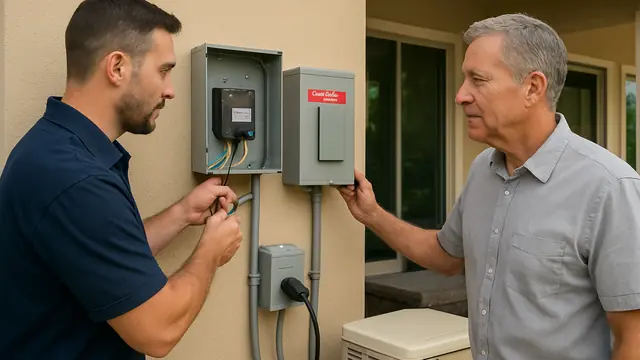
Do not remove an electrical panel cover, touch exposed conductors, bypass protection, or repeatedly reset a fault. Keep clear of smoke, sparks, burning odors, hot equipment, standing water near electricity, and downed lines, then call qualified help.
A bathroom or outdoor outlet goes dead, and RESET produces no click. The button may also latch briefly and release when an appliance starts. When a GFCI outlet will not reset in Upper Grand Lagoon, the device has usually lost supply power, is detecting an active fault, or has failed.
Unplug everything connected to the affected circuit. Check for moisture, heat, discoloration, damaged cords, or an electrical odor. You may inspect the breaker and other GFCIs one time. If the device still will not reset, or the breaker trips again, leave the circuit off.
A GFCI opens when current does not return through the expected neutral path. It may be escaping through water, damaged wiring, equipment, or a person, so the device should not be bypassed.
Start With What Happened Before the Trip
Think about what was operating immediately before power stopped.
Did a tool, hair appliance, refrigerator, pump, or extension cord start? Was there rain, a sink splash, or a leak? Did several outlets lose power or the breaker move to a middle position?
These details help separate an appliance problem from moisture, a downstream wiring fault, or loss of incoming power.
The Most Common Reasons a GFCI Will Not Reset
A Faulty Appliance Is Still Connected
Appliances can leak current through worn insulation, moisture, motors, or heaters. A standard breaker may not react, but the GFCI can detect the imbalance.
Unplug every device. If the outlet resets, reconnect items individually. An item that consistently causes the trip should remain unplugged until repaired or replaced.
Water Has Reached the Receptacle or Wiring
Water may enter an outdoor box through a cracked cover, failed gasket, loose fitting, or cord that holds the cover open. Moisture may also come from a sink, appliance, plumbing leak, wet plug, or downstream outlet.
The surface can dry before the inside of the box, and corrosion may remain.
The GFCI Has No LINE Power
- LINE terminals receive power from the panel. If a breaker has tripped, an upstream GFCI has opened, a switch is off, or a connection is loose, the reset mechanism may not operate.
- Move a tripped breaker fully OFF and then ON once. If it trips again, leave it off.
- Check other GFCIs because one device can protect outlets elsewhere.
A Downstream Circuit Problem Is Present
LOAD terminals send protected power to additional outlets. A loose neutral, damaged cable, wet box, overheated connection, faulty receptacle, or improper splice downstream can keep the controlling GFCI open.
The outlet with the buttons may be responding correctly to a fault elsewhere.
The GFCI Has Failed Internally
Electronic sensors and mechanical contacts can fail because of age, surges, heat, corrosion, repeated trips, or physical damage.
Symptoms include a loose button, no click, or intermittent power.
Wiring Was Installed or Altered Incorrectly
Reversed LINE and LOAD conductors, a loose neutral, or neutral-to-ground contact can interfere with operation. These require testing, not trial-and-error changes.
Safe Checks the Homeowner Can Perform
- Unplug all equipment from the affected outlet and other receptacles that lost power at the same time.
- Inspect cords and plugs for cuts, loose blades, missing grounding pins, moisture, or melting.
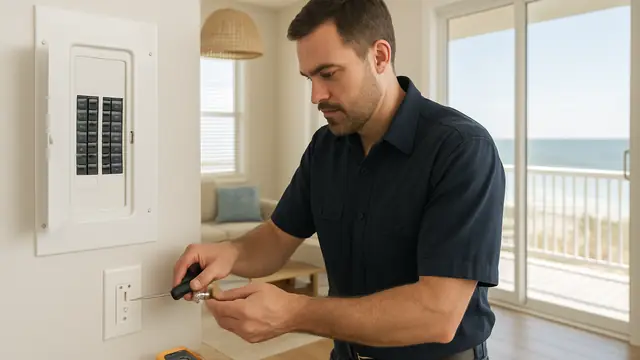
- At the panel, reset a tripped breaker once by moving it fully OFF and then ON. Stop if it opens again.
- Locate other GFCI outlets that may be upstream. Reset only devices that are dry, cool, and visibly undamaged.
- Press TEST and then RESET on the affected GFCI. Use firm finger pressure, but never force the mechanism or hold the button in place.
- If it resets, reconnect one appliance at a time to identify a faulty item.
What You Should Not Attempt
- Do not remove the outlet based only on the breaker label. Circuits may be mislabeled.
- Do not replace the GFCI with a standard receptacle to stop future trips. The trip is a symptom, and removing protection does not remove the cause.
- Do not swap LINE and LOAD wires, install a larger breaker, disconnect grounding, or tape the RESET button down.
- Do not energize a wet box or use heat, chemicals, or compressed air to dry it.
- Do not keep using an appliance or extension cord that repeatedly trips GFCI protection.
When the Problem Is Urgent
- Turn the breaker off immediately if you notice smoke, sparks, a burnt odor, buzzing, crackling, melted plastic, discoloration, or significant heat.
- Visible water, shocks, tingling, or a hot plug also require prompt attention.
- If the breaker trips repeatedly after all devices are unplugged, leave it off. The circuit may have a short, ground fault, or damaged conductor.
- Avoid temporary extension cords across damp floors, doorways, or walking paths.
How a Licensed Electrician Diagnoses It
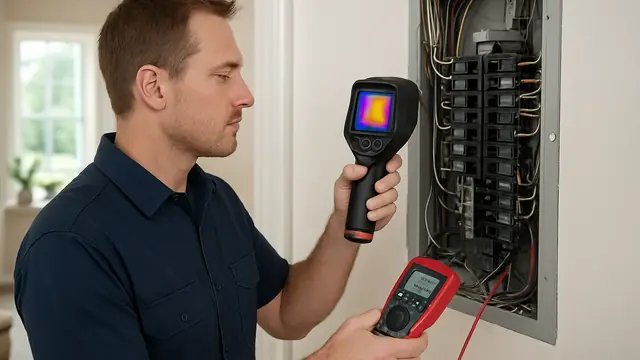
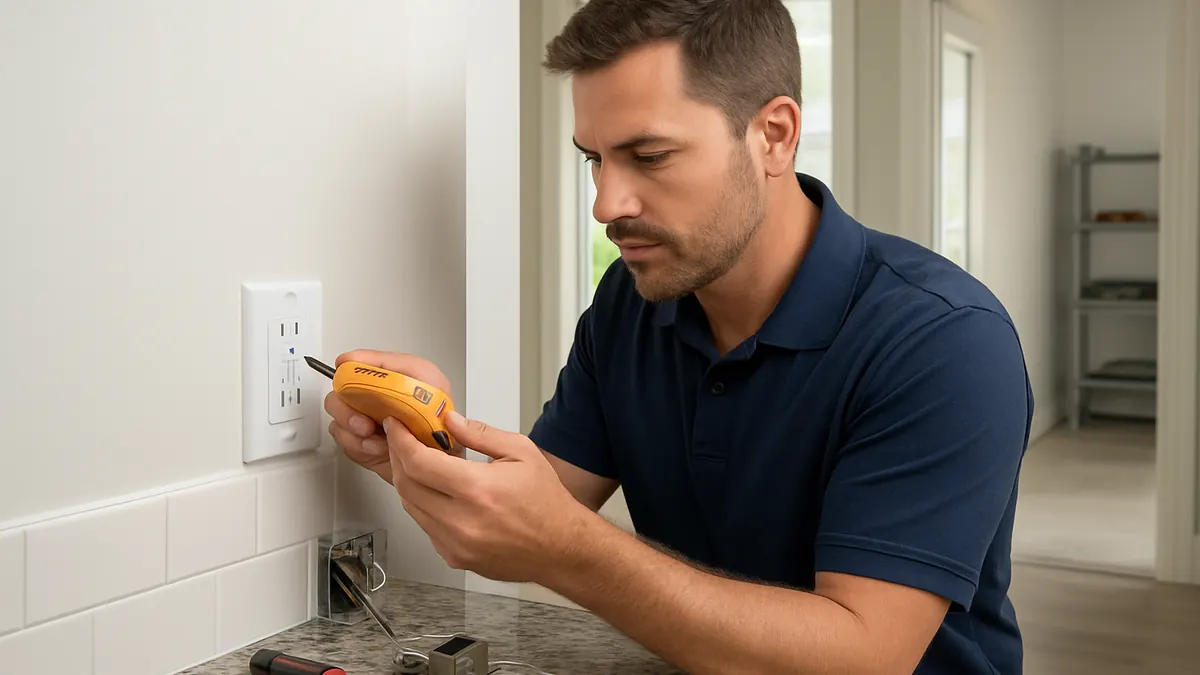
The electrician confirms whether the breaker is operating and whether correct voltage reaches the GFCI's LINE terminals. The neutral and grounding paths are tested as well.
The downstream LOAD conductors may be disconnected. If the GFCI resets with the rest of the circuit isolated, the electrician knows the fault is downstream. Outlets and wiring sections are then separated and tested until the problem is located.
If proper voltage reaches the isolated device and it still will not reset, the GFCI is likely defective.
The electrician also checks for corrosion, heat damage, moisture, miswiring, and improper neutral connections. The repaired circuit is then tested.
Repair Options Beginning With the Least Invasive
- The simplest repair may be removing a defective appliance or replacing a damaged cord. Once faulty equipment is disconnected, the breaker or upstream GFCI may reset normally.
- A loose connection can sometimes be repaired with a proper new termination. Heat-damaged wire ends may need to be removed.
- Moisture repairs may include correcting water entry, drying the enclosure, and replacing damaged covers or devices.
- A failed GFCI can often be replaced without changing the rest of the circuit. A downstream fault may be limited to one outlet, splice, or cable section.
- Broader rewiring is considered when damage is extensive, repeated, or inaccessible.
Typical Factors That Affect Cost
Cost depends on diagnostic time. Replacing one GFCI is less involved than tracing an intermittent downstream fault.
Other factors include moisture, damaged boxes, burned conductors, wall access, and required components.
Prevention and Maintenance Guidance
- Test GFCI outlets monthly. Press TEST to make sure power shuts off, then RESET to restore service.
- Replace outdoor covers or gaskets that are cracked, loose, or unable to close.
- Keep extension-cord connections away from water and unplug temporary outdoor equipment after use.
- Repair leaks promptly and replace cut, crushed, loose, or taped cords.
- Avoid overloaded adapters. If a specific appliance repeatedly trips protection, have that appliance evaluated.
Choose a Safe Repair Instead of a Bypass
When your GFCI outlet will not reset in Upper Grand Lagoon, disconnect equipment, check the breaker and upstream GFCIs once, and stop if the device still refuses to latch.
A licensed electrician can isolate the GFCI from downstream wiring, identify whether the cause is an appliance, wet connection, damaged conductor, loose terminal, or failed device, and start with the smallest safe repair. Leave the circuit off when there is heat, water, odor, visible damage, shock, or repeated tripping.
About this guide: This resource provides general homeowner education, not a remote diagnosis. Actual conditions, code requirements, equipment, and safe repair options must be evaluated at the property.