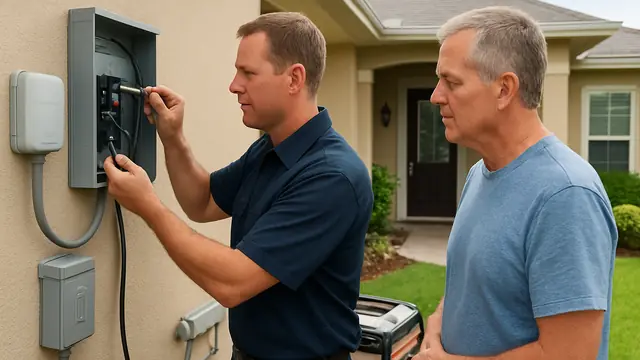
Do not remove an electrical panel cover, touch exposed conductors, bypass protection, or repeatedly reset a fault. Keep clear of smoke, sparks, burning odors, hot equipment, standing water near electricity, and downed lines, then call qualified help.
You press the RESET button on a bathroom, kitchen, garage, or outdoor outlet, but it pops back out-or nothing happens. The outlet may have stopped working after rain, after someone used a hair dryer, or without an obvious warning. When a GFCI outlet will not reset in a Bid-A-Wee home, it usually means the device has no incoming power, is still detecting an electrical fault, or has failed internally.
The safest immediate step is to unplug everything from the affected outlet and nearby outlets that may share the circuit. Press TEST once, then press RESET firmly. If it will not stay reset, stop. Do not keep forcing the button or repeatedly cycling the breaker. Leave the outlet unused until the cause is identified.
A GFCI shuts off power when electricity appears to be leaking through moisture, damaged wiring, an appliance, or a person. A refusal to reset may be the device doing its job.
Why Won't My GFCI Outlet Reset?
The GFCI Has No Incoming Power
A GFCI generally cannot reset without power. The circuit breaker may be tripped, another GFCI upstream may have opened, or a wall switch may control the receptacle. A tripped breaker sometimes rests between ON and OFF rather than appearing fully off.
The outlet may also be protected by another GFCI in a garage, bathroom, kitchen, or outdoor area.
Moisture Has Entered the Outlet or Box
Moisture can reach an exterior receptacle through a cracked cover, missing gasket, loose plug connection, or damaged box. Water can also come from a nearby plumbing leak. Even when the face of the outlet looks dry, moisture may remain behind it.
The GFCI may trip immediately because current is still leaking from the intended circuit. Keep the circuit off when water is visible or suspected.
A Connected Device Has a Ground Fault
A hair dryer, pressure washer, refrigerator, dehumidifier, extension cord, outdoor decoration, or kitchen appliance can develop damaged insulation or internal leakage. The outlet may reset after everything is unplugged, then trip when the faulty item is reconnected.
If the outlet resets, reconnect devices one at a time and stop using the item that causes another trip.
The GFCI Device Has Failed
GFCI outlets contain electronics and mechanical contacts. Age, repeated trips, surges, heat, and corrosion can wear them out. A failed device may not click, may feel loose, or may refuse to reset even when correct power reaches it and no downstream fault remains.
Wiring Is Loose, Damaged, or Misconnected
Loose terminals can interrupt power or generate heat. Incorrect LINE and LOAD connections can prevent proper operation. LINE is the incoming power; LOAD carries protected power to additional outlets.
A damaged conductor, loose neutral, pinched cable, wet splice, or fault at a downstream receptacle can also keep the GFCI from resetting.
Safe Checks You Can Perform
Unplug all connected equipment. Check cords and plugs for cuts, black marks, loose blades, melted plastic, or moisture. Do not touch the receptacle if it is wet, hot, buzzing, or discolored.
- At the panel, look for a breaker positioned between ON and OFF. Move it fully to OFF and then back to ON one time. If it trips again, leave it off.
- Check other GFCIs in bathrooms, the garage, kitchen, laundry area, and outdoors. Reset any that have clearly tripped, then return to the original device.
- If the outlet was exposed to rain or a leak, do not use a hair dryer or heat gun on it. Keep the circuit off and arrange an inspection.
What You Should Not Attempt
Do not pull the outlet from the wall unless you are qualified to verify the circuit is de-energized. Panel labels can be inaccurate.
Do not replace the GFCI with a standard outlet simply to restore power. That removes shock protection. Do not move wires between LINE and LOAD terminals as an experiment; an incorrect connection can leave downstream outlets unprotected.
Never continue using an appliance that repeatedly trips the device. The trip may indicate current leaking through damaged insulation or moisture.
When the Problem Is Urgent
Turn the breaker off and seek prompt electrical service when the receptacle is hot, burnt, cracked, buzzing, sparking, smoking, or giving off an electrical odor. The same applies if water is inside the box, someone feels a shock, or the breaker repeatedly trips.
Prompt help is also appropriate when the circuit serves equipment that must operate reliably. Avoid improvised extension cords through wet areas.
How a Licensed Electrician Diagnoses It
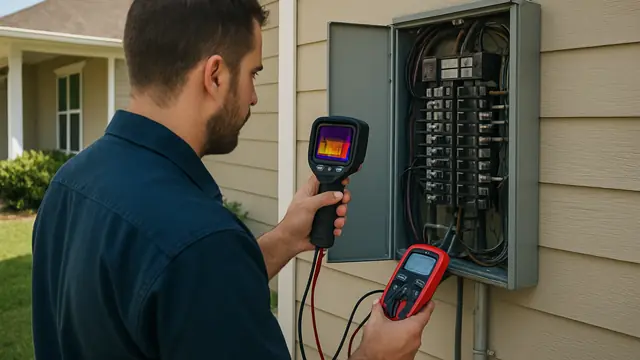
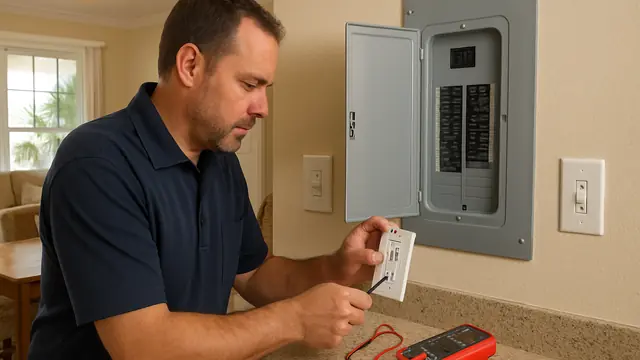
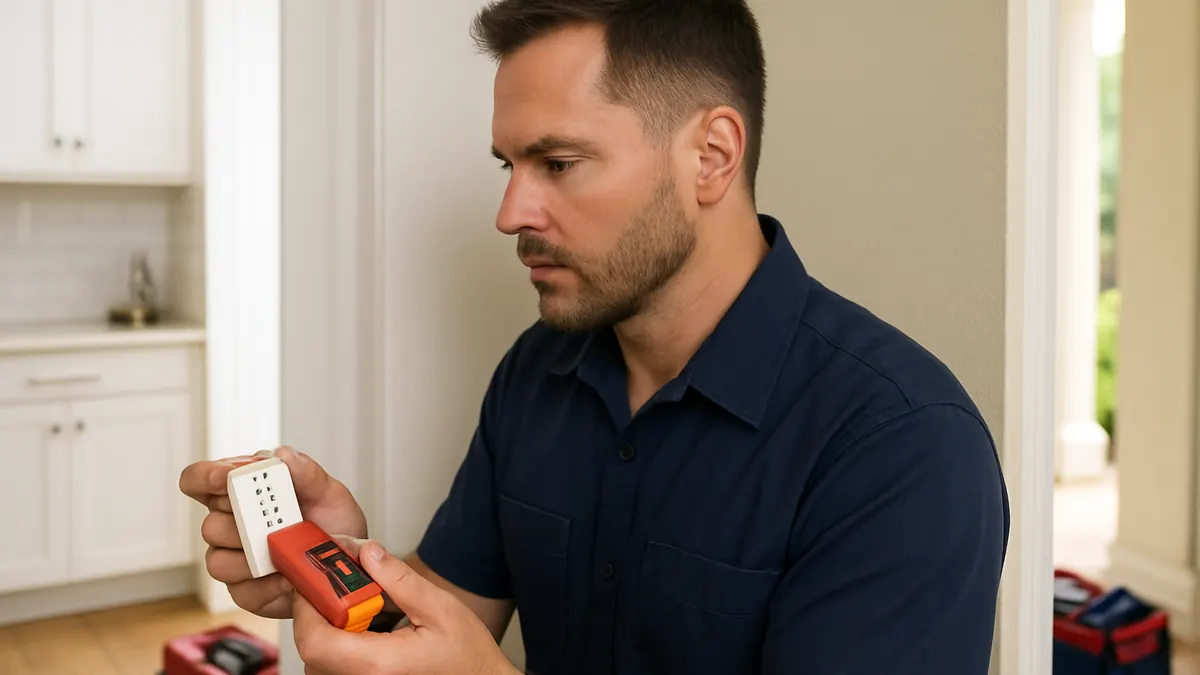
An electrician first confirms whether the breaker supplies the proper voltage and whether the hot, neutral, and grounding paths are correctly connected. Testing establishes whether the GFCI is actually receiving power.
The electrician may then disconnect the LOAD side. If the GFCI resets with downstream wiring removed, the fault is likely at another receptacle, cable, splice, or connected device. If it still will not reset with power, the GFCI itself may be defective.
Additional diagnosis may check for moisture, overheated terminals, damaged insulation, shared-neutral problems, and appliance faults.
Repair Options, From Least Invasive Up
The simplest correction may be resetting an upstream GFCI or restoring a properly cleared breaker after a faulty appliance is removed.
For moisture exposure, the repair may involve drying the enclosure, correcting the source of water, replacing a damaged gasket or cover, and installing an appropriate weather-resistant device.
If the receptacle has failed, replacement may be all that is needed when the box and wiring are sound. Loose or heat-damaged connections may require approved new terminations.
When the fault lies downstream, the electrician may repair one receptacle, splice, cable section, or appliance connection. Rewiring an entire circuit is usually considered only when damage is extensive or repeated.
What Affects Repair Cost?
Cost depends on whether the problem is limited to the GFCI or requires tracing several downstream outlets. Access, mislabeled breakers, concealed junctions, exterior moisture damage, damaged boxes, and wiring repairs can increase labor.
Device type also matters. A direct replacement in a sound box is less involved than repairing damaged conductors or opening a wall.
Preventing Future GFCI Trouble
- Test each GFCI monthly with the TEST and RESET buttons. TEST should shut off power; RESET should restore it. Replace a device that does not respond correctly.
- Keep outdoor covers closed and replace cracked covers or missing gaskets. Correct plumbing leaks promptly. Keep extension-cord connections away from rain and standing water.
- Replace damaged cords rather than taping them. Unplug seasonal equipment and tools when they are not being used.
Take the Next Appropriate Step
When your GFCI outlet will not reset in Bid-A-Wee, treat the condition as a safety warning, not a stubborn button. Unplug connected devices, make one careful breaker check, and leave the circuit off if the outlet trips again, feels hot, smells burnt, or shows moisture.
An electrician can determine whether the cause is a failed receptacle, wet box, appliance, loose connection, or downstream fault. Correcting the actual cause restores both power and protection.
About this guide: This resource provides general homeowner education, not a remote diagnosis. Actual conditions, code requirements, equipment, and safe repair options must be evaluated at the property.