Do not remove an electrical panel cover, touch exposed conductors, bypass protection, or repeatedly reset a fault. Keep clear of smoke, sparks, burning odors, hot equipment, standing water near electricity, and downed lines, then call qualified help.
You arrive home and notice that several digital clocks are flashing as though the power went out, yet other parts of the house never lost electricity. Later, the lights dim when the air conditioner starts, and one breaker is difficult to reset. These are among the seven signs your electrical panel needs an inspection in Upper Grand Lagoon and may point to a branch-circuit, service-connection, breaker, or heat-damage problem.
Reduce unnecessary electrical use and unplug sensitive equipment if voltage appears unstable. Reset a tripped breaker once only after removing portable loads and confirming there is no smoke, odor, moisture, or damage. Leave it off after another trip. Do not open the panel. If the cabinet is hot, wet, sparking, or smells burned, stay away and call a licensed electrician. Use emergency services for smoke or fire.
Why an Electrical Panel Can Affect the Entire Home
The panel distributes power through breakers that protect the wiring. Loose terminals, damaged breakers, corrosion, incompatible components, or insufficient capacity can affect one circuit or several rooms. Inspection does not automatically mean replacement; a targeted repair may solve the problem.
Seven Signs Your Electrical Panel Needs an Inspection in Upper Grand Lagoon
1. Breakers Trip More Often Than They Used To
A change in frequency matters. If a breaker that previously handled normal use begins tripping, the circuit may be overloaded, an appliance may be failing, or a wire, terminal, or breaker may be deteriorating. Record what was operating, unplug portable equipment, and reset once. Leave it off after another trip.
2. The Main Breaker Trips or Large Sections Lose Power
Repeated main-breaker trips can indicate a severe overload, damaged breaker, poor service connection, or distribution fault. Large partial outages may also involve service or utility equipment. Do not keep cycling the main breaker. Turn off sensitive equipment and seek evaluation.
3. Lights Flicker, Brighten, or Dim Across Different Circuits
One flickering light may need a bulb or fixture repair. Changes in unrelated rooms may indicate a loose neutral, unstable service voltage, overload, or panel connection problem.
A loose neutral can create uneven voltage, causing bright and dim lights, electronic resets, or motors that sound different. These changes need prompt evaluation.
4. The Panel Makes Buzzing, Crackling, or Popping Sounds
A functioning panel should not make persistent buzzing, sizzling, crackling, or popping noises. Possible causes include a loose terminal, failing breaker, damaged bus connection, or arcing.
The bus bar supplies the breakers. Arcing-electricity jumping across a gap-produces intense heat and can damage nearby components. Do not open the cabinet to locate the sound.
5. There Is Excessive Heat or a Burning Odor
A closed panel cover should not be hot. A hot spot, discoloration, melted plastic, blistered finish, or scorched odor indicates overheating from possible loose connections, overloaded conductors, damaged breakers, or poor bus contact. Stay away if the panel is hot or smoking; a fading odor does not prove safety.
6. Rust, Water Stains, or Corrosion Are Visible
Rust on the cabinet, stains above or below it, dampness near cable openings, or powdery residue may indicate moisture exposure. Water can corrode breakers, terminals, conductors, and bus bars.
Corrosion can weaken contact and create heat after the panel dries. Do not spray cleaner or rust remover inside. The equipment and moisture source both need correction.
7. The Panel Is Crowded or Cannot Support Planned Equipment
No open breaker spaces, missing filler plates, unclear labels, mixed breaker styles, or evidence of repeated additions are reasons for inspection before more circuits are installed.
New HVAC equipment, electric cooking, water heating, outdoor equipment, tools, or EV charging can increase demand. A load calculation determines whether the service can support it. The answer may be a dedicated circuit, subpanel, panel replacement, or service upgrade; a subpanel does not increase incoming capacity.
Safe Checks You Can Perform
Keep the panel closed. Record the breaker, equipment operating, affected rooms, and whether a large appliance had started. Look externally for rust, stains, discoloration, missing blanks, door damage, or blocked access. Inspect accessible cords and plugs. Unplug portable devices before one reset and stop after another trip or any heat, smoke, moisture, sound, or odor.
What a Homeowner Should Not Attempt
Do not remove the dead-front cover, tighten terminals, move conductors, replace service parts, or test exposed components. Incoming service terminals may remain live even with the main breaker off.
Never replace a breaker with a higher-amperage model because the original keeps tripping. The breaker protects the wiring. Oversizing it can allow the conductor to overheat without shutting off.
Do not tape or hold a breaker on, use an unapproved component, bypass protection, or attempt to dry wet equipment yourself.
Signs That Make the Situation Urgent
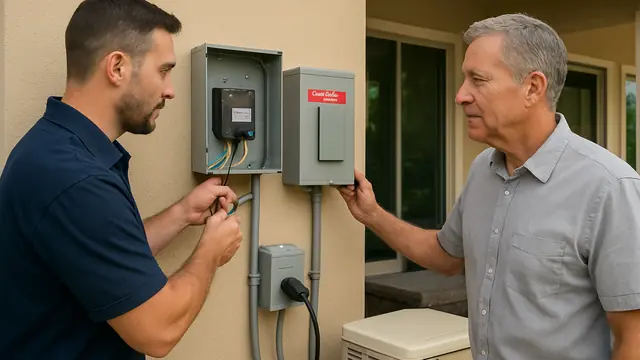
Urgent signs include smoke, arcing, sparks, a hot cabinet, burning odor, melted parts, water inside, shocks, repeated main trips, or dramatic brightness changes. A large partial outage may involve the service connection. Stay away from damaged exterior equipment and downed lines. For active fire, leave and call emergency services; do not use water.
How a Licensed Electrician Diagnoses the Problem
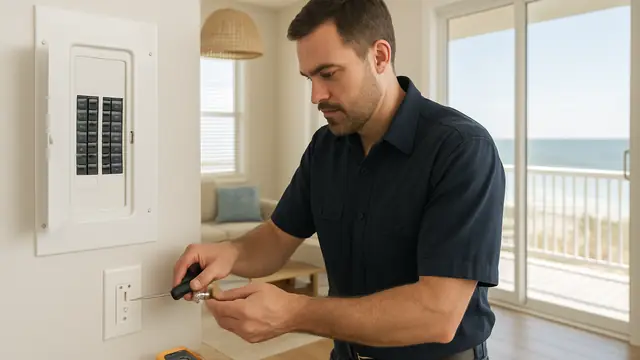
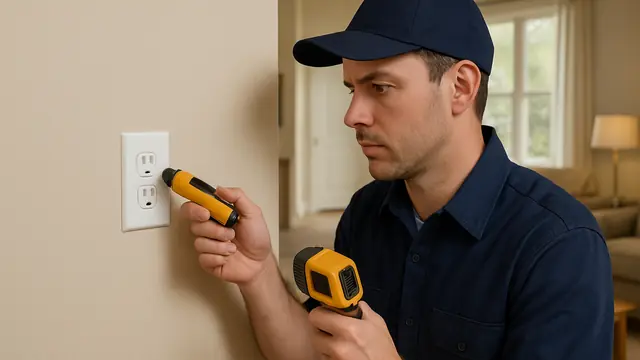
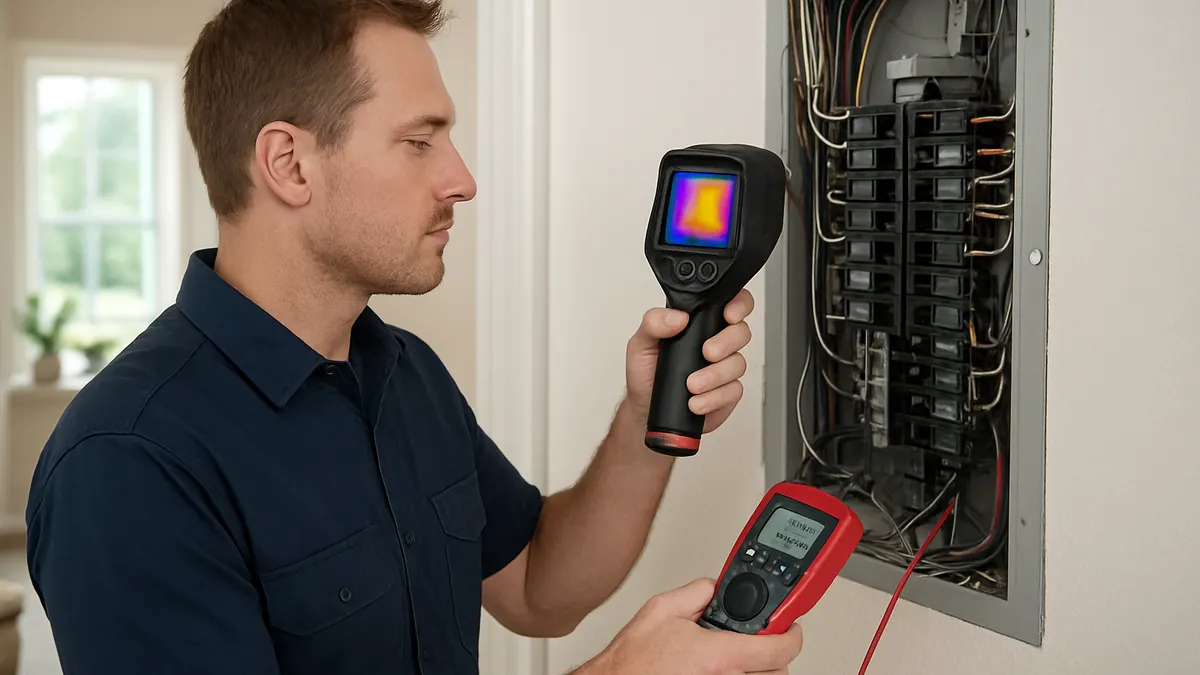
The electrician reviews the symptom pattern and checks panel rating, breaker compatibility, conductor sizing, loading, terminals, bus bars, grounding, corrosion, moisture, heat damage, and prior modifications. Voltage, current, and thermal tests help distinguish panel defects from appliance, branch-circuit, service, or neutral problems.
Repair Options Beginning With the Least Invasive
A focused correction may involve replacing one compatible breaker, repairing a loose branch-circuit connection, correcting wiring at an appliance, or installing a dedicated circuit for equipment that is overloading a shared circuit.
Further work may include replacing heat-damaged conductors, correcting grounding and bonding, stopping moisture entry, or adding a properly designed subpanel.
Panel replacement may be appropriate when bus bars are damaged, corrosion is widespread, overheating is extensive, compatible parts are unavailable, or unsafe modifications cannot be corrected. A service upgrade is considered when a load calculation shows inadequate capacity.
Typical Factors Affecting Cost
Cost depends on the defect, panel type, breaker availability, access, affected circuits, conductor damage, service size, grounding work, permits, and finish repairs.
Intermittent voltage problems may require additional testing. A clear proposal should identify the finding, least invasive safe repair, and reason for broader work.
Prevention and Maintenance Guidance
Keep the panel dry, accessible, and accurately labeled. Do not store household items, tools, or supplies in front of it. Have additions and major appliance circuits installed by qualified professionals.
Request a load evaluation before adding high-demand equipment. After leaks, remodeling, or unusual power events, pay attention to trips, odors, sounds, heat, or flickering.
Surge protection can reduce damage from certain voltage spikes, but it cannot correct loose terminals, overloaded circuits, corrosion, or failing breakers.
Homeowner FAQs
Does repeated dimming mean my service is too small?
Not necessarily. Dimming may come from motor startup, loose connections, voltage drop, equipment problems, or capacity issues. Testing is required.
Can a main breaker be replaced without replacing the panel?
Sometimes. The electrician must verify the panel condition, breaker compatibility, bus connection, and reason for the failure.
Why do only some rooms lose power?
Those rooms may share a circuit, one side of the electrical service, or a connection affected by a partial service problem.
Is rust on the panel door enough reason for replacement?
Not automatically. The extent of moisture entry and internal corrosion determines whether focused repair or replacement is appropriate.
Can thermal imaging find every electrical problem?
No. It can reveal abnormal heat while equipment is under load, but it is used with visual inspection and electrical measurements.
Should I have the panel checked before installing an EV charger?
Yes. The electrician should evaluate breaker space, service capacity, grounding, and the required dedicated circuit.
Arrange an Inspection Before the Warning Becomes an Outage
Seven signs your electrical panel needs an inspection in Upper Grand Lagoon include increasingly frequent trips, main-breaker or partial-power problems, multi-circuit voltage changes, abnormal sounds, excessive heat, moisture damage, and inadequate space or capacity. Some problems can be corrected with a targeted repair, but repeated or widespread symptoms should not be managed through repeated resets. A licensed electrician can identify the cause and recommend the smallest safe solution.
About this guide: This resource provides general homeowner education, not a remote diagnosis. Actual conditions, code requirements, equipment, and safe repair options must be evaluated at the property.