Do not remove an electrical panel cover, touch exposed conductors, bypass protection, or repeatedly reset a fault. Keep clear of smoke, sparks, burning odors, hot equipment, standing water near electricity, and downed lines, then call qualified help.
You are planning to add a Level 2 charger before your electric vehicle arrives, and you want the installation to support both current use and a possible second EV later. The electrical panel may have a 200-amp main breaker and available spaces, but the home also has significant cooling, water heating, cooking, laundry, and other electrical loads. You do not want to undersize the project, yet you also do not want to replace the entire service when a more focused solution would work.
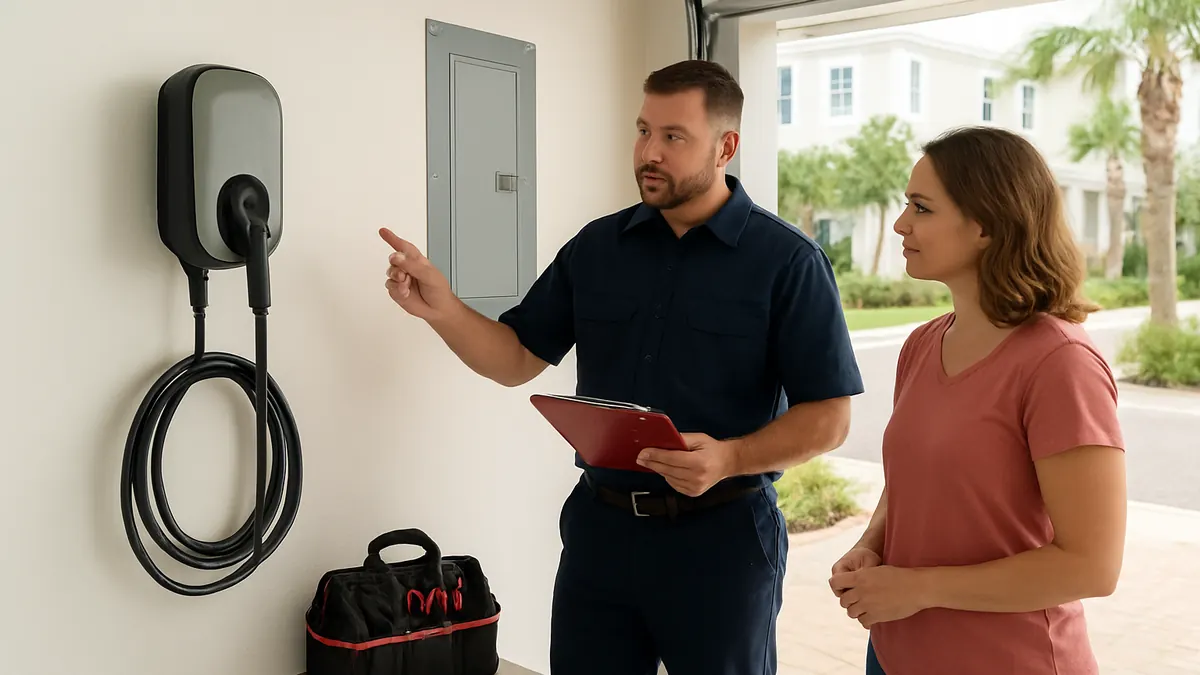
Leave the charger unconnected until a licensed electrician evaluates the system. Use only approved charging equipment, not extension cords, improvised adapters, or unidentified 240-volt outlets. The assessment should consider current needs, future plans, panel condition, service capacity, and parking locations.
Can Your Electrical Panel Support a Level 2 EV Charger in WaterColor?
It may support one charger, two coordinated chargers, or a charger below maximum output. The answer depends on calculated demand and charging strategy.
Planning for two EVs does not always require two maximum-output circuits. Approved equipment may share capacity or schedule charging.
Common Reasons Future EV Plans Require Additional Evaluation
The Existing Service Has Limited Spare Capacity
The load calculation includes applicable demand from HVAC equipment, electric heat, water heating, cooking appliances, dryers, pool or spa equipment, pumps, and other fixed loads. One charger may fit while two unrestricted chargers may not.
The Panel Has Spaces but Not Enough Capacity
Empty breaker positions do not create additional utility power. A panel can physically accept breakers while the calculated service load remains too high.
The Service Has Capacity but the Panel Is Crowded
A full panel may still have enough electrical capacity. An approved reconfiguration or subpanel may provide circuit positions for the charger installation.
The Charger Layout Has Not Been Planned
Charger placement affects cable reach, conductor length, wall penetrations, conduit, trenching, and physical protection. Planning both parking positions early may prevent avoidable rework.
The Charger Output Exceeds Real Driving Needs
A homeowner may focus on the fastest available charger even when the vehicle remains parked for many hours. Moderate charging can often replace daily mileage without maximizing the circuit.
Safe Checks You Can Perform Before the Evaluation
- Keep the panel cover closed. Photograph the panel exterior, main breaker, manufacturer label, breaker directory, proposed charger locations, and possible wiring routes.
- Record the model numbers for the vehicle and charger. Note the charger's maximum output, lower settings, hardwiring or plug requirements, and any approved power-sharing features.
- List major equipment and planned changes. Estimate each vehicle's mileage, parking hours, and how often both need substantial charging.
- This information helps the electrician compare a single circuit, two circuits, power sharing, or load-management options.
What You Should Not Attempt
- Do not remove the electrical panel cover or meter enclosure. Energized components may remain exposed even when the main breaker is off.
- Do not install larger breakers to create more charging power. Breakers must match conductor sizes, equipment ratings, and charger settings.
- Do not assume that two open spaces are enough for two chargers. Each charger may need a dedicated two-pole breaker, and the service must support the combined calculated demand.
- Do not use extension cords, homemade splitters, stacked adapters, or an unverified dryer or range receptacle.
- Do not change charger settings through an app after installation unless the circuit, service, and any load-management system are designed for the higher output.
Signs That Make the Situation Urgent
Stop charging if a connector, plug, receptacle, breaker, cable, or charger becomes unusually hot. Burning odor, discoloration, softened or melted plastic, buzzing, crackling, sparks, repeated trips, or recurring charger faults require prompt attention.
Arrange service if the main breaker trips, lights flicker when charging begins, the panel feels warm, or corrosion, water, or evidence of previous overheating is visible.
For smoke, active arcing, or fire, stay away from the equipment and call emergency services.
How a Licensed Electrician Diagnoses Present and Future Capacity
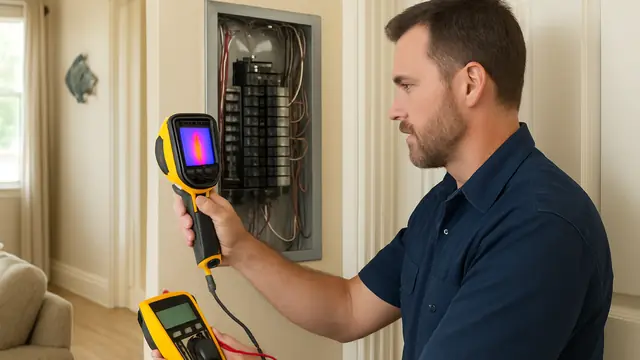
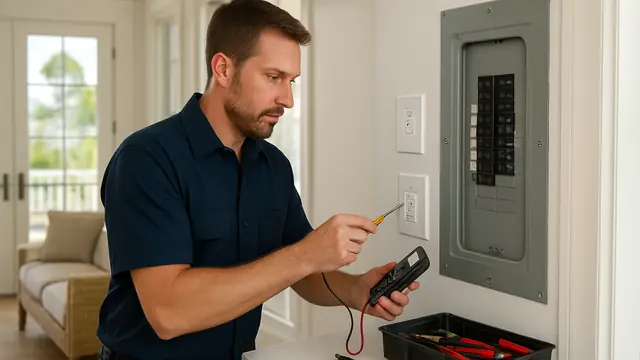
The electrician confirms the utility service rating, panel rating, main breaker, approved breaker types, available spaces, grounding and bonding, conductor sizes, terminations, and overall equipment condition.
A formal load calculation is completed for the current home and the proposed charging arrangement. If two EVs are planned, the electrician evaluates whether the chargers will operate independently, share power, or respond to total household demand.
The electrician reviews charger instructions and checks route length, access, conductor sizing, voltage drop, mounting, exposure, and protection.
Future planning may include conduit capacity, panel space, charger communication requirements, and whether a second circuit should be installed now or added later.
Repair and Installation Options From Least to Most Invasive
The least invasive option may be one dedicated circuit serving a charger at a moderate output. This can meet current needs while preserving panel capacity.
A charger designed for approved power sharing may divide available current between two vehicles. When one vehicle finishes or disconnects, more current may become available to the other.
Approved whole-home load management may reduce or pause EV charging when other large household loads operate. Charging resumes when electrical capacity is available.
If the service has capacity but the panel lacks breaker positions, an approved reconfiguration or subpanel may provide space. A subpanel does not increase the utility service capacity.
Minor panel defects may be repaired. Panel replacement may be appropriate when equipment is damaged, overcrowded, incompatible, or no longer serviceable.
A service upgrade is considered when calculated demand exceeds available capacity and moderate charging, power sharing, or load management cannot meet the household's needs.
Typical Factors Affecting Cost
Cost depends on the number of chargers, configured output, breaker and conductor sizes, panel condition, available spaces, circuit distances, wiring routes, wall access, conduit, trenching, outdoor exposure, charger mounting, permits, inspections, and utility coordination.
Installing pathways for a future charger during the first project may cost more initially but can reduce later disruption. Load management, communications wiring, a subpanel, panel replacement, or a service upgrade also affect scope.
A useful proposal should separate current requirements from optional future preparation and identify the final output available to each vehicle.
Prevention and Maintenance Guidance
Use each charger only at its approved setting. Do not raise output or disable power-sharing controls without another electrical evaluation.
Keep connectors clean and dry. Support cables so they cannot be driven over, pinched, stretched, or left in standing water.
Inspect chargers, cables, connectors, and receptacles if present for cracking, looseness, corrosion, discoloration, or heat marks. Stop charging if unusual heat, trips, or faults return.
Have the load calculation reviewed before adding a second EV, changing charger output, or installing another major electrical appliance.
Plan the Charger Installation Around Real Use
Can your electrical panel support a Level 2 EV charger in WaterColor? It may support one charger, two coordinated chargers, or a lower-output installation without a service upgrade. Other homes may need panel-space changes, repairs, replacement, or increased service capacity.
The right design begins with an inspection, load calculation, and clear picture of vehicle use. This helps prevent overheating and nuisance trips without unnecessary work.
About this guide: This resource provides general homeowner education, not a remote diagnosis. Actual conditions, code requirements, equipment, and safe repair options must be evaluated at the property.