Do not remove an electrical panel cover, touch exposed conductors, bypass protection, or repeatedly reset a fault. Keep clear of smoke, sparks, burning odors, hot equipment, standing water near electricity, and downed lines, then call qualified help.
You find a 240-volt receptacle near the parking area and assume the Level 2 charger can plug straight in. It may even match the charger plug. Before using it, however, you notice that the panel directory is incomplete, the breaker is not clearly identified, or the receptacle appears older than the rest of the electrical system.
An existing outlet does not prove that the circuit is suitable for EV charging. The wiring may be undersized, the receptacle worn, the breaker incorrect, or the service unable to support sustained charging. Leave the charger disconnected until a licensed electrician verifies the circuit and performs a load calculation. Do not use adapters, extension cords, or repeated tests.
Level 2 home charging typically uses 240 volts and provides more overnight charging than Level 1. The circuit and service must be designed for the charger's operating current. Federal guidance describes many residential Level 2 installations as dedicated circuits sized above the charger's actual current draw.
Can Your Electrical Panel Support a Level 2 EV Charger?
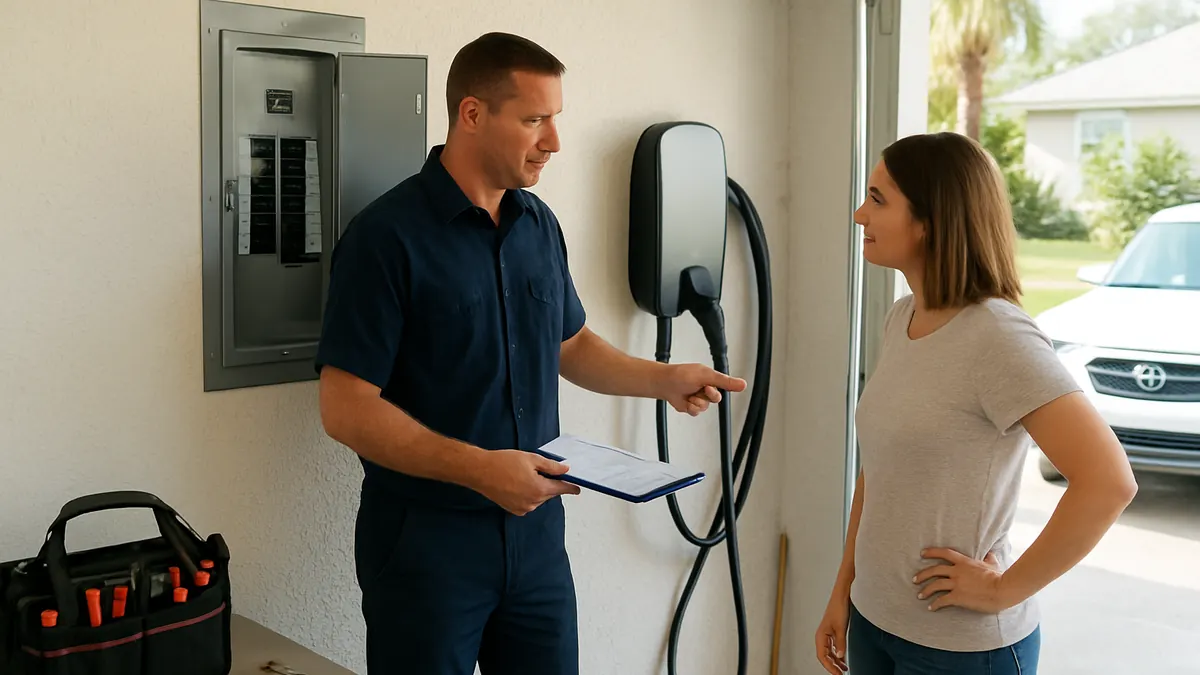
The answer depends on service capacity, panel condition, room for a two-pole breaker, and the feasibility of routing a compliant circuit to the vehicle. A panel can pass one test and fail another. An existing 240-volt circuit may have the correct voltage yet still be unsuitable for sustained EV charging.
Common Problems Found During EV Charger Evaluations
An existing receptacle was installed for another appliance
A receptacle used for another appliance was not necessarily designed or maintained for daily EV charging. The entire circuit must be verified.
The panel directory is inaccurate
Labels may be outdated or blank. The breaker serving the outlet must be traced and tested.
The panel lacks remaining load capacity
Air conditioning, electric water heating, cooking equipment, dryers, pool equipment, pumps, and other loads all affect the calculation. Empty breaker spaces do not guarantee available electrical capacity.
The charging location is distant
A detached garage, carport, or driveway may require a longer route, trenching, conduit, weather-rated equipment, or impact protection.
Previous electrical work created defects
Loose connections, improper breakers, corrosion, damaged conductors, or grounding defects must be repaired first.
Safe Checks for the Homeowner
- Keep the panel cover closed. You can photograph the panel label, main breaker, directory, existing receptacle, charger label, and proposed mounting area.
- Look at the receptacle without touching or removing it. Discoloration, cracking, looseness, rust, melted areas, or a missing cover are reasons not to use it.
- Find the charger manual and note its maximum output, lower settings, plug type, and hardwiring instructions.
- List major electric equipment and planned additions. Estimate daily mileage and overnight parking time to determine whether a moderate charging rate is sufficient.
What You Should Never Try
Do not remove the receptacle to inspect conductors. Do not tighten terminals, replace breakers, or change the charger's internal current setting unless you are qualified and the circuit was designed for that setting.
Do not assume a larger breaker will increase charging capability safely. Breaker size must protect the conductors and equipment. Oversizing the breaker can allow wiring to overheat before protection operates.
Do not use a household extension cord, stacked adapters, or an improvised shared circuit.
Urgent Warning Signs
Disconnect charging equipment if it can be done safely and stop using the circuit when you notice a hot plug, hot outlet, burning odor, buzzing, crackling, discoloration, melting, sparks, or repeated breaker trips.
Call promptly if lights flicker, the main breaker trips, the panel is warm, or water appears around electrical equipment. Call emergency services for smoke, arcing, or fire.
A charger fault may come from supply voltage, grounding, a loose connection, damaged equipment, or another circuit defect.
How a Licensed Electrician Diagnoses the System
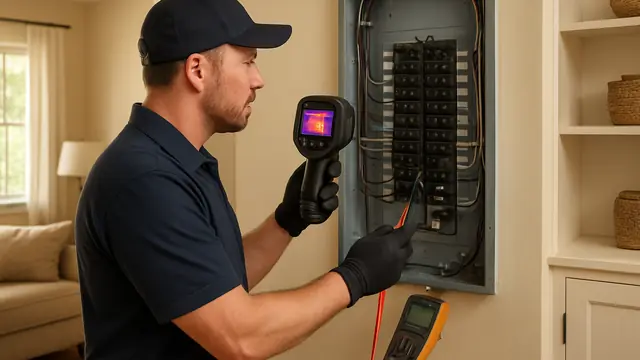
The electrician begins at the service equipment. The electrician checks service and panel ratings, breaker compatibility, grounding and bonding, available spaces, conductors, heat, and corrosion.
A load calculation then determines whether the existing service can carry the charger along with the home's expected demand. This calculation is not the sum of all breaker ratings. It uses recognized electrical rules to evaluate how loads are applied.
The National Electrical Code serves as a central safety standard for electrical design and installation. Federal EV-readiness guidance also identifies panel capacity, raceway, wiring, circuit protection, and listed charging equipment as key parts of a complete installation.
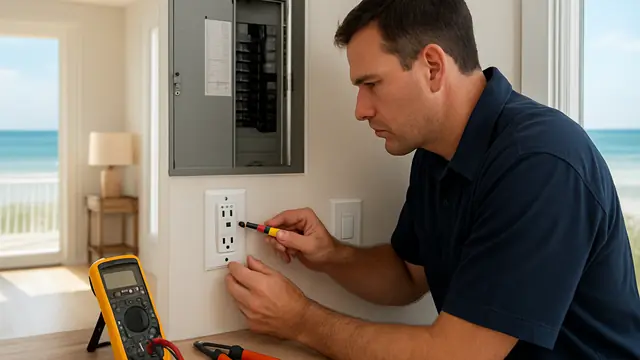
If an outlet exists, the electrician traces its circuit and verifies the breaker, conductor size, grounding, receptacle rating, terminals, and installation method.
Repair and Installation Choices
The least invasive solution may reuse an existing pathway while replacing unsuitable components. Reuse is appropriate only when the wiring and pathway pass inspection.
Another option is a new dedicated circuit configured below the charger's maximum output. This can provide dependable overnight charging without requiring the largest possible circuit.
Where service capacity is tight, an approved energy-management system may control charging based on other household loads. It can reduce or pause charging when electrical demand is high.
If the service has enough capacity but the panel lacks spaces, a properly designed subpanel or approved reconfiguration may help.
Panel replacement is considered when equipment is damaged, overcrowded, or incompatible. A service upgrade may be needed when calculated demand exceeds available capacity.
Cost Factors to Expect
Cost is affected by charger rating, existing service capacity, panel condition, breaker availability, whether an old circuit can be reused, conductor length, wire size, conduit, trenching, wall access, outdoor exposure, charger mounting, permitting, inspection, and utility work.
Existing defects, load management, and preparation for a second EV can add scope. Compare proposals by charging amperage, circuit method, permit responsibility, included repairs, and future readiness-not price alone.
Prevention and Maintenance
Use the charger only at the setting approved during installation. Do not increase its current through an app or internal switch without confirming that the circuit and service support the change.
Keep the connector and cable clean, dry, supported, and protected from tires and doors. Check for cracks, heat marks, corrosion, or damage. Have the system reviewed after major electrical changes or before adding a second EV.
Get a Clear Answer Before Charging in Blue Mountain Beach
Can your electrical panel support a Level 2 EV charger in Blue Mountain Beach? It may, but neither an empty breaker space nor an existing 240-volt outlet provides enough evidence. A safe answer requires a panel inspection, load calculation, charger review, and evaluation of the complete wiring route.
That process often identifies a practical solution that is less invasive than a full service upgrade. Until the circuit is verified, avoid adapters and unknown outlets, and stop using any charging equipment that becomes hot, damaged, wet, or unreliable.
About this guide: This resource provides general homeowner education, not a remote diagnosis. Actual conditions, code requirements, equipment, and safe repair options must be evaluated at the property.