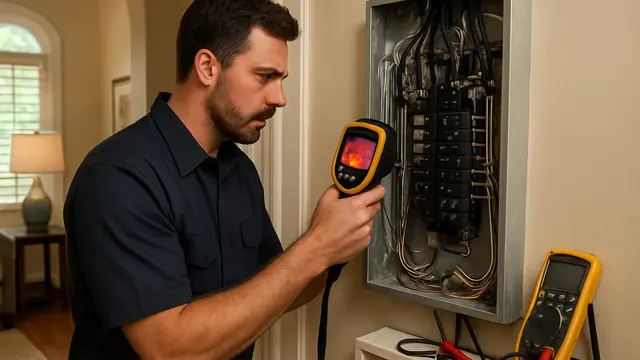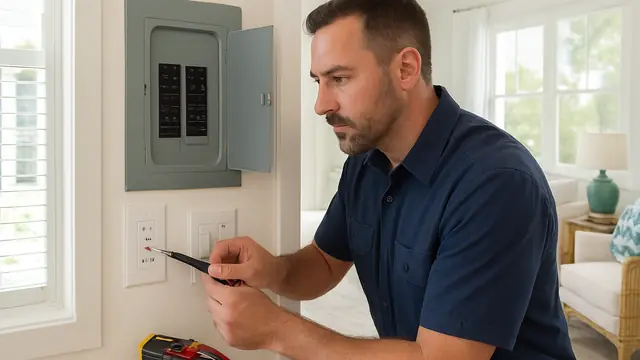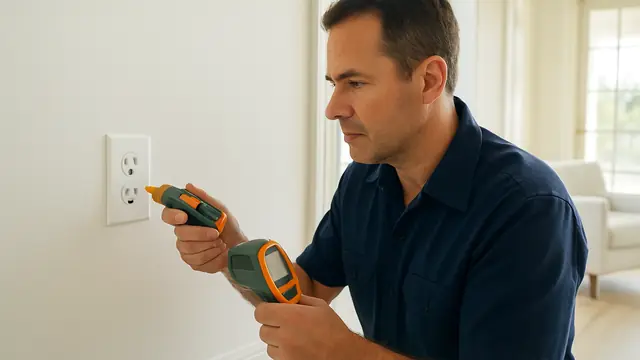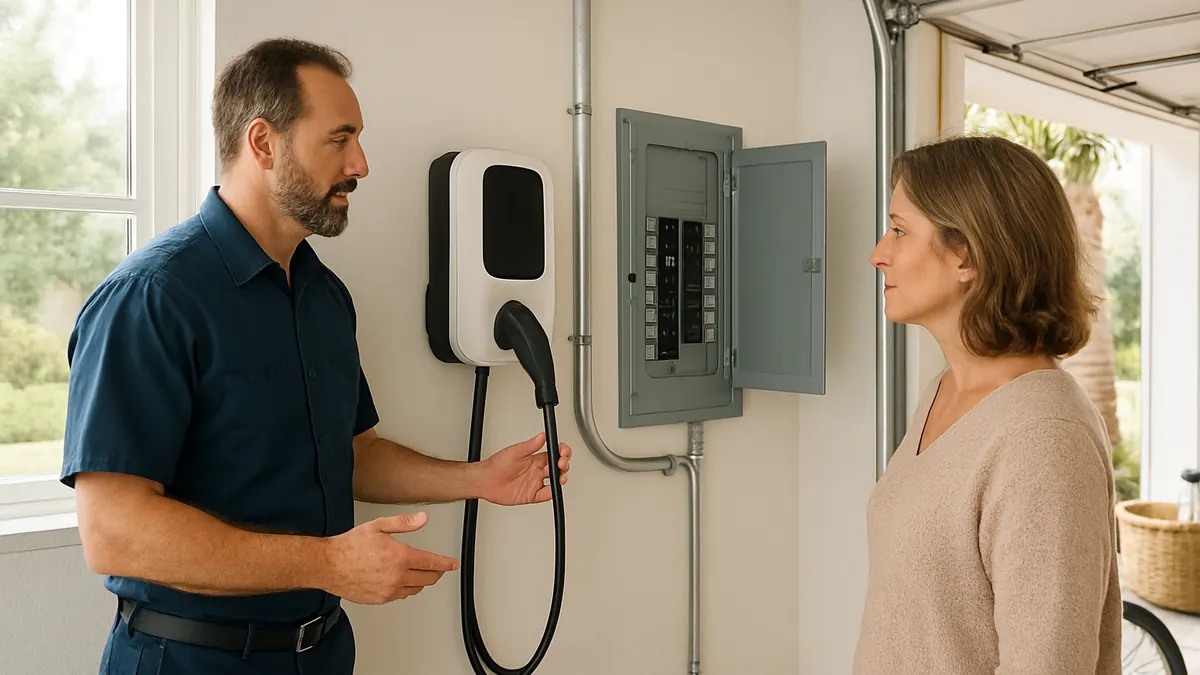
Do not remove an electrical panel cover, touch exposed conductors, bypass protection, or repeatedly reset a fault. Keep clear of smoke, sparks, burning odors, hot equipment, standing water near electricity, and downed lines, then call qualified help.
Your new EV is arriving this week, the charger is already in the box, and the manufacturer recommends professional installation. You check the electrical panel and see a 200-amp main breaker, so the project appears simple. Then you remember the home also has multiple air-conditioning systems, electric cooking, a clothes dryer, water heating, pool equipment, and other large loads. The real question is whether the panel has enough capacity when the house is operating.
A 200-amp label is encouraging, but it is not automatic approval. Leave the unit uninstalled, avoid adapters or unidentified 240-volt outlets, and have a licensed electrician perform a load calculation and inspection.
Level 2 charging uses 240 volts in a home and is intended to provide more charging during the hours a vehicle is parked. The required circuit depends on the charger's operating current, and many residential Level 2 units need a dedicated circuit rated above that operating current.
The Quick Answer: Panel Size Alone Is Not Enough
Your electrical service must support the home's existing calculated demand plus the proposed charger load. An electrician evaluates the service rating, panel rating, large appliances, heating and cooling equipment, and charger specifications.
Breaker space is separate from capacity. A charger circuit uses a two-pole breaker, but two open spaces do not prove the service can support it.
A lower configured current may still replace your daily mileage overnight.
Why a Seemingly Modern Panel May Still Need Work
The home already carries several large electrical loads
Electric water heating, electric cooking, pool or spa equipment, multiple HVAC systems, and other fixed appliances influence the calculation.
Breaker spaces are occupied or poorly organized
Previous additions may have filled the panel. Every breaker must be approved for that panel, and the conductor size must match its protection.
The desired charger is larger than necessary
Buying a charger capable of high output does not mean it must be installed at its maximum setting. Some equipment can be commissioned at a lower current when the manufacturer permits it.
The charger location creates a difficult pathway
Long distances, finished walls, outdoor areas, and separated parking can complicate the wiring route and equipment selection.
Existing defects must be corrected first
Loose connections, corrosion, overheating, damaged breakers, or improper previous work must be corrected before adding a sustained load.
Safe Information to Gather Before the Appointment
Do not open the panel. Instead, photograph the exterior label, main breaker, breaker directory, and the route between the panel and parking area. Note whether the parking space is inside, covered, or fully outdoors.
Record the EV and charger model numbers. Find the charger manual and note its maximum output, adjustable settings, and required circuit.
Make a list of major electrical equipment in the home. Include air conditioners, heat pumps, auxiliary heat, water heater, oven, cooktop, dryer, pool or spa equipment, pumps, and planned future additions.
Estimate the range you normally replace each night so the design reflects your needs.
What Not to Do While Waiting for Installation
Do not connect the charger to a dryer outlet with a general-purpose adapter. Do not use an extension cord, a homemade cable, or an unidentified receptacle that happens to accept the plug.
Do not remove the panel cover or tighten electrical connections. Parts of a service panel may remain energized even when the main breaker is switched off.
Never install a larger main breaker to "make room" electrically. Breaker size does not create capacity, and an oversized main can leave service conductors or equipment inadequately protected.
When the Charger or Panel Needs Urgent Attention
Stop charging if a plug or receptacle becomes hot, the breaker trips repeatedly, the charger reports faults, or you smell hot plastic or insulation. Buzzing, crackling, sparks, discoloration, melting, or smoke are warning signs, not normal charging behavior.
Call an electrician promptly if lights flicker when charging begins, the main breaker trips, the panel feels unusually warm, or you see corrosion or water around the electrical equipment. Keep away from wet or smoking equipment and call emergency services for active fire.
Repeatedly resetting a tripping breaker does not correct the underlying fault or overload.
How a Licensed Electrician Evaluates the System
The electrician verifies service size, panel rating, grounding and bonding, approved breaker types, available spaces, and equipment condition.
A formal load calculation then evaluates applicable household demand. Adding breaker numbers is not a valid substitute. EV charging is a sustained load that must be coordinated with the service and branch circuit.
The National Electrical Code is a primary safety standard for electrical design and installation, and federal EV guidance describes EV-ready infrastructure in terms of panel capacity, a dedicated 208/240-volt circuit, raceway, wiring, and overcurrent protection.
The electrician surveys the wiring route, considering conductor length, protection, mounting, exposure, and service access.
Solutions From Least to Most Invasive
The first option may be a dedicated circuit with the charger set to an output the existing panel can support. For many drivers, this provides enough overnight charging without maximizing the hardware.
A listed load-management device may allow the charger to respond to household demand. When major loads are active, charging can be reduced or paused; when capacity becomes available, charging resumes. This approach may avoid a service upgrade in an otherwise suitable installation.
If the service has capacity but the panel lacks spaces, an approved reconfiguration or subpanel can provide proper distribution. A subpanel does not increase the home's service rating.
Panel replacement may be appropriate when equipment is damaged, incompatible, or overcrowded. A service upgrade is considered when calculated demand exceeds available capacity.
What Affects the Cost?
The major factors are charger output, service capacity, panel condition, available breaker spaces, conductor size, distance to the parking location, wiring pathway, wall or ceiling access, outdoor exposure, trenching, charger mounting, permitting, inspection, and utility involvement.
Load management, panel replacement, defect repairs, surge protection, and preparation for a second charger also affect cost. A clear proposal should separate required safety work from optional improvements and state the charging rate.
Preventing Problems After Installation
Use the charger only at the configured setting. Do not change internal switches or software current limits unless the installation was designed for the higher output and a person confirms the change.
Keep the connector clean and dry, support the cable, and protect it from vehicles and doors. Inspect for heat marks, cracks, looseness, corrosion, cord damage, or repeated faults. Schedule another load review before adding a second charger or other major load.
Can Your Electrical Panel Support a Level 2 EV Charger in Alys Beach?
The answer depends on calculated capacity, equipment condition, charger output, and the route to the vehicle-not simply whether the panel says 200 amps. A licensed evaluation can identify the least invasive safe solution, from a modest dedicated circuit or load management to panel or service work when genuinely necessary.
Do not experiment with adapters or unidentified outlets while deciding. Continue only with approved charging methods, and stop using any equipment that becomes hot, damaged, wet, or unreliable.
About this guide: This resource provides general homeowner education, not a remote diagnosis. Actual conditions, code requirements, equipment, and safe repair options must be evaluated at the property.