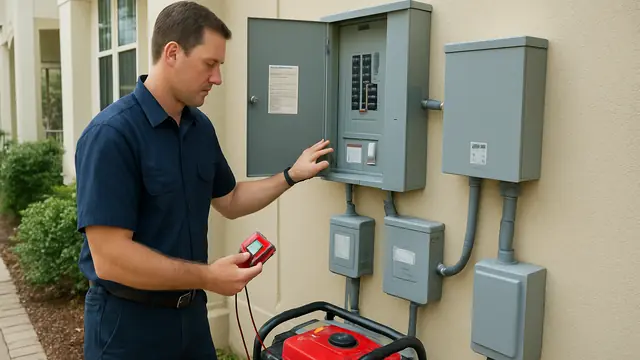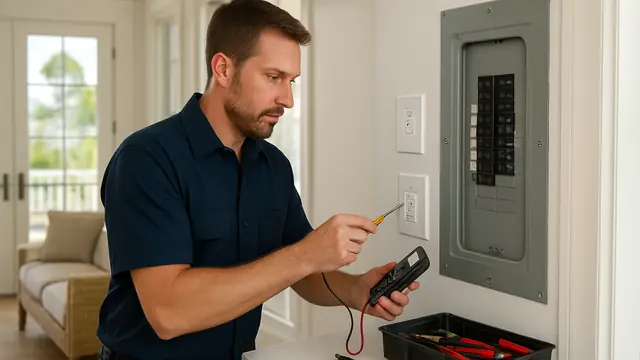
Do not remove an electrical panel cover, touch exposed conductors, bypass protection, or repeatedly reset a fault. Keep clear of smoke, sparks, burning odors, hot equipment, standing water near electricity, and downed lines, then call qualified help.
You may notice the problem when the home is busiest. The air conditioner starts, kitchen appliances are running, and a breaker shuts off part of the property. Another time, lights flicker or a breaker feels unusually warm. In a WaterColor home, those changes may show that the panel or one of its circuits is under stress.
The safe response is to stop using the affected appliance, unplug unnecessary equipment, and leave the panel cover in place. You may reset a tripped breaker once only when there is no smoke, sparking, burning odor, unusual heat, water exposure, or visible damage. If it trips again, leave it off and arrange an inspection with a licensed electrician.
Why the Electrical Panel Matters
The panel distributes power through breakers to individual circuits. Each breaker protects a particular wire size and load. A warning sign does not always mean the entire panel has failed, but it may reveal an overload, loose connection, damaged breaker, wiring fault, corrosion, or capacity problem.
Seven Signs Your Electrical Panel Needs an Inspection in WaterColor
1. Breakers Trip During Predictable Periods of Heavy Use
A breaker that trips when several major appliances operate together may be protecting an overloaded circuit. Repeated resets are not the answer. The load may need reduction, redistribution, or a dedicated circuit.
If a breaker trips during light use, a faulty appliance, damaged conductor, short circuit, ground fault, or weak connection may be involved.
2. Different Breakers Trip at Different Times
When unrelated breakers begin tripping, the issue may extend beyond one appliance. Possible causes include increased demand, panel heat, improper breakers, a service problem, or separate circuit faults.
Record which breakers trip and what was operating. Do not repeatedly reset the main breaker or several branch breakers in an attempt to keep the property running.
3. Lights Flicker Throughout More Than One Area
A loose bulb can affect one fixture. Widespread flickering, repeated dimming when motors start, or lights that alternate between bright and dim can indicate a loose connection, voltage drop, unstable neutral conductor, or service issue.
A loose neutral can create uneven voltage between circuits and affect lights, electronics, and appliances.
4. The Panel Is No Longer Quiet
A panel should not produce persistent buzzing, crackling, sizzling, or popping. A strong buzz may come from a loose component or breaker under stress. Crackling and popping may indicate arcing.
Arcing is electricity jumping across a gap instead of flowing through a secure connection. It creates intense heat and can damage panel components.
Do not open the panel to locate the noise.
5. You Notice a Burning Odor, Heat, or Discoloration
- A sharp electrical smell, melted plastic, darkened areas, or concentrated heat around a breaker can indicate a loose terminal, excessive current, corrosion, or damaged equipment.
- A poor connection may overheat while still supplying power, so operation does not prove safety.
- Do not touch a panel that appears hot, damaged, smoking, or sparking. Fire or active smoke requires emergency services.
6. Moisture, Rust, or Corrosion Is Visible
Rust on the enclosure, moisture staining on the wall, corrosion near the panel door, or evidence of water around cable openings should be inspected. Corrosion can increase resistance, weaken connections, and interfere with breaker operation.
Coastal moisture and salt in the air can contribute to corrosion when they reach electrical components. Do not open the panel to look for hidden damage or spray any product inside it.
7. New Equipment Has Changed the Home's Electrical Load
Adding an EV charger, electric water heater, pool equipment, larger HVAC system, or other major loads changes what the service must support. Open spaces do not prove adequate capacity.
A licensed electrician considers the panel rating, service conductors, existing circuits, equipment requirements, and a formal load calculation before adding a major circuit.
Safe Checks the Homeowner Can Perform
Without opening the panel, note the breaker number, affected rooms or equipment, and what was running. Record whether the problem happened at startup, after extended use, or only with several systems.
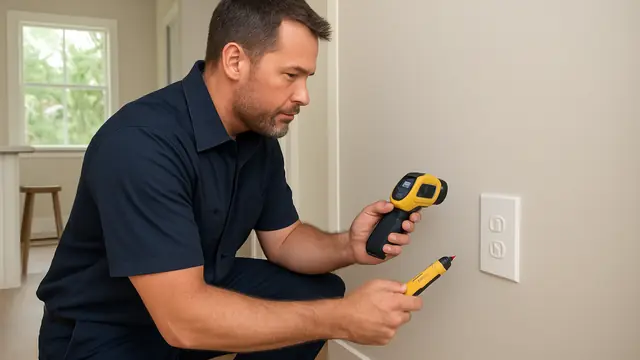
Check accessible cords, plugs, switches, and receptacles for damage, warmth, or odor. Unplug nonessential equipment and stop using any appliance linked to the problem.
Look around the closed panel for stains, rust, damage, missing filler plates, or blocked access.
What the Homeowner Should Not Attempt
- Do not remove the dead front around the breaker handles. Energized parts are behind it, and incoming service wires may remain live when the main breaker is off.
- Do not tighten lugs, move wires, replace breakers, or test live components. Breakers must be approved for the panel and sized for the wiring.
- Never install a higher-amp breaker to stop tripping; the wire could overheat. Do not spray chemicals into the enclosure.
When the Problem Requires Urgent Service
Arrange prompt service for recurring breaker trips, widespread flickering, panel noise, visible corrosion, unusual heat, or a breaker that will not remain reset. Symptoms after water intrusion, storm damage, renovation work, or the installation of new equipment also deserve timely evaluation.
Smoke, flames, active sparking, severe heat, or a strong burning odor are emergencies. Keep people away and call emergency services when fire or smoke is present.
How a Licensed Electrician Diagnoses the Problem
The electrician reviews the timing of the symptoms and recent changes in electrical use. The inspection may cover breaker compatibility, terminations, grounding and bonding, the internal bus, labels, moisture damage, corrosion, and overheating.
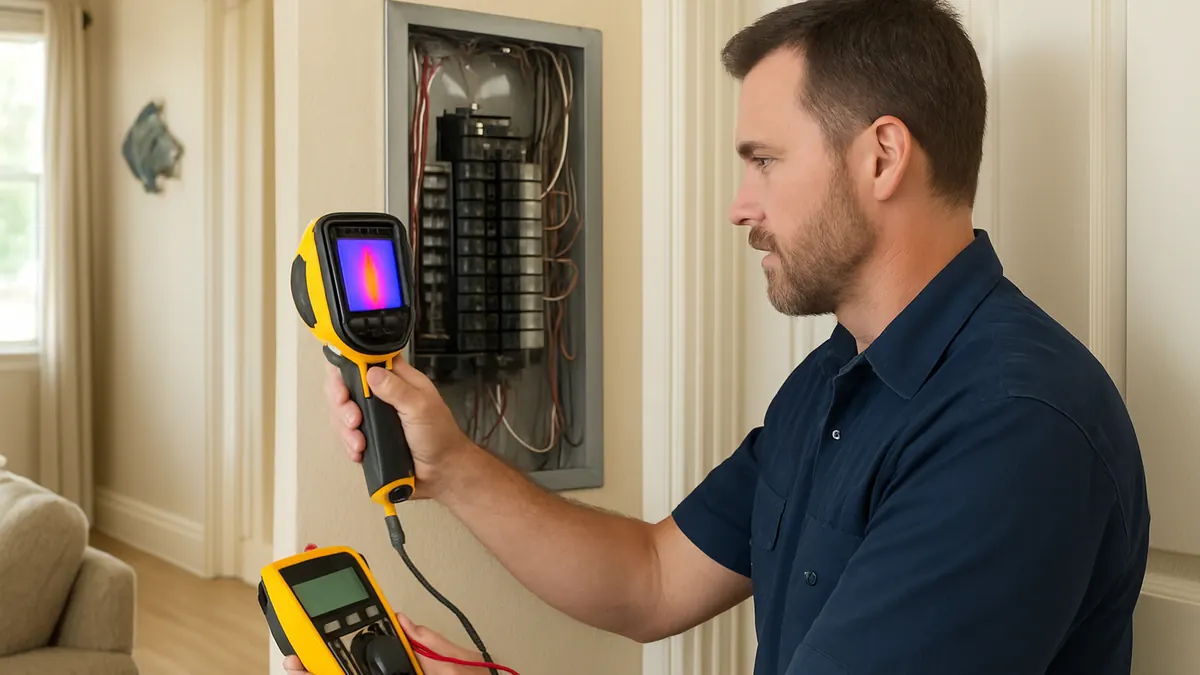
Testing may include voltage and current readings, thermal imaging, circuit isolation, and a load calculation when capacity is involved.
The electrician also considers the meter connection, service conductors, and utility supply so the problem is traced to its actual source.
Repair Options From the Least Invasive Upward
The smallest repair may involve one approved breaker, a corrected termination, branch-circuit repair, receptacle replacement, or removing a faulty appliance from service.
An overloaded appliance may need a dedicated circuit. A subpanel can add spaces when capacity allows, while approved load management can coordinate large loads.
Panel or service replacement is considered when the internal bus is damaged, corrosion is extensive, the enclosure is compromised, approved parts are unavailable, or calculated demand exceeds available capacity.
Typical Factors That Affect Cost
Cost depends on diagnostic time, access, affected circuits, wiring condition, equipment compatibility, permits, and utility coordination. A breaker repair differs from a dedicated circuit, subpanel, or service upgrade.
Moisture damage, hidden overheating, and previous modifications can increase the scope. Request a written explanation and options.
Prevention and Maintenance Guidance
Keep the panel dry, accessible, and clear of storage. Maintain an accurate circuit directory and approved filler plates.
Avoid permanent extension cords and overloaded power strips. Use licensed electricians for major additions. Arrange inspection after water exposure, recurring symptoms, or substantial load changes.
Schedule an Electrical Panel Inspection in WaterColor
Seven signs your electrical panel needs an inspection in WaterColor include breaker trips during heavy use, multiple breakers tripping, widespread lighting changes, unusual sounds, heat or burning odor, visible corrosion, and increased demand from new equipment. An inspection can determine whether the correct next step is a small repair, dedicated circuit, approved load-management solution, subpanel, panel replacement, or service upgrade.
About this guide: This resource provides general homeowner education, not a remote diagnosis. Actual conditions, code requirements, equipment, and safe repair options must be evaluated at the property.