Do not remove an electrical panel cover, touch exposed conductors, bypass protection, or repeatedly reset a fault. Keep clear of smoke, sparks, burning odors, hot equipment, standing water near electricity, and downed lines, then call qualified help.
Your electric vehicle is parked in the garage, but the standard 120-volt cord is not restoring enough range overnight. You have chosen a Level 2 charger and found what appears to be room in the electrical panel. Then the air conditioner starts, the electric water heater cycles, and you wonder whether adding another large electrical load could overload the house.
The safe immediate step is to keep using the manufacturer-approved charging method you already have and avoid connecting the new charger until the electrical system has been evaluated. Do not use an extension cord, homemade adapter, or existing 240-volt receptacle unless a licensed electrician confirms that the circuit is suitable.
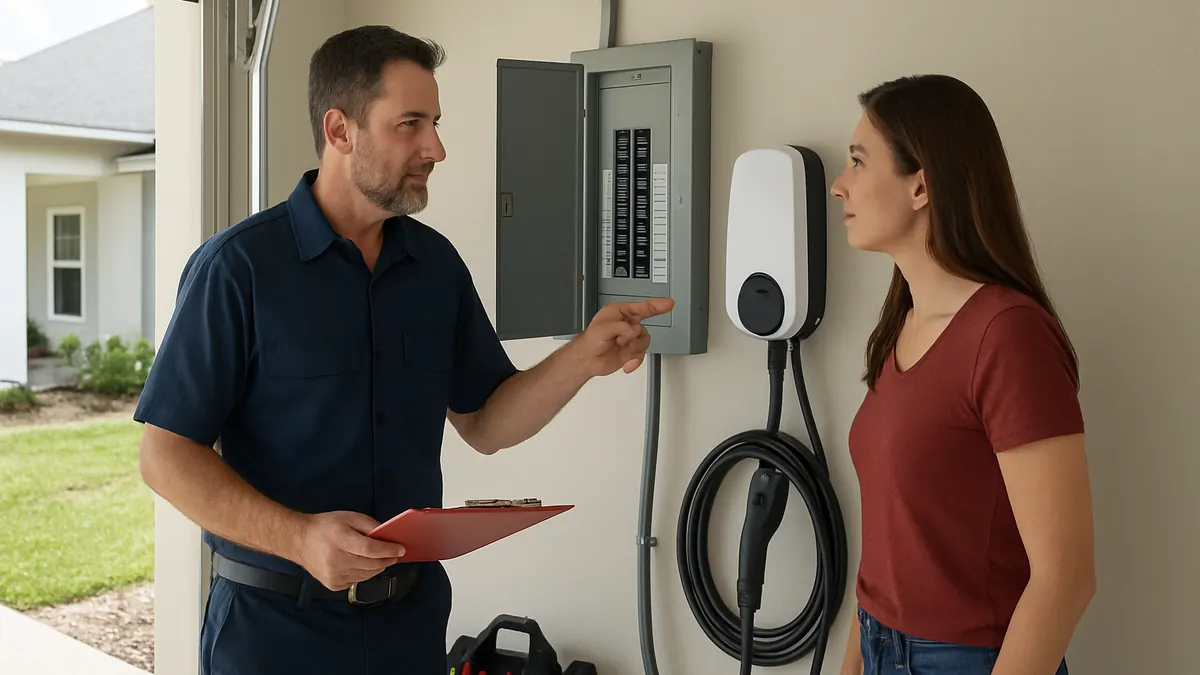
A Level 2 charger normally uses a 240-volt circuit and charges faster than a standard Level 1 cord. Whether your panel can support it depends on the charger setting, calculated household demand, breaker space, equipment condition, and route to the parking area-not simply the number on the main breaker.
Can Your Electrical Panel Support a Level 2 EV Charger in Camp Creek?
Possibly. Many homes can support useful Level 2 charging without a service upgrade. The charger may be installed at a moderate output, placed on a properly sized dedicated circuit, or paired with approved load-management equipment.
A panel labeled 200 amps is not automatically ready. The home may already have substantial demand from cooling, water heating, cooking, laundry, pool equipment, pumps, or other fixed appliances. A smaller service is not automatically disqualified either. The answer comes from a load calculation and physical inspection.
Common Reasons a Charger Cannot Be Added Immediately
The Calculated Electrical Load Is High
An electrician evaluates the home's expected demand rather than adding every breaker rating together. Breaker labels do not show how the house uses power.
The Panel Lacks Two Usable Breaker Spaces
Most Level 2 residential charging circuits require a two-pole breaker. Open positions must be properly located and approved for the panel. Unapproved tandem breakers are not a safe way to create room.
The Panel Has Defects
Loose connections, overheating, corrosion, damaged breakers, improper breaker types, or questionable previous work can delay installation. Adding a sustained charging load to compromised equipment can worsen an existing problem.
The Desired Charger Output Is Larger Than Necessary
A charger may advertise a high maximum output, but your daily driving may require much less. A lower approved setting can reduce the circuit size and electrical demand while still replacing your normal overnight mileage.
The Parking Location Complicates the Route
A charger across finished rooms, outdoors, or at a detached parking area may require longer conductors, conduit, trenching, weather protection, and voltage-drop planning.
Safe Checks You Can Perform
- Keep the panel cover closed. Photograph the panel exterior, main breaker, directory, charger label, proposed mounting location, and route between the panel and vehicle.
- Write down the vehicle and charger model numbers. Review the charger instructions for maximum current, adjustable settings, and whether it is hardwired or plug-in.
- List major electrical equipment, including HVAC systems, electric water heater, range, dryer, pool or spa equipment, pumps, and planned additions.
Estimate how many miles you drive each day and how long the vehicle remains parked. This helps the electrician recommend a practical charging rate instead of automatically designing for maximum output.
What You Should Not Attempt
Do not remove the panel cover. Components inside may remain energized even when the main breaker is off, creating shock and arc-flash hazards.
Do not replace the main breaker with a larger one. The service conductors, meter equipment, panel, utility connection, grounding system, and calculated load must all support an increase.
Do not connect the charger to a dryer receptacle through an improvised adapter or assume an old 240-volt outlet is safe because the plug fits. The breaker, conductor size, receptacle condition, grounding, and circuit use must be verified.
Do not increase the charger's current setting after installation unless the circuit and service were designed for it.
Signs That Make the Situation Urgent
Stop charging if the plug, receptacle, breaker, cable, or charger becomes unusually hot. Burning odors, melted plastic, discoloration, buzzing, crackling, sparks, repeated trips, or charger fault messages require prompt attention.
Call an electrician before installation if the panel is rusty, warm, noisy, damaged, or shows previous overheating. Flickering lights, unexplained main-breaker trips, and moisture around electrical equipment should not be ignored.
For smoke, active arcing, or fire, stay clear and call emergency services.
How a Licensed Electrician Diagnoses Charger Capacity
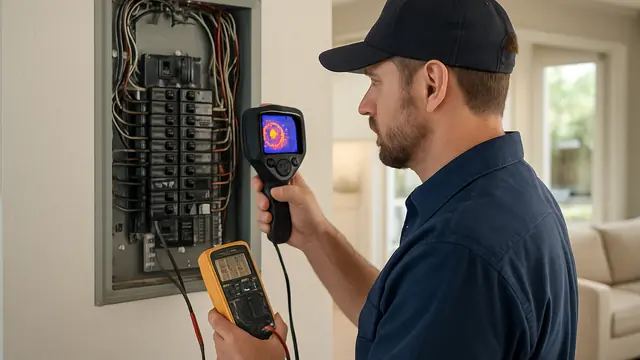
The electrician verifies the service rating, panel rating, breaker positions, approved breaker types, grounding and bonding, and equipment condition. The panel is opened using proper safety procedures so conductors, connections, bus components, and previous work can be inspected.
Next comes the load calculation. It accounts for applicable fixed loads and the proposed EV charger. The National Electrical Code is a central safety standard for electrical design and installation, including electric vehicle supply equipment and its circuits.
The electrician also evaluates conductor length, wiring method, wall access, outdoor exposure, mounting, physical protection, and manufacturer instructions.
Repair and Installation Options
The least invasive solution may be a dedicated circuit with the charger configured at an output that fits the existing calculation.
If capacity exists but breaker positions do not, an approved reconfiguration or subpanel may provide space. A subpanel adds distribution space; it does not increase service capacity.
Where spare capacity is limited, approved load-management equipment may reduce or pause charging when major household loads operate. Smart charge management can sometimes reduce the need for a costly upgrade while still delivering the energy the vehicle needs.
Panel replacement may be appropriate when equipment is damaged, overcrowded, incompatible, or no longer serviceable. A service upgrade is considered when calculated demand exceeds available capacity and lesser options cannot safely meet the homeowner's needs.
Factors That Affect Cost
Cost depends on charger output, service size, panel condition, breaker availability, conductor size, circuit length, wiring pathway, access, trenching, outdoor exposure, mounting, permits, inspections, and possible utility work.
Defect repairs, a subpanel, load management, panel replacement, or service upgrades change the scope. Planning for a second EV can also affect equipment choices.
A useful proposal should identify the configured output, circuit rating, wiring method, required repairs, and optional improvements.
Prevention and Maintenance
- Use the charger only at the approved setting. Keep the connector clean and dry, support the cable, and prevent it from being pinched or driven over.
- Check for cracking, looseness, heat marks, corrosion, cord damage, repeated faults, or breaker trips. Stop using the equipment if these appear.
- Have the load reviewed before adding another charger or major electrical appliance.
Get a Definite Answer Before Installing the Charger
Can your electrical panel support a Level 2 EV charger in Camp Creek? It may already support the charging rate you need, or the safest solution may involve a lower setting, load management, panel reconfiguration, equipment repair, or a service upgrade.
The important step is to evaluate the entire electrical system before energizing the charger. That protects the vehicle, charging equipment, wiring, and home while helping you avoid work that is larger than necessary.
About this guide: This resource provides general homeowner education, not a remote diagnosis. Actual conditions, code requirements, equipment, and safe repair options must be evaluated at the property.