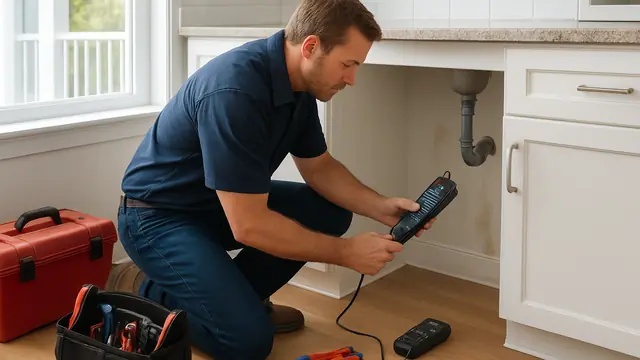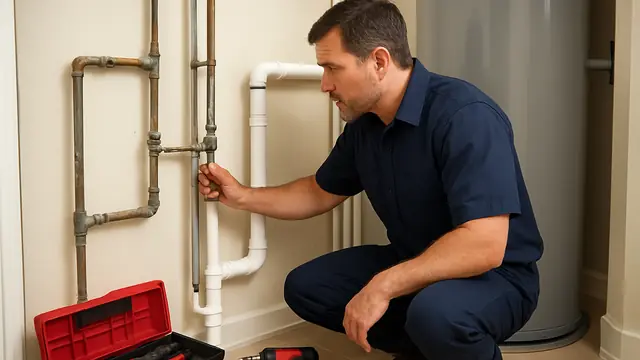
Stop and call for qualified help when plumbing water is near electrical equipment, sewage is entering occupied space, gas or burning odors are present, or a repair would require opening pressurized piping.
You turn on the shower, wait for the water to heat, and notice it never gets as hot as it used to. Perhaps the hot water runs out halfway through, the tank is making popping sounds, or you have found moisture around its base. For a homeowner on 30A, the immediate question is usually the same: should you repair the water heater or replace it?
If water is actively leaking, turn off the heater's water supply if the valve is safely accessible. For an electric unit, switch off the dedicated breaker only if the area is dry. If you smell gas near a gas-fired heater, leave the area and contact the gas utility or emergency services as appropriate.
What the Symptoms Usually Mean
No hot water can result from a failed electric heating element, thermostat, breaker, ignition system, burner component, or control.
Lukewarm water or short hot-water duration may mean one element has failed, sediment has reduced usable tank capacity, the thermostat is malfunctioning, or household demand has increased.
Popping or rumbling often occurs when sediment collects at the bottom of a storage tank. Water becomes trapped beneath the buildup and flashes into steam during heating.
Moisture may come from a connection, drain valve, temperature-and-pressure relief valve, condensation, or the tank itself. A replaceable fitting is different from a corroded pressure vessel, so the leak source must be confirmed.
Repair or Replace a Water Heater in 30A: Key Factors
A relatively young unit with one failed component may be a strong repair candidate. An older unit with corrosion, repeated breakdowns, and declining performance may not justify continued investment.
A tank leaking through its body normally requires replacement. The steel vessel has failed, and surface patches are not a safe, lasting repair.
Review the service history. One thermostat or igniter replacement is not the same as repeated calls for elements, valves, controls, and leaks. Recurring failures often indicate that other aging parts may soon follow.
Consider whether the heater meets present demand. Repairing an undersized unit may restore its original output without solving short showers or slow recovery. Replacement allows the plumber to evaluate capacity and system type.
Excessive pressure, failed thermal-expansion control, corroded connections, poor drainage, electrical defects, or venting problems may contribute to failure and must be addressed.
Safe Checks You Can Perform
Confirm whether every hot-water fixture has the same problem. If one shower is lukewarm while other fixtures are normal, the shower cartridge or mixing valve may be responsible.
Check the electrical panel for a tripped water-heater breaker. Reset it once only when there is no moisture, burning smell, buzzing, or visible damage. If it trips again, leave it off.
Look at visible piping, the drain pan, and the floor. Note whether water appears at the top connections, a valve, the discharge pipe, or beneath the tank. Do not touch water that may have reached electrical components.
What Homeowners Should Not Attempt
- Do not patch a leaking tank, block the relief valve, or cap its discharge pipe. The relief valve is a critical safety device.
- Do not open electrical access panels unless you are qualified to work on high-voltage equipment. Do not disassemble gas controls, alter burners, or modify venting.
- Avoid repeatedly resetting a breaker or ignition system. A safety device that keeps shutting the heater down is signaling a condition that requires diagnosis.
Signs the Problem Is Urgent
Call promptly when water is spreading beyond the drain pan, the tank is visibly rusted and wet, or the relief valve releases hot water continuously.
Repeated breaker trips, scorched wiring, a burning smell, or water near electrical components require shutdown and professional service.
For gas heaters, leave the area if you smell gas. Soot, delayed ignition, unusual flame behavior, or evidence that exhaust is not venting correctly also requires immediate evaluation.
Suddenly scalding water, loud banging, or rapid pressure changes should not be ignored. These symptoms may involve failed controls, overheating, high pressure, or thermal expansion.
How a Licensed Plumber Diagnoses It
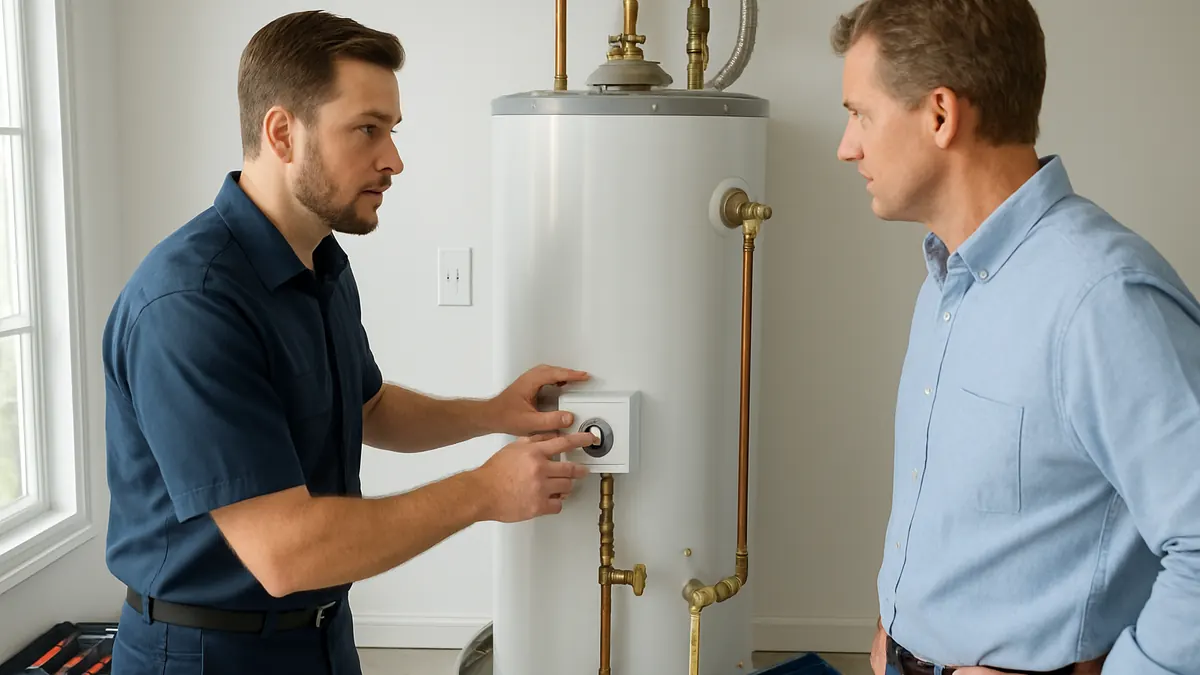
A plumber confirms the symptom and reviews the heater's age, model, capacity, fuel type, installation, and repair history.
For electric heaters, testing may include voltage, thermostats, heating elements, wiring, and high-limit controls. For gas models, the plumber may inspect ignition, burner operation, gas supply, safety controls, combustion, and venting.
The plumber checks connections, valves, the discharge system, and the tank body for leaks. Water pressure and thermal expansion may also be tested because excessive pressure can shorten equipment life and cause recurring valve discharge.
Repair Options Before Replacement
The least invasive repair may involve tightening or replacing a supply connection, shutoff valve, drain valve, or other external component.
Electric units may need a heating element or thermostat. Gas units may need an igniter, thermocouple, flame sensor, burner service, or control component. A tankless system may need filter cleaning, descaling, sensor service, or correction of ignition, venting, or condensate problems.
A leaking relief valve may require replacement, but the plumber should first identify why it opened. Excess temperature, high pressure, or failed expansion control must be corrected.
Sediment-related performance may improve with appropriate flushing when the tank remains sound. Flushing is maintenance, not a cure for corrosion or a leaking vessel.
Replacement becomes more reasonable when the tank leaks, corrosion is extensive, parts are unavailable, failures repeat, or the unit no longer meets household demand. Options may include a conventional tank, heat-pump model, or tankless system, depending on utilities, space, and usage.
What Affects the Cost
Repair cost depends on the failed part, model, fuel type, accessibility, diagnostic time, and whether related plumbing or electrical work is needed.
Replacement cost is affected by capacity, efficiency, installation location, removal access, piping changes, electrical requirements, gas supply, venting, drain-pan and discharge arrangements, and code-related upgrades.
Compare the complete installed scope rather than equipment price alone.
Prevention and Maintenance
Inspect the area periodically for moisture, rust, mineral residue, or staining. Address small leaks before they damage nearby materials.
Keep the unit accessible and follow manufacturer guidance for flushing, anode-rod inspection, tankless descaling, and filter cleaning. Maintenance needs depend on the equipment and its history.
Have recurring relief-valve discharge, pressure fluctuations, or connection failures evaluated. Correct water pressure and expansion control can help protect the heater.
Reassess capacity when household use changes. More occupants, simultaneous showers, large tubs, or frequent guest turnover can make a previously adequate heater feel undersized.
Making the Right Next Decision
The answer to "repair or replace a water heater in 30A?" depends on where the failure is, whether the tank or heat exchanger is sound, how reliable the unit has been, and whether it still fits the home's needs. A targeted repair can be sensible when the failure is limited. Replacement is usually the better path when the tank leaks, corrosion is advanced, performance is inadequate, or breakdowns have become repetitive.
About this guide: This resource provides general homeowner education, not a remote diagnosis. Actual conditions, code requirements, equipment, and safe repair options must be evaluated at the property.