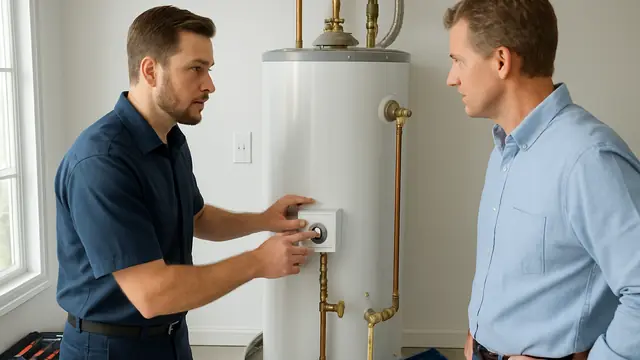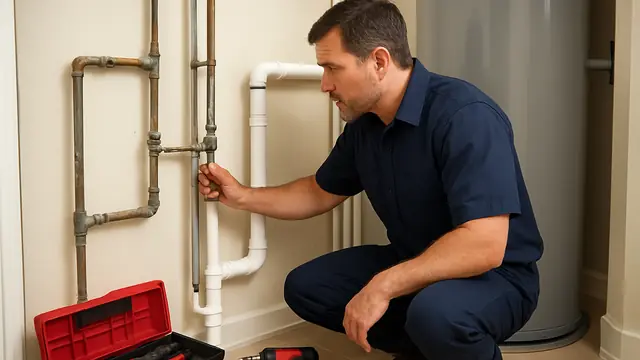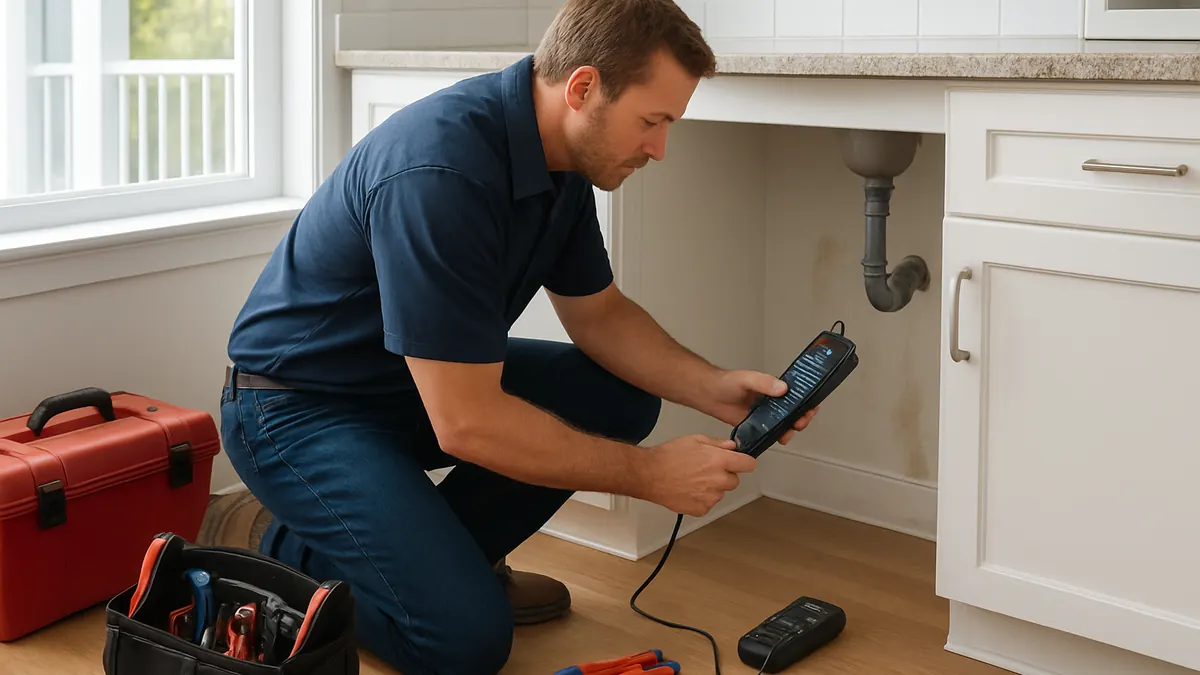
Stop and call for qualified help when plumbing water is near electrical equipment, sewage is entering occupied space, gas or burning odors are present, or a repair would require opening pressurized piping.
You notice a musty smell near a bathroom, a pale stain spreading across the ceiling, or a water bill that no longer matches your normal use. Nothing is visibly dripping, yet something in the home feels wrong. These are common reasons a 30A homeowner begins looking for a hidden plumbing leak.
A hidden leak is water escaping where it cannot be seen immediately-behind drywall, beneath flooring, inside a cabinet, or above a ceiling. Stop using the nearest fixture and watch whether moisture continues. If water is spreading rapidly, shut off the main valve and call a licensed plumber.
Seven Warning Signs of a Hidden Plumbing Leak in 30A
1. An Unexplained Increase in Water Use
A higher water bill can be an early sign of a pressurized water-line leak. If occupancy, irrigation, and normal household routines have not changed, water may be escaping continuously.
Small leaks can waste water without producing a puddle. A quiet toilet refill or pinhole supply-line opening may run around the clock. Compare several billing periods when occupancy varies.
2. Water Sounds When Everything Is Off
The plumbing system should generally be quiet when faucets, toilets, appliances, and outdoor spigots are not operating. A faint hiss, drip, or rushing sound may indicate unwanted water movement.
Listen near bathrooms, cabinets, and the water heater. A continuing sound may come from a pipe, toilet, appliance connection, or pressure problem.
3. Stains, Bubbling Paint, or Warped Materials
Water may create yellow or brown ceiling marks, bubbling paint, swollen baseboards, loose flooring, or warped cabinetry. The visible damage may not sit directly below the source because water can travel along framing and pipes.
Do not press on a sagging ceiling. Saturated drywall may break apart, and the water may be close to wiring or fixtures.
4. A Musty Smell That Keeps Returning
A persistent musty odor usually means an area remains damp. The cause could be plumbing, condensation, roofing, or another moisture source, so the location must be tested rather than guessed.
Check sink cabinets, laundry areas, closets sharing a plumbing wall, and rooms below upstairs bathrooms. Dampness that returns after cleaning deserves professional attention.
5. The Water Meter Moves During a No-Use Test
Turn off every faucet, appliance, toilet, and outdoor water source. After confirming that nothing is refilling, observe the water meter. Continued movement may indicate water flowing somewhere in the system.
This test does not locate the leak and may not reveal a drain leak, but it gives the plumber useful information.
6. Water Pressure Changes Unexpectedly
A sudden pressure drop at several fixtures may be related to a supply leak, partially closed valve, pressure regulator, utility condition, or simultaneous water demand. A change at only one faucet may be caused by a clogged aerator.
Pressure changes combined with meter movement, stains, or running-water sounds make a hidden leak more likely.
7. Surface Damage Returns After Repairs
Dark spotting, peeling paint, cracked caulk, or damaged flooring may return when the moisture source was never corrected. Cleaning or repainting the surface will not stop water entering from behind it.
Recurrence, rather than appearance alone, is the important warning sign.
What Commonly Causes Hidden Leaks?
Leaks often begin at pipe joints, fixture supply tubes, shower valves, toilet seals, appliance hoses, shutoff valves, or drain connections. Corrosion, excessive pressure, movement, installation defects, physical damage, and normal wear can contribute.
Supply leaks may continue because the pipe remains under pressure. Drain leaks commonly appear only when a fixture or appliance operates. That timing helps narrow the source.
Safe Checks You Can Perform
Dry the affected area and note when moisture returns. Use nearby fixtures one at a time while another person watches the stain, cabinet, ceiling, or floor. Stop immediately if water begins spreading.
Inspect accessible hoses, valves, toilet connections, sink traps, and appliance lines with a flashlight. Place a dry paper towel beneath a connection to reveal slow moisture. Photograph changes and record which fixture was used before the symptom appeared.
Locate the main water shutoff before an emergency. If active leakage is damaging the home, closing it may reduce further loss.
What You Should Not Attempt
Do not cut into a wall, ceiling, cabinet, or floor without knowing what plumbing, wiring, or structural components are concealed there. Do not use chemical drain cleaner to treat a leak; it cannot repair a cracked pipe or loose joint.
Avoid covering stains with paint, caulk, or sealant before the source is identified. Cosmetic work may hide evidence while the leak continues.
When the Problem Is Urgent
Act promptly when water is spreading, a ceiling is sagging, flooring is slippery, the meter shows continuous flow, or pressure is dropping rapidly. Sewage odors, contaminated water, or moisture near electrical equipment also require urgent attention.
If water is near electricity, do not touch outlets, switches, fixtures, or equipment. Leave the wet area and shut off water only when the valve can be reached safely.
How a Licensed Plumber Diagnoses the Leak
A plumber will ask when the symptom appears, which fixtures were used, and whether the meter moves with all water off. The plumbing layout and visible moisture pattern are then evaluated.
Diagnosis may include fixture isolation, pressure testing, moisture detection, acoustic listening equipment, a small inspection camera, or controlled testing of supply and drain lines. These methods help target the repair and reduce unnecessary demolition.
The plumber should explain what failed, why access is needed, and whether restoration is required.
Repair Options From Least to Most Invasive
An accessible connector, supply tube, valve, trap, toilet seal, appliance hose, or fixture component may only need adjustment or replacement. A localized section of damaged pipe may be repaired when it can be reached safely.
When the leak is concealed, a limited access opening may be enough. In some cases, rerouting a short pipe section is less disruptive than opening several finished surfaces.
Broader replacement may be appropriate when leaks are recurring or multiple sections of piping are deteriorated. Replacement should follow diagnosis rather than being recommended automatically.
What Affects Repair Cost?
Cost depends on the location, accessibility, failed component, pipe material, diagnostic work, and amount of finished material that must be opened. An exposed valve repair differs greatly from a leak behind tile or beneath flooring.
Other factors include emergency timing, plumbing isolation, applicable permits, and restoration. Ask which costs cover plumbing and which cover building repairs.
Prevention and Maintenance
Inspect visible supply lines, valves, toilet connections, and appliance hoses for corrosion, cracking, swelling, or moisture. Address shutoff valves that no longer operate properly.
Watch water bills and pressure for unusual changes. During extended periods when a 30A property is unoccupied, arrange periodic inspections or consider a suitable leak-detection device with automatic shutoff capability.
After a repair, make sure wet materials are properly dried before the area is closed or repainted.
Homeowner FAQs
Can a hidden leak stop by itself?
The symptom may pause, but a damaged pipe or connection rarely repairs itself. Intermittent leaks often return when pressure changes or a fixture is used.
Does a moving water meter prove a pipe is leaking?
Not always. A running toilet, irrigation system, appliance, or treatment cycle can also move the meter. Confirm that every water-using device is off.
Can a shower leak only during use?
Yes. A drain, trap, valve, connection, or surrounding assembly may leak only while the shower is operating.
Should I call a plumber before repairing drywall?
Yes. The moisture source should be identified and stopped before the surface is patched, painted, or replaced.
Can leak detection eliminate wall openings?
It can reduce unnecessary openings, but access may still be required to confirm and repair the failed component.
Take the Next Step When You See Seven Warning Signs of a Hidden Plumbing Leak in 30A
Seven warning signs of a hidden plumbing leak include unexplained water use, running-water sounds, stains, musty odors, meter movement, pressure changes, and recurring surface damage. One sign may have a simple explanation, but several together should not be ignored.
Document what you observe, stop using the suspected fixture, and shut off the main supply when active water is causing damage. Arrange professional diagnosis before covering the visible symptom.
About this guide: This resource provides general homeowner education, not a remote diagnosis. Actual conditions, code requirements, equipment, and safe repair options must be evaluated at the property.