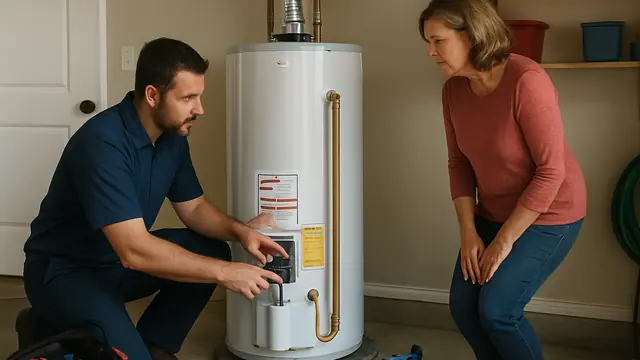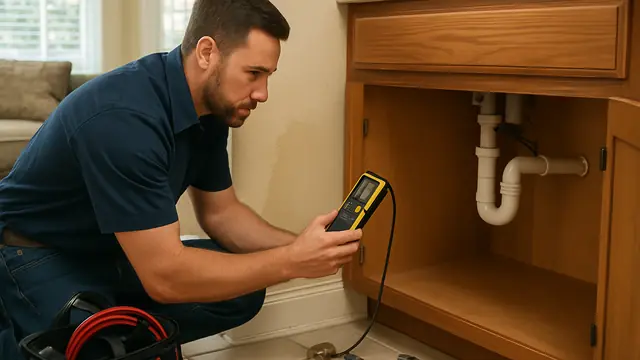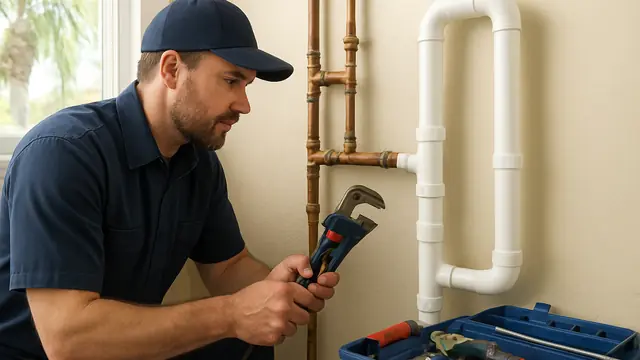
Stop and call for qualified help when plumbing water is near electrical equipment, sewage is entering occupied space, gas or burning odors are present, or a repair would require opening pressurized piping.
The kitchen sink drains, but a toilet in another part of the house bubbles. Later, water rises in the bathtub when the washing machine empties. A plunger may seem to help for a few minutes, yet the symptoms return as soon as more water enters the system. For a homeowner in DeFuniak Springs, that combination usually points beyond one fixture. It may indicate a restriction in a shared branch drain or the main sewer line.
The safest response is to limit water use until the cause is identified. Do not run laundry or the dishwasher, and avoid repeated flushing. If sewage appears in a tub, shower, floor drain, or around a cleanout, stop using the plumbing completely and keep people away from the contaminated area.
A sewer camera inspection allows a licensed plumber to examine the inside of the pipe. The inspection can identify visible blockages, root intrusion, standing water, damaged joints, and broken sections so the next step is based on evidence rather than guesswork.
Why a Camera Inspection May Be Needed
A simple clog near one fixture can often be diagnosed without a camera. A camera becomes more valuable when several fixtures are affected, a stoppage returns after cleaning, or the location of the problem is uncertain.
Safe Observations Before the Appointment
Make a list of the fixtures involved and the order in which symptoms appeared. Note whether the toilet gurgles only when another fixture drains or whether every drain is slow all the time.
Look at the lowest tub or shower because a main-line backup often shows there first. Do not remove a drain cover or touch wastewater.
If an exterior cleanout is visible, check for dampness or leakage around it, but leave the cap in place. A full line can release sewage when the cap is loosened.
What Not to Do During a Possible Sewer Backup
- Do not continue running water to see whether the blockage clears on its own. Added water can cause an indoor overflow.
- Do not mix chemical drain cleaners or pour them into several fixtures. They may remain trapped in the pipe and expose the plumber to hazardous liquid.
- Do not operate a rented sewer cable without proper training. A cable can twist, become stuck, or damage a weakened line.
- Do not dig in the yard based on where you think the pipe runs. A camera equipped with a transmitter can often help locate the problem more accurately.
What Happens During a Sewer Camera Inspection in DeFuniak Springs?
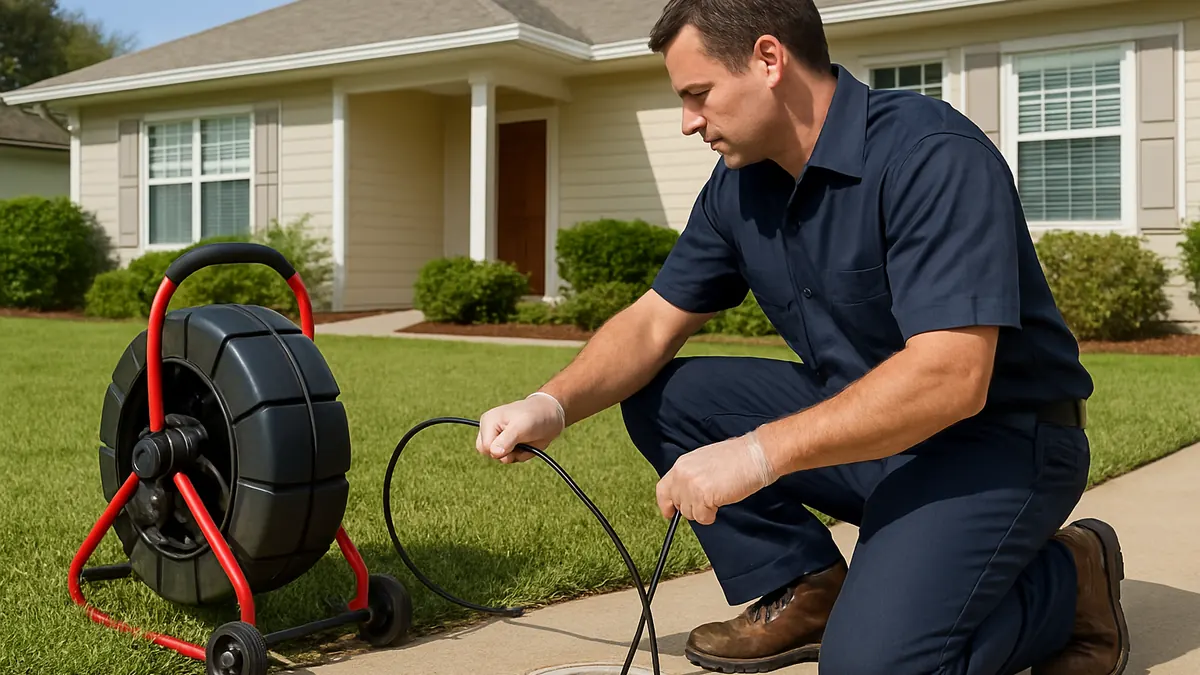
The plumber first reviews the symptoms, past stoppages, and any previous drain cleaning. Then an appropriate access point is selected. An exterior cleanout commonly provides the most direct route, although another approved opening may be needed.
A small waterproof camera with built-in lighting is attached to a flexible push cable. As the plumber feeds the cable through the pipe, live video appears on a monitor.
The plumber watches for material attached to the pipe wall, foreign objects, roots, standing water, cracks, separated or offset joints, and changes in pipe shape.
Many sewer camera heads transmit a signal. Using a locating receiver above ground, the plumber can mark the approximate position and depth of the camera. This is especially useful when a localized repair is being considered.
The plumber should explain what was visible, what could not be inspected, and which next step is reasonable.
Common Findings and Their Meaning
Obstruction or Buildup
Paper, wipes, grease, soap residue, food debris, or another object may restrict the line. If the pipe remains intact, professional cleaning or retrieval may solve the problem.
Roots
Roots usually enter through a joint or crack. Clearing them restores flow temporarily, but the entry point can allow new growth.
Standing Water
Water remaining in one section may indicate a belly, poor slope, or a downstream blockage. The plumber evaluates the length of the wet section and whether the camera can continue.
Offset, Crack, or Collapse
Misaligned joints catch debris and may admit soil or roots. Cracks can remain localized, while deformation or collapse may significantly restrict flow. The extent of damage determines whether spot repair or broader replacement is appropriate.
Why the Line Sometimes Must Be Cleaned First
A camera cannot see through a dense clog or heavily clouded wastewater. Trying to push through a solid obstruction can also risk trapping the camera.
In that situation, the plumber may first open the line with appropriate cleaning equipment. A follow-up camera pass then shows whether the stoppage was only loose material or whether an underlying defect caused it.
When the Situation Requires Urgent Service
Sewage entering the home is urgent. Stop all water use and prevent contact with the affected area.
Prompt attention is also warranted when no toilets can be used, wastewater leaks around a cleanout, the line backs up shortly after it was cleared, or several fixtures stop draining at once.
Repair Options From the Least Invasive Approach
A simple obstruction may be cleared with a professional cable machine. The plumber selects the proper head or attachment for the blockage.
If the pipe is structurally sound but coated with grease or sludge, hydro jetting may be an option. High-pressure water cleans the pipe wall, but the line should be evaluated first because damaged piping may not be suitable.
Root cutting can restore flow, though the damaged joint or crack may still require repair. A single defective section may be addressed with a targeted excavation and spot repair.
When conditions allow, trenchless repair may reduce the amount of surface disturbance. Full replacement is generally reserved for extensive deterioration, repeated collapse, or multiple defects that cannot be corrected reliably with smaller repairs.
What Affects the Cost?
Inspection cost varies with access, line length, pipe diameter, cleaning requirements, locating, and video documentation.
Repair cost depends on the defect type, depth, location, and length. Obstacles above the pipe, restoration needs, pipe material, and access for equipment also affect the work.
Prevention and Maintenance
- Flush only human waste and toilet paper. Put wipes, paper towels, hygiene products, and cleaning cloths in the trash.
- Keep grease, oils, and food scraps out of kitchen drains. Use strainers to catch solids before they enter the system.
- Respond to repeated gurgling, slow drains, or sewage odors before a complete stoppage occurs. Keep camera footage and repair records so future plumbers can compare findings.
- If roots or a structural defect are discovered, follow the recommended monitoring or repair schedule rather than relying indefinitely on repeated emergency cleaning.
Schedule a Sewer Camera Inspection in DeFuniak Springs
What happens during a sewer camera inspection in DeFuniak Springs is a step-by-step evaluation of the accessible sewer line. The plumber reviews the symptoms, inserts a lighted camera, documents visible conditions, locates defects when possible, and explains the least invasive reasonable response. If several drains are reacting together or the same blockage keeps returning, a camera inspection can show what is actually happening before repair decisions are made.
About this guide: This resource provides general homeowner education, not a remote diagnosis. Actual conditions, code requirements, equipment, and safe repair options must be evaluated at the property.