Stop and call for qualified help when plumbing water is near electrical equipment, sewage is entering occupied space, gas or burning odors are present, or a repair would require opening pressurized piping.
Water around a water heater in a Bluewater Bay home may come from a loose connector, a safety valve, a drain valve, condensation, or a failing storage tank. The homeowner may notice a few drops, a damp drain pan, rust-colored streaking, warped flooring, or a growing puddle around the equipment.
Because water can travel along pipes and down the side of a tank, the visible puddle does not always reveal the true source. Prompt diagnosis is important, particularly when the heater is located in an interior closet, garage storage area, attic-adjacent space, or finished utility room.
Bluewater Bay's warm, humid environment can also make it harder to distinguish condensation from an actual leak. Persistent moisture, corrosion, or recurring water accumulation should be professionally evaluated.
Most Likely Causes
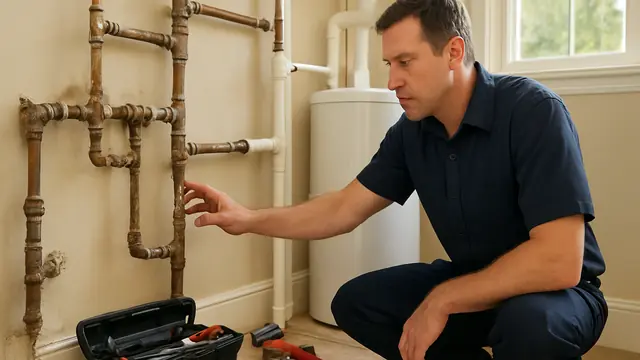
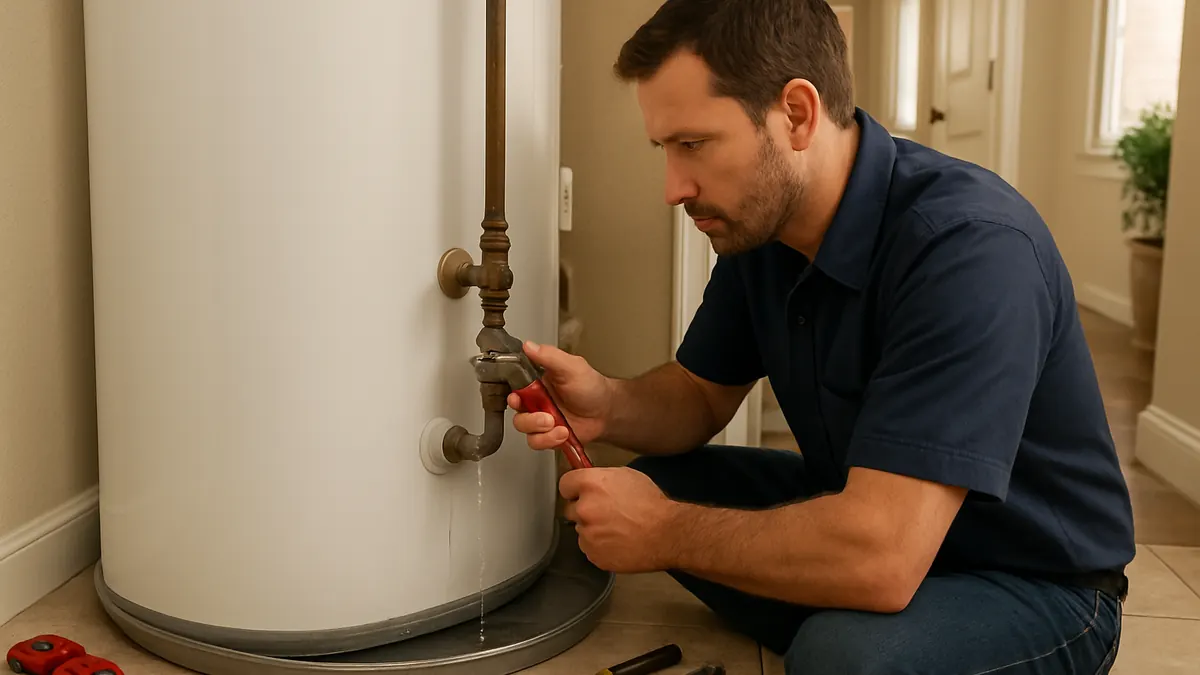
Connections at the top of the heater are common sources. The cold-water inlet, hot-water outlet, flexible connectors, and shutoff valve may loosen or deteriorate. Coastal humidity and airborne salt can accelerate corrosion on exposed metal components, especially in garages or utility areas with outside air exposure.
The T&P valve may release water because of a defective valve, excessive temperature, high water pressure, or thermal expansion. A relief valve is a safety device, so the cause of the discharge matters.
- The drain valve can develop a slow drip. Plastic valves may crack, while metal valves can corrode or become obstructed by mineral deposits.
- Electric heaters can leak from heating element gaskets. Water may appear around an access panel and then run toward the base.
- Condensation may occur on a cold tank or piping, but it should not be assumed to be harmless when the area remains wet.
- A leaking internal tank is usually indicated by water emerging from beneath the heater or around a lower seam after the upper connections and valves have been ruled out.
Safe Checks to Perform
Observe the heater without touching wiring, hot metal, or gas components. Inspect the top connections, sides of the tank, T&P valve, drain valve, drain pan, and floor.
Dry the area and monitor it. Use paper towels near suspected fittings to identify a slow drip. Note whether the water appears only during heating cycles or after heavy hot-water use.
Inspect nearby pipes and appliances. A leaking air-conditioning drain, washing machine hose, refrigerator line, or plumbing connection can cause water to collect near the heater.
Look for rust, white mineral deposits, green corrosion, stained drywall, or swollen trim. These conditions may indicate a slow leak that has existed for some time.
When water is flowing actively, close the cold-water shutoff valve only if it turns without excessive force. Shut off the correct electric breaker when water is near electrical components. Never stand in water while operating electrical equipment.
What Should Not Be Attempted
- Do not cap, plug, or obstruct the T&P valve discharge line. Doing so can remove a critical protection against excessive pressure.
- Do not patch the steel tank. Once the tank shell is leaking, adhesives and coatings are not safe structural repairs.
- Avoid working on gas valves, burners, electrical wiring, thermostats, or heating elements without proper training and testing equipment.
- Do not repeatedly reset a breaker that trips. A tripped breaker may indicate water intrusion, a failed element, damaged wiring, or another electrical fault.
- Do not relight a gas heater when water is present in the burner compartment or when gas is smelled.
Urgent Warning Signs
The situation becomes urgent when water is spreading into finished areas or cannot be contained.
Arrange immediate service for:
- Water spraying under pressure
- Rapidly increasing leakage
- Steam around the tank
- Extremely hot water from the relief pipe
- A distorted or bulging tank
- Gas odors
- Soot or scorching near the burner
- Burning electrical odors
- Water entering wiring compartments
- Leaking from a ceiling or upper-floor location
- Water affecting adjacent rooms or neighboring property
A suspected gas leak requires evacuation and contact with the gas provider or emergency services from a safe area.
How a Plumber Diagnoses the Leak
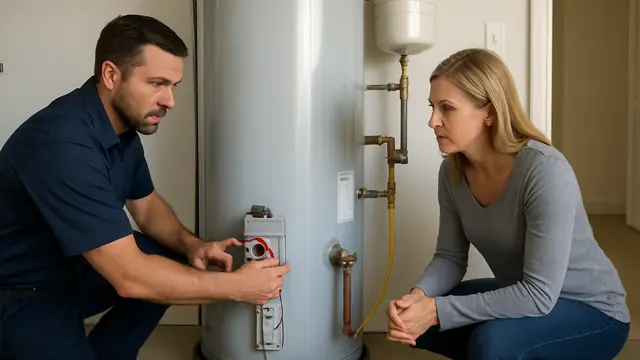
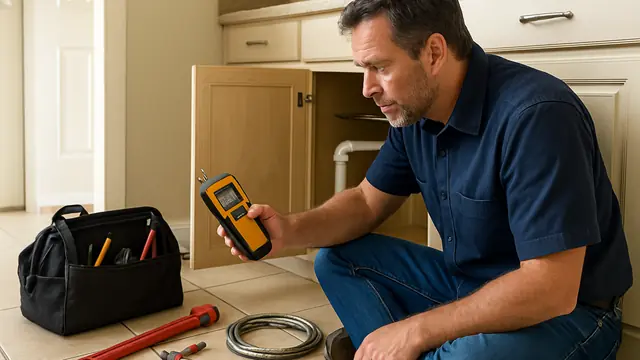
A licensed plumber first confirms that the water heater is the source. The technician traces the moisture, inspects nearby systems, and checks each connection while the heater is operating.
The plumber may test water pressure and inspect the pressure-reducing valve. Excessive pressure can contribute to relief-valve discharge and premature failure of plumbing components.
- Thermal expansion is evaluated when the home has a closed plumbing system. The plumber may test an existing expansion tank for proper air charge and internal bladder condition.
- On electric heaters, element gaskets, thermostats, and electrical compartments are examined. On gas units, the burner, combustion area, venting, and gas connections are inspected.
- The technician will determine whether the tank is sound. External leaks can often be repaired. Leakage through the tank shell means replacement is generally required.
Repair Options at Different Price Levels
Not every leak requires a new water heater. A leaking connector may only need a properly installed replacement. A faulty drain valve, shutoff valve, T&P valve, or heating element gasket may also be replaceable.
When pressure is the cause, the solution may involve adjusting or replacing the pressure-reducing valve, installing an expansion tank, or replacing a failed expansion tank.
If the internal tank is leaking, replacement options range from a basic code-compliant conventional tank to higher-efficiency equipment. The homeowner may choose standard electric, standard gas, heat pump, high-efficiency tank, or tankless technology.
The least expensive initial option is not always the least expensive over the equipment's life. However, homeowners should receive choices instead of being pushed automatically toward the highest-priced system.
A conventional storage heater may be the best fit when the existing utilities are adequate and the household's demand is predictable. Tankless equipment may be useful for households needing extended hot-water production, but correct sizing is critical. Heat pump equipment may reduce energy use in a suitable garage or utility space but needs sufficient air volume and a condensate drain.
Typical Cost Factors
The final price depends on the leak source and the condition of the surrounding system.
Factors include:
- Replacement part or complete heater
- Tank capacity and efficiency
- Fuel type
- Existing electrical service
- Gas-line and venting requirements
- Accessibility
- Corroded piping or valves
- Water-pressure corrections
- Expansion tank needs
- Drain pan and drain route
- Permit requirements
- Equipment warranty
- Disposal of the existing heater
- Water damage
- Emergency response timing
A direct replacement in an accessible garage may be less involved than replacing a heater in a narrow interior closet with damaged valves and no suitable drainage.
Preventive Maintenance for Bluewater Bay Homes
Inspect the water heater and nearby plumbing regularly. Check exposed metal fittings for corrosion, particularly when the heater is located near garage doors, exterior vents, or other openings.
- Flush a tank-style heater as recommended by the manufacturer. Sediment should be removed before it creates excessive noise or reduces heat transfer.
- Inspect the anode rod based on the heater manufacturer's guidance and local water conditions. Replacing a depleted anode rod can help protect the tank.
- Have household water pressure tested. Expansion tanks should be inspected periodically because they can lose their air charge or develop an internal bladder failure.
Replace older flexible supply lines and corroded shutoff valves before an emergency occurs. Confirm that a drain pan is installed where appropriate and that its drain is unobstructed.
Leak alarms are inexpensive protection. Smart leak sensors and automatic shutoff valves can be especially valuable for second homes, frequently vacant properties, or households that travel.
The most authoritative diagnosis comes from locating the leak rather than assuming the heater needs replacement. A Superior Mechanical can evaluate the equipment, explain the cause, and provide repair and replacement choices based on the actual condition of the system.
About this guide: This resource provides general homeowner education, not a remote diagnosis. Actual conditions, code requirements, equipment, and safe repair options must be evaluated at the property.